
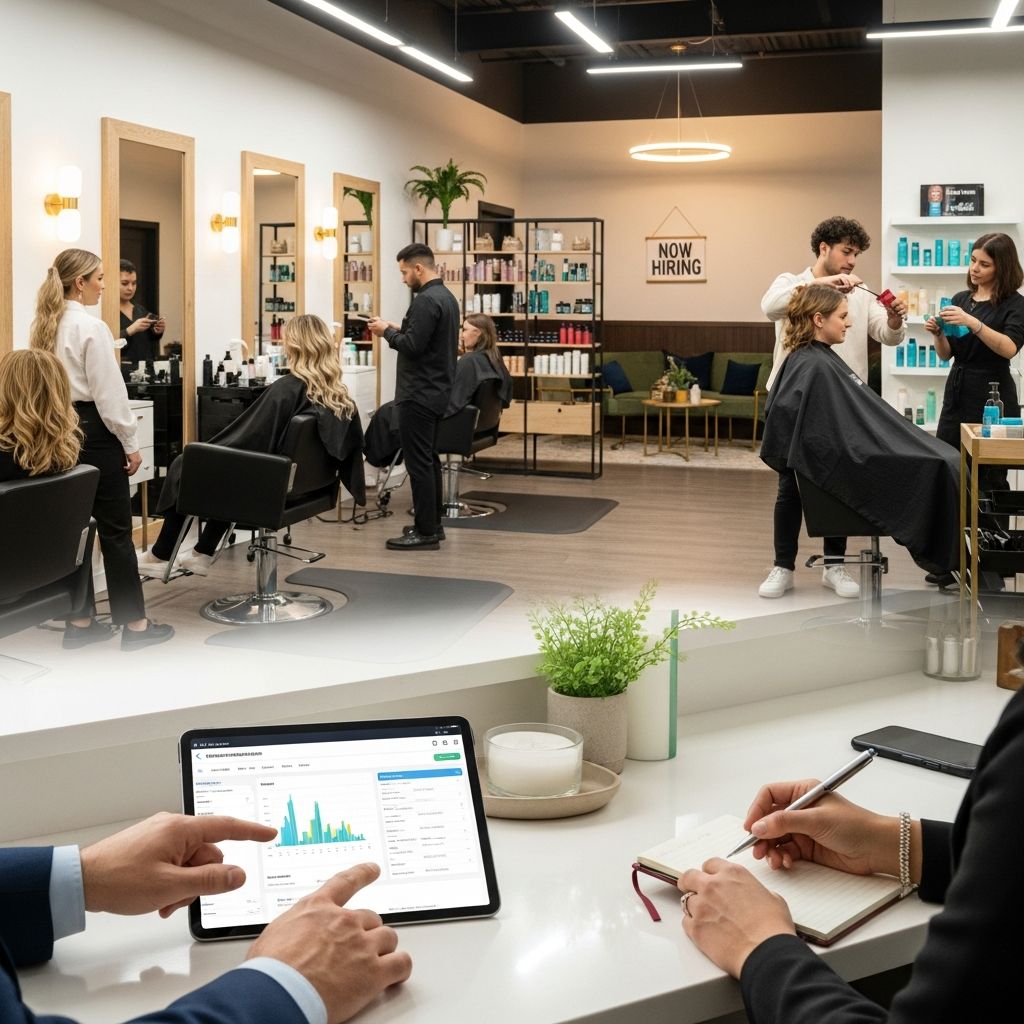
Operating a successful salon requires far more than expertise in hair styling, makeup application, or nail care. Today’s salon managers must navigate complex business operations, inspire diverse teams, and create exceptional client experiences while maintaining profitability. Whether you’re transitioning into a management role or seeking to strengthen your leadership abilities, understanding and developing the right skill set is fundamental to achieving lasting success in this competitive industry.
Understanding the Dual Framework of Salon Management Skills
Effective salon management operates on two distinct but equally important skill dimensions. The first encompasses technical, measurable abilities acquired through formal education, hands-on experience, and specialized certifications. These technical competencies form the operational backbone of your salon, enabling you to manage financial systems, track inventory, schedule staff, and maintain compliance with industry regulations.
The second dimension involves interpersonal and emotional intelligence capabilities that shape your relationships with clients, staff, and stakeholders. These abilities—including communication, emotional awareness, conflict resolution, and inspirational leadership—determine whether your team remains motivated and whether clients develop lasting loyalty to your salon. The most successful salon managers recognize that excellence requires mastering both dimensions simultaneously.
Interpersonal Foundations: Building Relationships That Matter
Cultivating Genuine Understanding and Connection
The capacity to truly understand others forms the cornerstone of effective salon management. When you develop genuine awareness of client aspirations, concerns, and preferences, you position yourself to deliver personalized service that exceeds expectations. Equally important is your ability to recognize the individual strengths, challenges, and career aspirations of your team members.
This understanding enables you to:
- Address client hesitations about services with confidence and reassurance
- Tailor training approaches to individual learning styles
- Create a workplace culture where team members feel valued and heard
- Identify potential within your staff and nurture their professional growth
- Respond appropriately when conflicts or concerns arise
Mastering the Art of Clear and Purposeful Communication
Communication excellence serves as the connective tissue linking clients, staff, management, and business objectives. Salon managers frequently serve as intermediaries, translating client needs to stylists, explaining policies to team members, and articulating business goals to ownership. Without clear communication channels, misunderstandings multiply, client satisfaction deteriorates, and team morale suffers.
Develop communication proficiency across multiple contexts:
- Deliver instructions that leave no ambiguity about expectations or procedures
- Practice active listening to fully understand concerns before responding
- Provide constructive feedback that helps team members improve without damaging confidence
- Adapt your communication style for different audiences and situations
- Create feedback mechanisms where clients and staff can voice concerns safely
Inspiring and Guiding Your Team Effectively
Leadership extends far beyond directing others to complete tasks. Effective salon leaders inspire their teams toward shared vision, establish clear expectations, provide meaningful guidance, and cultivate an environment where success feels achievable and rewarding. Leaders make strategic decisions when facing difficult choices, address conflicts before they escalate into organizational dysfunction, and build cultures where collective success matters as much as individual achievement.
Consider these leadership dimensions:
- Articulating a compelling vision that gives team members purpose beyond paychecks
- Making tough decisions while maintaining staff respect and trust
- Addressing conflicts quickly and fairly before resentment builds
- Recognizing achievements and celebrating milestones
- Modeling professional behavior and ethical standards
- Empowering team members to solve problems and make decisions within their roles
Managing Time and Priorities in a Complex Environment
A salon manager’s responsibilities span financial management, staff coordination, client relations, marketing initiatives, and facility maintenance simultaneously. Without strong time management capabilities, urgent matters consume your attention while important strategic activities never receive proper focus. Effective time management protects team members from burnout, ensures clients experience minimal wait times, and allows the business to operate with predictable efficiency.
Strengthen your time management approach by:
- Categorizing tasks by urgency and importance rather than addressing everything equally
- Creating efficient schedules that balance appointment flow with staff breaks
- Implementing systems that automate routine decisions and processes
- Delegating appropriately rather than attempting to handle everything personally
- Building buffer time into schedules to accommodate unexpected situations
- Reviewing and adjusting schedules regularly based on actual performance data
Technical Mastery: The Operational Engine of Success
Financial Stewardship and Budget Management
Salons operate as businesses with bottom-line profitability requirements. Financial management competency enables you to develop realistic budgets, monitor actual performance against projections, manage payroll efficiently, process daily transactions accurately, and ensure resources are allocated strategically. Managers who lack financial acumen often find themselves with insufficient cash for necessary investments or surprised by unexpected shortfalls.
Essential financial management activities include:
- Analyzing revenue trends and identifying opportunities to increase income
- Tracking expense categories and identifying cost reduction opportunities
- Creating payroll budgets that balance competitive compensation with profitability
- Reconciling daily transactions and ensuring accurate financial records
- Using financial software systems to reduce errors and improve efficiency
- Reporting financial performance to ownership and making data-driven recommendations
Strategic Inventory Management
A well-stocked inventory directly affects client satisfaction, staff productivity, and profitability. Inventory management requires you to maintain appropriate stock levels of products used in service delivery, monitor consumption patterns, predict future needs, place orders timely, and prevent product waste or spoilage. Inventory mismanagement creates client frustration when services cannot be completed, reduces team productivity when they cannot access needed supplies, and wastes money through excess stock or expired products.
Develop inventory management excellence through:
- Establishing minimum and maximum stock thresholds for each product category
- Implementing regular physical counts to verify system accuracy
- Analyzing consumption data to improve ordering accuracy
- Training staff on proper product storage and handling to reduce waste
- Building relationships with reliable vendors who offer competitive pricing
- Using inventory software systems to streamline tracking and ordering processes
Building and Developing Your Team
Staff development represents one of your most impactful responsibilities. Training programs that sharpen technical skills, develop leadership capacity, and build team cohesion directly improve client satisfaction, reduce staff turnover, and increase salon profitability. Salons with strong training cultures attract higher-quality candidates and experience greater employee loyalty.
Establish comprehensive staff development by:
- Creating structured onboarding programs for new team members
- Identifying skill gaps and designing targeted training interventions
- Offering ongoing professional development opportunities beyond basic job training
- Mentoring junior staff to build their confidence and technical abilities
- Providing regular feedback and coaching to support continuous improvement
- Creating pathways for advancement that motivate talented team members to stay
Marketing Strategy and Client Growth
Understanding sales and marketing fundamentals enables you to attract new clients, retain existing customers, and grow revenue. Managers who lack marketing capability often struggle with client acquisition and fail to communicate their salon’s unique value to the market.
Develop marketing and sales competency by:
- Designing loyalty programs that encourage repeat visits and higher spending
- Creating promotional campaigns aligned with seasonal trends and client preferences
- Leveraging social media platforms to showcase your team’s work and salon culture
- Training staff to communicate service benefits and recommend additional services
- Implementing referral incentives that turn satisfied clients into brand ambassadors
- Analyzing which marketing efforts generate the best return on investment
Building Your Skill Development Strategy
Committing to Continuous Learning and Growth
The beauty industry evolves continuously as new techniques, technologies, and business practices emerge. Managers who embrace ongoing professional development stay current with industry trends, expand their capability toolkit, and position their salons as forward-thinking businesses.
Create a learning agenda that includes:
- Industry conferences and networking events where you learn from peer managers
- Online courses in business management, leadership, and salon-specific topics
- Professional certifications in salon management or related business disciplines
- Workshops focused on emerging beauty trends and techniques
- Membership in professional associations that offer resources and best-practice guidance
- Reading industry publications and thought leadership content
Creating Personal Development Accountability
Skill development requires consistent effort over time. Rather than vague commitments to improvement, establish specific learning objectives with measurable outcomes, defined timelines, and accountability mechanisms. Consider partnering with a mentor, joining a peer learning group, or working with a business coach who can provide external perspective and hold you accountable to your development goals.
Why These Skills Determine Your Salon’s Success
Driving Operational Excellence and Profitability
Managers with strong technical competencies streamline processes, reduce errors, and eliminate waste. This operational efficiency directly translates to improved profit margins and sustainable business growth. When schedules run smoothly, inventory is managed strategically, and financial systems are accurate, the salon operates predictably and profitably.
Creating a Workplace Where People Want to Work
Team members who feel led by someone they respect, who understand their goals, and who communicate clearly develop stronger commitment to their roles. This cultural excellence reduces turnover, improves service quality, and creates a competitive advantage in attracting talented stylists and support staff.
Building Client Loyalty and Advocacy
Clients who receive consistent, excellent service from a well-trained team, managed by a leader who understands their needs, develop emotional loyalty that transcends price competition. These clients return regularly, spend more over time, and recommend your salon to others through word-of-mouth marketing.
Key Competency Comparison
| Competency Category | Primary Focus | Business Impact | Development Timeline |
|---|---|---|---|
| Communication | Clear messaging, active listening, feedback | Reduces misunderstandings, improves morale | 3-6 months of focused practice |
| Financial Management | Budgeting, expense tracking, profitability | Increases profit margins, ensures sustainability | 6-12 months with formal training |
| Leadership | Vision setting, decision-making, conflict resolution | Strengthens culture, reduces turnover | Ongoing development over years |
| Staff Development | Training programs, mentoring, skill building | Improves service quality, builds loyalty | Continuous ongoing responsibility |
| Inventory Management | Stock levels, ordering, waste reduction | Reduces costs, ensures service delivery | 3-4 months to establish systems |
| Marketing and Sales | Client acquisition, retention programs, growth | Increases revenue, builds brand reputation | Ongoing with quarterly adjustments |
Frequently Asked Questions About Salon Management Skills
What is the most critical skill for a salon manager?
While all competencies matter, communication underlies effectiveness in every other area. Poor communication undermines financial management, staff development, client satisfaction, and team morale. Strong communicators can learn other skills more easily because they understand expectations clearly and can seek help when needed.
Can someone become a salon manager without formal business training?
Yes, though formal training accelerates development. Many experienced stylists transition to management by learning business skills on the job while supplementing with courses, mentoring, and industry resources. However, deliberate skill-building is more effective than hoping experience alone develops necessary competencies.
How much time should a manager invest in staff development?
Effective staff development is not a discrete task but an ongoing management responsibility. Budget time for training programs, mentoring conversations, performance feedback, and professional development opportunities. Many successful salons dedicate 5-10% of manager time to formal development activities plus daily coaching interactions.
What role does technology play in developing salon management skills?
Technology tools—scheduling software, financial systems, inventory management platforms, and communication applications—extend your capability by automating routine tasks and providing data insights. However, technology amplifies but cannot replace fundamental management competencies. The most effective managers use tools strategically to enhance their natural abilities.
How do I know if I’m ready for a salon manager position?
Readiness indicators include: comfort with financial concepts, demonstrated ability to motivate others, strong communication skills, experience solving operational problems, commitment to continuous learning, and genuine interest in business beyond technical services. Consider seeking a mentor or coach to assess your readiness honestly.
References
- Essential Salon Manager Skills: Definitions and Tips — Indeed.com Career Advice. Accessed 2025. https://www.indeed.com/career-advice/resumes-cover-letters/salon-manager-skills
- Salon Manager Duties, Responsibilities & Skills: A Complete Guide — WellnessLiving. Accessed 2025. https://www.wellnessliving.com/blog/salon-manager-duties-responsibilities-and-skills-the-complete-guide/
- 7 Management Skills Successful Salon Owner Needs to Master — Appointible. Accessed 2025. https://appointible.com/biz/blog/staff-management/salon-owner-skills/
- Beauty Salon Management Guide: 6 Tips for Success — Rippling. Accessed 2025. https://www.rippling.com/blog/beauty-salon-management
- The Ultimate Guide to Salon Management: Tips, Strategies — Salonist. Accessed 2025. https://salonist.io/salon-management-guide

Medha Deb is an editor with a master's degree in Applied Linguistics from the University of Hyderabad. She believes that her qualification has helped her develop a deep understanding of language and its application in various contexts. Medha specializes in the areas of beauty, health, sports, and wellness and is committed to ensuring that the content on the website is…