
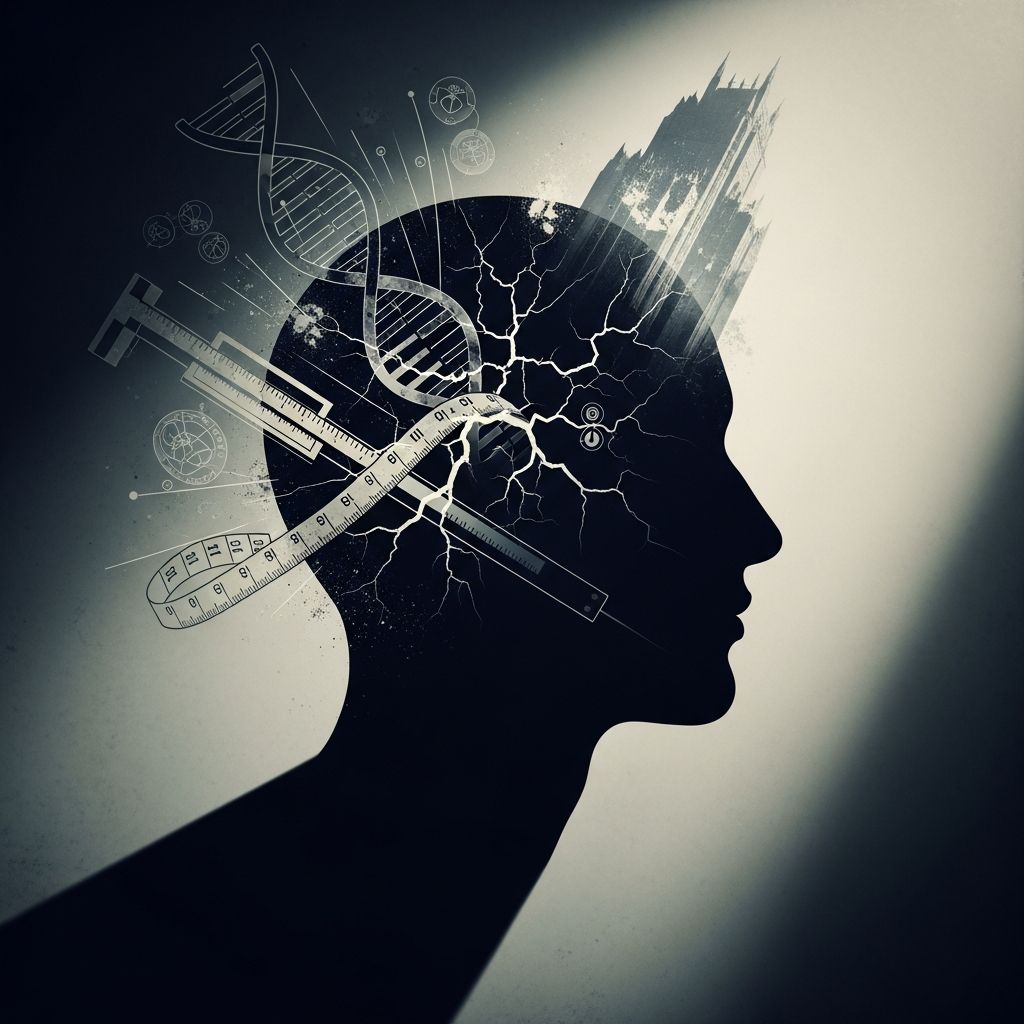
Eugenics emerged as a pseudoscientific movement in the late 19th century, aiming to enhance human genetic quality through selective breeding and restrictive policies. Though now widely discredited, it profoundly influenced laws, science, and society across nations, leading to forced sterilizations, discriminatory immigration, and ties to atrocities.
The Birth of Eugenics: Scientific Ambitions and Flawed Foundations
The concept of eugenics originated with British scientist Francis Galton, who coined the term in 1883, drawing from his cousin Charles Darwin’s theories on natural selection. Galton believed human traits like intelligence were primarily hereditary and could be improved by encouraging reproduction among the ‘fit’ (positive eugenics) and discouraging it among the ‘unfit’ (negative eugenics). He likened human improvement to animal breeding, famously stating that investing in human genetic enhancement could produce a ‘galaxy of genius.’
Galton’s ideas gained traction amid industrialization and social anxieties in Europe and America. Upper classes attributed their success to genetics rather than privilege, viewing poverty and disability as biological failings. This ‘race science’ framed biology as destiny, justifying interventions to ‘purify’ populations.
- Key Influences: Darwin’s evolution, statistical analysis of family pedigrees, and fears of urban poor and immigrants.
- Early Organizations: Britain’s Eugenics Education Society (1907, now Galton Institute) and Germany’s Society for Racial Hygiene (1905).
Eugenics Crosses the Atlantic: America’s Embrace of Genetic Control
In the United States, eugenics flourished from the early 1900s, led by figures like Charles Davenport, a Harvard-trained biologist who founded the Eugenics Record Office (ERO) in 1910 with Carnegie Institution funding. Davenport promoted the idea that traits like intelligence, criminality, and morality were strictly genetic, advocating selective breeding.
American eugenicists implemented negative measures aggressively:
- Compulsory Sterilization: By 1927, 27 states had laws sterilizing those deemed ‘feeble-minded,’ criminals, or epileptic—over 60,000 procedures by the 1970s, upheld by the Supreme Court in Buck v. Bell.
- Anti-Miscegenation Laws: Banned interracial marriage in many states to prevent ‘racial mixing.’
- Immigration Restrictions: 1924 Immigration Act limited entries from Asia, Eastern/Southern Europe, based on ‘inferior’ genetics.
Positive eugenics included ‘Better Baby’ contests at fairs, celebrating ‘fit’ families symbolically. Universities like Wisconsin-Madison taught eugenics courses until 1948.
Global Spread: Eugenics in Europe and Beyond
Eugenics wasn’t confined to English-speaking nations. By World War I, most industrialized countries had eugenics societies. Sweden and Canada enacted sterilizations; Australia promoted ‘fit’ breeding.
| Country | Key Policies | Estimated Impact |
|---|---|---|
| United States | Sterilization laws (27 states), 1924 Immigration Act | 60,000+ sterilizations |
| Germany | Racial hygiene laws, leading to Holocaust programs | Influenced Nazi policies |
| Sweden | Voluntary then compulsory sterilizations (1934-1976) | ~63,000 procedures |
| UK | Eugenics societies, limited laws | Influenced policy debates |
Germany’s movement, rooted in 1905’s Society for Racial Hygiene, emphasized Nordic superiority. American models directly inspired Nazi programs post-1933.
The Nazi Eugenics Nightmare: From Theory to Genocide
Under Hitler, eugenics morphed into state policy. The 1933 Law for the Prevention of Hereditarily Diseased Offspring mandated sterilizations, modeled on U.S. laws. The T-4 ‘euthanasia’ program killed 200,000+ disabled people, justified by propaganda posters decrying their societal cost.
Nazi racial hygiene extended to the Holocaust, targeting Jews, Roma, LGBTQ+, and others as ‘life unworthy of life.’ Post-WWII Nuremberg Trials exposed these horrors, linking them to eugenic pseudoscience. American eugenicists like Davenport had corresponded with German counterparts, providing intellectual cover.
The Downfall: Post-War Reckoning and Scientific Rejection
World War II discredited eugenics. As Nazi atrocities surfaced, U.S. public opinion shifted. The ERO closed in 1939 after Carnegie funding cuts; by 1940s, genetics advanced showing complex trait inheritance beyond simplistic eugenic models.
Key factors in decline:
- Scientific Advances: Mendelian genetics revealed environment’s role in traits.
- Ethical Outrage: Revelations of Nazi camps.
- Legal Challenges: U.S. sterilizations continued but faced lawsuits into the 1970s.
Yet, legacies persist: California’s sterilizations until 1979; recent apologies from states and institutions.
Modern Echoes: Neo-Eugenics and Ethical Debates
Today, eugenics is rejected, but debates linger in genomics. CRISPR gene editing raises ‘new eugenics’ fears—designer babies or inequality amplification. Unlike coercive past, modern focuses on voluntary choices, but equity concerns remain.
Institutions grapple with history: Genome.gov timelines educate on eugenics’ flaws; universities acknowledge past teachings. Lessons emphasize separating science from bias.
Frequently Asked Questions (FAQs)
What is eugenics in simple terms?
Eugenics is a discredited pseudoscience seeking to improve human genetics by promoting ‘superior’ reproduction and restricting ‘inferior’ ones.
Who invented eugenics?
Francis Galton coined the term in 1883, inspired by Darwin.
How many people were sterilized in the U.S.?
Over 60,000 under eugenics laws, mainly targeting the poor, disabled, and minorities.
Did Nazis get eugenics ideas from America?
Yes, U.S. sterilization laws and ERO influenced early Nazi policies.
Is eugenics still practiced today?
No, but genetic technologies spark similar ethical debates.
Key Lessons from Eugenics’ Dark Legacy
Eugenics highlights science’s vulnerability to ideology. It targeted vulnerable groups—ethnic minorities, disabled, poor—under ‘public health’ guise. Today, ethical genomics demands inclusivity, rejecting hierarchy.
Word count: 1723 (excluding metadata and references).
References
- Eugenics – Wikipedia — Wikipedia contributors. 2023-10-01. https://en.wikipedia.org/wiki/Eugenics
- A BRIEF HISTORY OF EUGENICS IN AMERICA: IMPLICATIONS … — PMC (PubMed Central). 2019-09-26. https://pmc.ncbi.nlm.nih.gov/articles/PMC6736015/
- Eugenics: Its Origin and Development (1883 – Present) — National Human Genome Research Institute (genome.gov). 2023-05-01. https://www.genome.gov/about-genomics/educational-resources/timelines/eugenics
- The legacy of eugenics — UC Berkeley Public Health. 2022-01-15. https://publichealth.berkeley.edu/articles/spotlight/research/the-legacy-of-eugenics
- Historical Issues: Grappling with Our Past — University of Wisconsin-Madison Genetics. 2021-08-10. https://genetics.wisc.edu/historical-issues-grappling-with-our-past/
- Eugenics and Scientific Racism — National Human Genome Research Institute (genome.gov). 2023-06-20. https://www.genome.gov/about-genomics/fact-sheets/Eugenics-and-Scientific-Racism

Medha Deb is an editor with a master's degree in Applied Linguistics from the University of Hyderabad. She believes that her qualification has helped her develop a deep understanding of language and its application in various contexts. Medha specializes in the areas of beauty, health, sports, and wellness and is committed to ensuring that the content on the website is…