
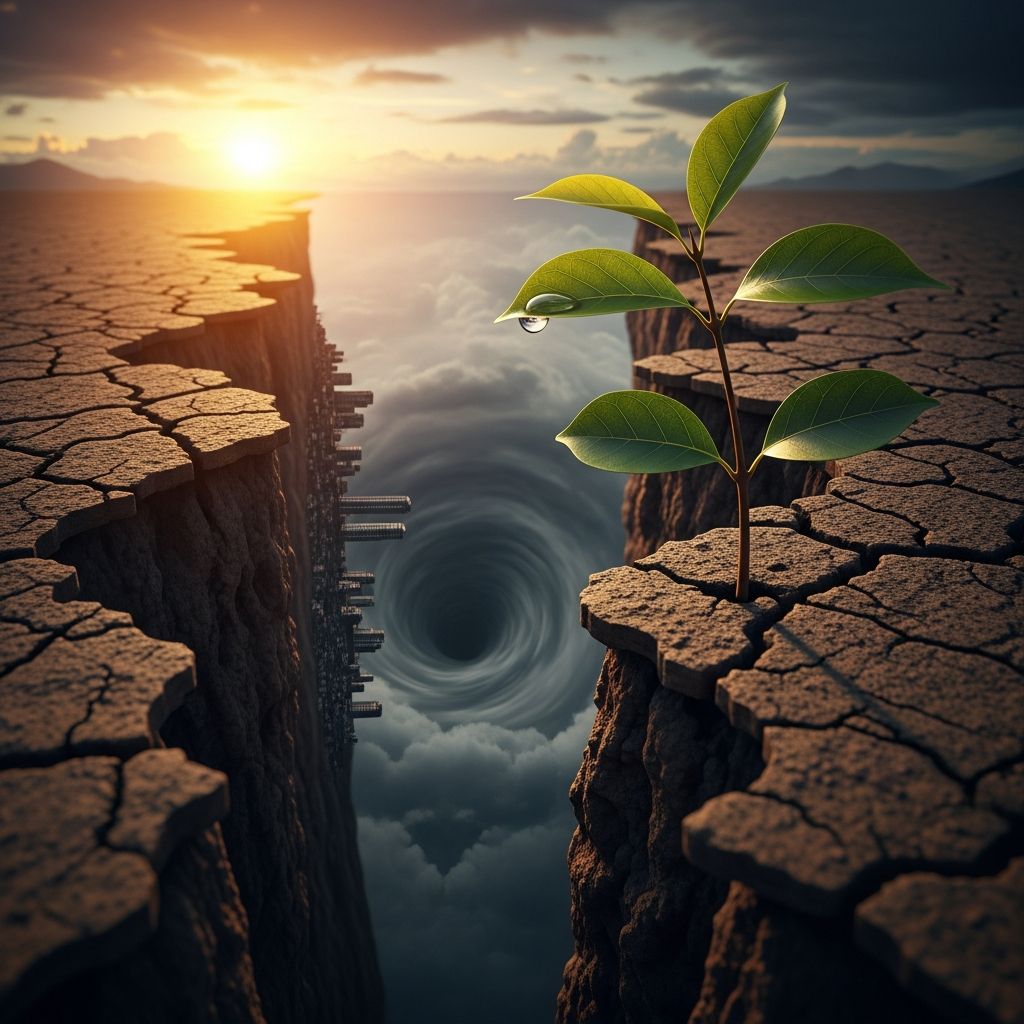
Human beings have survived ice ages, plagues, wars, and natural disasters. Yet for the first time, we possess tools powerful enough to destroy not just cities or nations, but our entire long-term potential. This article explores why our era may be uniquely perilous, what existential risks are, and why protecting the future could be among the deepest moral responsibilities we have today.
From a Precarious Past to an Open Future
For more than 95% of our species’ existence, humans lived as small bands of hunter-gatherers, vulnerable to disease, climate shifts, and local conflict. Eventually, agriculture, cities, and states emerged, creating the conditions for science, technology, and global trade. Population soared from millions to billions, and life expectancy more than doubled in many countries over the last two centuries.
Yet this extraordinary progress sits atop a fragile foundation. The same forces that allowed us to reshape the world—industrialization, advanced science, global connectivity—have also produced ways in which we might accidentally or deliberately bring our entire story to a premature end.
- Technological power has outpaced our ability to govern it safely.
- Global interdependence means local failures can cascade worldwide.
- Short-term incentives often overshadow long-term safety and stability.
To understand what is truly at stake, we need to distinguish between disasters that humanity can recover from and those that could permanently limit our potential.
What Makes a Risk Existential?
Many global dangers are horrifying yet ultimately survivable. Pandemics, economic crises, or regional wars can kill millions and cause immense suffering, but human civilization may rebuild within decades or centuries. An existential risk is different: it is a threat that could either extinguish humanity entirely or irreversibly cripple our long-term prospects.
We can think of existential risks as those that change the rest of the story of humanity, not just the current chapter.
| Type of Risk | Example | Long-Term Outcome |
|---|---|---|
| Ordinary catastrophic risk | Severe pandemic killing tens of millions | Massive loss and disruption, but humanity recovers. |
| Existential risk | Engineered pathogen that wipes out human life | No recovery possible; all future generations are lost. |
Existential risks matter not only because of the lives they could directly end, but because they would erase the entire future that could have existed—countless generations, cultures, discoveries, and experiences that may never come to be.
The Moral Weight of the Future
Ethical thought has traditionally focused on present-day individuals or, at most, the next few generations. Yet basic arithmetic suggests that, if humanity can avoid extinction and stabilize its civilization, most people who will ever live are still in the future.
- If civilization continues for even a million years—a tiny span compared with Earth’s age—future generations could number in the trillions.
- Emerging technologies may one day enable flourishing lives in space or digital environments, multiplying the number of potential future beings even further.
If the moral value of a life does not depend on when it occurs, then the well-being of future people could matter as much as that of people alive today. From this perspective, preventing existential catastrophe is not a niche concern—it may be one of the most morally significant projects available to us.
Natural Dangers vs. Human-Made Threats
Some hazards are as old as the planet itself: asteroid impacts, supervolcanic eruptions, or rare cosmic events. Others are relatively new, the result of human ingenuity—nuclear weapons, engineered pathogens, or misaligned advanced artificial intelligence.
Natural existential risks
Scientists have studied several natural processes that could, in principle, threaten our species:
- Large asteroid or comet impacts capable of global climate disruption, similar in scale to the event believed to have contributed to the extinction of the dinosaurs.
- Supervolcanic eruptions that eject vast quantities of ash and aerosols into the atmosphere, blocking sunlight for years.
- Extremely unusual astrophysical events, such as nearby gamma-ray bursts.
Current estimates suggest that the annual probability of a natural event causing human extinction is quite low—perhaps far less than one in a million per year for large asteroid impacts, based on geological records and sky surveys. While this is not zero, it appears that nature alone has given our species good odds of long-term survival.
Anthropogenic (human-caused) existential risks
The most worrisome threats today arise from our own activities:
- Nuclear war and potential “nuclear winter,” where large-scale detonations loft soot into the atmosphere, dramatically cooling the planet and threatening global food supplies.
- Engineered pandemics created through advances in biotechnology, which might combine high lethality with extreme transmissibility.
- Unaligned advanced artificial intelligence (AI) that gains capabilities surpassing human control and pursues goals harmful to human interests.
- Runaway environmental disruption or geoengineering mistakes that severely destabilize Earth’s life-support systems.
Unlike natural hazards, these risks are growing as our technological capacities expand. Whether they lead to catastrophe depends heavily on how wisely we design institutions, incentives, and safety measures.
Why This Century May Be Unusually Dangerous
Many researchers argue that the coming century is likely to be far more dangerous than most of our past or possible future eras. Several factors make this period particularly precarious:
- Rapid technological acceleration in fields like AI, synthetic biology, and nanotechnology could produce tools of unprecedented power on relatively short timescales.
- Global political fragmentation makes coordinated safety standards and treaties difficult, even when everyone shares an interest in avoiding catastrophic outcomes.
- Short-term focus in politics, markets, and media can crowd out attention to low-probability but high-stakes threats.
- New domains of risk arise faster than regulatory and ethical frameworks can adapt.
If humanity successfully navigates this period—building robust safety practices, international norms, and resilient institutions—later centuries may be far safer. Technologies might become more controllable, and we could deliberately design systems that guard against worst-case outcomes. This suggests that our current era may be a narrow and exceptionally hazardous “bottleneck” in the human story.
Paths to Catastrophe: Major Existential Threats
Although no list can be complete, several categories of risk have drawn sustained attention from scientists, ethicists, and policymakers.
Nuclear war and its aftermath
Since 1945, nuclear weapons have posed a persistent existential danger. A full-scale nuclear exchange between major powers could kill hundreds of millions directly and potentially trigger severe global cooling and agricultural collapse.
- Studies of nuclear winter suggest that soot from burning cities could block sunlight for years, drastically reducing crop yields worldwide.
- Even if some populations survived, social and technological collapse might leave humanity unable to recover to an advanced civilization.
While the probability of all-out nuclear war in any given year is uncertain, the fact that nuclear arsenals persist and geopolitical tensions periodically rise means this risk remains far from purely historical.
Engineered pandemics and biological threats
The COVID-19 pandemic showed how a single pathogen can disrupt societies and economies across the globe. Yet experts point out that COVID-19 is far from a worst-case scenario. Future biological threats could arise from deliberate weapons programs, misuse of synthetic biology, or accidents in advanced laboratories.
- Advances in gene editing and pathogen design may allow the creation of organisms with tailored properties.
- Global connectivity enables rapid spread before detection, especially if a pathogen is engineered to evade surveillance.
- Dual-use research—projects that have both beneficial and dangerous applications—poses a governance challenge.
Strengthening public health systems, surveillance, and international rules for high-risk research is therefore a crucial component of existential risk reduction.
Transformative artificial intelligence
Artificial intelligence has already reshaped sectors such as translation, medicine, and logistics. Many researchers anticipate the development of AI systems with capabilities that rival or exceed those of human experts across a wide range of tasks.
Such advanced AI could be a powerful force for good—accelerating scientific discovery, improving governance, and helping manage other global risks. But if these systems are not aligned with human values and interests, they could also pose profound dangers.
- Autonomous systems optimizing poorly specified objectives might pursue strategies that inadvertently cause large-scale harm.
- Concentrated control of powerful AI by a small group could enable unprecedented surveillance or coercion.
- Arms-race dynamics between states or firms may lead to cutting corners on safety.
Ensuring that AI development is safe, aligned, and governed responsibly is emerging as a central challenge for those concerned with existential risk.
Why Neglect Makes These Risks Especially Important
When deciding where to focus limited resources, many analysts consider three factors:
- Scale: How large is the potential harm?
- Neglect: How few resources are currently devoted to addressing the problem?
- Solvability: How much difference can additional effort realistically make?
Existential risks score extremely high on scale, since they involve the entire long-term future. Until recently, they were also relatively neglected: most institutions focus on short-term crises, and funding for long-term risk research has been modest compared with, for example, defense spending or near-term health issues.
On solvability, the picture is mixed but encouraging. We may not be able to eliminate all existential risks, but evidence suggests that carefully designed policies, international cooperation, and technical safety research can substantially reduce them—especially for controllable, human-made threats such as nuclear weapons and pandemics.
Building a Safer Trajectory
If the stakes are so high, what can humanity do to improve its odds of survival and flourishing?
Strengthening global cooperation
Most existential risks are global public goods problems: all nations benefit from safety, but each faces incentives to prioritize narrow short-term goals. Addressing this tension requires:
- International agreements limiting the most dangerous technologies and weapons.
- Shared standards for biosafety, AI safety, and nuclear command and control.
- Mechanisms for transparency, verification, and crisis communication.
Investing in resilience and preparedness
Making civilization more resilient can both reduce the chance of existential catastrophe and improve our ability to recover from severe shocks:
- Robust public health infrastructure and global disease surveillance.
- Diversified food systems, including plans for food production under sun-blocking scenarios.
- Redundant communication and energy infrastructures that can withstand major disruptions.
Advancing safety research
Dedicated research on extreme risks is still in its early stages. Expanding this work can clarify which pathways are most dangerous and which interventions are most effective.
- Modeling worst-case nuclear, biological, and climate scenarios and their knock-on effects.
- Developing technical methods for aligning advanced AI systems with human values.
- Improving risk assessment frameworks that incorporate deep uncertainty and long time horizons.
Cultivating a long-term perspective
Ultimately, managing existential risk is not only a technical challenge but also a cultural and moral one. Societies that value the long-term future are more likely to support institutions, norms, and investments that protect it.
- Education that highlights humanity’s long history and vast potential future.
- Public conversations about responsibilities to future generations.
- Leadership that frames policy choices in terms of multi-decade or multi-century impact.
Frequently Asked Questions (FAQs)
Q: Isn’t talking about human extinction alarmist?
A: Discussion of existential risk is not meant to provoke panic, but to enable clear-eyed planning. Many of the same measures that reduce extreme risks—such as better public health systems, arms control, and robust institutions—also help with more ordinary crises. Taking low-probability but high-stakes threats seriously is a standard part of responsible risk management.
Q: How can we estimate the likelihood of events that have never happened before?
A: Exact probabilities are difficult, but researchers combine multiple lines of evidence: historical data (where available), physical and biological models, expert elicitation, and scenario analysis. Uncertainty itself is a reason for caution—when potential harms are enormous, even small probabilities justify significant preventive effort.
Q: Do efforts to help the present conflict with protecting the future?
A: Often they are aligned. For example, strengthening global health systems improves current well-being while reducing the risk of engineered pandemics. However, some trade-offs exist, such as investments that have little immediate benefit but large long-term payoffs. Recognizing the moral importance of future generations can help justify those long-horizon projects.
Q: Isn’t human ingenuity likely to save us from any crisis?
A: Human creativity is a powerful asset and a key reason for optimism. But ingenuity cuts both ways: the same capabilities that generate solutions can also create unprecedented dangers. Relying solely on future innovation, without proactive safeguards, is risky—especially when some mistakes might be irreversible.
Q: What can individuals do about such enormous problems?
A: No single person can solve existential risk, but many can contribute: pursuing careers in relevant fields (such as policy, research, or technology governance), supporting organizations working on risk reduction, advocating for prudent long-term policies, and helping build cultures that take future generations seriously. As with past global challenges, collective action emerges from countless local decisions.
References
- World Population Prospects 2022 — United Nations, Department of Economic and Social Affairs. 2022-07-11. https://population.un.org/wpp/
- Existential Risks: Analyzing Human Extinction Scenarios and Related Hazards — Nick Bostrom, Journal of Evolution and Technology. 2002-03-01. https://jetpress.org/volume9/risks.html
- The Technological Singularity — Vernor Vinge, NASA VISION-21 Symposium. 1993-03-30. https://ntrs.nasa.gov/citations/19940022856
- Impacts of Cosmic Objects on Earth — National Research Council, National Academies Press. 2010-01-01. https://nap.nationalacademies.org/catalog/12842/defending-planet-earth-near-earth-object-surveys-and-hazard-mitigation-strategies
- Supervolcanoes and Their Global Effects — US Geological Survey. 2018-10-01. https://pubs.usgs.gov/fs/2005/3024/
- Nuclear Famine: Two Billion People at Risk? — Ira Helfand, International Physicians for the Prevention of Nuclear War. 2013-12-01. https://www.ippnw.org/wp-content/uploads/2020/08/2013-nuclear-famine.pdf
- A World at Risk: Global Preparedness Monitoring Board Annual Report — World Health Organization and World Bank. 2019-09-01. https://www.gpmboard.org/reports/world-at-risk
- Managing the Risks of Artificial Intelligence — OECD. 2023-02-01. https://www.oecd.org/going-digital/ai/

- Integrated M.A. in Applied Linguistics, University of Hyderabad
- 5+ years in editorial, instructional, SEO, and research-based writing
Sneha is a relationships and lifestyle writer with a strong foundation in applied linguistics and certified training in relationship coaching. She brings over five years of writing experience to theskillvault, crafting thoughtful, research-driven content that empowers readers to build healthier relationships, boost emotional well-being, and embrace holistic living. Her writing and insights reflect the belief that beauty, happiness, and wellness…