
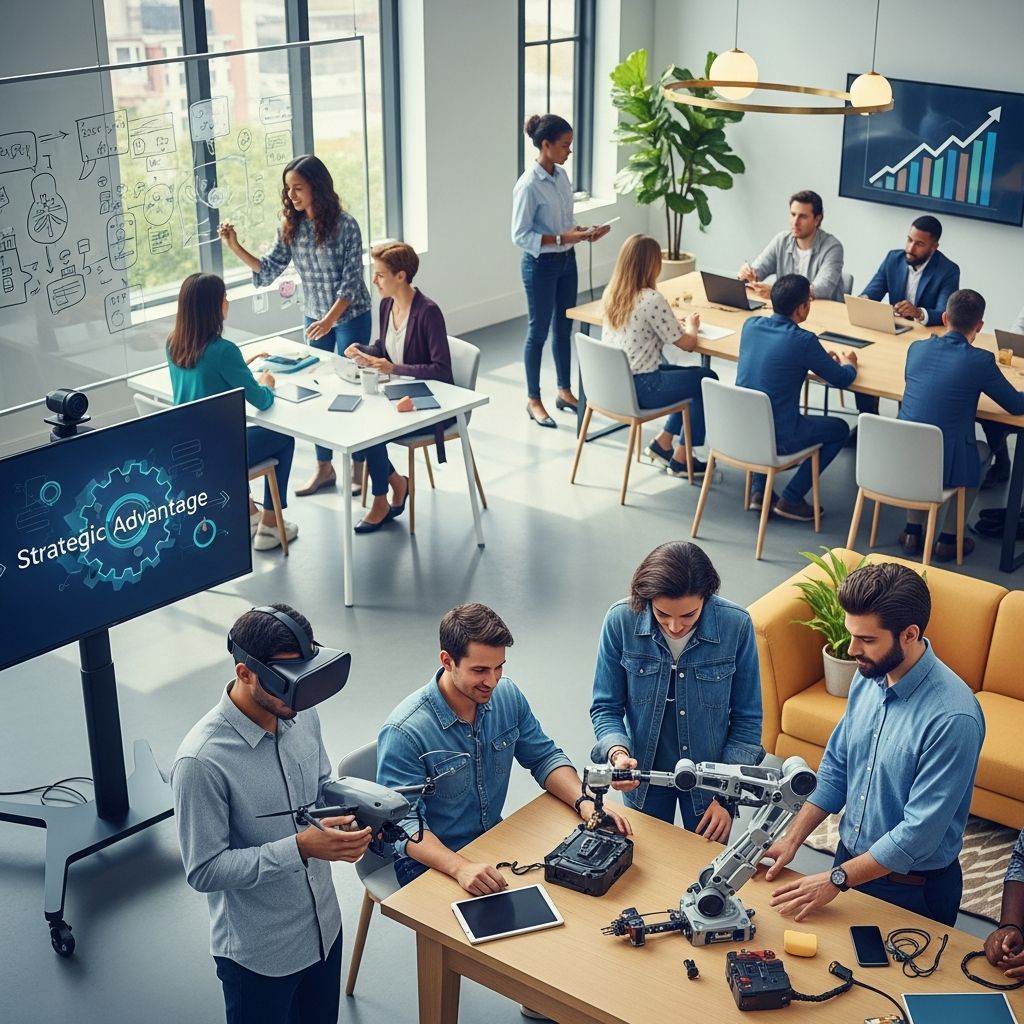
Organizations are moving away from one-off training events and slide-heavy workshops toward learning methods that create visible, lasting change. At the center of this shift is experiential learning—a development approach where people learn by doing, reflecting, and applying insights directly to real work challenges. Combined with coaching, it is quickly becoming a critical capability for companies competing in a fast-changing environment.
What Experiential Learning Really Means in the Workplace
Experiential learning is often summarized as “learning by doing,” but in a professional context it goes further than simply performing tasks.
At its core, experiential learning in organizations involves three intertwined elements:
- Real experience – Employees engage with authentic tasks, projects, and relationships instead of purely hypothetical cases.
- Structured reflection – Learners pause to analyze what happened, why it happened, and how they might act differently next time.
- Intentional application – New insights are translated into concrete behavior changes and performance goals in the flow of work.
When these elements are present, development becomes continuous, personal, and directly tied to business outcomes rather than detached from day-to-day operations.
Why Traditional Training Alone Is No Longer Enough
Conventional training programs typically rely on lectures, presentations, and information transfer. While useful for introducing concepts, this approach has critical limitations:
- Participants often forget most of what they hear when they do not apply it shortly afterward.
- Generic content does not always match the complexity and pressure of real work situations.
- Behavioral and cultural change rarely occurs after a single event, no matter how inspiring.
Experiential learning addresses these gaps by embedding learning into daily practice. Studies indicate that active, hands-on learning leads to stronger engagement, better motivation, and more durable understanding than passive approaches.
The Strategic Benefits of Experiential Learning for Organizations
When experiential learning is thoughtfully designed and supported, it creates value for both individuals and the organization. Research across education and professional settings highlights several recurring advantages.
| Organizational Priority | How Experiential Learning Contributes |
|---|---|
| Stronger performance and execution | Skills are practiced on real tasks, so learning directly improves project delivery and service quality. |
| Engagement and retention | Employees gain ownership of their development, which increases motivation and attachment to the organization. |
| Leadership pipeline | Emerging leaders handle complex assignments with coaching and feedback, accelerating readiness for bigger roles. |
| Innovation and adaptability | Safe experimentation encourages creative problem-solving and comfort with uncertainty. |
| Culture and collaboration | Cross-functional projects and reflection build empathy, communication, and shared accountability. |
Key Outcomes at the Individual Level
From the employee perspective, experiential learning often leads to:
- Deeper understanding of concepts through practical application rather than memorization.
- Improved problem-solving and critical thinking as people navigate ambiguous, real-world scenarios.
- Greater self-awareness of strengths, blind spots, and values, discovered through reflection and feedback.
- Increased confidence gained by taking initiative, experimenting, and learning from both success and failure.
- Enhanced collaboration and communication when learners work with diverse stakeholders to achieve shared goals.
The Role of Coaching in Amplifying Experiential Learning
Coaching significantly enhances the impact of experiential learning. While experience provides raw material, coaching helps people make sense of that experience, identify patterns, and translate insight into action.
Coaching strengthens experiential learning by:
- Guiding reflection – Coaches prompt employees to examine assumptions, reactions, and decisions, deepening learning from each situation.
- Linking behaviors to goals – Coaching conversations connect day-to-day experiments to broader performance and career objectives.
- Normalizing failure – A coach can frame missteps as data and opportunity, reducing fear and encouraging experimentation.
- Reinforcing accountability – Regular check-ins help learners follow through on commitments and measure progress over time.
When companies pair experiential opportunities (such as stretch projects or cross-functional assignments) with coaching, they turn everyday work into a powerful leadership laboratory.
Designing Effective Experiential Learning in Organizations
Creating high-impact experiential learning programs requires more than assigning people to new tasks. Effective design pays attention to alignment, support, and evaluation.
1. Align Experiences With Real Business Needs
Development is most powerful when experiential projects contribute visibly to strategic priorities. Examples include:
- Leading a pilot for a new product or service.
- Driving a change initiative that affects a full department.
- Taking ownership of a critical client or stakeholder relationship.
- Solving a recurring operational problem with cross-functional input.
This approach ensures that learning time also generates business value and makes it easier to secure leadership sponsorship.
2. Build in Reflection and Feedback Loops
Without reflection, experience can reinforce unhelpful habits rather than growth. Organizations can embed reflection by:
- Scheduling short debriefs at project milestones.
- Encouraging learners to keep development journals or logs.
- Using peer or group reflection sessions after major events.
- Integrating reflection questions into coaching and performance conversations.
Feedback from managers, coaches, and peers provides additional perspectives on how behaviors are perceived and where adjustments may be needed.
3. Provide Psychological Safety for Experimentation
For experiential learning to work, employees must feel safe to test new behaviors, ask questions, and admit mistakes. Organizations can support this by:
- Explicitly framing projects as learning opportunities, not only performance tests.
- Recognizing and rewarding thoughtful risk-taking, even when results are mixed.
- Encouraging leaders to share their own learning experiences and missteps.
- Separating developmental feedback from punitive consequences whenever possible.
4. Blend Digital Tools With Real-World Practice
Technology can extend the reach and consistency of experiential learning without replacing on-the-job practice.
- Virtual simulations allow employees to rehearse complex decisions in a controlled environment.
- Digital coaching platforms connect employees with professional coaches regardless of location.
- Online learning modules can prepare learners before they tackle real projects.
- Collaboration tools enable cross-border teams to work on shared challenges.
The strongest programs combine digital experiences with real-world assignments, ensuring that insights move quickly from the screen to the workplace.
Applications Across Different Talent Segments
Experiential learning is relevant at every level of the organization, but the design and focus vary by audience.
Early-Career Talent
For new graduates or early-career hires, experiential programs can accelerate the transition from theory to practice by:
- Rotating them through different departments to broaden their understanding of the business.
- Assigning them to client-facing or frontline projects with close supervision.
- Pairing them with mentors and coaches to help interpret experiences and navigate complexity.
Mid-Level Professionals
At the mid-career stage, experiential learning is often focused on influence, collaboration, and leading through others:
- Leading cross-functional teams or initiatives without formal authority.
- Driving process improvements that require negotiation and stakeholder alignment.
- Participating in action-learning teams that solve real organizational challenges.
Senior Leaders
For experienced leaders, experiential learning can emphasize strategic thinking and cultural stewardship:
- Steering high-stakes transformations, such as digitalization or restructuring.
- Engaging directly with customers, communities, or regulators to broaden perspective.
- Acting as sponsors and coaches for emerging leaders, turning their own experience into a learning asset for others.
Measuring the Impact of Experiential Learning
Organizations increasingly expect clear evidence that development investments improve performance. Experiential learning lends itself naturally to measurement because activities are tied to real work outputs.
Common ways to evaluate impact include:
- Behavioral indicators – Observable changes in how employees communicate, lead, and collaborate.
- Performance metrics – Improvements in project delivery, quality, customer satisfaction, or revenue tied to development initiatives.
- Engagement and retention data – Survey scores and turnover trends among participants compared with broader populations.
- Self-reported growth – Reflections and self-assessments that track confidence, readiness, and perceived skill development.
When experiential learning is integrated with talent processes and supported by coaching, organizations are more likely to see sustained behavior change rather than short-lived enthusiasm.
Practical Ideas to Get Started
Any organization can begin to shift toward more experiential approaches without completely overhauling existing programs. The following simple steps can create momentum:
- Convert parts of existing workshops into practice-based activities or simulations.
- Ask managers to identify one real project where each team member can take on new responsibility.
- Introduce short, structured reflection routines at the end of key meetings or milestones.
- Offer group coaching or peer learning circles to help employees process experiences collectively.
- Recognize individuals and teams who demonstrate learning agility and experimentation.
Over time, these smaller moves can build a culture where learning is not confined to classrooms but is embedded in the way work is done every day.
Frequently Asked Questions (FAQs)
Q: How is experiential learning different from on-the-job training?
Traditional on-the-job training often focuses on watching, repeating tasks, or following instructions. Experiential learning adds deliberate reflection, feedback, and goal-setting, encouraging employees to question, experiment, and improve rather than simply copy existing practices.
Q: Can experiential learning work in remote or hybrid environments?
Yes. Real projects, virtual simulations, digital collaboration tools, and online coaching all enable experiential learning in distributed teams. What matters most is that employees tackle authentic challenges and have structured opportunities to reflect, not whether they are physically co-located.
Q: Is experiential learning only suitable for high-potential employees?
Experiential learning benefits all employees, not just high potentials. Everyday problem-solving, customer interactions, and process improvements offer learning opportunities for everyone when managers cultivate reflection, feedback, and support.
Q: How much time does experiential learning require?
Experiential learning does not always require extra time; it often repurposes existing work. Short reflection moments, targeted coaching sessions, and slight redesigns of current projects can transform routine tasks into powerful development experiences.
Q: What role do managers play in experiential learning?
Managers are critical enablers. They assign stretch work, set clear expectations, provide feedback, create psychological safety, and model learning behaviors themselves. Without managerial support, experiential learning risks becoming fragmented or inconsistent.
References
- 9 key benefits of experiential learning for educators, students, and employers — Riipen. 2023-01-10. https://www.riipen.com/blog/experiential-learning-benefits
- What is Experiential Learning and Why Is It Important? — Kent State University. 2022-05-18. https://www.kent.edu/community/what-experiential-learning-and-why-it-important
- 4 Benefits of Experiential Learning for Practical Knowledge — 21K School. 2023-03-02. https://www.21kschool.com/us/blog/benefits-of-experiential-learning/
- What is Experiential Learning & How It Benefits Students — Watermark Insights. 2022-11-07. https://www.watermarkinsights.com/resources/blog/experiential-learning-benefits-students/
- 5 Benefits Of Experiential Learning In The Workplace — EdgePoint Learning. 2020-08-14. https://www.edgepointlearning.com/blog/benefits-of-experiential-learning/
- The Role of Experiential Learning on Students’ Motivation and Learning Outcomes in Chemistry Education — Farida N. H., et al., Journal of Turkish Science Education (via PubMed Central). 2021-08-30. https://pmc.ncbi.nlm.nih.gov/articles/PMC8569223/
- Experiential learning — Institute for Teaching and Learning Innovation, The University of Queensland. 2021-10-05. https://itali.uq.edu.au/teaching-guidance/teaching-practices/active-learning/experiential-learning

- Integrated M.A. in Applied Linguistics, University of Hyderabad
- 5+ years in editorial, instructional, SEO, and research-based writing
Sneha is a relationships and lifestyle writer with a strong foundation in applied linguistics and certified training in relationship coaching. She brings over five years of writing experience to theskillvault, crafting thoughtful, research-driven content that empowers readers to build healthier relationships, boost emotional well-being, and embrace holistic living. Her writing and insights reflect the belief that beauty, happiness, and wellness…