
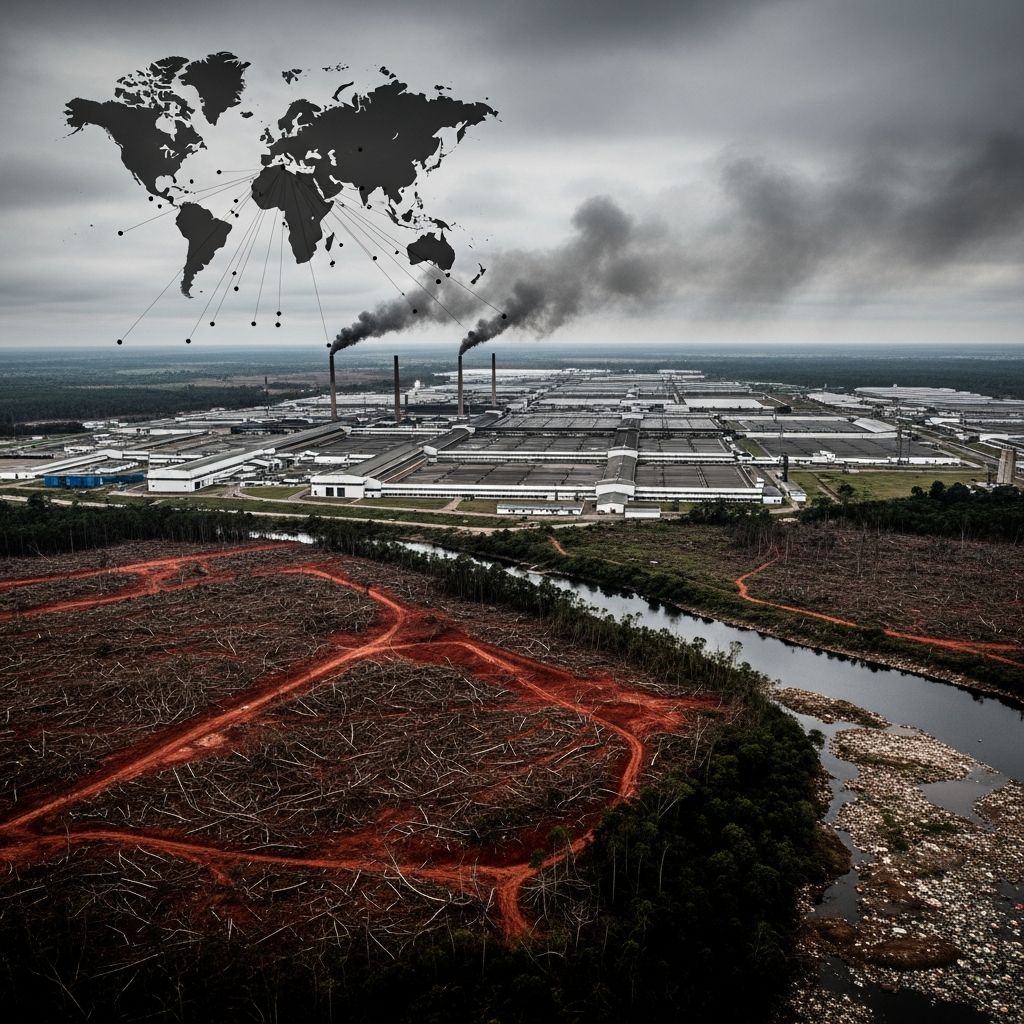
The Scope and Scale of Industrial Animal Agriculture
The modern food production system relies heavily on concentrated animal feeding operations (CAFOs), commonly referred to as factory farms. These facilities house tens of thousands of animals in confined spaces, fundamentally transforming how humanity produces protein on a global scale. The industry processes approximately 70 billion farm animals annually, creating an intricate network of production, processing, and distribution that touches nearly every aspect of our food supply.
Factory farming emerged as a response to growing food demands in the post-World War II era. The model prioritizes efficiency and cost reduction through economies of scale, consolidation of production facilities, and intensive breeding practices. Today, this system dominates protein production across North America, Europe, and increasingly in developing nations where meat consumption patterns are shifting toward industrial models.
Greenhouse Gas Emissions and Climate Contribution
One of the most significant concerns surrounding factory farming involves its contribution to atmospheric greenhouse gases. Industrial animal agriculture accounts for approximately 14.5% of all human-caused greenhouse gas emissions globally. This figure rivals the combined emissions from the transportation sector and demonstrates the scale at which livestock production influences climate dynamics.
The emissions profile of factory farming is complex and multifaceted. The industry produces three primary greenhouse gases with varying potencies. Methane, released primarily from animal digestive processes and manure decomposition, possesses more than 20 times the warming potential of carbon dioxide. Nitrous oxide, generated during manure management and fertilizer production, proves even more potent, with a global warming potential exceeding 300 times that of CO2. Carbon dioxide itself emerges from land clearing, fertilizer manufacturing, fuel consumption, and transportation logistics.
Breaking down the emissions pathways reveals the systemic nature of the problem. Feed crop production alone requires enormous quantities of chemical fertilizers, generating approximately 41 million tons of carbon dioxide annually on a global basis. The infrastructure required to operate these facilities—cooling systems, heating, ventilation, and machinery—consumes roughly 90 million tons of carbon fuel yearly. Meanwhile, habitat conversion for feed crop cultivation and grazing pastures releases hundreds of millions of additional tons of carbon through deforestation and soil disturbance.
Within the United States specifically, factory farms bear responsibility for 65% of all human-related nitrous oxide emissions. This gas remains in the atmosphere for approximately 150 years, creating a century-long legacy of warming impacts from current agricultural practices. The concentration of atmospheric nitrous oxide has climbed to roughly 16% higher levels than in 1750, reflecting the acceleration of industrial farming over recent decades.
Water Resources and Aquatic Ecosystems
Beyond atmospheric pollution, factory farming creates severe stress on freshwater systems and aquatic environments. The industry consumes staggering quantities of water to sustain livestock operations and produce feed crops. In the United States alone, industrial animal agriculture accounts for 55% of all water consumption, while domestic household water use comprises merely 5%. Globally, factory farms utilize 16% of the planet’s freshwater reserves.
The waste generated by these operations overwhelms water treatment capacities and natural ecosystem resilience. Factory farms in the United States produce an estimated 885 billion pounds of manure annually, none of which undergoes treatment or regulatory oversight by government agencies. This volume exceeds human waste production by a factor of thirteen when compared to 2012 baseline data.
Manure storage in vast lagoons or open pits allows untreated waste to permeate groundwater supplies and contaminate surface waters. When these facilities spread manure on agricultural land, nitrogen and ammonia compounds bind to precipitation and wash into waterways. This nutrient enrichment triggers algal blooms that consume dissolved oxygen as they decompose, creating hypoxic “dead zones” in estuaries and coastal areas. Heavy metals, pharmaceutical residues, and pathogens further contaminate aquatic environments, creating cascading ecological damage.
Air Quality Degradation and Human Health
The atmospheric pollution from factory farms extends beyond climate-altering greenhouse gases to include compounds that directly damage air quality in surrounding communities. Hydrogen sulfide, released from manure storage and handling, creates extreme odor problems for downwind residents while contributing to acid rain formation. Ammonia gas from animal waste and decomposition processes pollutes the air and contaminates water through precipitation-driven nitrogen deposition.
Communities adjacent to factory farming operations experience measurable health impacts and quality-of-life deterioration. Research from the University of Missouri demonstrated that factory farm facilities depress real estate values in nearby areas. The concentration of these operations in specific geographic regions means certain communities bear disproportionate pollution burdens, raising environmental justice concerns about the location of industrial agriculture in relation to vulnerable populations.
Land Use, Biodiversity, and Habitat Destruction
The feed production requirements of factory farming drive extensive land conversion and ecosystem destruction. In the United States, nearly 50% of corn production and 70% of soy cultivation serves to feed confined animals rather than directly nourishing human populations. This reality represents a significant inefficiency in global food systems, as converting plant calories to animal protein involves substantial energy and resource losses.
Land clearing for feed crops and grazing pastures eliminates wildlife habitats and biodiversity hotspots. The destruction of natural ecosystems releases carbon stored in vegetation and soils while eliminating species refuges. This habitat fragmentation undermines ecosystem resilience and accelerates species extinction trajectories in regions experiencing intensive agricultural expansion.
Economic Dimensions and Climate Vulnerability
The economic consequences of factory farming extend beyond production costs to encompass climate-related damages borne by vulnerable populations. The Global North’s factory farming operations bear responsibility for approximately $8.65 billion in damages from recent climate disasters in Africa, Asia, and South America. Despite contributing minimally to emissions, developing nations and smallholder farming communities experience the most severe climate impacts, including intensified droughts, floods, and heat waves.
By 2050, economic costs associated with climate-driven disasters could exceed $1 trillion annually as climate change intensifies. Factory farming may bear liability for over $100 billion of these expenses, yet the burden falls disproportionately on nations lacking resources for adaptation and climate resilience infrastructure. African countries alone must spend approximately $53 billion annually by 2030 to adapt to climate crisis impacts.
Global Expansion and Future Trajectory
Factory farming is not declining but rather expanding rapidly in the Global South. Meat demand projections indicate increases of 30% in Africa, 18% in Asia Pacific, and 12% in Latin America by 2030. This expansion threatens to displace traditional agroecological pastoralists and diversified independent farming systems that have sustained livelihoods for generations while maintaining lower environmental footprints.
The transition to industrial models diminishes food security for the 1.7 billion people whose livelihoods and food access depend on smallholder farming systems. Land converted to feed crop production for factory farms eliminates opportunities for local food production and wildlife habitat conservation, creating a compounding crisis of resource depletion and ecological degradation.
Manure Management and Technological Solutions
The sheer volume of manure produced by factory farming creates management challenges that the industry increasingly attempts to address through technological interventions. Manure digesters, or anaerobic digesters, capture methane released during decomposition for energy generation or flaring. While presented as climate solutions, these systems fail to address the root problem of excessive animal concentration and instead enable further intensification of confinement practices.
Unlike traditional farming where animals distribute waste naturally as they move across pastures, industrial operations concentrate animal waste at levels the land cannot sustainably absorb. Rather than reducing animal density to match ecosystem capacity, the industry invests in expensive technologies that treat symptoms while perpetuating the underlying system.
Antibiotic Resistance and Disease Transmission
Beyond environmental concerns, factory farming creates public health risks through prophylactic antibiotic administration to confined animals. The crowded, stressful conditions of CAFOs promote pathogenic disease proliferation, necessitating routine antimicrobial treatment to maintain animal survival rates. This practice accelerates the evolution of antibiotic-resistant bacteria that spread into human populations through environmental contamination and food chains.
The concentration of genetically similar animals in close proximity creates ideal conditions for rapid pathogen mutation and transmission. Historical pandemic risks, including avian influenza strains, have emerged from industrial poultry operations. The economic incentives underlying factory farming prioritize production volume over disease prevention measures that might reduce profitability.
Policy Recommendations and Sustainable Transitions
Addressing the multifaceted crisis created by factory farming requires comprehensive policy interventions. Calls for a ten-year moratorium on new factory farm approvals would halt expansion while providing time for systemic transitions. Redirecting climate finance toward adaptation and loss-and-damage funds for smallholder farmers would support sustainable agricultural development in vulnerable regions.
Supporting agroecological farming practices, diversified production systems, and pastoralist communities strengthens food security while reducing environmental impacts. These approaches maintain lower greenhouse gas emissions, preserve biodiversity, improve soil health, and sustain livelihoods for billions of people globally.
The Interconnection Between Animal Welfare and Environmental Sustainability
Factory farming’s environmental destruction intimately connects to animal welfare concerns. The confinement practices that maximize production efficiency cause severe suffering to billions of animals through overcrowding, painful mutilations, selective breeding for rapid growth that causes debilitating injuries, and prophylactic drugging. The same systemic drivers that produce environmental damage simultaneously generate animal cruelty at an unprecedented scale.
Addressing climate change and ecological degradation requires dismantling industrial confinement systems that fundamentally contradict both environmental and ethical principles. Sustainable food systems must respect both planetary boundaries and animal sentience.
Common Questions About Factory Farming Impacts
Q: How much of global emissions come from factory farming?
A: Industrial animal agriculture accounts for approximately 14.5% of all human-caused greenhouse gas emissions globally, with some estimates of methane contributions reaching 37% of total methane releases from human activities.
Q: What makes factory farm waste different from human waste?
A: Factory farm waste is typically untreated and poorly managed, unlike human waste which undergoes regulated treatment processes. Factory farms produce 13 times more waste than the entire U.S. human population, with no government regulation governing its handling or storage.
Q: How does factory farming affect water supplies?
A: Factory farming consumes 16% of global freshwater and contaminates water through manure lagoon seepage, nutrient runoff creating dead zones, and pharmaceutical residues. In the U.S., it accounts for 55% of total water consumption.
Q: Can technological solutions like anaerobic digesters solve factory farming problems?
A: Anaerobic digesters capture methane for energy but fail to address the root problem of excessive animal concentration. They enable further intensification rather than promoting systemic changes toward sustainable farming practices.
Q: What impact does factory farming have on developing nations?
A: Factory farming causes $8.65 billion in climate disaster damages in developing regions while displacing traditional farming systems that sustain 1.7 billion people, disproportionately burdening vulnerable populations with climate adaptation costs.
References
- Factory farms contribute at least 11% of emissions causing climate disasters, new report shows — World Animal Protection. https://www.worldanimalprotection.org/latest/press-releases/11-emissions-climate-disasters/
- The Massive Impact of Factory Farming on our Environment — New Roots Institute. https://www.newrootsinstitute.org/articles/massive-environmental-impacts
- Fact Sheet – Air Pollution from Factory Farms — Environmental Integrity Project. https://environmentalintegrity.org/wp-content/uploads/FACT-SHEET-on-air-pollution-from-factory-farms.pdf
- Environmental Impacts of Extreme Animal Confinement — Center for Biological Diversity. https://www.biologicaldiversity.org/takeextinctionoffyourplate/factory_farms/index.html
- Factory Farming: A Recipe for Disaster for Animals & Our Planet — American Society for the Prevention of Cruelty to Animals (ASPCA). https://www.aspca.org/protecting-farm-animals/factory-farming-environment
- 11 Facts About Factory Farms and the Environment — DoSomething.org. https://dosomething.org/article/11-facts-about-factory-farms-and-environment
- What’s Wrong With Factory Farming? — National Center for Biotechnology Information (NCBI). https://pmc.ncbi.nlm.nih.gov/articles/PMC9757169/

Medha Deb is an editor with a master's degree in Applied Linguistics from the University of Hyderabad. She believes that her qualification has helped her develop a deep understanding of language and its application in various contexts. Medha specializes in the areas of beauty, health, sports, and wellness and is committed to ensuring that the content on the website is…