
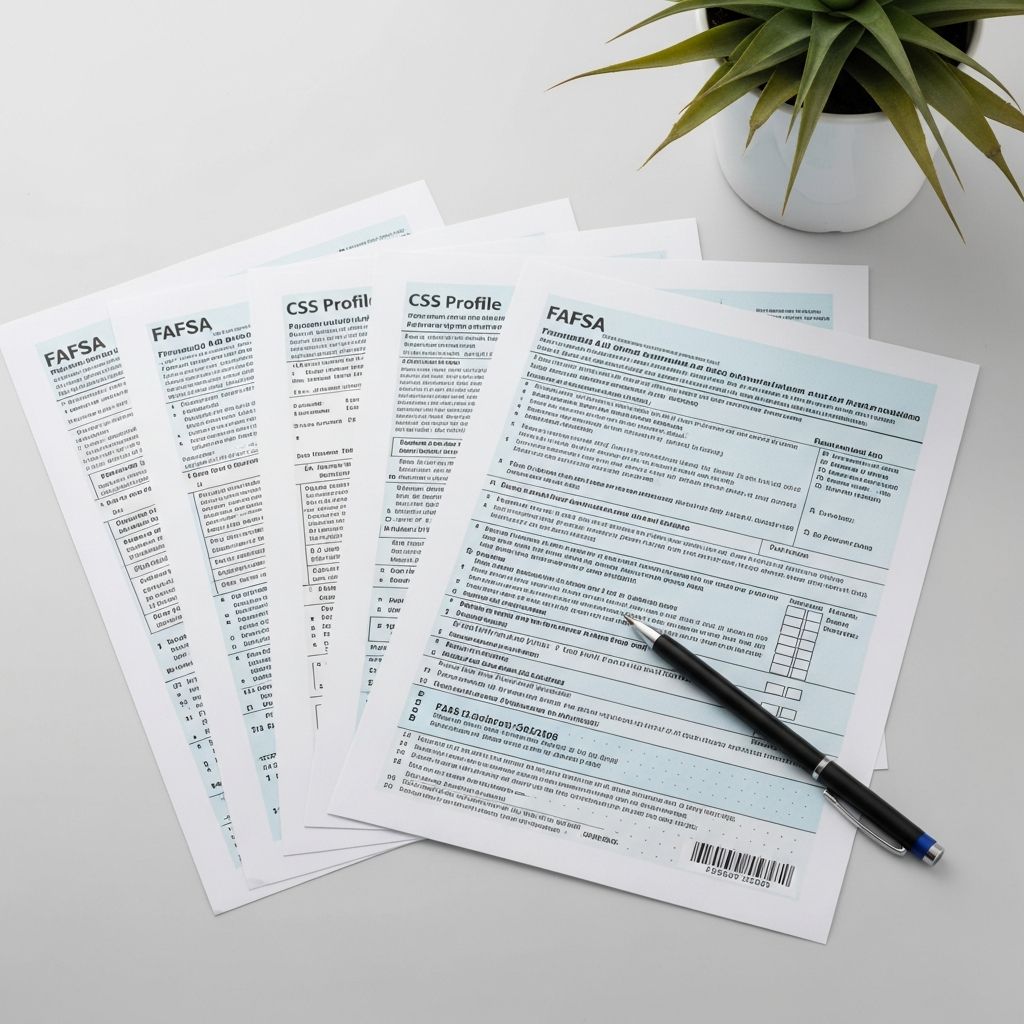
Securing financial aid is a critical step for most students pursuing higher education, and understanding the primary application forms—FAFSA and CSS Profile—is essential for accessing federal, state, and institutional funding. The Free Application for Federal Student Aid (FAFSA) opens doors to government-backed grants, loans, and work-study programs, while the CSS Profile helps colleges determine need-based aid from their own resources.
Understanding the Core Financial Aid Applications
Financial aid applications serve as the gateway to billions in annual support. The FAFSA, managed by the U.S. Department of Education, calculates your Student Aid Index (SAI) to gauge family contribution capacity. In contrast, the CSS Profile, administered by the College Board, provides a more detailed financial picture for non-federal aid.
Both forms require accurate personal, family, and financial data. Completing them early maximizes opportunities, as funds are often awarded on a first-come, first-served basis.
Step-by-Step Guide to Completing the FAFSA
The FAFSA process begins with creating an FSA ID, a secure login for studentaid.gov. This ID allows electronic signatures and access to prior-year data via the IRS Direct Data Exchange, streamlining tax information import.
Key Sections of the FAFSA Form
- Student Identity: Verify name, Social Security number, and contact details from your StudentAid.gov account.
- Personal Circumstances: Report marital status, dependents, and veteran status, which influence dependency determination.
- Demographics: Include citizenship status and household size for eligibility checks.
- Financials: Enter income, assets, and untaxed income; parents or contributors handle their sections separately.
- Colleges: List up to 20 schools; order may matter for state aid.
- Signature: All contributors (parents, spouses) must consent and sign electronically.
After submission, receive a FAFSA Submission Summary via email, detailing your SAI and next steps. Review for errors and correct promptly.
FAFSA Deadlines and Timing
For the 2026-27 award year (July 1, 2026–June 30, 2027), the form opens in late 2025. Federal deadline is June 30, 2027, but states and schools have earlier cutoffs—check studentaid.gov/fafsa-deadlines. High school seniors should apply in fall; college students annually thereafter.
| Aid Type | Typical Deadline | Priority Action |
|---|---|---|
| Federal Grants/Loans | June 30 | Apply early for max eligibility |
| State Aid | Varies by state | Check state agency site |
| Institutional Aid | School-specific | Review college financial aid page |
Navigating the CSS Profile for Institutional Aid
Unlike FAFSA, the CSS Profile is required by about 200 private colleges for their merit- and need-based awards. It dives deeper into assets like home equity, small businesses, and non-custodial parent finances, often collecting data FAFSA skips.
Access it at cssprofile.collegeboard.org after creating a College Board account. Fee waivers are available for qualifiers. List schools early, as some charge per institution.
Unique Aspects of CSS Profile
- Requires 2024 tax returns, W-2s, and detailed asset breakdowns.
- Considers situational changes like job loss or medical expenses via special circumstances form.
- Deadlines align with college admissions—often November for early decision, February for regular.
Colleges use CSS data alongside FAFSA to craft personalized aid packages, potentially including endowed scholarships unavailable via federal forms.
Preparing Documents and Information
Gather these before starting:
- SSA-1099 for Social Security benefits.
- Records of untaxed income (child support, IRA distributions).
- Bank statements, investment records, and business/farm asset details.
- 2024 federal tax returns (1040, schedules).
Use the IRS Data Retrieval Tool (DRT) on FAFSA to auto-fill tax data accurately. For CSS, manual entry is common, emphasizing precision to avoid delays.
Common Pitfalls and How to Avoid Them
Errors like mismatched names or SSNs delay processing. Contributors must complete their sections promptly—students can’t finalize without them.
- Missed Deadlines: Set calendar reminders; late apps forfeit priority funds.
- Incomplete Contributor Info: Invite parents/spouses early via email links.
- Dependency Overrides: Homeless or abused students contact aid offices for status changes.
- SAP Compliance: Maintain GPA and completion rates yearly.
After Submission: What Happens Next
Schools receive your data 3-5 days post-submission. Expect aid offers (financial aid award letters) detailing grants, loans, work-study. Review, accept/decline via school portals, and appeal if circumstances changed.
Reapply annually; SAI can shift with income changes. Explore scholarships continuously via school offices and databases.
Strategies to Maximize Your Aid Package
Beyond forms:
- Apply to multiple schools, including safeties with generous aid.
- Submit special circumstance forms for divorce, unemployment.
- Compare offers; negotiate politely with aid offices.
- Pursue private scholarships to reduce loan reliance.
Work-study provides on-campus jobs; federal loans offer better terms than private.
FAQs
What if I don’t have my tax info ready?
Use DRT later to update; submit initially with estimates, then correct.
Do both FAFSA and CSS Profile require parent info?
Yes, unless independent; non-custodial parents may need separate CSS.
Can I reuse last year’s FAFSA?
No, renew annually with updated data.
What is the SAI?
Replaces EFC; lower SAI means more need-based aid.
Are there fees?
FAFSA is free; CSS has a $25 base + $16 per school, waivable.
State and School-Specific Variations
States like California prioritize in-state publics; others tie aid to FAFSA timing. Private schools mandating CSS often meet 100% demonstrated need. Always verify via school sites.
References
- The Financial Aid Application Process — AAMC Students & Residents. 2023. https://students-residents.aamc.org/financial-aid-resources/financial-aid-application-process
- How to Complete the FAFSA — College Board BigFuture. 2025. https://bigfuture.collegeboard.org/pay-for-college/get-help-paying-for-college/fafsa/how-to-complete-the-fafsa
- The FAFSA Process — U.S. Department of Education Financial Aid Toolkit. 2026-02-01. https://financialaidtoolkit.ed.gov/tk/learn/fafsa.jsp
- Free Application for Federal Student Aid (FAFSA) — USA.gov. 2026. https://www.usa.gov/fafsa
- Steps for Students Filling Out the FAFSA Form — Federal Student Aid. 2025. https://studentaid.gov/articles/fafsa-student-steps/
- Filling Out the FAFSA Form — Federal Student Aid. 2026. https://studentaid.gov/apply-for-aid/fafsa/filling-out

Medha Deb is an editor with a master's degree in Applied Linguistics from the University of Hyderabad. She believes that her qualification has helped her develop a deep understanding of language and its application in various contexts. Medha specializes in the areas of beauty, health, sports, and wellness and is committed to ensuring that the content on the website is…