
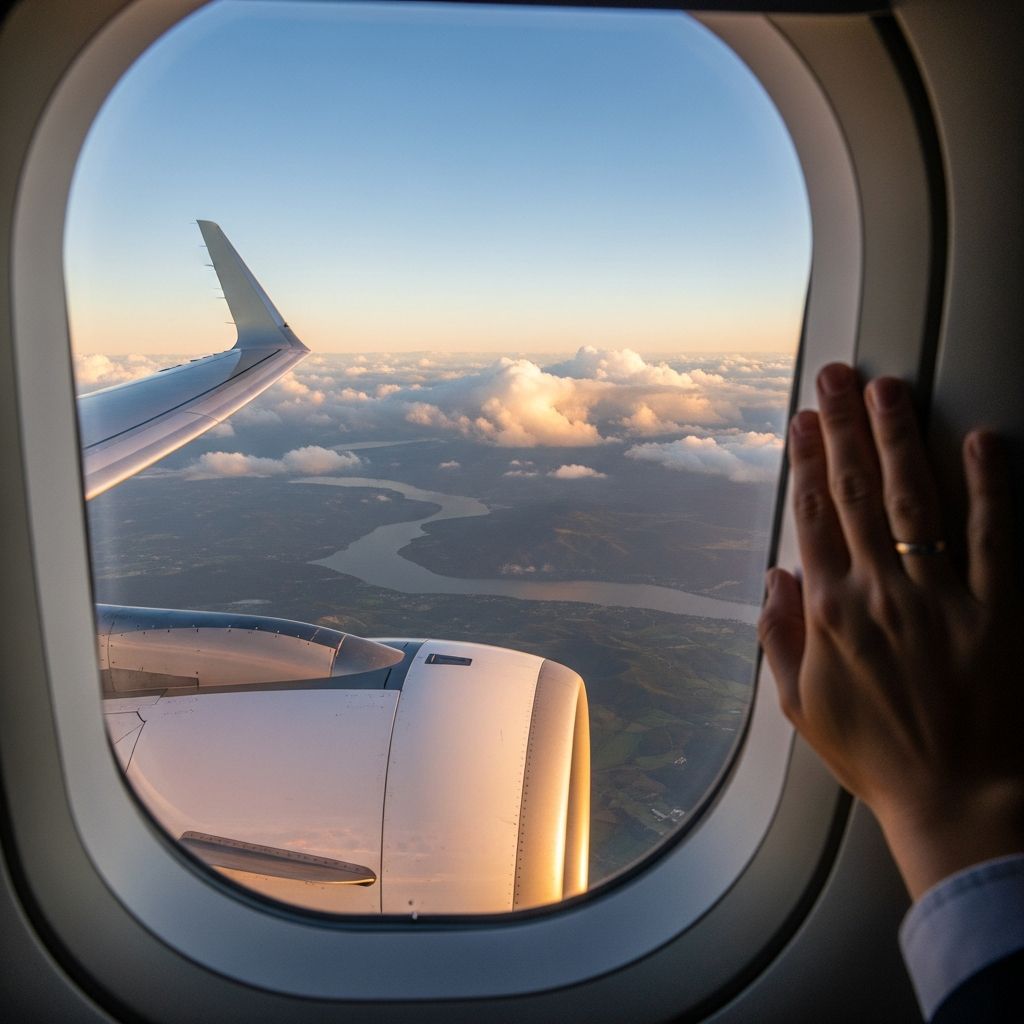
Understanding Aviophobia and Its Impact on Daily Life
Aviophobia, commonly known as fear of flying, represents one of the most prevalent specific phobias among the general population, affecting approximately 18% of individuals worldwide. This anxiety disorder extends far beyond simple nervousness about air travel; it creates a profound psychological barrier that prevents people from pursuing career opportunities, visiting loved ones, or exploring the world. The condition manifests as an intense and persistent fear that develops in anticipation of flights or during actual air travel, fundamentally altering how individuals plan their lives.
The impact of aviophobia transcends the moment of boarding an aircraft. Many sufferers experience anticipatory anxiety weeks or months before a scheduled flight, which disrupts sleep patterns, concentration, and overall quality of life. Some individuals go to extraordinary lengths to avoid air travel entirely, choosing ground transportation regardless of time constraints or practical inconvenience. This avoidance pattern reinforces the underlying fear, creating a self-perpetuating cycle that strengthens the phobia rather than diminishing it.
Identifying Physical and Psychological Symptoms
Fear of flying produces a diverse range of symptoms that can vary significantly between individuals. Understanding these manifestations helps people recognize when professional intervention becomes necessary.
Physical Manifestations
- Rapid heartbeat and palpitations during flight boarding or takeoff
- Shortness of breath and hyperventilation triggered by airport environments
- Excessive sweating even in cool cabin temperatures
- Gastrointestinal distress and nausea
- Muscle tension and trembling throughout the body
- Dizziness and vertigo sensations during flight phases
Psychological and Behavioral Symptoms
- Intense panic attacks occurring before or during flights
- Intrusive, catastrophic thoughts about airplane safety
- Pervasive avoidance of airports, flight bookings, and air travel discussions
- Persistent irrational beliefs about aviation hazards despite statistical evidence
- Heightened sense of loss of control in the aircraft cabin
- Overwhelming sense of claustrophobia in confined spaces
The Neuroscience Behind Fear Conditioning
Fear of flying develops through a process of fear conditioning where the brain learns to associate flying-related stimuli with danger. This conditioning strengthens through repeated exposure to anxiety-provoking thoughts without experiencing actual negative consequences. The amygdala, the brain’s fear center, becomes hyperactive when processing flight-related information, while the prefrontal cortex—responsible for rational thinking—shows reduced activity. This neurological imbalance explains why logical reassurance about aviation safety statistics rarely convinces someone with aviophobia.
Understanding this neurobiological foundation is crucial because it shifts the perspective from viewing aviophobia as irrational weakness to recognizing it as a learned response that can be unlearned through appropriate intervention. The brain’s plasticity allows individuals to develop new neural pathways that associate flying with safety rather than danger through evidence-based therapeutic techniques.
Cognitive Behavioral Therapy: The Gold Standard Treatment
Cognitive behavioral therapy (CBT) represents the most empirically supported and widely recommended treatment approach for aviophobia. This therapeutic modality operates on the principle that our thoughts, feelings, and behaviors interconnect, and by modifying thought patterns and behavioral responses, individuals can significantly reduce anxiety and fear.
Core Components of CBT for Flight Anxiety
The CBT approach for aviophobia typically incorporates several integrated components that work synergistically to address different aspects of the fear response:
- Cognitive Restructuring: Therapists guide clients in identifying catastrophic thoughts such as “The plane will crash” or “I’ll lose control and embarrass myself.” Through systematic examination of evidence, individuals learn to replace these distortions with balanced, realistic perspectives. For instance, “Flying is statistically safer than driving” becomes a grounding thought when anxiety escalates.
- Behavioral Experimentation: Clients develop concrete evidence against their fear-based beliefs by engaging in behavioral tests. Visiting an airport without flying, viewing aircraft up close, or watching planes take off and land provides experiential data that contradicts catastrophic predictions.
- Thought Records and Monitoring: Keeping detailed logs of anxiety-triggering situations helps identify patterns in thinking and creates distance from automatic negative thoughts. This metacognitive awareness enables individuals to observe their thoughts rather than becoming merged with them.
- Education About Anxiety: Understanding the physiology of anxiety—how the body’s fight-or-flight response produces uncomfortable but ultimately harmless sensations—demystifies the experience and reduces fear of the fear itself.
Exposure Therapy: Confronting Fear Systematically
Exposure therapy operates on a fundamental principle: repeated, prolonged contact with feared situations without experiencing negative consequences leads to habituation, where the brain gradually diminishes its threat response. For aviophobia, this therapeutic approach has demonstrated remarkable effectiveness in both research settings and clinical practice.
Types of Exposure Approaches
| Exposure Type | Description | Best For |
|---|---|---|
| Imaginal Exposure | Vividly describing or mentally rehearsing feared flight scenarios with therapist guidance | Initial anxiety reduction and cognitive preparation |
| Virtual Reality Exposure | Using simulated flight environments in a controlled therapeutic setting | Safe, accessible early-stage exposure without actual flight logistics |
| In-Vivo Gradual Exposure | Progressive real-world experiences escalating from airports to actual flights | Building genuine confidence and long-term behavioral change |
| Massed In-Vivo Exposure | Therapist accompanies client through entire flight experience, providing real-time support | Severe aviophobia requiring intensive intervention |
Virtual reality exposure therapy has emerged as a particularly valuable tool for individuals whose anxiety prevents them from engaging in real-life exposures immediately. Research demonstrates that VR simulations significantly reduce anxiety levels while providing a completely safe environment where clients can practice coping strategies. The advantage of VR lies in its controlled nature—therapists can pause, adjust intensity, and repeat specific scenarios based on individual progress.
Gradual exposure builds through a structured fear hierarchy, beginning with less anxiety-provoking activities and progressively advancing to more challenging ones. This step-wise approach prevents overwhelming the nervous system while systematically expanding the individual’s comfort zone. A typical hierarchy might progress from watching airplane videos, to visiting an airport terminal, to sitting inside a parked aircraft, to boarding a plane with the safety of returning to the gate, and finally to completing full flights.
The Role of Relaxation and Breathing Techniques
While exposure and cognitive work form the foundation of aviophobia treatment, complementary relaxation strategies help manage the physical manifestations of anxiety. These techniques provide individuals with tools to self-regulate their nervous system response.
- Diaphragmatic Breathing: Slow, deep breathing patterns activate the parasympathetic nervous system, counteracting the fight-or-flight response. The 4-7-8 technique—inhaling for four counts, holding for seven, exhaling for eight—proves particularly effective during acute anxiety episodes.
- Progressive Muscle Relaxation: Systematically tensing and releasing muscle groups reduces physical tension while providing grounding awareness of bodily sensations.
- Mindfulness Meditation: Cultivating present-moment awareness without judgment helps individuals observe anxious thoughts and physical sensations without becoming caught in catastrophic narratives.
A critical consideration: relaxation techniques should be practiced proactively rather than used as avoidance behaviors. Using relaxation exclusively to escape anxiety symptoms can inadvertently reinforce the belief that the feared situation is genuinely dangerous and requires management strategies to survive it.
Medication Considerations and Integrated Treatment
For individuals with severe aviophobia, psychopharmacological intervention combined with behavioral therapy offers a comprehensive treatment approach. Medications do not eliminate aviophobia but rather reduce anticipatory anxiety and panic symptoms to levels manageable enough for exposure work to proceed effectively.
Selective serotonin reuptake inhibitors (SSRIs) such as sertraline represent first-line pharmacological treatment for anxiety disorders, working by increasing serotonin availability in the brain. Beta-blockers can address physical symptoms like heart palpitations, while short-term benzodiazepine use may be appropriate for specific flight situations, though long-term reliance should be avoided. Collaboration between psychiatry and behavioral therapy providers ensures medication supports rather than substitutes for therapeutic work.
Practical Strategies for Managing Flight Anxiety
Beyond professional treatment, individuals can implement concrete strategies that support their anxiety management before, during, and after flights.
Pre-Flight Preparation
- Book flights during times when you feel most alert and calm
- Familiarize yourself with your specific aircraft type, seating configuration, and safety features
- Create a detailed itinerary to reduce uncertainty and increase perceived control
- Notify flight crew about your anxiety; their reassurance and information can prove invaluable
- Arrive at the airport with ample time, eliminating rushing and time-related stress
In-Flight Coping
- Engage with distraction activities such as movies, reading, or music that genuinely capture attention
- Practice grounding techniques like identifying five things you can see, four you can hear, three you can touch, two you can smell, and one you can taste
- Move around the cabin, adjusting position and engaging different muscle groups
- Connect with flight crew or fellow passengers to create social presence and reduce isolation
Specialized Treatment Programs and Resources
Many metropolitan areas offer specialized group therapy programs conducted by airport-based mental health professionals. These programs incorporate comprehensive education about aviation safety, mechanical functioning of aircraft, and threat assessment. Importantly, many conclude with a “graduation flight” where participants board an actual aircraft together, reinforcing their progress in a naturalistic setting with built-in peer support.
Professional organizations such as the Anxiety and Depression Association of America provide evidence-based resources and practitioner directories, enabling individuals to locate therapists specifically trained in phobia treatment within their geographic area.
Long-Term Success and Maintaining Gains
Research on exposure therapy outcomes demonstrates impressive long-term effectiveness, with many participants achieving the ability to fly comfortably without significant anxiety following treatment. Success depends largely on consistent practice and exposure even after initial treatment concludes. Taking occasional flights, rather than avoiding air travel following successful therapy, maintains the learned safety associations.
Cognitive change occurs gradually through accumulation of disconfirming experiences. Each flight completed without the catastrophe predicted by anxiety provides evidence that directly contradicts the phobic belief system. Over time, this accumulated evidence solidifies into a new, more accurate threat assessment.
Frequently Asked Questions
Q: How long does exposure therapy typically take to show results?
A: Most individuals begin noticing anxiety reduction within 8-12 weeks of consistent exposure-based treatment, though significant improvements often require 12-16 weeks or longer depending on phobia severity and consistency with exposure exercises.
Q: Can I overcome fear of flying without professional help?
A: While self-help approaches exist, professional guidance substantially increases success rates. Therapists help identify specific fear triggers, prevent avoidance patterns, and provide expert guidance through exposure progressions that self-directed efforts may miss.
Q: Is virtual reality exposure as effective as real-life exposure?
A: VR exposure effectively reduces anxiety and provides excellent preparation for real-life flying, though ultimate habituation typically requires actual flight experiences. VR works best as an initial step, particularly when extreme anxiety prevents real-world exposure.
Q: Will anxiety medication eliminate my fear of flying?
A: Medications reduce anxiety symptoms to manageable levels but do not cure the underlying phobia. Behavioral therapy targeting the fear itself produces lasting change, with medication supporting the therapeutic process rather than replacing it.
Q: What happens if I have a panic attack during a flight?
A: Panic attacks, while intensely uncomfortable, are not dangerous and will naturally resolve within 20-30 minutes. Coping strategies like grounding techniques, slow breathing, and reassurance from flight crew help individuals tolerate the experience, which paradoxically reduces future panic risk through exposure.
References
- How Exposure Therapy Can Help You Overcome Your Fear of Flying — MCG Works. 2024-09-13. https://mcg.works/resources/2024/9/13/how-exposure-therapy-can-help-you-overcome-your-fear-of-flying
- Fear of Flying Therapy: Flight Phobia Therapists Ontario — Virtual CBT Psychotherapy. 2024. https://www.virtualcbt.ca/therapy-blog/flight-phobia-treatment
- Exposures For Fear Of Flying — Psychology Tools. 2024. https://www.psychologytools.com/resource/exposures-for-fear-of-flying
- Overcoming Fear of Flying: A Combined Approach — National Center for Biotechnology Information (NIH). 2023. https://pmc.ncbi.nlm.nih.gov/articles/PMC10312254/
- Aerophobia (Fear of Flying): Causes, Symptoms & Treatment — Cleveland Clinic. 2024. https://my.clevelandclinic.org/health/diseases/22431-aerophobia-fear-of-flying

Medha Deb is an editor with a master's degree in Applied Linguistics from the University of Hyderabad. She believes that her qualification has helped her develop a deep understanding of language and its application in various contexts. Medha specializes in the areas of beauty, health, sports, and wellness and is committed to ensuring that the content on the website is…