
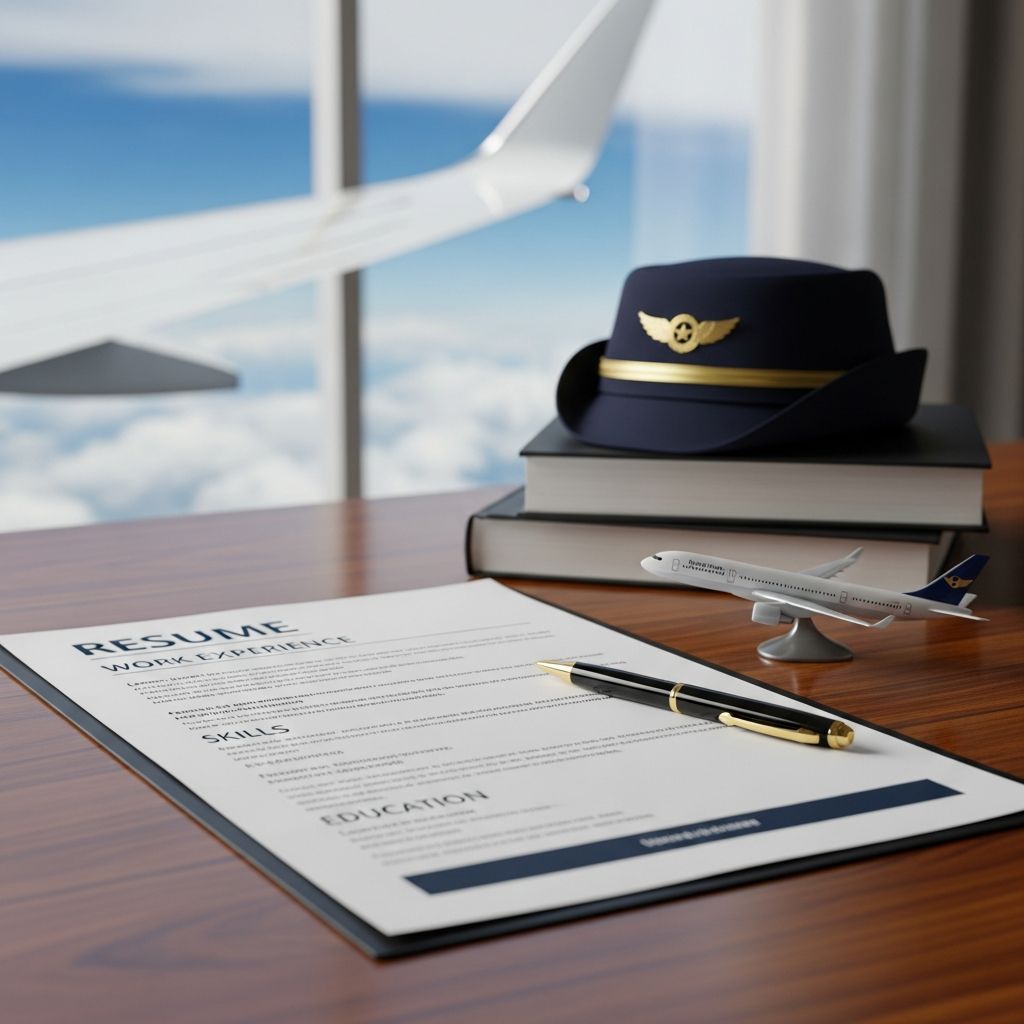
Airlines receive thousands of applications for each cabin crew opening, so a well-structured, targeted resume is essential if you want to make it to the interview stage. A strong flight attendant resume highlights your safety awareness, customer service mindset, ability to stay calm under pressure, and your readiness to represent the airline professionally.
This guide walks you through every important section of a modern flight attendant resume, explains what recruiters look for, and shows how to present your skills and experience so applicant tracking systems (ATS) and human recruiters both take notice.
Understanding What Airlines Look For
Before you start writing, it helps to understand how airlines typically evaluate cabin crew candidates. Airlines operate under strict regulatory frameworks and must prioritize safety, reliable operations, and service quality.
Across airlines, recruiters consistently look for candidates who demonstrate:
- Passenger safety and security focus – understanding procedures, remaining vigilant, and complying with aviation regulations.
- Exceptional customer service – creating a positive passenger experience, even during delays, turbulence, or difficult interactions.
- Communication skills – clear, calm, and professional verbal and non-verbal communication with passengers and crew.
- Teamwork – working seamlessly with cockpit and cabin crew in a highly coordinated environment.
- Stress tolerance – keeping composure in emergencies, medical incidents, and demanding service situations.
- Cross-cultural awareness – interacting respectfully with passengers from diverse backgrounds, often across multiple time zones.
Your resume should make each of these qualities obvious through your profile, experience bullets, and skills list, not just by stating them, but by backing them up with specific examples and measurable outcomes.
Core Structure of a Flight Attendant Resume
Most cabin crew resumes follow a clear, recruiter-friendly structure. A typical and effective order is:
- Contact information
- Professional profile or summary
- Work experience
- Education
- Skills
- Certifications and licenses
- Languages (if applicable)
- Additional sections (awards, volunteering, interests)
ATS systems used by larger airlines rely on straightforward formatting, standard headings, and relevant keywords, so keeping to a logical structure improves your chances of passing the initial screening.
Contact Details That Look Professional
The contact section seems simple, but errors here can cost you interviews. Include:
- Full name
- Professional title (e.g., Flight Attendant, Cabin Crew Applicant)
- Phone number with country code if applying internationally
- Professional email address (avoid nicknames)
- City and country (full address is usually unnecessary)
- Link to a professional profile (e.g., LinkedIn), if it’s updated and polished
Use a clean, readable font and avoid including sensitive personal data such as full date of birth or full home address, unless specifically requested in the airline’s application guidelines.
Writing a Compelling Flight Attendant Profile
The profile (or summary) is the first thing recruiters read, so it must quickly show that you match the role. A focused 3–4 line paragraph is usually enough.
What to Include in Your Profile
- Role and experience level – for example, “entry-level cabin crew candidate” or “senior flight attendant with 7+ years on long-haul routes.”
- Key strengths – safety, emergency response, premium service, leadership, or language abilities.
- Notable achievements – satisfaction ratings, awards, or performance scores that can be quantified.
- Target airline or route type – domestic, regional, long-haul, low-cost, or full-service carriers.
Avoid generic claims like “hard-working” without proof. Instead, tie your strengths to real outcomes, such as reduced complaints, faster boarding times, or recognition from supervisors.
Showcasing Experience: From Cabin to Customer Service
The experience section is where you demonstrate that you can handle the realities of cabin crew work. Airlines look for both direct flight attendant roles and closely related customer-facing positions.
How to Organize Your Experience
- List roles in reverse chronological order.
- Include job title, employer, location, and dates.
- Use 3–6 concise bullet points per role, prioritizing achievements over tasks.
Even if you have never worked on board, you can draw on experience from hospitality, retail, tourism, call centers, or healthcare—any environment where safety, empathy, and service are central.
Turning Duties into Achievements
Recruiters see countless resumes listing similar duties. Stand out by quantifying your impact wherever possible.
- Replace “responsible for serving passengers” with numbers: for example, the average number of passengers per flight or per shift.
- Mention metrics such as customer satisfaction scores, complaint reduction, on-time service, or sales of onboard products.
- Highlight participation in emergency drills, safety audits, or medical incidents and your role in resolving them.
- Use strong action verbs such as “coordinated,” “reassured,” “implemented,” “facilitated,” and “resolved.”
| Weak Experience Bullet | Stronger Experience Bullet |
|---|---|
| Helped passengers on flights. | Assisted an average of 180+ passengers per sector with seating, baggage, and special needs, contributing to consistently positive post-flight feedback. |
| Did safety demonstrations. | Delivered accurate pre-flight safety briefings and verified cabin compliance in line with company and aviation authority procedures, supporting 100% incident-free operations during tenure. |
| Served food and drinks. | Managed full-cabin meal and beverage service on short-haul routes, balancing speed and quality to maintain on-time departures while handling passenger requests. |
Education: What Matters for Cabin Crew
Most airlines require at least a secondary school or high school qualification, and some prefer or require post-secondary education in hospitality, tourism, or related fields.
List your qualifications in reverse order, including:
- Degree or diploma name
- Institution
- Location
- Graduation year (or “in progress” if not yet complete)
If you are an entry-level candidate with limited experience, you can briefly highlight coursework that aligns with customer service, communication, or safety—such as tourism management, psychology, languages, or first aid.
Skills Airlines Expect to See
A targeted skills section helps recruiters quickly verify that you meet their requirements. Combine technical knowledge with interpersonal skills and make sure your wording reflects the job description.
Technical and Safety-Related Skills
- Cabin safety procedures and emergency protocols
- First aid, CPR, AED operation (if certified)
- Evacuation techniques and equipment use
- Safety demonstrations and compliance checks
- Knowledge of airline policies and aviation regulations
Customer Service and Interpersonal Skills
- Conflict de-escalation and complaint handling
- Service in premium cabins (if applicable)
- Cross-cultural communication and empathy
- Time management during turnarounds and boarding
- Team coordination within multi-crew operations
Use the job posting to prioritize which skills to list. Many airlines use ATS to scan for specific keywords, so mirroring relevant phrasing—accurately and honestly—can improve your match rate.
Certifications, Licenses, and Specialized Training
Documenting relevant certifications reassures recruiters that you either meet or are close to meeting regulatory and company standards.
- Crew member certificates issued by national aviation authorities (where relevant).
- First Aid, CPR, and AED certifications from recognized bodies.
- Security awareness or aviation security courses.
- Customer service or hospitality training from airlines, hotels, or training centers.
List the name of each certification, the issuing organization, and the date obtained or expiry date if applicable.
Highlighting Language Skills
For global airlines, languages are a major advantage. Cabin crews often serve passengers who speak little or no English, so additional languages can significantly improve service quality and safety communication.
Include a dedicated languages section if you speak more than one language. State both the language and your level (such as “native,” “fluent,” “conversational,” or “basic”). Avoid overstating your ability—recruiters may test language skills during assessments.
Optional Sections That Strengthen Your Application
If space allows, additional sections can help differentiate you from other candidates when they genuinely reinforce your fit for the role.
Awards and Recognition
- Customer service awards
- Employee of the month or similar recognition
- Commendations from supervisors or passengers
Volunteer Experience
- Community work involving direct public interaction
- Emergency response or first-aid volunteering
- Events or hospitality roles showing responsibility and initiative
Interests and Activities
Interests can be helpful if they support the role, such as:
- Travel and cultural exploration
- Language learning
- Fitness or sports (demonstrating stamina for long shifts)
Keep this section short and professional, avoiding anything overly controversial or unrelated.
Formatting Tips for ATS and Recruiter Readability
Even strong content can be overlooked if your resume is difficult to scan. To maximize readability and compatibility with ATS software:
- Use a simple layout with clear headings and consistent spacing.
- Stick to standard fonts and avoid graphics, text boxes, or complex columns that some ATS tools cannot parse.
- Save your resume in the format requested by the airline (often PDF or DOCX).
- Keep length to one page for early-career applicants and up to two pages for experienced cabin crew.
Tailoring Your Resume to Each Airline
Different airlines emphasize different values—some focus heavily on premium service, others on efficiency and low-cost operations, and others on long-haul, multicultural experiences. Adapting your resume to each airline significantly improves your chances of being shortlisted.
To tailor effectively:
- Study the airline’s job description and corporate values on its official website.
- Reflect the same terminology (e.g., “guest” vs “passenger,” “cabin crew” vs “flight attendant”) where accurate.
- Prioritize experience from similar route types (short-haul, long-haul, charter, regional).
- Mention any familiarity with their fleet types or service standards if you have it.
Common Mistakes to Avoid
Even strong candidates sometimes lose out because of avoidable resume errors. Watch out for:
- Spelling and grammar mistakes – these raise concerns about attention to detail.
- Overly decorative designs – they can confuse ATS systems and distract from content.
- Vague responsibilities without results – always ask, “What did I improve, solve, or achieve?”
- Irrelevant detail – prioritize what proves you can keep passengers safe and comfortable.
- Inconsistent dates or job titles – discrepancies may raise red flags for recruiters.
Frequently Asked Questions (FAQs)
Q: Do I need flight experience to apply as a flight attendant?
A: Not necessarily. Many airlines hire entry-level candidates and provide training. Emphasize customer service roles, language skills, and any safety-related training you have.
Q: How long should my flight attendant resume be?
A: One page is usually best for new or mid-level applicants. Highly experienced cabin crew or those applying for senior or purser roles may reasonably use up to two pages.
Q: Which skills are most important to list?
A: Safety awareness, emergency readiness, customer service, teamwork, communication, and stress tolerance are core. Add technical skills such as first aid certification and any airline-specific systems only if you genuinely have experience with them.
Q: Should I include a photo on my resume?
A: Practices vary by region and airline. Follow the specific instructions in the job posting or the airline’s recruitment page. If in doubt, check the official guidelines, as some organizations discourage photos to reduce bias.
Q: How can I show language ability effectively?
A: Add a dedicated languages section and indicate your proficiency level for each language. If you have passed recognized language exams or use languages daily in your job, mention that briefly.
References
- 25 Flight Attendant Resume Examples and Templates for 2025 — ResumeBuilder.com. 2024-06-10. https://www.resumebuilder.com/resume-examples/flight-attendant/
- Flight Attendant Resume Template: Examples & Writing Guide [2025] — The Interview Guys. 2024-03-05. https://blog.theinterviewguys.com/flight-attendant-resume-template/
- 20 Best Flight Attendant Resume Examples and Templates for 2025 — ResumeTemplates.com. 2024-05-21. https://www.resumetemplates.com/flight-attendant-resume-examples/
- Resume for Airlines: How To Write a Cabin Crew Member Resume — Indeed Career Guide. 2023-11-15. https://www.indeed.com/career-advice/resumes-cover-letters/resume-for-airlines
- How to Write a Flight Attendant Resume That Will Get You the Job — PrepScholar. 2022-08-19. https://blog.prepscholar.com/flight-attendant-resume
- Cabin Crew Safety and Emergency Procedures — European Union Aviation Safety Agency (EASA). 2021-09-01. https://www.easa.europa.eu/en/domains/air-operations/cabin-safety

- Integrated M.A. in Applied Linguistics, University of Hyderabad
- 5+ years in editorial, instructional, SEO, and research-based writing
Sneha is a relationships and lifestyle writer with a strong foundation in applied linguistics and certified training in relationship coaching. She brings over five years of writing experience to theskillvault, crafting thoughtful, research-driven content that empowers readers to build healthier relationships, boost emotional well-being, and embrace holistic living. Her writing and insights reflect the belief that beauty, happiness, and wellness…