
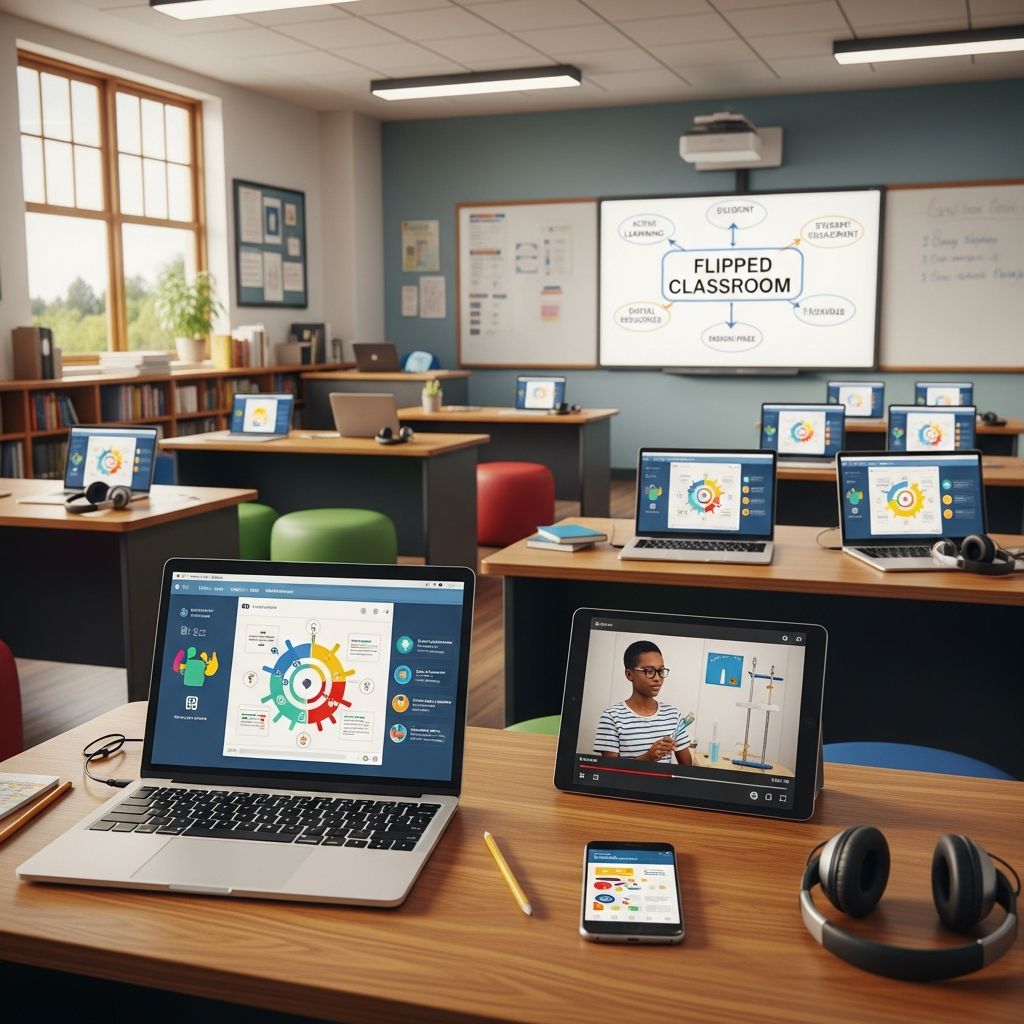
Reimagining Education Through Classroom Inversion
The traditional educational model has remained largely unchanged for decades: teachers deliver lectures during class time, while students complete assignments and practice independently at home. However, a growing number of educators are challenging this conventional approach by adopting a fundamentally different teaching strategy. The flipped classroom represents a significant shift in how educators use time, technology, and learning spaces to maximize student engagement and understanding.
At its core, the flipped classroom inverts the typical cycle of learning by asking students to engage with foundational content before arriving in class, then using valuable in-person time for interactive, collaborative, and application-based activities. This pedagogical approach recognizes that students benefit tremendously when they have opportunities to work through challenging concepts with expert guidance rather than struggling alone with homework.
Understanding the Core Philosophy Behind Classroom Flipping
The flipped classroom model operates on several fundamental principles that distinguish it from both traditional and fully online learning environments. Rather than viewing class time as a venue for information delivery, this approach treats the classroom as a space for dynamic interaction, problem-solving, and deeper cognitive engagement. The model acknowledges that while students can absorb introductory content through self-paced online resources, they benefit most from direct teacher support when applying and extending their understanding.
This philosophy stems from educational research demonstrating that active learning strategies produce superior outcomes compared to passive lecture-based instruction. By transferring the responsibility for initial content exposure to pre-class preparation, educators liberate classroom hours for higher-order thinking activities that require immediate feedback, peer collaboration, and customized scaffolding.
Essential Infrastructure: Technology Foundations for Flipped Learning
Implementing a flipped classroom successfully requires deliberate consideration of technological tools and platforms. Educators must make several interconnected decisions about how content will be created, distributed, and accessed by students.
Video Creation and Delivery Systems
While videos represent the most common form of pre-class content, they are not the only option. Educators should evaluate video recording software, editing capabilities, and hosting platforms that align with their technical comfort level and institutional resources. The goal is selecting tools that facilitate efficient content creation without requiring extensive technical expertise or expensive equipment.
Learning Management and Tracking
A robust learning management system serves as the central hub for organizing flipped classroom content, tracking student engagement with pre-class materials, and managing in-class activities. These platforms provide administrators with valuable data about student preparation levels and learning progress, enabling more targeted classroom instruction.
Access and Equity Considerations
Educators must ensure that all students have reliable access to pre-class content and required technology. This includes considering students with limited internet connectivity, varying device availability, and diverse accessibility needs. Providing multiple formats for content and offline access options demonstrates commitment to inclusive design.
Designing Engaging Pre-Class Learning Experiences
The quality of pre-class preparation directly influences the effectiveness of in-class learning activities. Rather than creating lengthy videos that replicate traditional lectures, educators should develop focused, accessible content that introduces essential concepts without overwhelming students.
Video Content Best Practices
- Maintain optimal length of 5-7 minutes to sustain student attention and encourage completion
- Structure content with clear learning objectives so students understand what they should focus on
- Use visuals, animations, and demonstrations to illustrate abstract concepts
- Include interactive elements such as embedded questions or reflection prompts
- Provide transcripts and closed captions for accessibility and comprehension support
Alternative Pre-Class Preparation Methods
While videos are popular, flipped classrooms can incorporate diverse content formats. Reading assignments, interactive simulations, online quizzes, podcasts, and digital modules all serve as viable pre-class preparation. The key is selecting formats that match content complexity and student learning preferences.
Providing students with guided note-taking templates or reflection questions encourages active engagement with pre-class materials rather than passive consumption. These scaffolds help students identify key concepts and prepare questions for classroom discussion.
Restructuring In-Class Time for Active Engagement
The fundamental purpose of flipping the classroom is creating space for meaningful in-class activities that would be impossible in a traditional lecture format. This transformation requires rethinking classroom layout, instructional approaches, and teacher roles.
Creating Flexible Physical Learning Spaces
Traditional classroom configurations with rows of fixed desks facing the teacher are poorly suited for collaborative learning activities. Flipped classrooms benefit from flexible furniture arrangements, including modular tables, movable seating, and designated areas for different types of work. This physical flexibility enables seamless transitions between partner discussions, small group projects, and whole-class interactions.
Active Learning Strategies for In-Class Time
Educators should design in-class activities that engage students in higher-order thinking and application of concepts introduced through pre-class materials. Effective activities include:
- Problem-solving exercises where students work through authentic challenges collaboratively
- Case study analysis requiring students to apply theoretical concepts to real-world scenarios
- Structured peer discussions where students explain concepts to one another and resolve misconceptions
- Laboratory experiments and hands-on demonstrations that require active participation and observation
- Project-based learning activities combining multiple skills and competencies
- Assessment and feedback cycles where students receive immediate information about their understanding
Teacher Role Transformation
In flipped classrooms, teachers transition from information deliverers to learning facilitators and guides. Educators circulate among students, observe their thinking processes, ask probing questions, identify misconceptions, and provide targeted support. This role allows teachers to differentiate instruction based on individual student needs and adjust activities in real-time based on observed learning.
Building Student Motivation and Accountability
Success in flipped classrooms depends on students completing pre-class preparation. Without engagement with foundational content beforehand, classroom activities become less effective and students may feel unprepared to participate. Educators must design systems that encourage consistent preparation without creating excessive external pressure.
Intrinsic Motivation Strategies
Students are more likely to engage with pre-class materials when they understand how preparation directly supports meaningful classroom experiences. Making explicit connections between homework completion and engaging in-class activities helps students see preparation as purposeful rather than burdensome. Additionally, allowing students some autonomy in how they prepare—offering multiple content formats or flexible deadlines within reason—increases intrinsic motivation.
External Accountability Structures
Supplementing intrinsic motivation with reasonable external structures helps ensure consistent participation. Low-stakes quizzes on pre-class content, completion checklists, or gamified incentive systems can encourage preparation. These should be designed to support learning rather than create anxiety or excessive grading burden.
Personalized Learning Pathways in Flipped Environments
One of the most significant advantages of the flipped classroom model is enabling genuinely personalized learning experiences. When teachers are no longer constrained to delivering the same lecture to all students simultaneously, they can create differentiated pathways that respond to individual learning needs.
Students who require additional support can receive extra scaffolding during class time, while advanced learners can engage in extension activities and deeper exploration. Teachers can review pre-class quiz data to identify students struggling with specific concepts and provide targeted mini-lessons or peer support during class.
Implementation Considerations and Strategic Planning
Transitioning to a flipped classroom model requires thoughtful planning and incremental implementation. Rather than attempting to flip an entire course immediately, educators often achieve greater success by pilot testing with a single unit or class section first. This allows for refinement of processes, technology workflows, and instructional activities before scaling up.
Identifying Appropriate Content for Flipping
Not all course content is equally suited to the flipped classroom model. Educators should analyze their courses to identify specific topics where students struggle most or where application-based activities would provide significant benefits. Concepts involving complex problem-solving, skill development, or collaborative learning are particularly well-suited to flipped instruction.
Communicating with Stakeholders
When implementing significant instructional changes, clear communication with students, families, and administrators is essential. Educators should explain the rationale behind flipping, describe how the model supports learning, and provide guidance on how students should approach pre-class preparation. When families understand that flipped classrooms reduce homework burden while increasing classroom support, they typically respond positively to the innovation.
Measuring Success and Iterating on Practice
Determining whether a flipped classroom implementation is achieving its goals requires systematic collection of evidence about student learning and engagement. Educators should monitor academic performance through formative and summative assessments, track student completion of pre-class materials, and gather qualitative feedback about student experiences.
Classroom observations revealing increased student engagement, more meaningful peer interactions, and higher-order thinking discussions indicate that flipping is producing desired effects. Conversely, if students consistently fail to prepare for class or struggle to engage in planned activities, adjustments to content delivery, preparation requirements, or classroom activities may be necessary.
Comparing Traditional and Flipped Classroom Models
| Aspect | Traditional Classroom | Flipped Classroom |
|---|---|---|
| Primary Class Function | Information delivery through lectures | Application and interactive learning activities |
| Homework Focus | Independent practice and application | Content exploration and preparation |
| Teacher Role | Content presenter | Learning facilitator and guide |
| Student Support During Difficult Work | Primarily independent or with peers | Direct teacher guidance and feedback |
| Differentiation Opportunities | Limited by whole-class pacing | Extensive through flexible classroom time |
Addressing Common Challenges and Misconceptions
While flipped classrooms offer significant potential, educators often encounter obstacles during implementation. Understanding common challenges helps leaders prepare realistic timelines and develop solutions.
Creating quality video content requires substantial initial time investment that can overwhelm teachers attempting to flip their courses independently. Building institutional support through professional development, curriculum specialists, or collaborative content creation among teachers can distribute this workload and improve quality. Additionally, not all video-based approaches constitute true flipped learning; simply recording lectures and assigning them as homework without redesigning classroom activities misses the fundamental purpose of classroom flipping.
Some educators worry that moving lectures outside the classroom diminishes their role or impact. In reality, the flipped model elevates teaching by shifting focus toward the complex work of supporting individual learner development, providing real-time feedback, and facilitating meaningful discussions that require expert facilitation.
Frequently Asked Questions
Q: Must all pre-class content be video-based?
A: No. While videos are common, flipped classrooms can effectively use readings, podcasts, interactive simulations, digital modules, or other formats that allow students to engage with content independently before class.
Q: How long should pre-class videos be?
A: Research suggests that 5-7 minute videos optimize student engagement and completion rates while still providing adequate content coverage for foundational learning.
Q: What if students don’t complete pre-class preparation?
A: Combining intrinsic motivation strategies with low-stakes accountability measures helps encourage preparation. Teachers should also have contingency plans, such as brief in-class reviews or peer tutoring, to support unprepared students while maintaining activity flow.
Q: Is flipped learning appropriate for all grade levels?
A: Flipped classrooms can be adapted for elementary through higher education, though implementation approaches differ. Younger students may need more scaffolding and shorter pre-class assignments, while the model generally works well for middle and high school students.
Q: How does flipped learning support struggling students?
A: During class time, teachers can provide targeted support to students who struggle, offer re-teaching of difficult concepts, and adjust activities based on observed learning. Students also benefit from peer support in collaborative activities.
Q: Can flipped classrooms work in fully online settings?
A: While flipped learning traditionally combines online content with in-person interaction, the principles can adapt to fully online courses through synchronous virtual sessions where students apply concepts with real-time instructor guidance.
References
- A Beginner’s Guide to Flipped Classroom — PowerSchool. 2024. https://www.powerschool.com/blog/a-beginners-guide-to-the-flipped-classroom/
- Flip Your Classroom — Center for Teaching & Learning, University of California, Berkeley. 2024. https://teaching.berkeley.edu/teaching-strategies/designing-your-course/flip-your-classroom
- The Flipped Classroom Guide for Teachers — eLearning Industry. 2024. https://elearningindustry.com/the-flipped-classroom-guide-for-teachers
- Flipped Classroom — Center for Teaching & Learning, University of Texas at Austin. 2024. https://ctl.utexas.edu/teaching-technology/flipped-classroom
- Flipped Classrooms — Bok Center for Teaching and Learning, Harvard University. 2024. https://bokcenter.harvard.edu/flipped-classrooms
- Flipped Classroom Pedagogy — Stanford Teaching Commons. 2024. https://teachingcommons.stanford.edu/teaching-guides/blended-and-hybrid-teaching-guide/frameworks-blended-and-hybrid-teaching/flipped

Medha Deb is an editor with a master's degree in Applied Linguistics from the University of Hyderabad. She believes that her qualification has helped her develop a deep understanding of language and its application in various contexts. Medha specializes in the areas of beauty, health, sports, and wellness and is committed to ensuring that the content on the website is…