
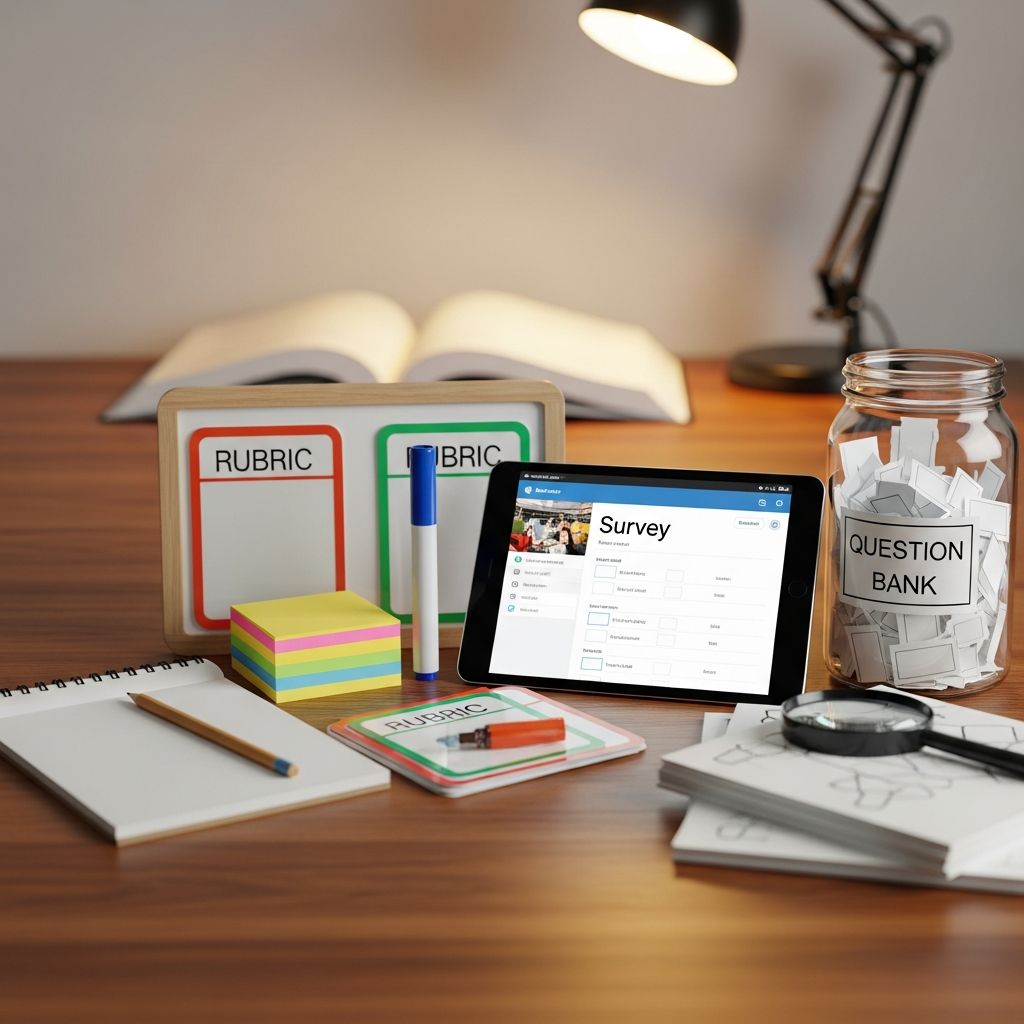
Formative assessment stands as a cornerstone of effective teaching, offering ongoing insights into student understanding to guide instruction dynamically. Unlike summative evaluations, these methods focus on process over final outcomes, enabling educators to adjust lessons in real time. This article explores a comprehensive set of strategies and digital tools to construct a versatile toolkit, drawing from proven classroom practices.
Understanding the Power of Formative Assessment
Formative assessments provide immediate feedback loops that benefit both teachers and students. They reveal misconceptions early, celebrate progress, and foster a growth mindset. Research from the National Council on Teacher Quality emphasizes that frequent, low-stakes checks correlate with higher achievement gains, particularly in math and reading. By integrating these into daily routines, teachers can personalize learning paths, ensuring no student falls behind unnoticed.
Key benefits include heightened student engagement through interactive formats and data-driven decision-making for lesson planning. For instance, quick polls can shift a class from confusion to clarity within minutes, transforming potential frustration into productive learning moments.
Essential Low-Tech Strategies for Everyday Use
Not every formative tool requires technology. Simple, analog methods prove highly effective for gauging comprehension across grade levels.
- Think-Pair-Share Discussions: Students reflect individually, discuss with a partner, then share with the group. This builds confidence and uncovers diverse perspectives.
- Mini-Whiteboard Showdowns: Equipped with dry-erase boards, students respond to prompts simultaneously. A quick visual scan reveals class-wide trends.
- Thumbs Up/Down Signals: Non-verbal cues allow instant checks without disrupting flow, ideal for large groups.
- Exit Tickets: End-of-lesson prompts like “One thing I learned today” yield concise insights for next-day adjustments.
These techniques demand minimal preparation yet deliver rich data. Teachers report using them 3-5 times per class to maintain momentum without overwhelming students.
Digital Platforms Revolutionizing Real-Time Feedback
Technology amplifies formative assessment by automating grading and analytics. Here’s a curated selection of platforms tailored for seamless integration.
| Tool | Key Features | Best For |
|---|---|---|
| Socrative | Quizzes, polls, instant reports | Quick comprehension checks |
| Kahoot! | Game-based quizzes, leaderboards | Engaging group reviews |
| Google Forms | Custom surveys, auto-grading | Flexible data collection |
| Nearpod | Interactive lessons, polls | Whole-class activities |
| Edpuzzle | Video-embedded questions | Flipped classroom models |
These tools support diverse question types, from multiple-choice to open-ended, with dashboards visualizing progress. For example, Kahoot! turns assessments into competitions, boosting participation rates by up to 30% in studies.
Creative Visual and Reflective Methods
Engage visual learners and promote metacognition through artistic and introspective approaches.
- Concept Mapping: Students diagram connections between ideas, revealing conceptual gaps visually.
- Self-Reflection Journals: Guided prompts encourage ownership of learning, such as rating confidence on a 1-5 scale.
- Gallery Walks: Display student artwork or summaries for peer feedback, combining assessment with collaboration.
- Know-Wonder-Learn Charts: Track prior knowledge evolution over units, perfect for project-based learning.
These methods not only assess but also develop higher-order thinking. A study by the U.S. Department of Education notes reflection boosts retention by 20-25%.
Collaborative and Peer-Driven Assessments
Leverage group dynamics to deepen understanding and build community.
- Flipgrid Video Responses: Short videos foster expression and peer review, enhancing communication skills.
- Padlet Boards: Virtual sticky notes enable brainstorming and real-time collaboration.
- Two Stars and a Wish: Peers highlight strengths and suggest improvements, promoting constructive feedback.
- Jigsaw Groups: Expert teams teach segments, with assessments verifying transfer of knowledge.
Peer involvement reduces teacher workload while teaching empathy and critique. Evidence from Edutopia shows collaborative formats increase accountability.
Implementing a Balanced Assessment Routine
Success lies in variety and frequency. Aim for 4-6 checks per lesson, mixing formats to suit objectives.
- Start with pre-assessments like KWL to activate knowledge.
- Mid-lesson: Use polls or whiteboards for pivots.
- End with reflections or tickets for closure.
Track patterns via spreadsheets or platform analytics. Professional learning communities (PLCs) amplify impact through shared tool trials and strategy tweaks. Workshops covering tool basics and best practices ensure smooth adoption.
Overcoming Common Challenges
Barriers like time constraints or tech access are surmountable.
- Time-Savers: Pre-build templates in Google Forms or Nearpod.
- Equity Focus: Offer offline alternatives like paper polls.
- Student Buy-In: Frame as “learning check-ins,” not tests.
- Data Overload: Prioritize 2-3 key metrics per session.
Districts providing device access report 15% higher implementation rates, per NWEA insights.
Frequently Asked Questions (FAQs)
What is the difference between formative and summative assessment?
Formative assessments monitor learning during instruction for adjustments, while summative evaluate at the end for grading.
How often should I use formative assessments?
Daily, 3-5 times per class, keeping them brief to inform teaching without fatigue.
Are digital tools necessary for effective formative assessment?
No, low-tech methods like think-pair-share work excellently; digital enhances scalability.
Can formative assessments work in large classes?
Yes, tools like Socrative or thumbs signals scale efficiently.
How do I analyze formative data quickly?
Use built-in dashboards or simple charts to spot trends in under 5 minutes.
Building Long-Term Success
A robust toolkit evolves with your practice. Experiment, gather student input, and refine annually. Integrating these 10 core ideas—low-tech basics, digital powerhouses, visuals, reflections, and collaborations—equips you to meet diverse needs. Ultimately, formative assessment cultivates resilient learners ready for any challenge.
References
- 10 of the Most Useful Formative Assessment Tools for Classrooms — EssayGrader.ai. 2023. https://www.essaygrader.ai/blog/formative-assessment-tools
- 24 Formative Assessment Examples To Add to Daily Lessons — Formative.com. 2023. https://www.formative.com/read/formative-assessment-examples
- 10 Quick Ways To Do Formative Assessment — Accelerate Learning Blog. 2023. https://blog.acceleratelearning.com/10-quick-ways-to-do-formative-assessment
- 27 Easy Formative Assessment Strategies for Gathering Evidence of Student Learning — NWEA.org. 2026-01-15. https://www.nwea.org/blog/2026/easy-formative-assessment-strategies-for-gathering-evidence-of-student-learning/
- Formative Assessment — Edutopia.org. 2023. https://www.edutopia.org/discussion/10-fun-filled-formative-assessment-ideas
- 10 Formative Assessment Ideas — TeachDaily.com. 2023. https://www.teachdaily.com/content/articles/10-formative-assessment-ideas

Medha Deb is an editor with a master's degree in Applied Linguistics from the University of Hyderabad. She believes that her qualification has helped her develop a deep understanding of language and its application in various contexts. Medha specializes in the areas of beauty, health, sports, and wellness and is committed to ensuring that the content on the website is…