
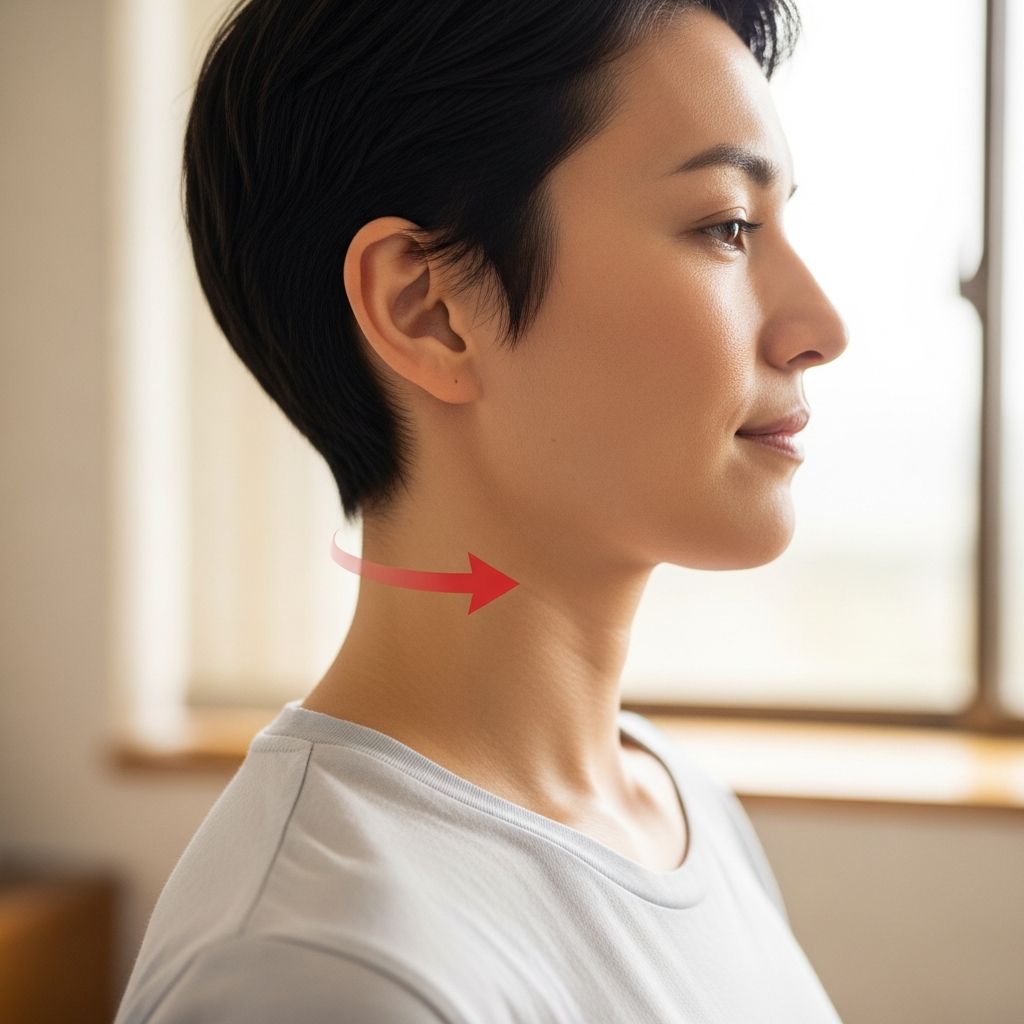
Forward head posture, often called ‘text neck,’ occurs when your head juts forward beyond its natural alignment over the shoulders, dramatically increasing strain on the cervical spine. For every inch the head shifts forward, the effective weight on the neck multiplies by 10 pounds, turning your 10-12 pound head into a 20-120 pound burden. This common issue affects millions, especially office workers and smartphone users, leading to persistent discomfort that disrupts daily life.
Why Your Neck Hurts: The Mechanics of Misalignment
Poor posture doesn’t just look bad—it rewires your body’s biomechanics. When the head tilts forward, the cervical spine bears excessive load, forcing neck muscles to overcompensate against gravity. This creates muscle overload in the upper back and shoulders, while shortening chest muscles and weakening deep neck stabilizers.
Key mechanical changes include:
- Cervical hyperflexion: Lower vertebrae tilt too far forward, upper ones hyperextend, compressing discs and joints.
- Ligament creep: Prolonged forward tilt stretches neck ligaments, leading to instability and accelerated wear.
- Imbalanced forces: Shoulders round inward, pulling the thoracic spine into kyphosis and amplifying upper body tension.
Over time, these shifts reduce neck mobility, pinch nerves, and heighten degeneration risk, such as osteoarthritis or disc herniation.
Health Risks Beyond the Neck
Forward head posture’s impact ripples through the body. Compressed nerves and vessels in the neck can trigger arm pain, numbness, and tingling—symptoms of radiculopathy. Tight muscles contribute to cervicogenic headaches, starting at the skull base and radiating forward.
| Body System | Common Symptoms | Why It Happens |
|---|---|---|
| Neck & Shoulders | Pain, stiffness, spasms | Muscle overload and joint compression |
| Head | Headaches, dizziness | Nerve impingement, reduced blood flow |
| Respiratory | Shallow breathing, weakness | Restricted diaphragm and chest expansion |
| Back | Upper/mid-back pain, sciatica | Altered spinal curves affecting lower regions |
| Balance & Circulation | Falls risk, poor circulation | Proprioceptive disruption |
Studies link this posture to respiratory muscle weakness, TMJ disorders, and even sleep apnea due to airway compression. In older adults, it correlates with low back pain and reduced expiratory strength.
Spotting the Signs: Self-Assessment Guide
Recognize forward head early to prevent escalation. Stand sideways to a mirror: your ear should align with shoulder midpoint, hip, and ankle. If your head protrudes, measure the distance—each inch signals trouble.
Daily symptoms checklist:
- Neck soreness after screen time
- Frequent headaches or jaw tension
- Rounded shoulders or ‘hunch’ appearance
- Tingling in arms/hands
- Difficulty turning head fully
Professionals use craniovertebral angle (CVA) measurements: under 50 degrees indicates significant FHP. If symptoms persist, consult a physician to rule out underlying issues like degenerative disc disease.
Daily Habits Fueling the Problem
Modern life promotes slouch: desks too low, screens misaligned, phones pulled to eyes. Prolonged flexion during work or texting causes ‘creep’—ligaments elongate under sustained stress, destabilizing vertebrae.
High-risk activities:
- Typing on laptops without external keyboards
- Crading phones while walking/talking
- Slumping in cars or on sofas
- Sleeping without neck support
Women, older adults, and ex-smokers face higher odds due to ergonomics and muscle changes. Combat this by elevating screens to eye level and setting posture reminders.
Proven Strategies to Realign Your Posture
Correction blends awareness, strengthening, and stretching. Start with ergonomic tweaks: use a standing desk converter, footrest, and chair with lumbar support. Position monitors so your gaze is neutral, elbows at 90 degrees.
Core Posture Rules:
- Chin tucked slightly (double-chin feel)
- Shoulders back and down
- Ears over shoulders
- Feet flat, weight balanced
Build habits like the ‘posture check’ every 30 minutes—roll shoulders, tuck chin, stand tall.
Targeted Exercises for Neck Relief
Evidence-based moves restore balance. Perform daily, 10-15 reps, 2-3 sets. Consult a PT for personalization.
Chin Tucks
Sit/stand tall. Glide chin straight back, creating a subtle tuck without tilting. Hold 5 seconds. Strengthens deep flexors, counters forward pull.
Scapular Retractions
Squeeze shoulder blades together like pinching a pencil. Hold 10 seconds. Opens chest, stabilizes upper back.
Neck Extensions
Gently look up, then side-to-side. Avoid forcing—focus on mobility. Use a towel under chin for resistance.
Chest Openers
Clasp hands behind back, lift arms while squeezing blades. Stretch tight pecs daily.
A multimodal approach—exercises plus traction—resolved radiculopathy in one case study after 17 weeks.
Advanced Fixes and Professional Help
For chronic cases, physical therapy employs mirror exercises, spinal manipulation, and Prolotherapy to tighten ligaments. Bracing provides temporary support but risks dependency.
Sleep smart: use contoured pillows keeping neck neutral. Weight management reduces spinal load.
Frequently Asked Questions (FAQs)
How long to fix forward head posture?
Visible improvements in 4-6 weeks with consistent effort; full realignment may take 3-6 months.
Does forward head posture cause dizziness?
Yes, via nerve/vessel compression and cerebrospinal fluid disruption.
Can kids develop text neck?
Adolescents show less severe FHP than adults, but heavy device use increases risk.
Is surgery ever needed for posture-related neck pain?
Rarely; conservative treatments succeed in most, but severe degeneration may require intervention.
What’s the best pillow for neck posture?
Orthopedic pillows cradling the neck’s curve, medium-firm for side/back sleepers.
Prevention: Long-Term Wellness Plan
Integrate movement: walk hourly, yoga for flexibility, strength training for core stability. Track progress with photos or apps. Forward head isn’t inevitable—small changes yield big gains in pain-free living.
References
- How Poor Posture Causes Neck Pain — Spine-health. 2023. https://www.spine-health.com/conditions/neck-pain/how-poor-posture-causes-neck-pain
- How Poor Posture Impacts Your Health — Catholic Health Long Island. 2024. https://www.catholichealthli.org/blog/how-poor-posture-impacts-your-health
- Forward head posture symptoms and complications — Caring Medical. 2023-05-01. https://caringmedical.com/prolotherapy-news/forward-head-posture-symptoms-and-complications-caring-medical-fort-myers/
- How Posture Affects the Muscles in Your Neck and Back — ISPP Center. 2024. https://www.isppcenter.com/blog/how-posture-affects-the-muscles-in-your-neck-and-back
- Forward Head Posture — Physiopedia. 2025. https://www.physio-pedia.com/Forward_Head_Posture
- The Relationship Between Forward Head Posture and Neck Pain — PMC (NCBI). 2019-12-20. https://pmc.ncbi.nlm.nih.gov/articles/PMC6942109/

- Integrated M.A. in Applied Linguistics, University of Hyderabad
- 5+ years in editorial, instructional, SEO, and research-based writing
Sneha is a relationships and lifestyle writer with a strong foundation in applied linguistics and certified training in relationship coaching. She brings over five years of writing experience to theskillvault, crafting thoughtful, research-driven content that empowers readers to build healthier relationships, boost emotional well-being, and embrace holistic living. Her writing and insights reflect the belief that beauty, happiness, and wellness…