
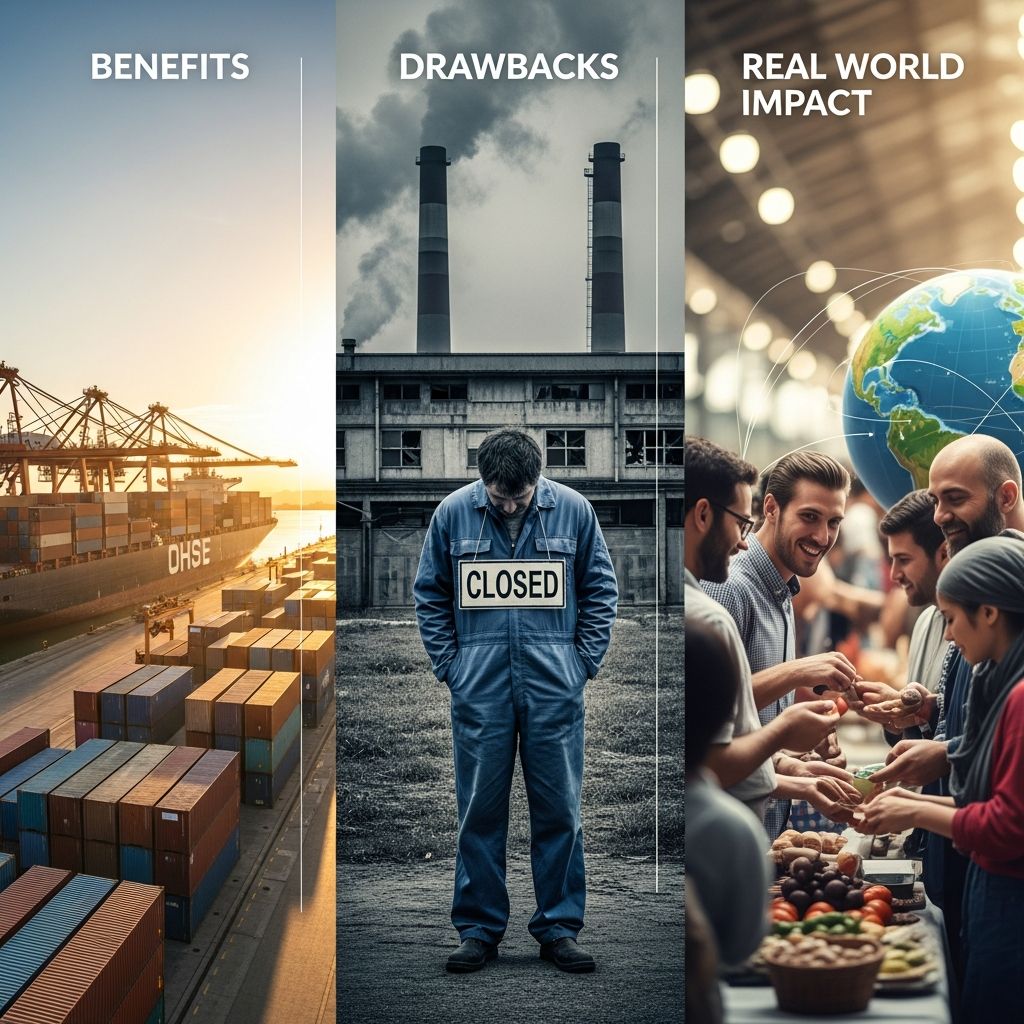
What Free Trade Actually Means
At its core, free trade refers to a system where countries allow goods and services to move across borders with minimal restrictions. This typically means low or no tariffs, few quotas, and reduced regulatory barriers that would otherwise make international commerce more difficult. The idea is not that trade is completely unregulated, but that governments agree to treat each other’s products and services fairly, without artificial protection for domestic industries.
Free trade is usually established through formal agreements between two or more nations. These agreements define what qualifies as a domestic product, how rules of origin are applied, and what standards must be met. While the goal is to expand market access and encourage specialization, the real-world outcomes are more complex than simple economic models sometimes suggest.
How Free Trade Fuels Economic Growth
One of the most widely supported arguments for free trade is its ability to boost overall economic performance. When countries can focus on producing what they do best—whether that’s advanced technology, agriculture, or manufacturing—they use their resources more efficiently. This concept, known as comparative advantage, allows nations to produce more with the same inputs, increasing total output.
Greater efficiency translates into higher productivity, which in turn supports stronger GDP growth. Businesses can scale up operations, invest in innovation, and reach larger customer bases. For consumers, this often means more choices and better value. As competition increases, companies are pushed to improve quality, reduce waste, and keep prices competitive.
Consumer Gains from Open Markets
For most households, the most visible benefit of free trade is what happens at the store. Open markets bring in a wider variety of products, from electronics and clothing to food and household goods. This variety is not just about convenience; it also gives consumers more power to choose based on price, quality, and preferences.
Because foreign producers often operate at lower costs or benefit from economies of scale, imported goods can be significantly cheaper than domestically produced equivalents. Lower prices effectively increase real incomes, allowing families to stretch their budgets further. Over time, this contributes to a higher standard of living, especially for lower- and middle-income households that spend a large share of their income on tradable goods.
Specialization and Global Supply Chains
Free trade encourages countries to specialize in specific industries where they have a natural or acquired advantage. A country with strong engineering talent might focus on high-tech manufacturing, while another with fertile land and favorable climate may dominate in agriculture. This specialization leads to deeper expertise, faster innovation, and more efficient production processes.
Modern global supply chains are built on this principle. Components for a single product—like a smartphone or car—may be designed in one country, manufactured in several others, and assembled elsewhere. While this creates interdependence, it also allows companies to optimize costs, reduce lead times, and respond more flexibly to changes in demand.
Encouraging Innovation and Competition
When domestic firms face competition from abroad, they are less likely to rest on their laurels. The threat of losing market share to more efficient or innovative foreign rivals forces companies to improve management practices, adopt new technologies, and invest in research and development.
This dynamic can lead to faster technological progress and better products for consumers. In sectors like telecommunications, computing, and consumer electronics, global competition has driven rapid innovation and falling prices over the past few decades. Even in more traditional industries, exposure to international markets can spur modernization and productivity gains.
Expanding Opportunities for Businesses
For companies, especially small and medium-sized enterprises, free trade agreements can open doors to new markets. Reduced tariffs and clearer rules make it easier and more predictable to export goods and services. This can be particularly valuable for niche producers or those with unique products that may have limited demand at home.
Access to cheaper inputs—such as raw materials, components, or intermediate goods—also lowers production costs. This can improve profit margins or allow firms to offer more competitive pricing. In some cases, it enables businesses to enter industries they otherwise couldn’t afford to operate in, fostering entrepreneurship and diversification.
Supporting Peace and International Cooperation
While harder to measure, many economists and policymakers argue that free trade contributes to more stable international relations. When countries are economically interdependent, the cost of conflict rises. Disrupting trade relationships can harm both sides, creating a strong incentive to resolve disputes through diplomacy rather than confrontation.
Trade agreements often come with broader cooperation on issues like regulatory standards, intellectual property, and labor practices. Over time, this can build trust and institutional links between nations, reinforcing peaceful and constructive engagement. Historical examples, such as the post–World War II integration of Western Europe, are often cited as evidence of how economic openness can support long-term peace.
Job Displacement and Industry Shifts
Despite its overall economic benefits, free trade can have significant negative effects on certain workers and industries. When cheaper imports flood the market, domestic producers in less competitive sectors may struggle to survive. This is especially true in labor-intensive industries like textiles, basic manufacturing, and some agricultural products.
As firms downsize or shut down, workers can lose their jobs. Even if the economy as a whole gains from trade, the losses are often concentrated in specific regions or communities, leading to long-term unemployment, reduced wages, and social strain. Retraining programs and economic diversification can help, but they are not always sufficient or timely enough to prevent hardship.
Widening Inequality Within Countries
Another major concern is that the gains from free trade are not evenly distributed. Capital owners, highly skilled workers, and those in export-oriented industries tend to benefit the most. Meanwhile, low- and medium-skilled workers in import-competing sectors may see little improvement—or even a decline—in their living standards.
This uneven distribution can exacerbate income and wealth inequality. In some advanced economies, regions that were once industrial powerhouses have experienced decades of decline as manufacturing jobs moved overseas. While national averages may show growth, the lived experience in affected communities can be one of stagnation or decline, fueling political and social tensions.
Pressure on Wages and Working Conditions
Global competition can also put downward pressure on wages, particularly in sectors exposed to international trade. Employers may resist wage increases or resist improving working conditions if they fear losing business to lower-cost producers abroad. In extreme cases, this can lead to a “race to the bottom,” where countries compete by lowering labor standards rather than improving productivity.
While trade agreements increasingly include labor provisions, enforcement remains a challenge. In some developing countries, weak institutions and limited oversight can allow poor working conditions to persist, even as exports grow. This raises ethical questions about how trade should be structured to ensure fair treatment of workers across borders.
Environmental and Resource Concerns
Free trade can also have environmental consequences. The expansion of production and transportation increases energy use, emissions, and resource extraction. In some cases, countries may relax environmental regulations to attract investment or boost exports, leading to pollution, deforestation, or overfishing.
At the same time, trade can also support environmental goals. It allows countries to import cleaner technologies, renewable energy equipment, and more efficient machinery. It can also enable specialization in less resource-intensive industries. The net environmental impact depends heavily on how trade is managed and what complementary policies are in place, such as carbon pricing, pollution controls, and sustainable development strategies.
Challenges for Small and Local Businesses
For small and local businesses, free trade presents a mixed picture. On one hand, it can reduce the cost of imported inputs and open up export opportunities. On the other hand, it exposes them to intense competition from large multinational firms that benefit from economies of scale, global supply chains, and aggressive pricing strategies.
Local producers, especially in agriculture or artisanal sectors, may find it difficult to compete with mass-produced imports, even if their products are of high quality. This can lead to market concentration, reduced diversity in local economies, and the erosion of traditional industries. Supportive policies—such as access to finance, technical assistance, and targeted trade promotion—can help small businesses adapt, but they are not always available or effective.
Loss of Policy Autonomy and Sovereignty
Participating in free trade agreements often requires countries to accept binding rules on tariffs, subsidies, regulations, and dispute resolution. While this can create a more predictable environment for business, it can also limit a government’s ability to protect certain industries, support strategic sectors, or respond to domestic crises.
For example, a country may be restricted from imposing temporary tariffs to shield a struggling industry or from providing subsidies to promote green energy. Dispute settlement mechanisms can override national laws if they are found to violate trade rules, raising concerns about democratic accountability and national sovereignty. Balancing international commitments with domestic policy goals remains a key challenge for policymakers.
Dependency and Geopolitical Risks
Heavy reliance on international trade can make economies vulnerable to external shocks. Supply chain disruptions, political conflicts, trade wars, or sudden changes in global demand can have serious consequences for countries that depend heavily on exports or imports of critical goods.
This became especially evident during recent global crises, such as the pandemic and geopolitical tensions, which exposed the risks of over-concentration in certain supply chains. While diversification and strategic stockpiling can reduce some of these risks, they also add complexity and cost. Policymakers must weigh the benefits of efficiency against the need for resilience and security.
Intellectual Property and Innovation Protection
Modern trade agreements increasingly include strong intellectual property (IP) protections, covering patents, trademarks, copyrights, and trade secrets. These provisions are intended to encourage innovation by ensuring that creators and inventors can benefit from their work.
However, IP rules can also create tensions. In some cases, they may limit access to essential medicines, educational materials, or digital technologies, particularly in lower-income countries. Striking the right balance between rewarding innovation and ensuring broad access remains a contentious issue in international trade negotiations.
Key Trade-Offs in Practice
Free trade is not a simple “good” or “bad” policy; it involves trade-offs that must be carefully managed. The table below summarizes some of the main benefits and challenges:
| Aspect | Benefits | Challenges |
|---|---|---|
| Economic Growth | Higher productivity, increased GDP, more efficient resource use | Growth may not be evenly distributed; some regions or sectors may decline |
| Consumers | Lower prices, greater variety, improved standards of living | Potential loss of local products and cultural diversity |
| Workers | New jobs in export sectors, higher demand for skilled labor | Job losses in import-competing industries, wage pressure |
| Businesses | Access to larger markets, cheaper inputs, growth opportunities | Increased competition, pressure on small/local firms |
| Environment | Access to cleaner technologies, potential for greener specialization | Risk of increased emissions, resource depletion, and regulatory race to the bottom |
Designing Better Trade Policies
To maximize the benefits of free trade while minimizing its downsides, governments need to adopt complementary policies. These might include:
- Strong social safety nets and unemployment insurance to support displaced workers.
- Active labor market policies, such as retraining programs and job placement services.
- Investment in education and skills development to prepare workers for high-value industries.
- Environmental regulations and climate policies to ensure that trade does not come at the expense of sustainability.
- Support for small and medium enterprises to help them compete and innovate.
- Transparent and inclusive trade negotiations that consider the interests of all stakeholders, not just large corporations.
FAQs About Free Trade
Does free trade always lead to job losses?
No, free trade does not always cause net job losses. While some jobs in import-competing industries may be lost, new jobs are often created in export-oriented sectors and in industries that benefit from cheaper inputs. The overall impact on employment depends on how well the economy adjusts and what supporting policies are in place.
Who benefits the most from free trade?
Free trade tends to benefit consumers through lower prices and greater choice. Businesses that export or rely on imported inputs also gain. Within countries, the gains are often largest for capital owners and highly skilled workers, while low- and medium-skilled workers in vulnerable sectors may see fewer benefits or even losses.
Can free trade harm the environment?
Free trade can increase environmental pressures through higher production, transportation, and resource use. However, it can also support environmental goals by enabling access to cleaner technologies and encouraging specialization in less polluting industries. The net effect depends on how trade is combined with environmental policies.
Are trade agreements the same as free trade?
Trade agreements are the legal frameworks that establish free trade between countries, but they are not pure free trade. They include specific rules on tariffs, quotas, intellectual property, labor, and environmental standards. These agreements can vary widely in scope and depth, and they often reflect political compromises as much as economic principles.
How can countries protect workers while still benefiting from trade?
Countries can protect workers by investing in education and skills, providing strong social safety nets, supporting retraining and relocation programs, and enforcing labor standards. Well-designed trade policies, combined with domestic reforms, can help ensure that the gains from trade are more widely shared.
References
- Free Trade Agreements: Overview and Economic Impact — International Trade Administration, U.S. Department of Commerce. 2023. https://www.trade.gov/free-trade-agreement-overview
- Winners and Losers from Trade — Federal Reserve Bank of Cleveland. Economic Commentary, 2019. https://www.clevelandfed.org/publications/economic-commentary/2019/ec-201915-winners-and-losers-from-trade
- The Benefits of Free Trade: A Primer — Peterson Institute for International Economics. 2022. https://www.piie.com/research/piie-charts/benefits-free-trade-primer

- Integrated M.A. in Applied Linguistics, University of Hyderabad
- 5+ years in editorial, instructional, SEO, and research-based writing
Sneha is a relationships and lifestyle writer with a strong foundation in applied linguistics and certified training in relationship coaching. She brings over five years of writing experience to theskillvault, crafting thoughtful, research-driven content that empowers readers to build healthier relationships, boost emotional well-being, and embrace holistic living. Her writing and insights reflect the belief that beauty, happiness, and wellness…