
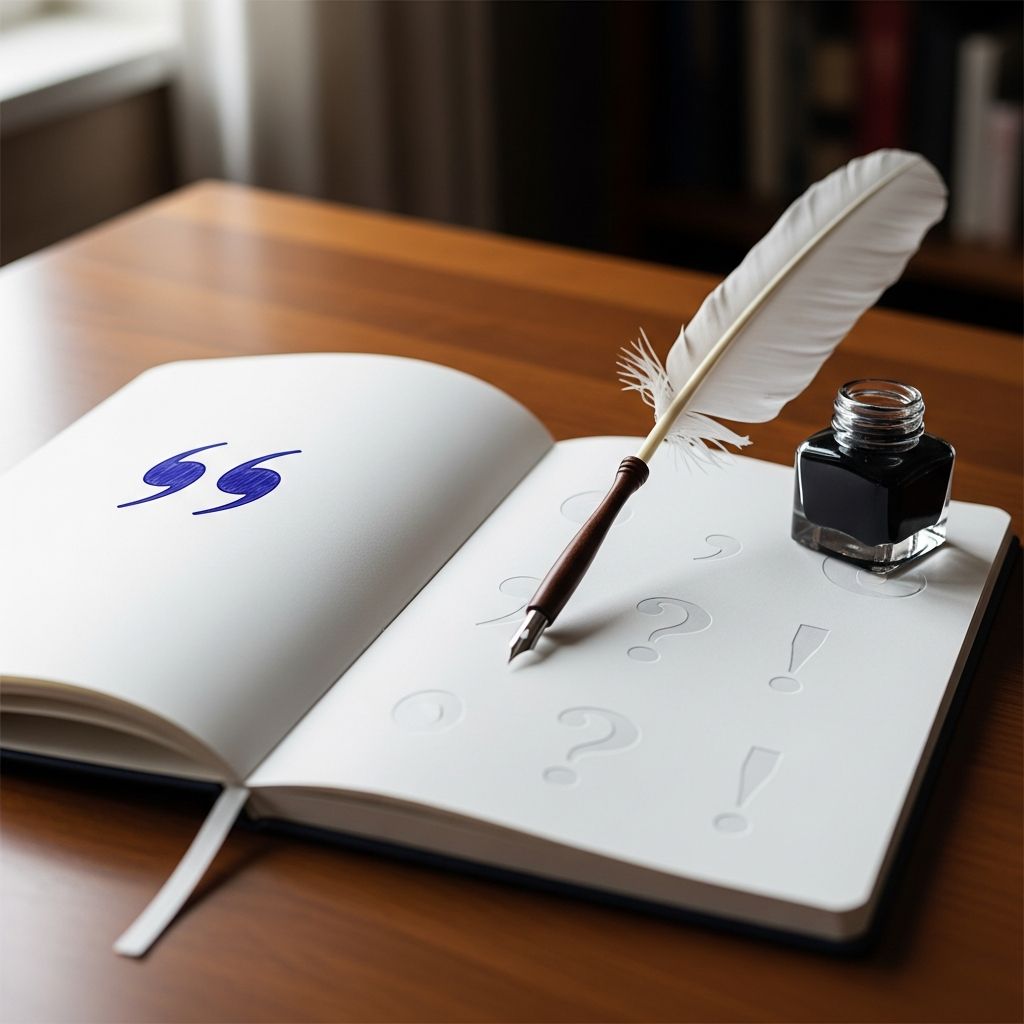
French punctuation follows distinct conventions that set it apart from English, particularly in spacing and symbol usage. These rules ensure clarity, rhythm, and elegance in written communication, making them essential for language learners and professional writers alike.
Core Principles of French Typographic Spacing
One of the most striking differences in French writing is the handling of spaces around punctuation. Unlike English, where spaces precede only certain marks, French requires a space before and after several key symbols. This applies to two-part punctuation like colons, semicolons, exclamation points, question marks, and guillemets. The space before these marks is often a non-breaking space to prevent awkward line breaks.
For simpler marks such as periods and commas, the rule aligns more closely with English: no space before, but one space after. This consistency helps maintain readability while highlighting French’s unique style.
Essential Punctuation Symbols and Their French Names
French has specific names for its punctuation marks, which reflect their form and function. Understanding these terms is crucial for dictation, proofreading, and advanced study.
| Symbol | French Name | English Equivalent | Key Usage Note |
|---|---|---|---|
| . | Le point (final) | Period | Ends declarative sentences; space after only. |
| , | La virgule | Comma | Separates clauses; no space before. |
| : | Les deux-points | Colon | Introduces lists or quotes; space before and after. |
| ; | Le point-virgule | Semicolon | Links related clauses; space before and after. |
| ! | Le point d’exclamation | Exclamation mark | Expresses emphasis; space before and after. |
| ? | Le point d’interrogation | Question mark | Denotes questions; space before and after. |
| « » | Les guillemets | Quotation marks | Enclose dialogue; spaces around text. |
| … | Les points de suspension | Ellipsis | Indicates omission; space after. |
| ’ | L’apostrophe | Apostrophe | Elides vowels; no spaces. |
| – | Le tiret or trait d’union | Dash/Hyphen | Hyphens join words; dashes separate thoughts. |
This table summarizes the primary marks, drawing from standard typographic practices.
Detailed Guide to Individual Punctuation Marks
The Period: Le Point Final
The period signals the end of a complete thought, much like in English. It is followed by a single space and capitalization of the next word. In abbreviations, a mid-sentence period may appear without a following space if integrated, but full stops always take one afterward. Example: Je vais à Paris. C’est magnifique.
Commas: La Virgule
Commas in French separate items in lists, introduce subordinate clauses, or mark pauses. Decimal points use commas instead of periods, e.g., 3,14 for pi. No space precedes the comma. Example: Nous mangeons des pommes, des poires et des bananes.
Colon and Semicolon: Les Deux-Points and Le Point-Virgule
Colons introduce explanations, lists, or direct speech, requiring spaces on both sides. Semicolons connect independent clauses more closely than a period but less than a comma. These ‘two-part’ marks demand the signature French spacing. Example: Voici les ingrédients : farine, œufs, sucre. And: Il pleut ; nous restons à la maison.
Exclamation and Question Marks
These marks convey emotion or inquiry with rising intonation in speech. Both require a space before in writing, distinguishing French from English typography. They can appear mid-sentence for emphasis. Examples: Quelle joie ! and Tu viens ?
Guillemets: The French Quotation System
Primary quotes use angled guillemets « » rather than straight quotes. A non-breaking space separates them from the quoted text, and additional spacing follows punctuation rules inside. Nested quotes may use English-style marks. This system provides clear nesting and aligns with formal publishing. Example: Il a dit « Je t’aime ! » avec passion.
Other Marks: Ellipsis, Apostrophe, and Dashes
- Ellipsis (Les points de suspension): Three dots indicate trailing thoughts or omissions, with a space after.
- Apostrophe: Contracts articles with vowels, e.g., l’eau, no spaces involved.
- Dashes and Hyphens: Em dashes (tiret) separate parenthetical ideas with spaces around; hyphens (trait d’union) link compound words.
Parentheses function similarly to English, enclosing asides.
Spacing Nuances and Common Pitfalls
French typography classifies marks as ‘simple’ (period, comma: space after) or ‘double’ (colon etc.: spaces before and after). Currency symbols (€, $), percentages (%), and hashtags (#) also follow double-spacing in formal text. Canadian French often omits the pre-space, blending Anglo influences.
Avoid crowding by mastering non-breaking spaces (espace insécable), especially before guillemets and marks. Dictation phrases like «deux-points ouvrent les guillemets» guide precise oral-to-written conversion.
Practical Applications in Numbers, Time, and Titles
French uses commas for decimals (2,5) and spaces or periods for thousands separators (2 500 or 2.500). Time follows 24-hour format with ‘h’: 14h30. Titles abbreviate with periods, e.g., M. for Monsieur, integrated without extra spaces.
Regional Variations and Modern Adaptations
While European French adheres strictly to double spaces, Québec French may use English-style single spaces for some marks. Digital typing on keyboards requires Alt codes or settings for guillemets (Alt+0171 for «, Alt+0187 for »). Formal writing prioritizes tradition for authenticity.
Frequently Asked Questions (FAQs)
Why does French punctuation need a space before question marks?
This typographic rule enhances readability and rhythm, a convention since printing presses standardized it centuries ago.
Can I use English quotation marks in French?
In informal digital contexts yes, but guillemets are preferred in formal publishing and education for cultural accuracy.
How do I type guillemets on a standard keyboard?
Use Alt+0171 («) and Alt+0187 (») on Windows, or Option+\u005C on Mac; set French keyboard layout for ease.
Does French use Oxford commas?
No, lists typically omit the serial comma before ‘et’: pommes, poires et bananes.
Are spaces before percentages required?
Yes, in formal French: 50 %; this applies to symbols like € or #.
Exercises to Practice French Punctuation
To internalize these rules:
- Rewrite English sentences with proper French spacing: “What a beautiful day!” → Quelle belle journée !
- Insert guillemets: He said, “I love France.” → Il a dit « J’aime la France. »
- Correct decimals: 3.14 → 3,14
Regular practice builds intuition for fluid writing.
Mastering these elements elevates French from functional to sophisticated. Whether composing emails, essays, or novels, precise punctuation conveys professionalism and respect for the language’s heritage.
References
- 10 French Punctuation Marks: Names & Typing Rules — FrenchToday. 2023. https://www.frenchtoday.com/blog/french-grammar/french-punctuation/
- French Punctuation – YouTube — YouTube Video. Accessed 2026. https://www.youtube.com/watch?v=LUFNpowiEUM
- French vs English punctuation — Listen & Learn Australia. 2023. https://www.listenandlearnaustralia.com.au/blog/french-punctuation-guideline/
- French punctuation marks: Every symbol, explained — LingoCulture. 2024. https://lingoculture.com/blog/grammar/french-punctuation-marks/
- Writing in French — Province of British Columbia (.gov). 2025. https://www2.gov.bc.ca/gov/content/governments/services-for-government/service-experience-digital-delivery/web-content-development-guides/web-style-guide/writing-in-french

- Integrated M.A. in Applied Linguistics, University of Hyderabad
- 5+ years in editorial, instructional, SEO, and research-based writing
Sneha is a relationships and lifestyle writer with a strong foundation in applied linguistics and certified training in relationship coaching. She brings over five years of writing experience to theskillvault, crafting thoughtful, research-driven content that empowers readers to build healthier relationships, boost emotional well-being, and embrace holistic living. Her writing and insights reflect the belief that beauty, happiness, and wellness…