
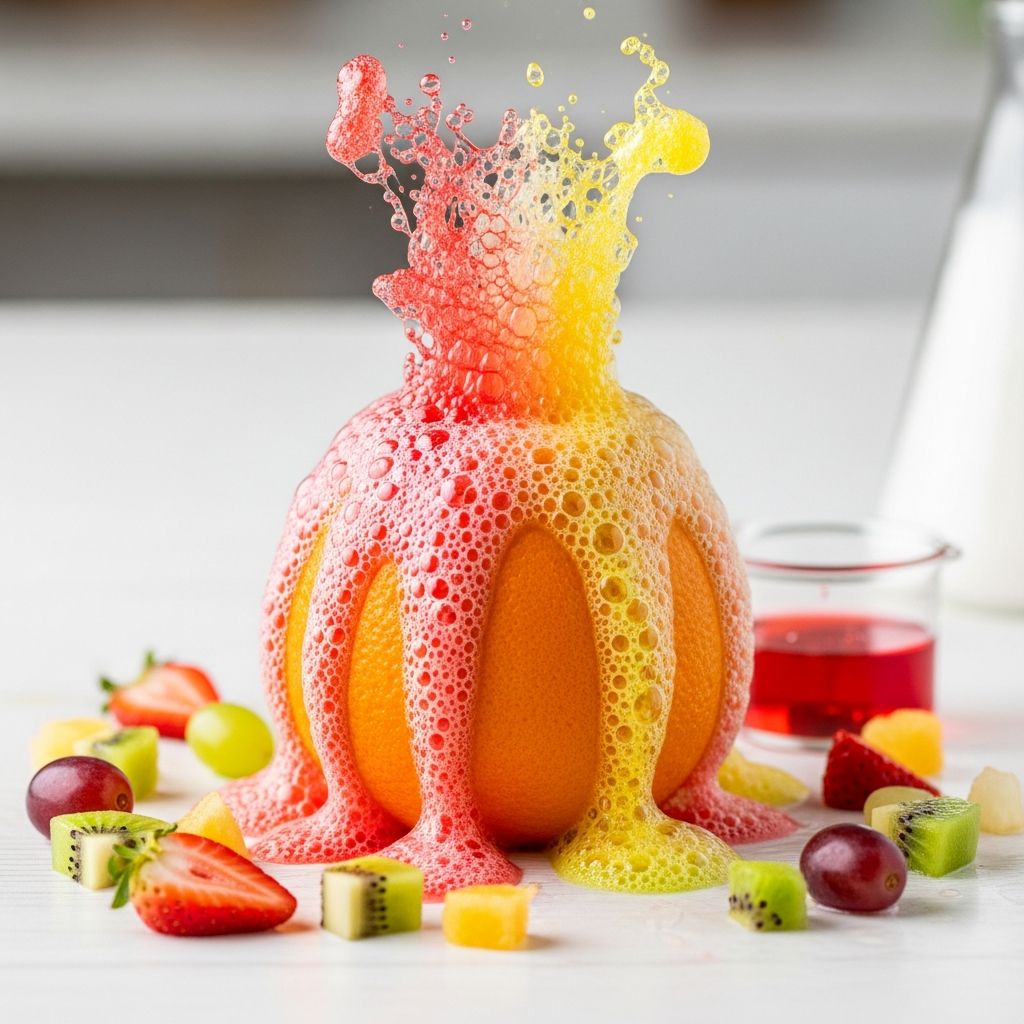
Transform ordinary fruits into spectacular erupting volcanoes right in your kitchen. This hands-on experiment captivates children by combining the thrill of a fizzy explosion with lessons in chemistry and nutrition. Using common household items, kids can explore acid-base reactions while enjoying colorful, edible results.
Why Fruit Volcanoes Spark Scientific Wonder
Fruit volcanoes offer more than just mess-free excitement; they introduce fundamental science concepts in an accessible way. The reaction between citric acid in fruits and baking soda produces carbon dioxide gas, mimicking a volcanic eruption. This activity supports learning about irreversible chemical changes, pH levels, and the scientific method.
Educators and parents praise these experiments for reinforcing healthy eating habits. Children handle real fruits, discussing vitamins and natural acids, which ties into biology and nutrition education. During summer breaks, such projects combat learning loss by keeping minds engaged with practical STEM challenges.
Gathering Your Volcano-Making Supplies
Assemble these easy-to-find materials for a successful eruption:
- Fresh fruits like apples, lemons, oranges, or watermelon (choose firm ones for best structure)
- Baking soda (sodium bicarbonate)
- White vinegar or fresh lemon juice
- Dish soap (for extra foamy lava)
- Food coloring (optional, for vibrant effects)
- Adult knife or spoon for carving
- Shallow tray or plate to contain the mess
- Droppers, pipettes, or turkey basters for precise pouring
- Protective eyewear and apron for safety
These items cost little and are often already in your pantry, making this ideal for spontaneous learning sessions.
Step-by-Step Guide to Erupting Your Fruit Volcano
Follow these instructions with adult supervision to ensure safety and maximize fun.
- Prepare the fruit base: Select a sturdy fruit like an apple or lemon. Place it on a tray. An adult carves a deep crater in the top, about halfway down, without piercing the bottom. This creates the volcano’s chamber.
- Add the base layer: Spoon 2-3 teaspoons of baking soda into the crater. Mix in a squirt of dish soap to trap gas bubbles and create lava-like foam.
- Enhance with color: Drop in food coloring for dramatic red, green, or orange lava flows. Swirl gently to distribute.
- Initiate the reaction: Using a dropper, slowly add vinegar or fruit juice, one drop at a time. Watch as fizzing bubbles build and overflow!
- Observe and repeat: Step back and observe the eruption. Refill and try again with variations for multiple tests.
Each eruption lasts 30-60 seconds, providing ample time for observation. Clean up by composting the fruit and rinsing tools.
The Chemistry Powering the Eruption
At its core, this is an acid-base reaction. Baking soda acts as a base (alkaline), while vinegar (acetic acid) or citric acid from fruits provides the acid. They react to form water, salt, and carbon dioxide gas: NaHCO₃ + CH₃COOH → CH₃COONa + H₂O + CO₂.
The CO₂ gas forms bubbles that rise and escape, creating the fizz. Dish soap stabilizes the bubbles into frothy “lava.” Citrus fruits like lemons enhance the reaction due to higher acidity, producing taller eruptions compared to milder fruits.
| Fruit Type | Acidity Level | Eruption Height | Best For |
|---|---|---|---|
| Lemon/Orange | High | Tall & Foamy | Strong Reactions |
| Apple | Medium | Moderate Flow | Fall Themes |
| Watermelon | Low | Gentle Fizz | Group Sizes |
This table compares common fruits based on observed reactions, helping predict outcomes.
Extending the Experiment: Variables and Predictions
Turn play into science by applying the scientific method. Start with a question: “Does fruit type affect eruption size?” Form a hypothesis, test variables, record data, and analyze results.
- Variable ideas: Change vinegar amount, baking soda quantity, or fruit size. Test with/without soap.
- Prediction example: “More vinegar will make a bigger eruption.” Measure height with a ruler.
- Data tracking: Use a simple chart for trials.
Children practice fair testing by keeping all but one factor constant. This builds critical thinking and vocabulary like “hypothesis” and “observation.”
Health and Nutrition Tie-Ins
Beyond chemistry, discuss fruit benefits. Lemons provide vitamin C for immunity; apples offer fiber for digestion. Post-eruption, blend remnants into smoothies, reinforcing zero-waste habits.
This merges STEM with wellness, encouraging kids to choose fruits over processed snacks. Compare natural acids in fruits to added sugars, fostering informed eating.
Safety First: Guidelines for Supervised Fun
Adult oversight is essential. Wear goggles during pouring; avoid eye contact with mixtures. Use trays to contain spills. Dispose of residues properly—fruits to compost, liquids down the drain.
For groups, assign roles: one measures, another observes. This teaches teamwork and responsibility.
Seasonal Twists and Variations
Adapt for holidays: Red apples for fall, green kiwis for St. Patrick’s Day. Try orange peels for Halloween “pumpkin” volcanoes. Scale up with watermelon for parties.
Pair with related experiments like raisin dances (density) or color-changing cabbage pH tests for a full science day.
Common Questions About Fruit Volcanoes
FAQ
What age is this suitable for?
Best for ages 4-10. Younger kids observe; older ones hypothesize and measure.
Why use dish soap?
It creates foamier bubbles by trapping CO₂, enhancing visual appeal.
Can I use other acids?
Yes! Lemon juice or cola works, but vinegar is most reliable.
How do I clean up?
Compost fruit, rinse tray with soap and water. Quick and eco-friendly.
What if there’s no eruption?
Check freshness of baking soda or depth of crater. Add more acid slowly.
Benefits for Summer Learning and Beyond
These volcanoes combat summer slide by blending play with academics. Kids retain science skills, improve fine motor control via droppers, and gain confidence in experimentation.
Integrate into homeschooling or after-school programs. Track progress with journals, building lifelong learning habits.
References
- Editable Fruit Volcano Science Experiment Worksheet — Twinkl. 2023. https://www.twinkl.com/resource/ks2-fruit-volcanoes-science-experiment-t-sc-2550953
- Erupting Apple Volcano Experiment — Little Bins for Little Hands. 2023. https://littlebinsforlittlehands.com/erupting-apple-science-baking-soda-fizzy-activity/
- Fizzing Fruits Activity — Scouts.org.uk. 2023. https://www.scouts.org.uk/activities/fizzing-fruits/
- 7 Steps to a Fruit Volcano — Connections Academy. 2023. https://www.connectionsacademy.com/support/resources/article/7-steps-to-a-fruit-volcano-summer-learning-activity-for-kids/
- STEM @ HMCPL: Make a Citrus Volcano — YouTube (Huntsville Madison County Public Library). 2023. https://www.youtube.com/watch?v=AmG11AooLV8

Medha Deb is an editor with a master's degree in Applied Linguistics from the University of Hyderabad. She believes that her qualification has helped her develop a deep understanding of language and its application in various contexts. Medha specializes in the areas of beauty, health, sports, and wellness and is committed to ensuring that the content on the website is…