
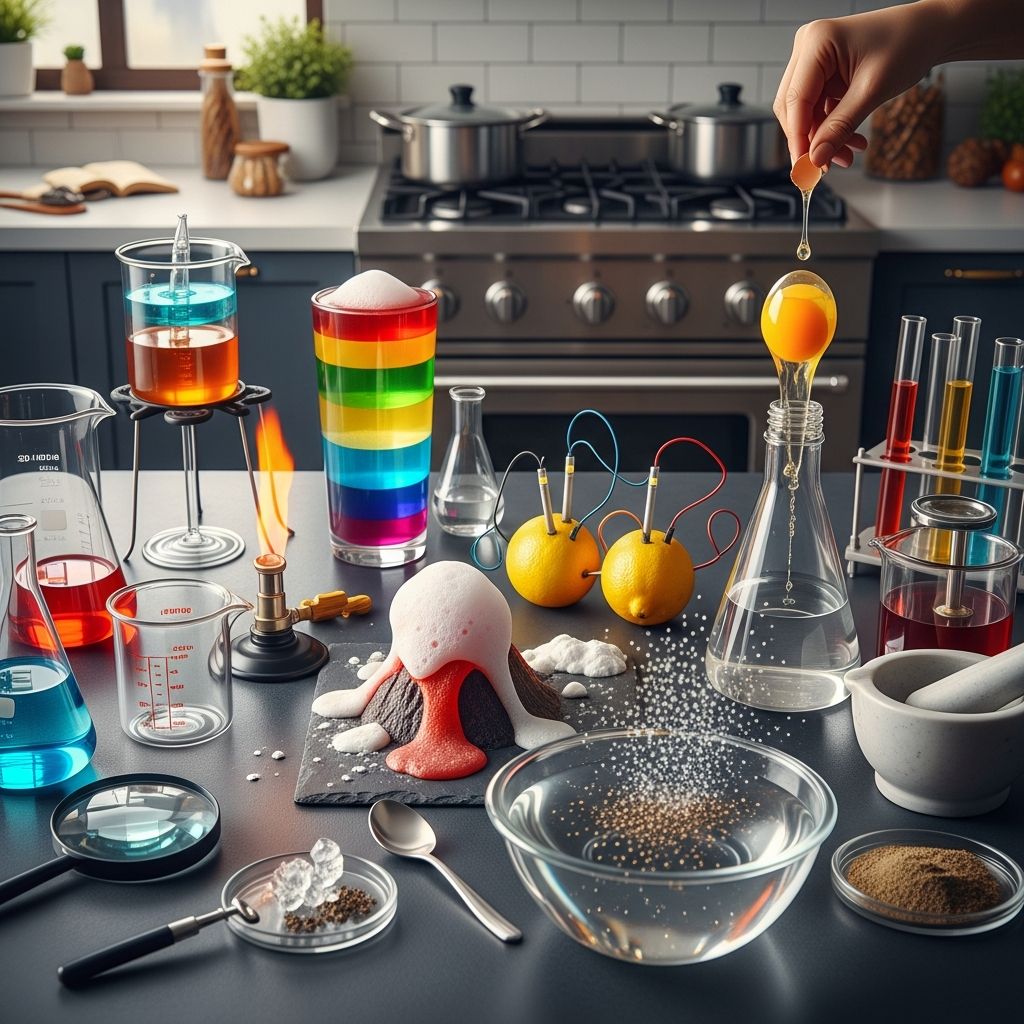
Transform your kitchen into a laboratory where curiosity meets flavor. Food science experiments offer an exciting way to explore fundamental scientific principles using ingredients you likely have on hand. These activities blend education with enjoyment, making complex concepts like chemical reactions, density, and biology accessible and memorable. Whether you’re a teacher planning classroom demos, a parent seeking weekend fun, or a student tackling a project, these hands-on explorations reveal the hidden science behind everyday foods.
Why Food Makes the Perfect Science Lab
Food is an ideal medium for scientific inquiry because it’s safe, colorful, and rewarding—you can eat the results! These experiments demonstrate real-world applications of STEM (Science, Technology, Engineering, Math) concepts. For instance, observing how sugar dissolves or yeast ferments teaches solubility, biochemistry, and more. They encourage hypothesis testing, data recording, and critical thinking, skills essential for young scientists. Plus, they promote healthy eating discussions and sensory exploration.
Start with simple setups requiring minimal equipment: bowls, spoons, fridge space, and basic pantry staples. Safety is key—adult supervision ensures safe handling of heat sources or sharp tools. Scale experiments for different ages: preschoolers mix colors, while older kids measure variables for precise results.
Exploring Density and Layering with Drinks
Density, the mass per unit volume, explains why some liquids float on others. Create stunning layered beverages to visualize this principle.
- Ingredients: Clear glasses, honey, dish soap, water (colored with food dye), vegetable oil, rubbing alcohol.
- Steps: Pour honey first (densest), then soap, colored water, oil, and alcohol (least dense). Watch layers form without mixing.
- Science: Each liquid’s density determines position; denser ones sink.
Challenge: Predict layer order before pouring. Extensions include tasting non-toxic versions with syrups and juices, linking to nutrition labels’ sugar content comparisons.
Osmosis in Action: Candy and Fruit Tricks
Osmosis is water movement across semi-permeable membranes from low to high solute concentration. Gummy candies and fruits make it visible.
| Experiment | Setup | Observation | Explanation |
|---|---|---|---|
| Gummy Osmosis | Place gummies in water, salt water, sugar water overnight. | Water-soaked swell; salt-shrunk shrink. | Water enters/exits based on external concentration. |
| Fruit Battery | Insert zinc/copper electrodes into lemon; connect to LED. | Light glows from citric acid electrolyte. | Electrochemical reaction generates current. |
These reveal cellular processes, tying to biology curricula. Eat results to discuss preservation methods.
Crystal Magic: Growing Edible Sugars
Crystallization occurs when supersaturated solutions cool, forming solid lattices. Grow rock candy or honey crystals for sweet science.
- Boil water, dissolve excess sugar into syrup.
- Seed sticks with sugar, suspend in jars covered with cloth.
- Wait 1-2 weeks; crystals form as solution evaporates.
Variables: Test temperatures or additives like flavor extracts. Connect to confectionery and geology—sugar crystals mimic minerals. Display as edible art.
Chemical Reactions: Fizz, Foam, and Color Changes
Acids and bases react dramatically. pH indicators from nature make detection easy.
- Red Cabbage Indicator: Boil cabbage leaves for purple juice. Test vinegar (pink), baking soda (green), neutral (purple). Explains litmus basics.
- Fizzy Drinks: Mix lemon juice (acid) + baking soda (base) for CO2 bubbles. Add syrup for edible soda.
- Elephant Toothpaste: Yeast + hydrogen peroxide + dish soap foams hugely (safe version).
Discuss catalysis: Yeast speeds peroxide decomposition. Applications in baking (leavening) and cleaning.
Biology at Work: Yeast, Enzymes, and Fermentation
Microorganisms power bread, yogurt, and beer. Experiments show respiration and enzyme activity.
Yeast Balloons: Mix warm water, sugar, yeast in bottle; cover with balloon. Gas inflates it, demonstrating fermentation: Yeast converts sugar to CO2 + ethanol. Optimal temperature? Test 20°C, 37°C, 50°C.
Enzyme Jell-O: Compare Jell-O with fresh vs. canned pineapple. Fresh enzymes (bromelain) prevent setting; heat denatures them. Links to digestion.
Bake bread to observe gluten development and rise, tasting Maillard browning (amino acids + sugars under heat).
Everyday Wonders: Browning, Curdling, and Preservation
Enzymatic browning oxidizes cut apples/potatoes. Lemon juice (vitamin C) inhibits it—test slices with/without.
Curds and Whey: Vinegar curdles milk proteins (casein) at low pH, yielding cheese. Colloid science in action.
Preservation debate: Salt/osmosis dehydrates microbes; sugars preserve jams. Test bread molds with/without preservatives.
Advanced Projects: Molecular Gastronomy and Tech
Molecular gastronomy uses science for cuisine. Spherification: Sodium alginate + calcium drops liquid into caviar-like spheres.
- Extract DNA from strawberries: Mash, soap-lyse cells, alcohol-precipitate white strands.
- Centripetal Jell-O: Spin set Jell-O with marble; force keeps it centered.
- Solar S’mores: Foil-lined box focuses sun to melt chocolate/marshmallows.
Digital twists: Film timelapses, create podcasts interviewing ‘experts’ (family chefs), or 3D-print molecule models.
Integrating into Learning Environments
Classrooms: Group stations rotate experiments, journals track data. Homeschool: Weekly themes (e.g., ‘Crystal Week’). Families: Tie to meals, discussing nutrition science.
Extensions:
- Compare soda densities via floating eggs.
- Grow salt crystals vs. sugar.
- Debate GMOs/organic labeling.
Benefits: Boosts retention—tasting aids memory. Aligns with NGSS standards on matter, energy, ecosystems.
Frequently Asked Questions (FAQs)
What age groups are these experiments for?
Adaptable: 4-7 for mixing; 8-12 for variables; teens for data analysis. Supervision for heat/chemicals.
Are all results edible?
Most yes, but discard post-experiment if chemicals used (e.g., indicators). Prioritize food-grade items.
What if I lack ingredients?
Substitutes abound: Cornstarch for slime, fruit juices for dyes. Focus on concepts.
How to extend for science fairs?
Form hypotheses, vary one factor, graph results, research real-world apps.
Can these teach nutrition?
Yes—analyze sugars, test starch/glucose, discuss balanced diets.
References
- 50 Food Science Teaching Ideas — Fizzics Education. 2023. https://www.fizzicseducation.com.au/articles/50-food-science-teaching-ideas/
- These 33 Edible Science Projects Are Educational and Yummy, Too — WeAreTeachers. 2024-01-15. https://www.weareteachers.com/edible-science/
- Simple Experiments and Activities for Youth — Penn State Food Science. 2025-03-10. https://foodscience.psu.edu/outreach/youth/experiments

Medha Deb is an editor with a master's degree in Applied Linguistics from the University of Hyderabad. She believes that her qualification has helped her develop a deep understanding of language and its application in various contexts. Medha specializes in the areas of beauty, health, sports, and wellness and is committed to ensuring that the content on the website is…