
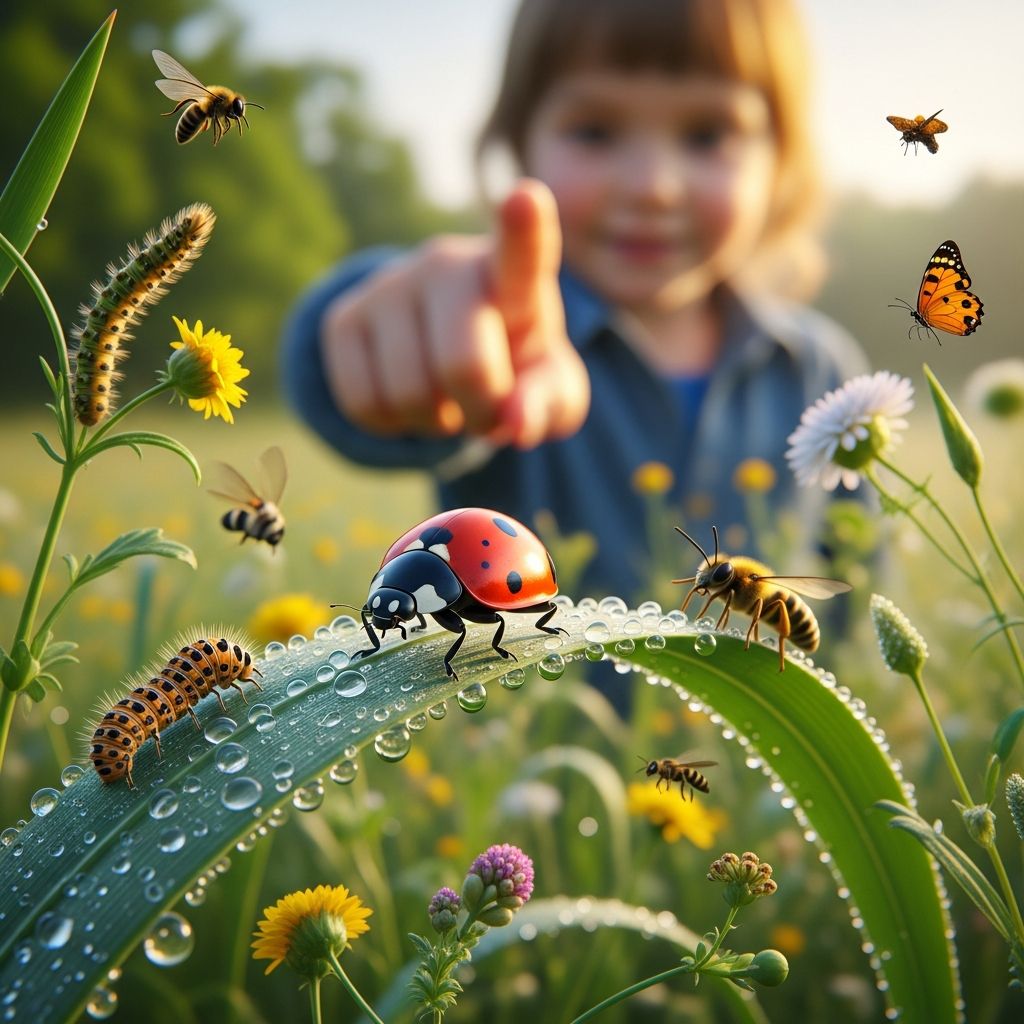
Insect exploration captivates children’s imaginations while introducing key concepts in biology, math, and motor skills. These activities transform everyday backyards and homes into vibrant learning labs, encouraging observation, creativity, and problem-solving.
Outdoor Exploration: Nature’s Tiny Wonders
Stepping outside opens doors to real-world science. Children discover insect behaviors, habitats, and diversity through simple, safe hunts that promote environmental awareness.
- Scavenger Quest in the Garden: Create a checklist featuring insects with unique traits, such as jumpers, flyers, or camouflage experts. Kids use magnifiers to note colors, sizes, and movements, building descriptive language skills.
- Ground-Level Trap Setup: Bury a container level with soil to capture wandering critters overnight. Morning reveals teaches about nocturnal habits and safe release emphasizes respect for wildlife.
- Shake-and-Observe Technique: Drape a light cloth under foliage and gently agitate branches. The contrasting backdrop highlights hidden species, sparking discussions on camouflage and ecosystems.
These methods, drawn from child-led nature studies, enhance focus and patience while connecting kids to their local biodiversity.
Crafty Creations: Artistic Insect Worlds
Hands-on crafting turns abstract ideas into tangible art, refining fine motor control and artistic expression through insect-inspired projects.
- Fingerprint Insect Gallery: Dip fingers in washable ink or paint to form bodies, then add details with markers. Count and sort creations into ‘habitats’ for math integration.
- Painted Stone Safari: Decorate smooth rocks as beetles or butterflies, then hide for a treasure hunt. This bridges art with physical activity, ideal for hesitant explorers.
- Symmetry Butterfly Wings: Fold paper, apply crayon melts or paint to one side, and mirror for perfect bilateral patterns, introducing geometry concepts playfully.
Such projects not only boost creativity but also reinforce STEM principles like patterns and counting.
Active Games: Movement Meets Learning
Physical games channel energy into educational challenges, developing gross motor skills alongside literacy and numeracy.
| Game Name | Skills Targeted | Materials Needed |
|---|---|---|
| Swatter Alphabet Challenge | Letter recognition, coordination | Cardstock bugs with letters, fly swatter |
| Capture and Collect Relay | Speed, counting, tweezers use | Plastic insects, baskets, tongs |
| Spray Target Practice | Fine motor, color matching | Chalk bugs, spray bottles with water |
Call letters for swatting, roll dice to collect matching bugs, or spray drawn targets—each twist embeds curriculum goals into fun.
Sensory Play: Touch and Feel Discoveries
Sensory experiences engage multiple senses, aiding cognitive growth and sensory processing in toddlers and preschoolers.
- Rescue Dig Bin: Weave yarn webs in a tub, bury toy bugs, and provide tools for extraction. Strengthens grips and perseverance.
- Edible Habitat Builds: Layer crushed cookies as dirt, chocolate drops as eggs, and pretzels as tunnels to mimic ant colonies, combining taste with engineering.
- Growing Lifecycle Models: Use playdough or veggies to stage metamorphosis from egg to adult, tracking changes over days.
These tactile setups, rooted in play-based learning, support emotional regulation and scientific inquiry.
Building Habitats: Engineering Tiny Homes
Constructing shelters teaches architecture, materials science, and ecology as kids design functional insect hotels.
- Materials Gathering: Collect twigs, pinecones, hollow stems, and bark—natural items that mimic wild preferences.
- Layered Design: Bundle items in a frame, arranging by insect type: solitary bees favor tubes, beetles prefer logs.
- Placement Strategy: Position in shaded, quiet spots near gardens to observe visitors over weeks.
Documenting occupancy with photos fosters data collection skills and long-term engagement.
Educational Kitchen Experiments
Food-based activities blend nutrition with science, exploring textures and reactions through bug themes.
- Ant Trail Snacks: Pipe peanut butter trails on plates, top with raisins as ants—practice following paths while snacking.
- Butterfly Veggie Prints: Dip celery halves in paint for wing stamps, creating patterned gardens.
- Larva Jell-O Wiggles: Embed gummy worms in gelatin to simulate growth stages, observing firmness changes.
These merge sensory play with healthy eating habits.
Weekly Immersion Plans
Structure multi-day themes for deeper dives, culminating in reflections like drawings or journals.
- Monday-Tuesday: Outdoor hunts and trap monitoring.
- Wednesday-Thursday: Indoor crafts and games.
- Friday: Habitat builds and snack experiments, followed by story time.
Adapt for ages: simplify for toddlers, add journals for school-age kids.
Frequently Asked Questions
What age group benefits most from these activities?
Ages 2-10, with scalable complexity: sensory for toddlers, data tracking for older kids.
Are real insects safe to handle?
Observe without touching; use tools and release promptly to minimize stress on insects and children.
How to adapt for indoor-only settings?
Use toy bugs, printed images, or window observations for urban or rainy days.
Do these align with school curricula?
Yes, supporting NGSS life science standards on ecosystems and life cycles.
What if a child fears bugs?
Start with painted rocks or drawings, gradually introducing real ones via videos or distant views.
Benefits Across Development
These pursuits cultivate curiosity, hand-eye coordination, social skills through group play, and foundational STEM literacy. Regular engagement correlates with improved attention and nature appreciation, per educational play research.
Expand with books like The Very Hungry Caterpillar or apps simulating habitats. Safety first: supervise outdoors, use non-toxic materials, and teach gentle interactions.
References
- 25 Fun Bug Activities for Kids: STEM Learning and Play — I’m The Chef Too. 2023. https://www.imthecheftoo.com/blogs/stem-for-kids/25-fun-bug-activities-for-kids-stem-learning-and-play
- Bug Activities For Kids — CraftMonsterz. 2023. https://craftmonsterz.com/bug-activities-for-kids/
- 12 Awesome Bug Activities for Toddlers and Preschoolers — Pocketful of Parenting. 2023. https://www.pocketfulofparenting.com/blog/bug-activities-for-toddlers
- 50 Fun Insect Learning and Play Activities for Kids — Barley & Birch. 2023. https://barleyandbirch.com/discover-insect-learning-play-activities-for-kids/
- Insect Activities & Bug Projects for Elementary Students — PestWorld For Kids (National Pest Management Association). 2024. https://www.pestworldforkids.org/for-teachers/elementary-school/

Medha Deb is an editor with a master's degree in Applied Linguistics from the University of Hyderabad. She believes that her qualification has helped her develop a deep understanding of language and its application in various contexts. Medha specializes in the areas of beauty, health, sports, and wellness and is committed to ensuring that the content on the website is…