
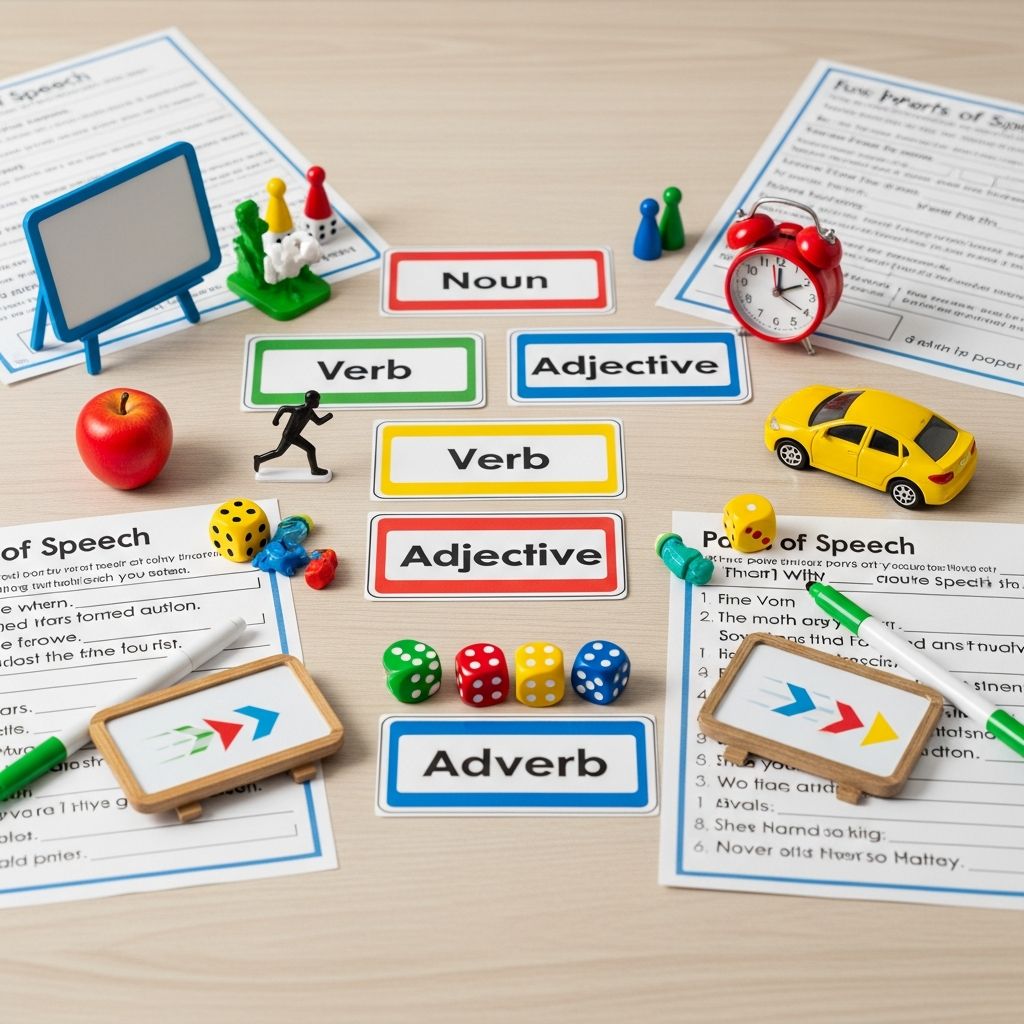
Mastering the parts of speech is foundational to effective communication and writing skills. This article presents a fresh collection of interactive activities designed to captivate students, from elementary to high school levels. By incorporating games, hands-on tasks, and multimedia elements, educators can transform dry grammar lessons into dynamic learning experiences that reinforce nouns, verbs, adjectives, adverbs, pronouns, prepositions, conjunctions, and interjections.
Understanding the Building Blocks of Language
Before diving into activities, it’s essential to grasp the core parts of speech. Nouns name people, places, things, or ideas; verbs show actions or states of being; adjectives describe nouns; adverbs modify verbs, adjectives, or other adverbs; pronouns replace nouns; prepositions indicate relationships; conjunctions connect ideas; and interjections express emotions. These elements form the skeleton of every sentence, and activities that highlight them help students internalize their roles.
Teaching these concepts sequentially prevents overwhelm. Start with nouns and verbs as the most concrete, then layer in descriptors like adjectives and adverbs. Visual aids, such as anchor charts co-created with students, serve as ongoing references, boosting retention through active participation.
Interactive Games to Energize Grammar Lessons
Games turn passive learning into active engagement. Here are proven strategies adapted for various class sizes and ages.
- Parts of Speech Charades: Write parts of speech on slips of paper. Students draw one and act it out silently—jumping for verbs, posing descriptively for adjectives—while classmates guess. This kinesthetic approach reinforces definitions through movement and boosts vocabulary recall.
- Funny Sentence Fill-Ins: Display sentences with blanks labeled by part of speech (e.g., “The __ (adjective) dog __ (verb) __ (adverb).”). In pairs, students insert words to create humorous results, then share. This highlights how parts of speech interact in context.
- Game Show Challenges: Host a classroom quiz show with buzzers or hand-raising. Questions test identification, like “Which word is a preposition?” Use timers for excitement and provide instant feedback to clarify misconceptions.
These games not only review skills but also foster collaboration and quick thinking, making grammar memorable.
Hands-On Sorting and Matching Exercises
Sorting activities build categorization skills essential for grammar proficiency. Provide word lists or cards, and have students group them by part of speech.
| Activity Type | Description | Grade Level | Materials Needed |
|---|---|---|---|
| Word Sorts | Students sort mixed words into columns: nouns, verbs, etc. Extend by creating sentences from sorted groups. | 3rd-5th | Word cards, chart paper |
| Ping Pong Toss | Label buckets with parts of speech. Toss balls marked with words into correct buckets from across the room. | K-4th | Ping pong balls, buckets, marker |
| Maze Sorts | Navigate printable mazes where paths are labeled by correct part of speech matches. | 4th-6th | Printables, pencils |
These tactile methods appeal to kinesthetic learners and can be differentiated—add complexity for advanced students by including phrases or sentences.
Creative Writing and Story-Building Tasks
Encourage application through writing. Mad Libs-style stories prompt specific parts of speech, revealing their impact on meaning and humor. For deeper practice:
- Choice Boards: Offer grids with tasks like “List 10 nouns from a book” or “Rewrite a sentence using 3 adjectives.” Students select 5 per board, promoting autonomy.
- Story Chains: In a circle, each student adds a word or phrase fitting a designated part of speech to build a collaborative tale.
- Descriptive Paragraphs: Assign prompts requiring minimums, e.g., “Write about your day with 5 verbs and 4 adverbs.”
Such exercises transition students from identification to production, enhancing composition skills.
Multimedia and Music Integration
Leverage songs and media for auditory learners. Analyze lyrics by underlining parts of speech—nouns in blue, verbs in red. Assign instruments: drums for nouns, bells for adjectives. Play the song, and students chime in on their assigned words, creating a rhythmic grammar symphony.
For visual tech integration, use digital tools like interactive notebooks or Google Forms for self-paced quizzes on parts of speech. Project videos of charades or game shows for whole-class demos.
Assessment and Review Strategies
Embed review seamlessly. Doodle notes combine drawing with definitions—sketch a running figure for verbs. Weekly word walls evolve with new sorts, serving as visual dictionaries.
Choice boards and task cards allow flexible assessment. Track progress with simple rubrics focusing on accuracy and creativity.
Frequently Asked Questions (FAQs)
What are the best activities for beginners?
Start with sorting games and charades to build foundational recognition of nouns and verbs before advancing to full sentences.
How can I adapt these for high school?
Incorporate complex sentences, literary analysis (e.g., parts of speech in poetry), and debates requiring precise language use.
Do these activities work for diverse learners?
Yes—offer visual, auditory, kinesthetic, and reading/writing options to accommodate all styles.
How often should I teach parts of speech?
Integrate weekly mini-lessons with daily practice to reinforce without overwhelming.
Are free resources available?
Many printables, like choice boards and worksheets, are accessible online for immediate classroom use.
Advanced Tips for Lasting Grammar Mastery
To elevate learning, combine activities into units. Week 1: Nouns and verbs via charades and sorts. Week 2: Add adjectives/adverbs with writing. Culminate in a “Grammar Festival” with stations rotating through games.
Parental involvement amplifies impact—send home ping pong games or lyric sheets. Track growth with pre/post assessments showing sentence complexity improvements.
Incorporate real-world application: Analyze news articles or ads for parts of speech, linking grammar to literacy.
References
- Parts of Speech Teaching Resources — Teach Starter. 2023. https://www.teachstarter.com/us/learning-area/parts-of-speech-us/
- 7 FUN Activities for Practicing the Different Parts of Speech — Fun in 5th Grade. 2022-10-15. https://funin5thgrade.com/7-fun-activities-for-practicing-the-different-parts-of-speech/
- Parts of Speech — Teachers Pay Teachers. 2024. https://www.teacherspayteachers.com/browse?search=parts+of+speech
- FREE Parts of Speech Activities: Choice Boards — Jennifer Findley. 2023-05-20. https://jenniferfindley.com/free-parts-of-speech-activities-choice-boards/
- Teaching Parts of Speech: 6 Activity Ideas — Teaching Made Practical. 2022. https://teachingmadepractical.com/parts-of-speech/
- Fun Ways To Teach Parts of Speech — The Homeschool Mom. 2021-08-10. https://www.thehomeschoolmom.com/fun-ways-teach-parts-speech/
- Creative Ways to Teach Parts of Speech in Middle School and High School — Sadlier School ELA Blog. 2023-11-05. https://www.sadlier.com/school/ela-blog/creative-ways-to-teach-parts-of-speech-in-middle-school-and-high-school

Medha Deb is an editor with a master's degree in Applied Linguistics from the University of Hyderabad. She believes that her qualification has helped her develop a deep understanding of language and its application in various contexts. Medha specializes in the areas of beauty, health, sports, and wellness and is committed to ensuring that the content on the website is…