
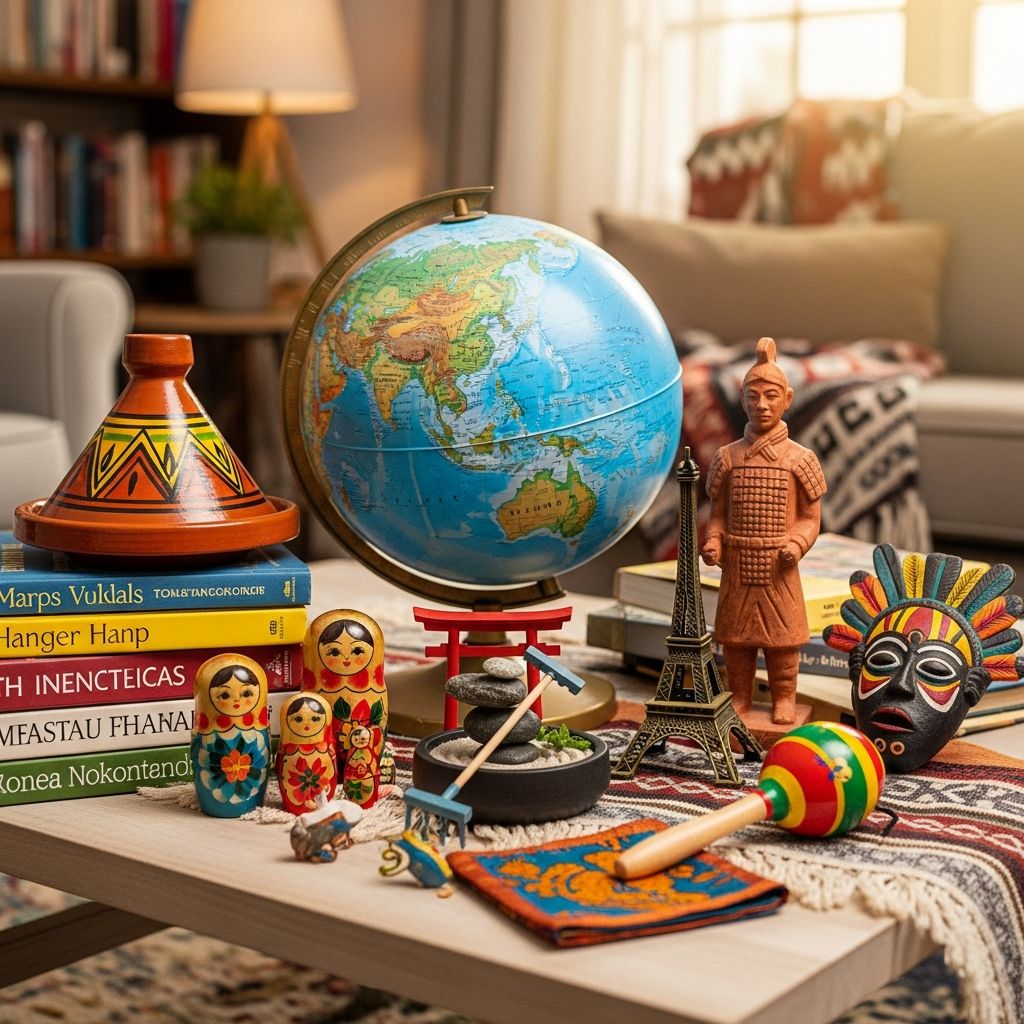
Introducing children to the rich tapestry of global cultures can transform everyday learning into an exciting adventure. By weaving cultural exploration into family routines, parents and caregivers create opportunities for empathy, curiosity, and lifelong appreciation of diversity. These activities blend entertainment with education, drawing on everyday resources to simulate travel and discovery without leaving home.
Building a Foundation for Cultural Curiosity
Cultural awareness starts with understanding that the world is a mosaic of traditions, languages, and perspectives. Research shows that early exposure to diversity enhances cognitive development and social skills. For instance, culturally responsive approaches help children connect new information to familiar experiences, making learning more relatable and effective. At home, this means turning meals, stories, and games into portals to other lands.
Begin by discussing family heritage to ground children in their own background. Then, expand outward. Use maps or globes to pinpoint countries, sparking questions like “What do kids there play?” This sets the stage for deeper dives into specific cultures.
Culinary Journeys: Cook Up Global Flavors
Food is a universal language that bridges divides. Preparing international dishes together teaches measurement, history, and sensory exploration. Start simple: make Japanese onigiri rice balls, shaping them while chatting about rice farming in Asia, or whip up Mexican guacamole, grinding avocados to mimic traditional methods.
- Indian Chapati: Knead dough and roll flatbreads, discussing wheat’s role in South Asian diets.
- Ethiopian Injera: Ferment batter for spongy pancakes, exploring communal eating customs.
- Italian Pizza: Top with regional variations, like Neapolitan vs. Sicilian styles.
These sessions double as math lessons—fractions in recipes—and science experiments, like yeast rising. Pair meals with videos of harvest festivals to contextualize origins. Children gain respect for food scarcity in some regions versus abundance in others.
Storytelling Circles: Tales from Around the Globe
Stories preserve cultural wisdom and ignite imaginations. Gather for “story nights” featuring folktales from diverse origins. Read Anansi the Spider from West Africa, where cleverness triumphs, or Japan’s Momotaro, the peach boy hero.
Encourage kids to retell tales in their words or act them out. This builds language skills and empathy by stepping into characters’ shoes. Resources like public domain libraries offer free access to global myths.
| Culture | Sample Tale | Key Lesson |
|---|---|---|
| Native American | Earth on Turtle’s Back | Respect for nature |
| Irish | Leprechaun Gold | Cleverness over greed |
| Chinese | The Magic Paintbrush | Creativity’s power |
Extend by inviting relatives to share oral histories via video calls, fostering intergenerational bonds.
Hands-On Crafts: Art as Cultural Expression
Art reveals a culture’s soul. Dive into projects using household items: create African kente cloth patterns with fabric scraps and markers, or Mexican papel picado banners by cutting tissue paper.
- Fold Japanese origami cranes, symbolizing peace, practicing geometry.
- Design Australian Aboriginal dot paintings on paper plates, depicting dreamtime stories.
- Craft Russian matryoshka dolls from rolled paper, exploring nesting symbolism.
These activities develop fine motor skills and patience. Display creations to reinforce pride. Link to history: discuss how crafts evolved from necessity, like Peruvian quipu knots for record-keeping.
Virtual Adventures: Travel Without a Passport
Technology opens doors to real-time exploration. Use free online tours of the Louvre (France), Great Wall (China), or Machu Picchu (Peru). Platforms like Google Earth Street View let kids “walk” markets in Morocco.
Watch live cultural festivals: Diwali lights in India or Carnival in Brazil. Discuss attire, dances, and music, then mimic with homemade costumes. Apps simulate language basics, like greeting in Swahili.
For immersion, follow virtual pen pal programs connecting kids globally. This builds friendships and contrasts daily life—school uniforms in Japan vs. casual wear elsewhere.
Music and Dance: Rhythm of the World
Music transcends barriers. Curate playlists: West African drumming, Irish jigs, Bollywood beats. Dance along, learning steps like the Brazilian samba or Greek syrtaki.
Make instruments: rice shakers for Latin maracas or rubber band guitars for bluegrass. Host “world music jam sessions,” inviting kids to lead from their heritage.
Studies link rhythm exposure to improved coordination and emotional regulation. Analyze lyrics for cultural values, like community in Polynesian songs.
Games and Play: Learning Through Fun
Games teach strategy and social norms. Play Mancala (ancient African board game) with beans and egg cartons, or Senet (Egyptian precursor to backgammon).
- Chinese Checkers for spatial thinking.
- Indian Pachisi, the original Ludo.
- Japanese Go for profound strategy.
Outdoor versions: hopscotch variations worldwide. Debrief: “How does winning feel in team-based games like Filipino Sungka?” This highlights collectivism vs. individualism.
Movies and Media: Visual Windows to Cultures
Curate family-friendly films: Coco for Mexican Day of the Dead, Mulan for ancient China. Follow with discussions on accuracy vs. Hollywood flair.
Documentaries on BBC Kids or Khan Academy Kids offer authentic glimpses. Create viewing guides with questions: “What surprised you about daily life in Kenya?”
Daily Rituals: Embedding Culture in Routines
Infuse culture subtly: greet in multiple languages mornings, set multicultural table settings. Track holidays on a global calendar—Lunar New Year, Eid, Hanukkah—preparing mini-celebrations.
Plant herbs like Thai basil, tying to cuisines. Journal reflections: “What did I learn today?” This builds habits of inquiry.
Overcoming Challenges in Cultural Learning
Sensitivity matters—avoid stereotypes by using primary sources. If resources are scarce, libraries and free apps suffice. Adapt for ages: sensory play for toddlers, debates for teens.
Address biases openly: “Why might media show incomplete pictures?” Promote critical thinking.
Measuring Impact: Signs of Growth
Watch for increased questions, empathy in play, or requests for more activities. Portfolios of crafts and journals showcase progress. Surveys like “Favorite new culture? Why?” gauge interest.
Frequently Asked Questions
How often should we do cultural activities?
Aim for 2-3 times weekly to build momentum without overwhelm. Integrate into routines for sustainability.
What if my child resists unfamiliar foods?
Start with familiar twists, like pizza with global toppings. Involve them in choices to build buy-in.
Are there free resources for virtual tours?
Yes, Google Arts & Culture, National Geographic Kids, and museum sites offer extensive free content.
How do I handle sensitive topics like historical conflicts?
Age-appropriate facts, focus on resilience and unity. Use stories emphasizing peace.
Can this work for single-culture families?
Absolutely—exposure broadens all perspectives, preparing kids for diverse schools and workplaces.
References
- Creative Ways to Celebrate Cultural Diversity in the Classroom — TeachHub. 2025-08. https://www.teachhub.com/teaching-strategies/2025/08/creative-ways-to-celebrate-cultural-diversity-in-the-classroom/
- Multicultural education in today’s classrooms — University of Kansas School of Education. N/A. https://educationonline.ku.edu/community/multicultural-education-in-todays-classrooms
- Culturally Appropriate Curriculum Design for Educators — Purdue University. 2024-01-01. https://education.purdue.edu/news/2024/01/01/curriculum-design-culturally-appropriate/
- Educating for diversity, equity, and inclusion: A review of commonly… — National Library of Medicine (PMC). 2021. https://pmc.ncbi.nlm.nih.gov/articles/PMC8532179/
- Best Methods for Teaching Diversity to Students and Lifelong Learners — American Psychological Association. N/A. https://www.apa.org/ed/sponsor/resources/ce-diversity.pdf
- The Importance of Cultural Diversity in the Classroom — ChildCare Education Institute. N/A. https://www.cceionline.com/the-importance-of-cultural-diversity-in-the-classroom/
- What Is Culturally Responsive Teaching? — Education Week. 2022-04. https://www.edweek.org/teaching-learning/culturally-responsive-teaching-culturally-responsive-pedagogy/2022/04

- Integrated M.A. in Applied Linguistics, University of Hyderabad
- 5+ years in editorial, instructional, SEO, and research-based writing
Sneha is a relationships and lifestyle writer with a strong foundation in applied linguistics and certified training in relationship coaching. She brings over five years of writing experience to theskillvault, crafting thoughtful, research-driven content that empowers readers to build healthier relationships, boost emotional well-being, and embrace holistic living. Her writing and insights reflect the belief that beauty, happiness, and wellness…