
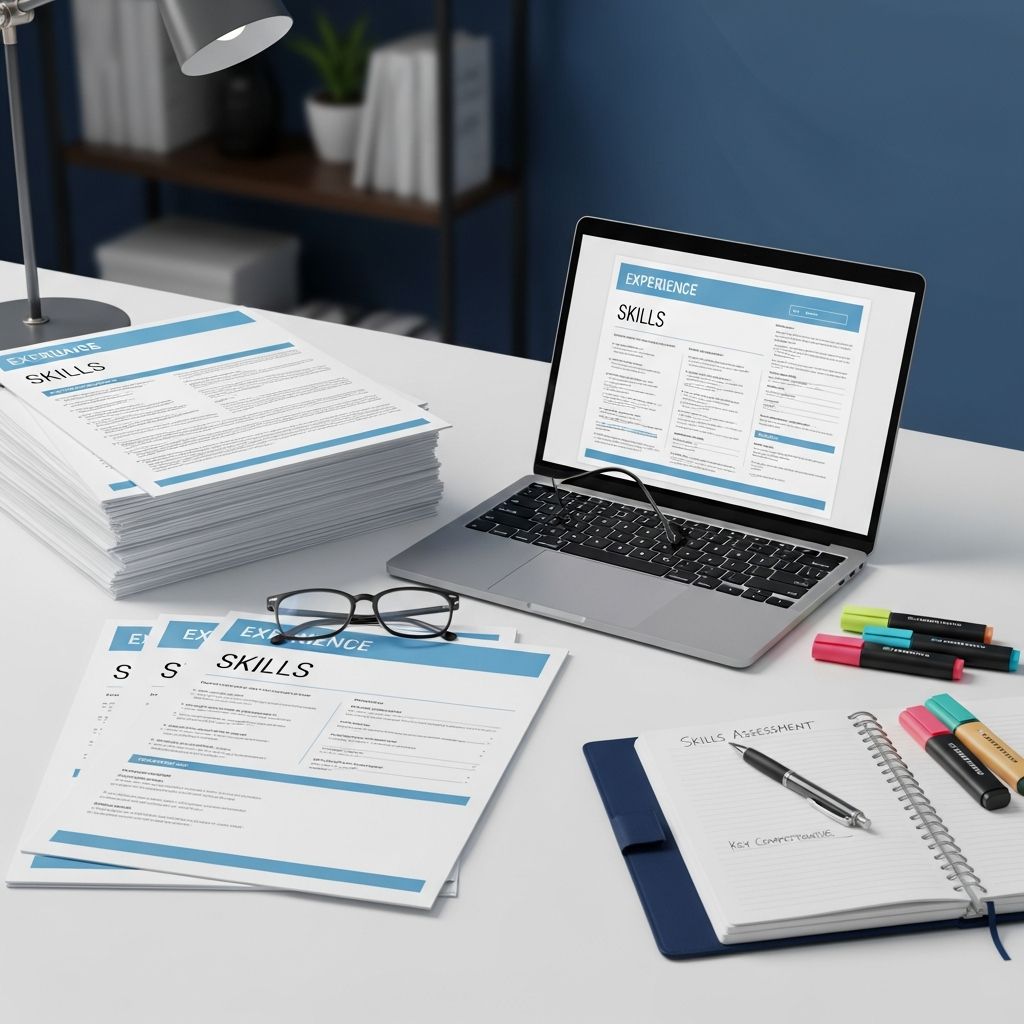
A functional resume can be a powerful tool when your skills are stronger than your job titles. Instead of walking a hiring manager through a job-by-job timeline, you organize your experience around what you can actually do. Used thoughtfully, this format can help career changers, recent grads, or professionals with work gaps present a compelling story.
This guide explains what a functional resume is, when it helps (and when it can hurt), and how to build a modern, recruiter-friendly version that still puts your skills first.
What Is a Functional Resume?
A functional resume is a skills-based resume format that highlights your abilities, knowledge, and achievements rather than your chronological work history.1 Instead of emphasizing where and when you worked, this format groups your experience into skill themes such as “Project Management” or “Customer Support.” Under each skill, you add bullet points that describe how you have used that capability to get results.
Traditional reverse-chronological resumes are organized by job title and employer, from most recent to oldest. A functional resume inverts that priority: the skills sections become the core of the document, and your work history is usually shortened and placed below the skills summary.2
| Resume Format | Main Focus | Best For |
|---|---|---|
| Reverse-chronological | Job titles, employers, and career progression | Steady work history in one field |
| Functional (skills-based) | Skill categories and related achievements | Career changers, limited experience, work gaps |
| Combination (hybrid) | Skills plus condensed work history | Mid-career professionals, pivoting within a field |
Who Should Consider a Functional Resume?
The functional format is not ideal for everyone. Recruiters in many industries still prefer to see a clear timeline of roles and employers, and some applicant tracking systems (ATS) are tuned to expect a chronological structure.3 However, there are situations where a skills-first approach can be helpful, especially if you combine it with a simple work history section.
Situations Where a Functional Resume May Help
- Career changers: When your past job titles do not match your target role, grouping experience by relevant skills lets you show how your background transfers.
- Recent graduates or students: If you have limited paid experience, you can elevate coursework, projects, and campus activities that demonstrate your capabilities.
- Professionals with employment gaps: A skills-based layout makes gaps less visually prominent, while still being honest in a brief work history section.
- Freelancers and gig workers: If your work involves many short projects, organizing by skill or service area can be clearer than listing dozens of tiny roles.
- Returning to work after a break: Caregivers or workers coming back from long absences can foreground up-to-date skills from volunteering, training, or side projects.
When a Functional Resume Can Backfire
Many recruiters view purely functional resumes with caution, because the format can make it harder to verify your experience and understand your career path.3 Some employers even treat heavily skills-only resumes as a red flag if they suspect the candidate is masking issues such as inconsistent employment.
A fully functional resume may not be the best choice if:
- You have a strong, continuous work history in the same field.
- Your job titles clearly match the roles you are applying for.
- You work in industries (finance, law, government) that heavily prioritize titles and tenure.
In those situations, a reverse-chronological or combination format that still includes a clear skills section is usually more effective.4
Core Elements of a Functional Resume
Although the emphasis shifts toward skills, a functional resume still needs standard information employers expect. A recruiter should be able to scan your document quickly and answer three questions:
- Who are you and how do I contact you?
- What kind of role are you targeting and what value do you offer?
- What skills and experiences prove that you can do this job?
1. Contact Information
Place your contact details at the top of the page:
- Full name
- City and state (or general location)
- Professional email address
- Phone number
- Optional: LinkedIn profile or portfolio URL
Use a simple, readable layout—ATS systems can misread overly designed headers.5
2. Professional Profile or Summary
Below your name and contact details, add a short professional summary (two to four lines). This is not an objective statement about what you want; it is a positioning statement about what you offer. For example, you might describe your years of experience, field, and two or three top strengths that match the job posting.
Tips for a strong summary:
- Use keywords from the job description (especially role-specific skills and tools).
- Mention the type of roles or environments you excel in (e.g., client-facing, fast-paced, research-focused).
- Include at least one concrete outcome or achievement if possible.
3. Skills-Based Experience Sections
This is the heart of a functional resume. Instead of listing your jobs, you create skill categories and support each with bullet points that show how you applied that skill in real situations.1
Steps to build this section:
- Identify three to five core skill areas most relevant to the job.
- Label each as a mini-heading (e.g., “Client Communication,” “Data Analysis,” “Leadership”).
- Under each, add three to five bullets describing specific actions and measurable outcomes.
- Draw from all your experiences: jobs, internships, projects, volunteering, and education.
Use action verbs and, when possible, quantify your impact (saved time, increased revenue, improved satisfaction scores, etc.). Quantified results are strongly associated with better hiring outcomes because they help employers evaluate impact more objectively.6
4. Brief Work History
Even in a functional resume, most hiring experts recommend including at least a minimal work history section.2 This typically appears below your skills sections and contains:
- Job title
- Employer name
- Location
- Dates of employment
You usually do not repeat detailed bullet points here, because you have already showcased key achievements under your skill categories. The purpose is to provide essential context and a transparent timeline.
5. Education, Certifications, and Training
Include an Education section listing your degrees, institutions, and graduation dates (or expected dates). If you completed relevant bootcamps, professional courses, or certifications, group them under a separate heading such as “Certifications & Training.” Online courses from reputable universities or platforms can demonstrate up-to-date skills, especially in fast-changing fields like technology and data.
6. Optional Supporting Sections
Depending on your background, you may add sections such as:
- Projects – for significant academic, freelance, or personal work that aligns with your target roles.
- Volunteer Experience – to highlight leadership and community engagement.
- Publications or Presentations – for research-heavy or academic fields.
- Technical Skills – if you have a long list of tools or programming languages.
How to Write a Functional Resume Step by Step
Use the process below to build a functional resume from a blank page.
Step 1: Clarify Your Target Role
Effective resumes are tailored to specific roles, not written as one-size-fits-all documents. Start by reviewing several job descriptions for positions you want. Note recurring skills, tools, and responsibilities. These will shape your skill categories and keywords.
Step 2: Brainstorm Your Skills and Evidence
List all the ways you have demonstrated value, including:
- Paid work experience
- Internships or practicums
- Volunteer roles and community involvement
- Course projects, capstones, or research
- Freelance or side projects
For each, jot down concrete actions you took and the outcomes. Later you can translate these into focused bullet points.
Step 3: Choose and Name Your Skill Categories
Group your experiences into three to five themes that align tightly with the job. For example:
- Customer Experience & Support
- Data & Reporting
- Team Collaboration
- Training & Onboarding
Use language that echoes the employer’s posting so both ATS software and recruiters can see the match quickly.5
Step 4: Write Results-Focused Bullets
Transform your notes into clear, concise bullet points using a simple formula:
Action verb + what you did + how/why + result (if available).
For example, instead of writing “Responsible for onboarding,” you might say “Onboarded and supported 25+ new team members, reducing average ramp-up time by two weeks.” Whenever possible, include metrics because they provide concrete evidence of your impact.6
Step 5: Add a Transparent Work History
Below your skills sections, list your roles with titles, employers, locations, and dates. Keep it simple and consistent in formatting. Do not hide employment gaps, but you do not need to draw attention to them either. Many recruiters respond more positively to a skills-first resume when the work history is still easy to scan.3
Step 6: Polish for ATS and Readability
To improve both human and automated readability:
- Use standard section headings such as “Professional Summary,” “Skills,” “Work History,” and “Education.”
- Avoid images, text boxes, and complex graphics that can confuse parsing software.5
- Include relevant keywords naturally, but do not stuff your resume with repeated terms.
- Stick to one or two fonts and keep font sizes and spacing consistent.
Functional vs. Combination Resume: Which Should You Use?
If you are drawn to the functional format but worried about employer skepticism, consider a combination resume. This hybrid layout blends a prominent skills section with a robust reverse-chronological work history, giving you the best of both worlds.2
| Functional Resume | Combination Resume |
|---|---|
| Skills sections dominate the page; work history is brief. | Balanced skills section plus detailed job entries with bullets. |
| Best when experience is fragmented or not directly related. | Best when you have some relevant experience, but want to emphasize transferable skills. |
| May raise more questions for recruiters who prefer clear timelines. | Generally more acceptable to recruiters across industries. |
If you are unsure, the combination format is often the safer default, particularly for corporate roles or competitive fields.4
Common Mistakes to Avoid
When writing a functional resume, steer clear of these frequent pitfalls:
- Being too vague: Generic bullets like “strong communication skills” without specific examples do not help employers assess you.
- Overloading the skill list: Long lists of buzzwords without proof can make your resume feel inflated.
- Leaving off dates entirely: Omitting employment dates can create distrust, even if your skills are impressive.3
- Ignoring the job posting: A skills-first resume still needs to be customized to the employer’s needs.
- Using complex design elements: Fancy formatting may look appealing but can cause problems in online application systems.
Quick Checklist: Is Your Functional Resume Ready?
- Your top three to five skill areas map directly to the job description.
- Every bullet under your skills sections describes a specific action and, when possible, a measurable outcome.
- You have included a brief but honest work history with titles, employers, locations, and dates.
- Your summary clearly states your professional identity and value.
- The layout is clean, scannable, and free of unnecessary graphics.
Frequently Asked Questions About Functional Resumes
Q: Are functional resumes bad for applicant tracking systems (ATS)?
Functional resumes can work with ATS if they use standard headings and straightforward formatting. Problems usually arise from complex layouts or missing sections, not from the skills-first structure itself. To be safe, avoid columns, graphics, and text boxes, and include a clear work history section with dates.5
Q: Do recruiters dislike functional resumes?
Many recruiters prefer chronological or combination resumes because they make it easier to see career progression and verify experience, and some view purely functional resumes with skepticism.3 However, when a skills-based layout is combined with a transparent work history and tailored to the role, it can still be effective—especially for nontraditional backgrounds.
Q: How many skill categories should I include?
Three to five focused categories usually work best. Fewer than three may not reflect the range of your abilities; more than five can dilute your message and overwhelm the reader. Each category should connect clearly to requirements in the job posting.
Q: Can I use a functional resume for my first job?
Yes. If you are a student or recent graduate, a functional or hybrid resume lets you showcase internships, class projects, and extracurricular activities under skill themes. Just be sure to include your education details and any paid or unpaid work in a brief history section so employers can see your timeline.
Q: Should I still include soft skills?
Soft skills like communication, teamwork, and problem-solving are valuable, but they need evidence. Instead of listing them alone, weave them into your bullets by describing situations where you demonstrated those abilities and the concrete results you achieved.
References
- Resume Formats — UC Davis Human Resources. 2024-01-10. https://hr.ucdavis.edu/departments/learning/toolkits/career-dev/action/resumes-formats
- Functional Resume Format: Best Examples and Free Templates — Rezi. 2023-07-15. https://www.rezi.ai/posts/functional-resume
- Functional Resume Format: Examples & Templates — MyPerfectResume. 2023-11-02. https://www.myperfectresume.com/resume/formats/functional
- Should You Use a Functional Resume Template in 2024? — Jobscan. 2024-04-05. https://www.jobscan.co/blog/recruiters-functional-resume-format/
- Functional Resume: Definition, Tips and Examples — Indeed Career Guide. 2023-09-12. https://www.indeed.com/career-advice/resumes-cover-letters/functional-resume-tips-and-examples
- Functional Resume Guide: Template and Tips — Coursera. 2023-06-22. https://www.coursera.org/articles/functional-resume

- Integrated M.A. in Applied Linguistics, University of Hyderabad
- 5+ years in editorial, instructional, SEO, and research-based writing
Sneha is a relationships and lifestyle writer with a strong foundation in applied linguistics and certified training in relationship coaching. She brings over five years of writing experience to theskillvault, crafting thoughtful, research-driven content that empowers readers to build healthier relationships, boost emotional well-being, and embrace holistic living. Her writing and insights reflect the belief that beauty, happiness, and wellness…