
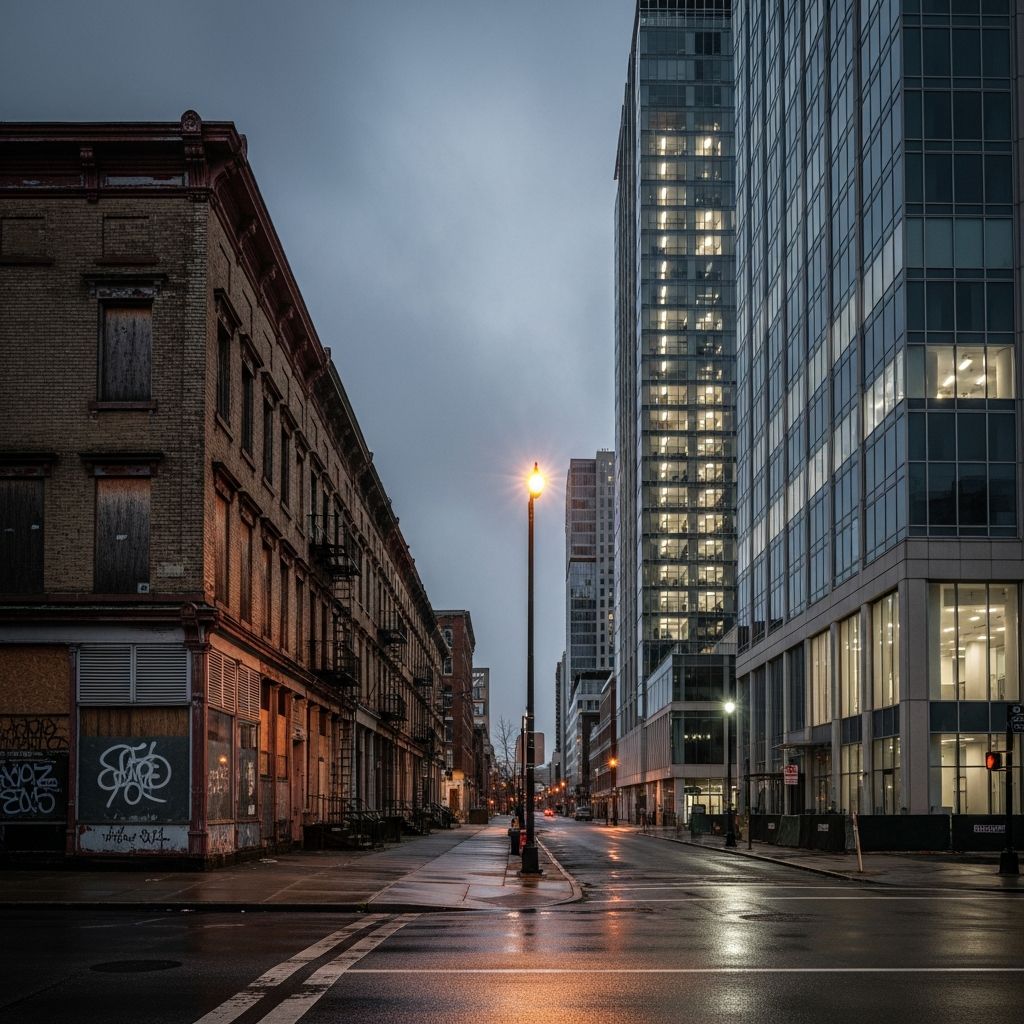
Gentrification transforms declining urban areas into vibrant hubs, but at what price to original residents? This process often displaces low-income families, erodes cultural identities, and deepens socioeconomic divides, sparking debates on equity in city planning.
Understanding the Gentrification Phenomenon
Gentrification occurs when affluent individuals or investors renovate or relocate to lower-income neighborhoods, driving up property values and living costs. This urban renewal can revitalize blighted areas with new businesses, safer streets, and modern infrastructure. However, it frequently sidelines long-standing residents who fueled the community’s unique character.
Historically rooted in post-industrial city shifts, gentrification surged in the US from the 1990s. A systematic review notes its doubling in the largest 50 cities since then, targeting areas previously hit by disinvestment like redlining. While economic growth follows, the human cost demands scrutiny.
Residential Displacement: The Core Challenge
The most immediate fallout is **displacement**, where rising rents force out renters and fixed-income homeowners. Landlords evict tenants to attract higher-paying newcomers, converting affordable units into luxury condos. In San Diego, gentrified neighborhoods rose 18% from 1990-2015, shrinking affordable housing stock.
- Rent hikes outpace wage growth, pricing out 20-30% of original residents in affected zones.
- Demolitions for upscale developments erase low-cost rentals, pushing families into precarious housing.
- Low-income movers often land in worse, non-gentrifying areas, perpetuating cycles of poverty.
Stanford research shows minorities bear the brunt, relocating to poorer city pockets due to discriminatory markets, unlike white displaces who access suburbs.
Cultural and Social Fabric Under Siege
Beyond economics, gentrification dilutes **cultural diversity**. Neighborhoods rich in immigrant, Black, or Latino heritage see mom-and-pop shops replaced by chain cafes catering to newcomers. This “cultural erasure” homogenizes spaces, severing social ties built over generations.
Reduced diversity manifests as wealthier, often white, influxes supplanting communities of color. Areas once vibrant with ethnic festivals and local eateries morph into generic upscale districts, alienating remaining residents.
| Aspect | Pre-Gentrification | Post-Gentrification |
|---|---|---|
| Businesses | Ethnic markets, family diners | Craft breweries, boutiques |
| Demographics | Multicultural, low-income | Homogeneous, affluent |
| Community Events | Block parties, cultural fairs | Art walks, yoga studios |
Health and Well-Being Impacts
Gentrification correlates with **health declines** for vulnerable groups. Displacement disrupts social networks, heightening stress and mental health issues. A review of US studies links it to poorer self-rated health among Black and low-income individuals, amid rising costs and isolation.
- Evictions spike anxiety and depression rates.
- Loss of familiar support systems worsens chronic conditions.
- Neighborhood changes reduce access to culturally appropriate food and services.
Homelessness surges as unaffordable housing funnels people onto streets. Gentrification strains shelters and public aid, overwhelming city resources.
Economic Ripples: Inequality Amplified
While property owners gain windfalls, renters face **socioeconomic disparities**. Cost-of-living jumps—housing, groceries, services—erode disposable income. Local businesses hike prices, excluding originals from neighborhood perks they helped foster.
Income inequality widens as gentrification funnels wealth to newcomers, leaving low-wage workers behind. Public schools may improve superficially but strain under demographic shifts, with resources diverted.
Real-World Case Studies
In Philadelphia, gentrification shrinks options for Black residents, who move to disinvested zones versus wealthier escapes for others. San Diego’s boom revitalized areas but spiked homelessness via housing shortages.
Broader patterns show “displacement by design,” where planners prioritize profit over equity, eroding Black cultural hubs. These examples underscore gentrification’s uneven toll.
Potential Upsides and Balanced Perspectives
Not all effects are negative. Gentrification curbs crime, upgrades infrastructure, and boosts tax bases for services. Yet critics argue these benefits accrue mainly to newcomers, masking deeper inequities. The real issue? Chronic housing shortages citywide, making hot spots battlegrounds.
Strategies for Equitable Urban Renewal
Mitigating harms requires proactive policies:
- Affordable Housing Mandates: Require 20% low-income units in new developments.
- Rent Stabilization: Cap increases to protect tenants.
- Eviction Safeguards: Just-cause laws and relocation aid.
- Community-Led Planning: Involve residents in zoning decisions.
- Inclusionary Incentives: Tax breaks for preserving cultural sites.
Cities like those guided by Urban Institute frameworks identify risks early, blending growth with protection.
Frequently Asked Questions
What is gentrification in simple terms?
Wealthier people moving into poorer areas, improving them but often pricing out originals.
Does gentrification always cause displacement?
Not always, but studies show high rates in minority-heavy zones without protections.
Can gentrification improve neighborhoods?
Yes, via better safety and amenities, but equitable policies ensure broad benefits.
How does gentrification affect health?
It links to stress, poor self-health ratings, especially for Black/low-income groups.
What policies stop negative effects?
Rent control, affordable quotas, and community input mitigate harms effectively.
References
- Gentrification and Its Impact on Homelessness — Crisis House. 2023. https://crisishouse.org/blog/gentrification-and-its-impact-on-homelessness/
- Gentrification Pros and Cons: A Double-Edged Sword — Robert Smith. 2023. https://robertsmith.com/blog/gentrification-pros-and-cons/
- Displaced By Design: Fifty Years of Gentrification and Black Cultural Displacement — NCRC. 2023. https://ncrc.org/displaced-by-design/
- Gentrification disproportionately affects minorities — Stanford Report. 2020-12-01. https://news.stanford.edu/stories/2020/12/01/gentrification-disproportionately-affects-minorities
- ‘Gentrification’ Is Not the Real Problem — Shelterforce. 2021-06-18. https://shelterforce.org/2021/06/18/a-case-to-stop-saying-gentrification/
- Impacts of Gentrification on Health in the US: a Systematic Review — PMC (NCBI). 2020. https://pmc.ncbi.nlm.nih.gov/articles/PMC7704880/
- Guide to Identify and Mitigate the Negative Effects of Gentrification — Urban Institute. 2023. https://www.urban.org/research/publication/guide-identify-and-mitigate-negative-effects-gentrification-caused

- Integrated M.A. in Applied Linguistics, University of Hyderabad
- 5+ years in editorial, instructional, SEO, and research-based writing
Sneha is a relationships and lifestyle writer with a strong foundation in applied linguistics and certified training in relationship coaching. She brings over five years of writing experience to theskillvault, crafting thoughtful, research-driven content that empowers readers to build healthier relationships, boost emotional well-being, and embrace holistic living. Her writing and insights reflect the belief that beauty, happiness, and wellness…