
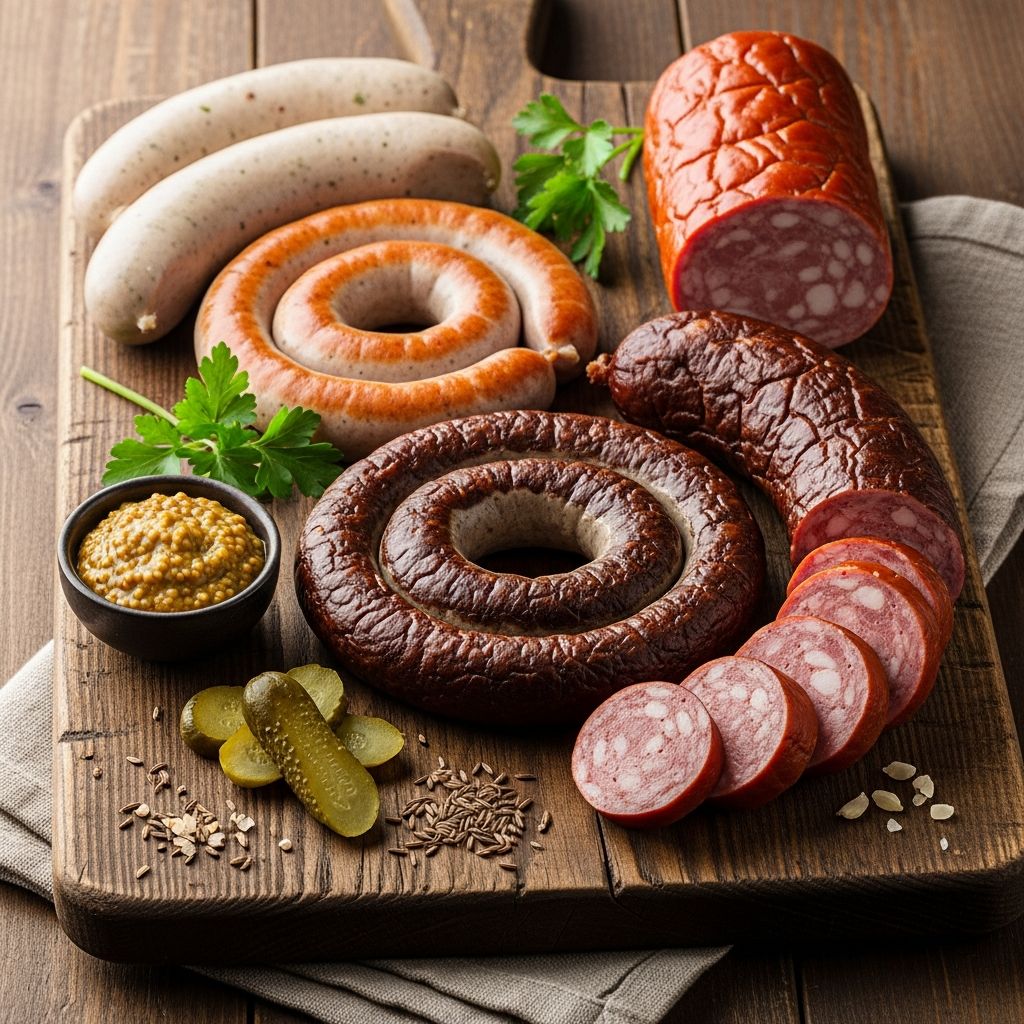
Germany’s sausage tradition stands as a cornerstone of its culinary identity, boasting over 1,500 varieties that reflect centuries of innovation, regional pride, and masterful preservation techniques. These wurst creations range from smoky grilled delights to delicate boiled treats, each tied to specific locales and protected by law in many cases. This guide delves into their ancient roots, key types, preparation methods, and cultural roles, offering a comprehensive taste of this enduring legacy.
The Ancient Roots of German Sausage Making
Sausage production in Germany traces back to antiquity, with the earliest recorded recipes appearing around 228 AD, showcasing early experimentation with meat grinding, stuffing, and seasoning. By the Middle Ages, sausages had evolved into staples, particularly in regions like Franconia and Thüringen, where butchers refined techniques using local meats and spices imported via medieval trade routes.
The Bratwurst, one of the most celebrated types, first entered historical records in 1313 in Nuremberg, sparking a longstanding rivalry between Franconian and Thüringian producers over its origins. Over time, smoking, curing, and grilling methods developed, influenced by available livestock—primarily pork, veal, and beef—and seasonal preservation needs. Today, the European Union’s Protected Geographical Indication (PGI) status safeguards many varieties, ensuring at least 51% of ingredients come from designated areas.
Core Categories of German Sausages
German sausages are broadly classified by preparation: Brühwurst (scalded or parboiled), Rostbratwurst (roasted), Kochwurst (boiled), and smoked or raw varieties. This diversity allows for endless pairings with beer, bread, mustard, and sauerkraut, embodying the nation’s Oktoberfest spirit and daily fare.
- Brühwurst: Gently cooked in hot water, these include Weisswurst and Frankfurter, prized for their tender texture.
- Rostbratwurst: Grilled over charcoal for a crispy exterior, like Nürnberger and Thüringer styles.
- Smoked Sausages: Cured for longevity, such as Mettwurst or Knackwurst, often enjoyed cold.
Spotlight on Legendary Regional Varieties
Each German region contributes unique sausages, protected by tradition and law. Here’s a breakdown of standout types:
| Sausage Type | Origin Region | Key Ingredients | PGI Status | Typical Serving |
|---|---|---|---|---|
| Thüringer Rostbratwurst | Thüringen | Pork, beef/veal, coriander, caraway, garlic | Yes (EU PGI) | Grilled with mustard |
| Nürnberger Rostbratwurst | Franconia (Nuremberg) | Fine pork mince, marjoram, mace, cardamom | Yes | 3-6 on sauerkraut |
| Weisswurst | Bavaria | Veal, pork, parsley, lemon, cardamom | No | Boiled, with pretzel & sweet mustard |
| Frankfurter Würstchen | Frankfurt | Pork, sometimes beef, smoked | Yes (protected name) | Steamed in roll |
| Bockwurst | Bavaria/Berlin | Veal, pork, paprika, chives | No | With bock beer |
| Knackwurst | Northern Germany (Holstein) | Pork/beef, garlic, smoked | No | Grilled with sauerkraut |
Thüringer Rostbratwurst, documented since 1404 with a recipe from 1613, is Germany’s oldest grilled sausage. Its spicy profile comes from robust seasonings, and only those meeting strict regional sourcing qualify for the name.
In Nuremberg, Rostbratwurst shrank in the 16th century to cut costs amid demand dips, becoming the petite, spice-infused icons served in multiples today.
Hidden Gems and Lesser-Known Favorites
Beyond the stars, varieties like Mettwurst (smoked pork spread) and Bierwurst (garlicky, dark-red smoked sausage from Bavaria) offer bold flavors. Ahle Wurst from northern Hesse cures into a hard, peppery log, sometimes laced with rum. Gelbwurst, a pale Bavarian invention from 1905, once included brains but now relies on veal, pork, and nutmeg for its creamy appeal—best eaten fresh.
Frankfurter Rindswurst, created in 1894 for Frankfurt’s Jewish community using beef, remains a kosher alternative, legally restricted to the city.
Mastering Traditional Preparation Techniques
Authentic cooking honors each sausage’s heritage:
- For Weisswurst: Simmer in 167°F (75°C) water for 10 minutes—never boil, to avoid bursting the delicate skin. Slice and serve with senf (sweet mustard) and a bretzel.
- Grilling Rostbratwurst: Charcoal-roast Thüringer or Nürnberger over medium heat, turning frequently for even crispiness. Pair with regional beer.
- Smoking Bockwurst or Knackwurst: Lightly smoke then grill until the ‘knack’ (snap) emerges, alongside potatoes or kraut.
Home cooks can replicate using quality mince, natural casings, and fresh spices. EU PGI rules emphasize minimal processing for true flavor.
Sausages in German Culture and Festivals
Sausages transcend food, symbolizing community at Oktoberfest, Christmas markets, and street stalls. In Munich, Weisswurst embodies Bavarian Gemütlichkeit; in Thüringen, Rostbratwurst fuels hiking trails. They’re paired with bock beer seasonally, as with Bockwurst’s 1500s origins.
Regional pride fuels debates—Frankfurters shun the ‘hot dog’ label, insisting on purity. Globally, they inspire American franks, but originals demand respect through proper sourcing.
Health Considerations and Modern Twists
Traditionally high in fat and sodium, these sausages suit moderation. Opt for leaner veal-based options or homemade versions with less curing salt. Contemporary butchers offer organic, grass-fed variants, blending heritage with wellness.
Frequently Asked Questions (FAQs)
What is the oldest German sausage?
Thüringer Rostbratwurst, referenced in 1404 with a 1613 recipe.
Which sausages have protected status?
Thüringer, Nürnberger, and Frankfurter Würstchen require regional ingredients and methods per EU PGI.
How do you eat Weisswurst properly?
Suck the filling from the skin after poaching; never eat the casing. Serve before noon traditionally.
Are there vegetarian German sausage options?
Modern adaptations exist, but classics rely on meat. Check local markets for plant-based wurst.
What’s the best beer pairing?
Weisswurst with wheat beer; Rostbratwurst with pilsner or bock.
Recipe: Homemade Thüringer-Style Rostbratwurst
Ingredients (makes 10): 2 lbs pork shoulder, 0.5 lb beef, 2 tsp coriander, 1 tsp caraway, 3 garlic cloves, salt, pork casings.
Steps:
- Grind meats coarsely.
- Mix with chopped garlic and spices; rest 24 hours.
- Stuff casings, twist into links.
- Grill 15-20 mins, turning often.
Serve with mustard and rye bread for an authentic bite.
References
- Meat Eaters Only: 6 Types of Popular German Sausage — Foodal. 2023. https://foodal.com/knowledge/protein/meat-eaters-only-the-6-most-famous-german-sausage-varieties/
- The Origin of German Sausages: A Culinary Journey — German Sausages Flavour Factory. 2023. https://www.germansausagesflavourfactory.com/post/theoriginofgermansausages-aculinaryjourney
- Most Popular Types of German Sausage, Explained — Matador Network. 2023. https://matadornetwork.com/read/popular-german-sausages/
- 15 Different Types Of German Sausage: Names, History & Origin — Cord Magazine. 2023. https://cordmagazine.com/living/food-drinks/15-different-types-of-german-sausage-names-history-origin/
- German Sausage Guide — Michelin Guide. 2023. https://guide.michelin.com/us/en/article/features/german-sausage-guide-bratwurst-weisswurst
- The 7 Most Popular Types of German Sausages — European Deli. 2023. https://europeandeli.com/blogs/the-dish/the-7-most-popular-types-of-german-sausages

Medha Deb is an editor with a master's degree in Applied Linguistics from the University of Hyderabad. She believes that her qualification has helped her develop a deep understanding of language and its application in various contexts. Medha specializes in the areas of beauty, health, sports, and wellness and is committed to ensuring that the content on the website is…