
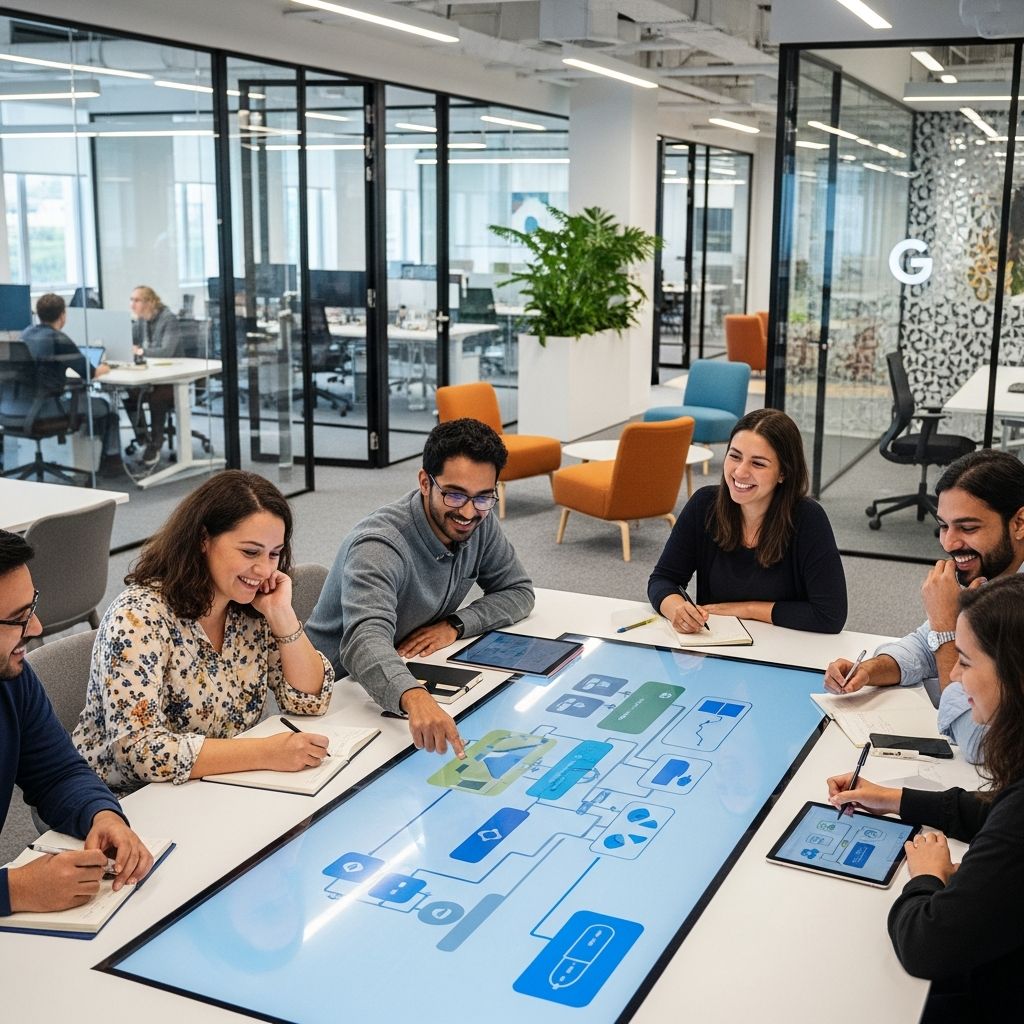
Google’s approach to work has long set the standard for modern workplaces, blending innovation, employee empowerment, and results-driven flexibility. By adopting these principles, employees in any organization can elevate their performance and job satisfaction.
Mastering Flexible Work Arrangements
In today’s evolving work landscape, Google’s hybrid model exemplifies accountable flexibility. Since 2023, the company has mandated at least three in-office days per week for most staff, balancing collaboration needs with personal autonomy. This policy underscores that structured flexibility—such as designated office days for teamwork and remote days for deep focus—enhances productivity without sacrificing employee morale.
Employees can apply this by advocating for clear guidelines in their own workplaces. For instance, propose core collaboration hours that accommodate time zones and personal preferences, ensuring asynchronous work thrives alongside synchronous interactions. Google’s use of tools like shared documents and collaborative platforms during virtual meetings demonstrates how technology can bridge physical gaps, making hybrid setups effective.
- Establish personal ‘focus blocks’ during remote days to tackle high-concentration tasks.
- Participate actively in office days with prepared agendas to maximize in-person value.
- Communicate preferences openly, such as email over instant chat for non-urgent matters.
Building a Culture of Open Dialogue
Transparency remains a cornerstone of Google’s environment. Regular town hall meetings, though less frequent now, allow employees to pose direct questions to executives like CEO Sundar Pichai, who addresses concerns publicly. This practice builds trust and ensures leadership remains approachable.
A flat hierarchy empowers even junior staff to contribute ideas without bureaucratic hurdles. In your role, emulate this by speaking up in meetings, using feedback channels, and fostering cross-team collaborations. Google’s pulse checks—frequent surveys replacing annual ones—keep the organization responsive to employee needs, particularly from underrepresented groups.
| Benefit | Google Practice | Employee Application |
|---|---|---|
| Trust Building | Town Halls & Q&A | Seek regular feedback sessions |
| Empowerment | Flat Structure | Share ideas across levels |
| Responsiveness | Pulse Surveys | Provide honest input frequently |
Unlocking Creativity Through Autonomy
Google’s famous 20% time policy lets employees dedicate one day a week to passion projects, sparking innovations like Gmail. This autonomy encourages risk-taking and out-of-the-box thinking, proving that freedom fuels breakthroughs.
As an employee, carve out similar ‘innovation hours’ in your routine. Experiment with new approaches to routine tasks, document your experiments, and share successes or failures with your team. Google’s emphasis on curiosity over perfection reduces fear of failure, a mindset any professional can adopt to drive personal and team progress.
- Identify a work-related side project aligning with company goals.
- Allocate 10-20% of weekly time to explore it.
- Present findings in team updates to inspire others.
Prioritizing Well-Being and Growth
Employee well-being is non-negotiable at Google, with comprehensive support for physical, mental, and emotional health. This holistic approach boosts engagement and retention, as happy teams deliver superior results.
Professionals should integrate self-care practices like boundary-setting outside work hours and pursuing skill-building opportunities. Google’s learning programs, including reimbursements and peer mentoring, highlight continuous development as integral to career longevity. Suggest ‘lunch and learn’ sessions or internal workshops to your employer.
Onboarding exemplifies this: New hires receive buddies for rapport-building, ensuring quick integration even in hybrid settings. Mirror this by mentoring newcomers or seeking guidance early in transitions.
Cultivating Inclusive Collaboration
Diversity drives Google’s innovation, with policies promoting varied perspectives through resource groups and inclusive hiring. Open decision-making involves employees via platforms for real-time feedback, creating a sense of shared ownership.
In practice, champion inclusivity by amplifying diverse voices in discussions and using collaborative tools like Miro for equitable participation. Google’s hybrid protocols—cameras on for engagement, off for info-sharing—optimize virtual interactions.
Driving Innovation with Psychological Safety
Google’s re:Work research emphasizes psychological safety, where teams feel safe to take risks. Regular feedback opportunities and inclusive cultures foster this, leading to higher innovation rates.
Build it personally by admitting mistakes openly and encouraging team vulnerability. This aligns with Google’s flat structure, empowering all levels to contribute boldly.
Aligning with Mission-Driven Purpose
Core values like user focus and excellence anchor Google’s culture, giving employees purpose beyond tasks. This alignment motivates sustained high performance.
Connect your daily work to broader impacts, reinforcing motivation during challenges.
Frequently Asked Questions (FAQs)
How has Google’s work policy evolved by 2025?
Google requires three in-office days weekly since 2023, offering exit packages for non-compliant staff, prioritizing in-person collaboration.
What is the 20% time policy?
Employees spend 20% of time on self-directed projects, fostering innovations like key products.
How does Google support hybrid teamwork?
Through clear rules like core hours, collaborative tools, and onboarding buddies for connection.
Why is transparency key at Google?
Town halls and pulse surveys build trust and responsiveness to employee needs.
How can employees apply Google’s well-being focus?
By setting boundaries, pursuing learning, and advocating for supportive policies.
References
- Google’s Values and Culture in 2025: What Changed and What … — Commonwealth Joe. 2025. https://commonwealthjoe.com/blogs/blog/google-culture-values-2025
- Google’s Company Culture: Unveiling Organizational Values — Culture Partners. 2024. https://culturepartners.com/insights/googles-company-culture-unveiling-organizational-values/
- Building company culture, trust and connection for hybrid workers — Google Business. 2024. https://business.google.com/uk/think/future-of-marketing/hybrid-working-company-culture/
- Exploring the Culture at Google: A Look Inside — Corporate Culture Institute. 2024. https://www.corporate-culture-institute.com/blog/exploring-the-culture-at-google-a-look-inside
- Google’s values and commitments — Google. 2025. https://about.google/company-info/commitments/
- Google — Building Together for Everyone — Google Belonging. 2025. https://belonging.google
- Guides: Foster an innovative workplace — Google re:Work. 2024. https://rework.withgoogle.com/intl/en/guides/foster-an-innovative-workplace

- Integrated M.A. in Applied Linguistics, University of Hyderabad
- 5+ years in editorial, instructional, SEO, and research-based writing
Sneha is a relationships and lifestyle writer with a strong foundation in applied linguistics and certified training in relationship coaching. She brings over five years of writing experience to theskillvault, crafting thoughtful, research-driven content that empowers readers to build healthier relationships, boost emotional well-being, and embrace holistic living. Her writing and insights reflect the belief that beauty, happiness, and wellness…