
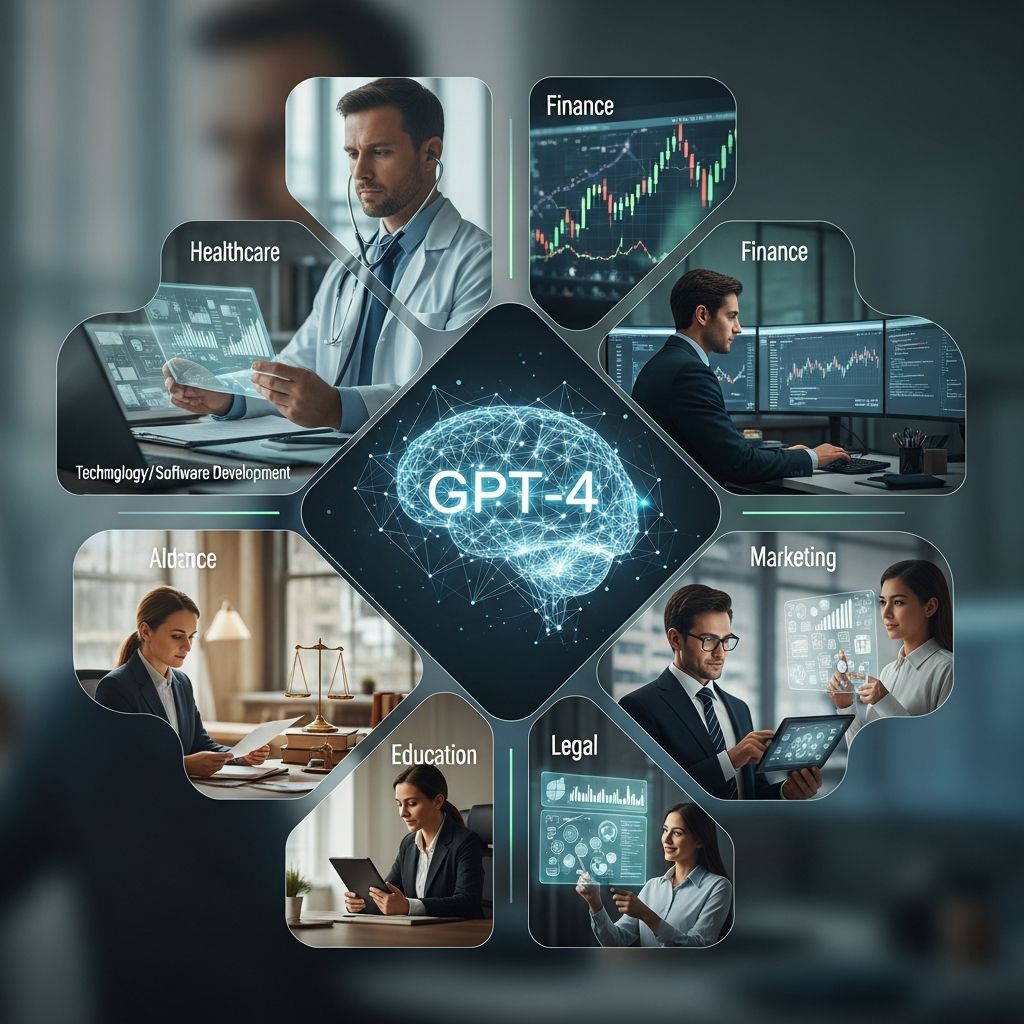
Understanding GPT-4 and Its Professional Significance
Artificial intelligence has become an indispensable tool in modern workplaces, and GPT-4 represents a significant leap forward in language model technology. Unlike its predecessors, GPT-4 combines both text and image processing capabilities, enabling professionals across diverse fields to enhance productivity and streamline complex workflows. This advanced multimodal model processes information with greater accuracy and nuance, reducing the likelihood of generating irrelevant or misleading outputs that characterized earlier iterations.
The development of GPT-4 reflects years of refinement and adversarial testing, ensuring robustness and reliability in professional environments. Organizations worldwide are discovering that integrating GPT-4 into their operations leads to measurable improvements in efficiency, creativity, and decision-making processes. Understanding how to effectively implement this technology has become essential for professionals seeking competitive advantages in their respective fields.
Enhancing Career Development and Recruitment
Career advancement and talent acquisition have been fundamentally transformed by GPT-4’s capabilities. Job seekers now leverage this technology to create more compelling application materials and navigate competitive labor markets more strategically. The tool excels at analyzing job descriptions and identifying critical competencies that hiring managers prioritize, allowing candidates to align their qualifications more effectively.
Resume and cover letter optimization has become more sophisticated with GPT-4’s assistance. The technology analyzes specific job postings and recommends targeted language that resonates with both automated screening systems and human reviewers. Rather than using generic descriptions, professionals can now incorporate industry-specific terminology and achievement metrics that demonstrate measurable impact in their previous roles.
Interview preparation has also evolved significantly. GPT-4 can simulate comprehensive mock interviews that address both behavioral and technical questions, providing real-time feedback on clarity, specificity, and communication effectiveness. Candidates receive personalized coaching on how to structure responses using the STAR method (Situation, Task, Action, Result) and can practice until they achieve confidence in their delivery.
From the recruitment side, human resources professionals use GPT-4 to craft highly personalized outreach messages. By analyzing candidates’ professional histories, LinkedIn profiles, and industry experience, recruiters can create individualized communication that speaks directly to each prospect’s career trajectory and aspirations. This level of personalization significantly increases response rates and interview acceptance rates.
Financial Services and Analytical Excellence
The financial services sector has embraced GPT-4 for its ability to process and synthesize vast amounts of complex documentation. Professionals dealing with contracts, compliance documents, and regulatory frameworks can now submit lengthy documents for analysis, receiving summaries of key risk areas, terms, and obligations in a fraction of the time manual review would require. GPT-4’s expanded context window allows it to retain information from up to 50 pages of text simultaneously, enabling comprehensive document analysis.
Financial analysts employ GPT-4 to generate research summaries, analyze market trends, and prepare investment theses. The technology can distill complex financial reports into executive summaries, identify patterns across multiple documents, and highlight potential areas of concern that warrant further investigation. This capability allows analysts to focus their expertise on strategic interpretation rather than information gathering.
Risk management teams utilize GPT-4 to identify potential exposure areas in contracts and agreements. The technology can flag unusual terms, missing protections, or non-standard clauses that might disadvantage the organization. Following this analysis, professionals can directly request draft communications addressing these concerns, accelerating the negotiation process.
Information Technology and Technical Implementation
Information technology professionals have discovered numerous applications for GPT-4 within their daily operations. The technology serves as a knowledgeable colleague available instantly, capable of explaining complex technical concepts, generating step-by-step implementation guides, and producing custom scripts tailored to specific infrastructure requirements.
System administrators use GPT-4 to troubleshoot issues more efficiently by describing problems and receiving detailed diagnostic approaches. The technology can generate configuration files, assist with code reviews, and help professionals stay current with rapidly evolving technologies and frameworks. This capability proves particularly valuable in environments where documentation may be outdated or incomplete.
Development teams leverage GPT-4’s programming expertise to accelerate coding projects. The technology can generate boilerplate code, suggest optimization approaches, and help identify potential bugs or security vulnerabilities. By handling routine coding tasks, developers can concentrate on architectural decisions and complex problem-solving.
The image processing capabilities introduced in GPT-4 open additional possibilities for IT professionals. Technical diagrams can be analyzed and converted into documentation, application mockups can be transformed into functional code, and system architecture sketches can be converted into implementation specifications.
Healthcare and Medical Professional Applications
Healthcare professionals increasingly recognize GPT-4’s potential for improving patient care coordination and administrative efficiency. The technology can assist with medical literature research, helping clinicians stay informed about emerging treatments and diagnostic approaches. By processing multiple research papers simultaneously, physicians can quickly synthesize current evidence for specific conditions or treatment protocols.
Administrative workflows in healthcare benefit significantly from GPT-4’s document processing abilities. Medical records can be analyzed for completeness, billing documentation can be reviewed for accuracy, and patient communication templates can be personalized based on specific medical histories and treatment plans. This reduces administrative burden and allows healthcare professionals to dedicate more time to direct patient care.
Medical coders and billing specialists use GPT-4 to ensure accurate code selection and documentation compliance. The technology can review clinical notes and suggest appropriate diagnostic and procedural codes, reducing claim denials and improving revenue cycle management.
Marketing, Content Creation, and Brand Development
Marketing professionals have discovered that GPT-4’s multimodal capabilities revolutionize social media management and content strategy. The technology can generate compelling captions for images, create multiple variations of marketing messages optimized for different audience segments, and maintain consistent brand voice across various platforms. By uploading example content, professionals train GPT-4 to understand their specific communication style and brand tone.
Content creators leverage GPT-4 to overcome writer’s block and accelerate production timelines. Long-form content can be generated from transcripts, research summaries, or outline notes. Marketing teams can produce blog articles, email campaigns, social media posts, and landing page copy with unprecedented speed while maintaining quality and relevance.
Market research benefits from GPT-4’s ability to analyze competitive landscapes and identify emerging trends. Marketing professionals can submit industry reports, competitor websites, and market data for comprehensive analysis that informs strategy development and positioning decisions.
Legal Practice and Compliance Management
Legal professionals have found GPT-4 invaluable for contract review and legal research acceleration. Attorneys can submit lengthy contracts for analysis, receiving summaries of key provisions, potential risks, and areas requiring negotiation. This technology does not replace legal expertise but rather augments it by handling preliminary document analysis and research compilation.
Compliance officers use GPT-4 to ensure organizations maintain adherence to evolving regulatory frameworks. The technology can review policies against current regulations, generate compliance documentation, and identify areas where organizational practices may require updating. This proactive approach reduces legal risk and demonstrates due diligence in regulatory matters.
Legal departments leverage GPT-4 for contract drafting assistance, generating template language for common agreement types. While attorney review remains essential, this capability accelerates the initial drafting phase and ensures consistency across organizational contracts.
Identifying Skill Development Opportunities and Training Needs
Professional development becomes more strategic with GPT-4’s ability to identify skill gaps based on career aspirations and industry trends. Professionals considering career transitions can submit job descriptions and industry analyses to receive comprehensive assessments of skills they need to develop. The technology can recommend specific learning resources, online courses, and practical projects that build required competencies.
Organizations use GPT-4 to conduct skills gap analyses across departments and teams. By evaluating current workforce capabilities against emerging business needs, human resources professionals can design targeted training programs that align individual development with organizational objectives.
Mentorship and coaching relationships benefit from GPT-4’s ability to provide consistent, accessible guidance between formal coaching sessions. Professionals working toward specific development goals can receive encouragement, accountability, and progress tracking support through AI-assisted conversations.
Strategic Career Positioning and Personal Branding
Building a distinctive professional brand requires consistency and strategic communication, areas where GPT-4 excels. The technology can help professionals articulate their unique value propositions, identifying what distinguishes them from peers in their field. This clarity translates into more compelling resume statements, LinkedIn profiles, and networking pitches.
Professionals seeking thought leadership status can use GPT-4 to generate blog post topics, social media content calendars, and speaking engagement abstracts. The technology helps maintain consistent communication cadence while preserving individual voice and expertise.
Networking outreach becomes more effective when personalized appropriately. Professionals can use GPT-4 to research connections, identify common interests or mutual acquaintances, and draft personalized networking messages that create genuine connection rather than generic solicitation.
Navigating Major Career Transitions
Career changes represent significant professional decisions requiring careful planning and strategic positioning. GPT-4 assists professionals navigating transitions by identifying transferable skills, suggesting roles that leverage existing expertise in new contexts, and helping reframe experience appropriately for target industries.
Someone transitioning from sales to project management, for example, can explore how skills like client relationship management, deadline management, and presentation abilities transfer to new roles. GPT-4 helps articulate these connections effectively in resume materials and interview discussions.
Career changers can also use GPT-4 to research target industries, understand professional expectations in new fields, and identify potential barriers to entry. This research-informed approach to career transitions increases success rates and reduces time spent in job searching.
Productivity Enhancement and Workflow Optimization
Beyond specific professional functions, GPT-4 serves as a general productivity enhancer across industries. The expanded context window allows professionals to submit multiple documents simultaneously, requesting comprehensive analysis that would previously require substantial time investment. Meeting notes can be transformed into action items, long transcripts can become presentation decks, and scattered information can be synthesized into coherent strategic documents.
The technology learns individual communication preferences and work styles, becoming increasingly valuable as professionals provide feedback and guidance. Over time, GPT-4 adapts its outputs to match specific industry terminology, organizational culture, and personal preferences.
Professionals working across multiple time zones appreciate GPT-4’s availability for brainstorming sessions, fact-checking, and preliminary analysis outside traditional business hours. This capability ensures work continues progressing even when team members are unavailable.
Reliability, Accuracy, and Professional Considerations
As with any technology, GPT-4 has important limitations professionals should understand. While more reliable than predecessors, the technology can still produce plausible-sounding but inaccurate information, a phenomenon known as “hallucination.” Critical decisions should never rely solely on GPT-4 outputs without verification from authoritative sources and human expertise.
Data privacy and confidentiality require careful attention when using GPT-4 in professional contexts. Sensitive information, confidential company data, or client information should never be submitted to publicly accessible versions of the technology without understanding potential implications.
Professional judgment remains essential in all applications. GPT-4 serves as a powerful augmentation tool, enhancing human capability rather than replacing professional expertise, critical thinking, and ethical decision-making.
Implementation Best Practices Across Organizations
Successfully implementing GPT-4 in professional environments requires thoughtful planning. Organizations benefit from establishing clear policies regarding appropriate use cases, data handling, and output verification. Training programs help employees understand the technology’s capabilities and limitations, maximizing value while minimizing risks.
Identifying high-impact use cases provides the strongest foundation for technology adoption. Organizations often begin by automating routine document analysis, accelerating content creation, or enhancing customer research capabilities before expanding to additional applications.
Regular evaluation of GPT-4’s impact on productivity and quality helps organizations optimize implementation over time. Measuring metrics like time savings, error reduction, and productivity improvement demonstrates value and guides resource allocation decisions.
Frequently Asked Questions
Q: How does GPT-4 differ from previous ChatGPT versions?
A: GPT-4 accepts both text and image inputs, processes up to 50 pages of text simultaneously (compared to 25 pages previously), and produces more accurate, nuanced outputs with fewer hallucinations. This multimodal capability opens applications unavailable in text-only predecessors.
Q: Is GPT-4 suitable for confidential business information?
A: Users should exercise caution with sensitive data. While GPT-4 itself maintains security standards, submitting confidential information to cloud-based services involves inherent risks. Organizations should establish policies regarding what information can be shared and consider enterprise solutions with enhanced privacy protections.
Q: Can GPT-4 replace professional expertise in fields like law or medicine?
A: No. GPT-4 augments professional expertise by handling preliminary research, analysis, and documentation tasks. Human professionals must always verify outputs, apply contextual judgment, and maintain accountability for critical decisions. The technology enhances efficiency but does not substitute for qualified practitioners.
Q: How can organizations measure GPT-4’s impact on productivity?
A: Organizations can track metrics including time saved on specific tasks, error reduction rates, output quality improvements, and employee satisfaction with the tool. Comparing productivity before and after implementation provides concrete evidence of impact.
Q: Which professions have adopted GPT-4 most rapidly?
A: Software developers show the highest adoption rates, followed by financial professionals, marketing specialists, and IT administrators. However, applications continue expanding across healthcare, legal services, education, and other sectors.
References
- 10 Ways Chat GPT-4 Can Help You In Your Job Search — Tier4 Group. 2024. https://tier4group.com/10-ways-chat-gpt-4-can-help-you-in-your-job-search/
- Here are 5 ways workers can use GPT-4 to improve productivity — Worklife News. 2024. https://www.worklife.news/technology/gpt-4/
- How ChatGPT Can Make Life Easier for IT Professionals — ITPro Today. 2024. https://www.itprotoday.com/ai-machine-learning/how-chatgpt-can-make-life-easier-for-it-professionals
- GPT-4 – OpenAI — OpenAI. 2024. https://openai.com/index/gpt-4-research/
- ChatGPT Usage Varies Widely by Job and Gender — AI for Education. 2024. https://www.aiforeducation.io/blog/chatgpt-usage-varies-widely-by-job-and-gender

Medha Deb is an editor with a master's degree in Applied Linguistics from the University of Hyderabad. She believes that her qualification has helped her develop a deep understanding of language and its application in various contexts. Medha specializes in the areas of beauty, health, sports, and wellness and is committed to ensuring that the content on the website is…