
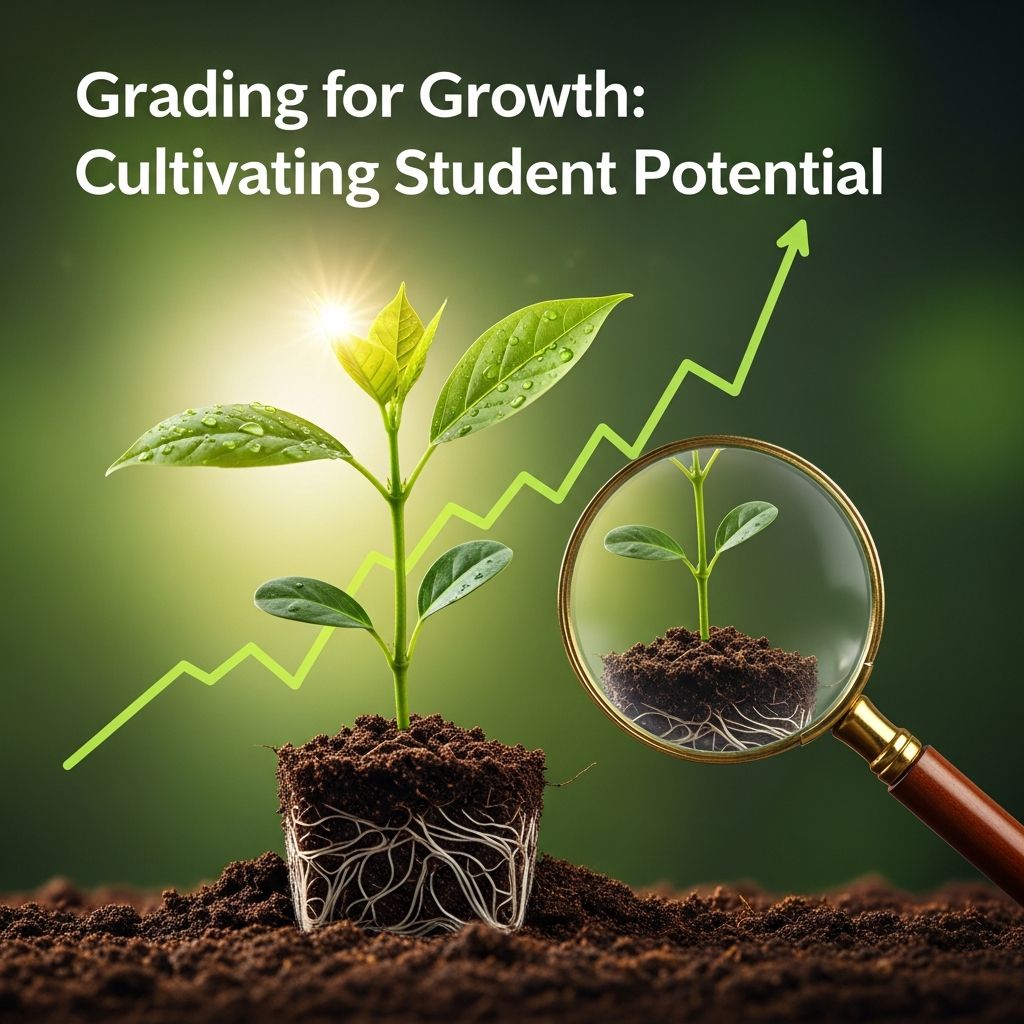
Traditional grading systems often prioritize final scores, turning education into a high-stakes competition that can stifle curiosity and persistence. By adopting a **growth mindset** approach to assessment, educators can reframe grades as guides for improvement rather than judgments of ability. This method emphasizes learning progress, strategic effort, and mastery, helping students view challenges as opportunities rather than threats.
Understanding the Foundations of Growth-Oriented Assessment
A growth mindset, as conceptualized by psychologist Carol Dweck, posits that abilities can be developed through dedication and hard work, contrasting with a fixed mindset that sees talent as innate and unchangeable. In classrooms, this translates to grading practices that reward process over perfection. Research shows that when teachers communicate belief in students’ potential to improve, pass rates rise, particularly for underserved groups.
Key principles include transparency in expectations, opportunities for revision, and feedback focused on actionable steps. Standards-based grading aligns closely here, evaluating proficiency against clear criteria rather than accumulated points, which reduces stress and encourages resilience.
Shifting from Points to Proficiency: Core Strategies
To implement growth-focused grading, start by clarifying what success looks like. Define specific, measurable learning outcomes such as “Students will analyze primary sources to construct evidence-based arguments” instead of vague goals like “Understand history.” This backward design ensures assessments directly measure intended skills.
- Provide advance rubrics: Share detailed rubrics outlining proficiency levels (e.g., novice, developing, proficient, advanced) with behavioral examples. This demystifies grading and empowers students to self-assess.
- Use a simplified scale: Adopt a 4-point scale where 3 indicates proficiency, avoiding the demotivating precision of percentages. Scores reflect current mastery, not permanent failure.
- Prioritize summative over formative grading: Reserve grades for end-of-unit demonstrations of learning. Practice work receives feedback only, shifting motivation from external rewards to intrinsic growth.
These adjustments foster a culture where mistakes signal areas for development, not deficits. Students begin asking “How can I get better?” rather than “What did I lose?”
Implementing Feedback That Drives Improvement
Effective feedback is the cornerstone of growth grading. It should be timely, specific, and tied to effort or strategies, not innate traits. For instance, say “Your revised thesis now clearly addresses the counterargument—great use of evidence!” instead of “You’re so smart.” This reinforces process over talent.
| Fixed Mindset Feedback | Growth Mindset Feedback |
|---|---|
| “This is wrong because you’re not good at math.” | “Let’s try breaking this into smaller steps—your persistence on the last problem paid off!” |
| “Perfect score! You’re a natural.” | “Your strategy of checking work twice led to this accuracy—keep refining it.” |
| “You failed; better luck next time.” | “Not yet proficient here. Focus on practicing X skill, and resubmit by Friday.” |
Limit feedback to 1-2 key areas per assignment to avoid overload, and always include next steps. On long-term projects, incorporate checkpoints for coaching-style reviews, allowing iterations before final grading.
Building a ‘Not Yet’ Culture in Your Classroom
The phrase “not yet” transforms a low score into a promise of potential. In standards-based systems, it indicates a skill is emerging but not mastered, opening doors for reteaching and retrying. This reduces anxiety, as students see growth as ongoing.
Practical steps:
- Embed ‘not yet’ in report cards and conversations: “You’re not yet at proficiency in algebraic manipulation, but your graphing skills are strong—let’s target practice problems.”
- Schedule remediation: Allow 1-2 resubmissions within a week, tied to targeted activities like peer tutoring or skill drills.
- Model growth language: Frame quizzes as “progress checks” and celebrate improvements, e.g., “Class average rose 20%—your strategies are working!”
Over time, this builds resilience. Studies confirm growth mindset interventions prevent grade drops in challenging courses.
Practical Tools and Systems for Growth Grading
Transition gradually to avoid overwhelm. Pilot in one unit: Select outcomes, craft rubrics, and track progress with digital tools like Google Classroom for revision tracking.
Sample Rollout Timeline:
| Week | Action |
|---|---|
| 1 | Introduce mindset concepts via short video/activity. |
| 2-3 | Apply to one assignment; provide model feedback. |
| 4 | Student-led reflections on growth. |
| 5+ | Expand to full unit; survey for adjustments. |
Measure success through student surveys on anxiety reduction and risk-taking, alongside proficiency gains.
Overcoming Common Challenges
Resistance from parents or admins accustomed to A-F scales is common. Address by sharing research: Growth grading boosts engagement without sacrificing standards. For policy constraints, adapt internally—grade summatives only while providing rich formative notes.
Teacher workload spikes initially but eases with routines. Batch feedback sessions and use peer review to scale.
Frequently Asked Questions (FAQs)
What if students don’t take ungraded work seriously?
Initially, some may slack, but clear ties to summative success and intrinsic motivation shifts behavior. Track participation qualitatively.
How do I handle district percent-based requirements?
Convert proficiency scales to percentages transparently (e.g., 3=85-100%), but emphasize narrative feedback for growth.
Does this work for all subjects and ages?
Yes—adapt rubrics to content. Elementary uses simpler scales; high school adds complexity. Evidence spans K-12.
What about competitive students chasing GPAs?
Reframe GPA as mastery snapshot. Share long-term benefits like deeper learning and college readiness.
How long until students embrace this?
One semester typically yields mindset shifts, accelerating with consistent modeling.
Long-Term Benefits for Students and Schools
Adopting growth grading yields confident learners who persist through setbacks. Anxiety drops, risks increase, and equity improves for low-SES students. Schools see higher retention and real-world skill development, aligning with workforce demands for adaptability.
In summary, grading for growth isn’t just kinder—it’s more effective. By measuring progress toward mastery and fueling it with targeted support, educators unlock every student’s potential.
References
- Grading for Growth in a High-Stakes World — Mindset Works Blog. 2016. https://blog.mindsetworks.com/entry/grading-for-growth-in-a-high-stakes-world
- Grading for Growth: Reconsidering Points, Purpose, and Proficiency — Faculty Focus. 2023. https://www.facultyfocus.com/articles/educational-assessment/grading-for-growth-reconsidering-points-purpose-and-proficiency/
- Grading and the Growth Mindset: Establishing a ‘Not Yet’ Culture — Jordan School District. 2021-02. https://southhills.jordandistrict.org/wp-content/uploads/sites/8/2021/02/Parent-Article-2-Grading-and-the-Growth-Mindset.pdf
- Grading With a Growth Mindset — Ashleigh’s Education Journey. 2020. https://www.ashleigh-educationjourney.com/grading-growth-mindset/
- Growth Mindset & Grading — Learning and Teaching Blog. 2018-04-02. https://learningandteachingblog.com/2018/04/02/growth-mindset-and-grading/
- Growth Mindset Teaching Helps Students Make the Grade — McCombs School of Business, UT Austin. 2023. https://news.mccombs.utexas.edu/research/growth-mindset-teaching-helps-students-make-the-grade/
- The Right Mindset Raises Grades — Stanford SPARQ. 2019. https://sparq.stanford.edu/solutions/right-mindset-raises-grades

- Integrated M.A. in Applied Linguistics, University of Hyderabad
- 5+ years in editorial, instructional, SEO, and research-based writing
Sneha is a relationships and lifestyle writer with a strong foundation in applied linguistics and certified training in relationship coaching. She brings over five years of writing experience to theskillvault, crafting thoughtful, research-driven content that empowers readers to build healthier relationships, boost emotional well-being, and embrace holistic living. Her writing and insights reflect the belief that beauty, happiness, and wellness…