
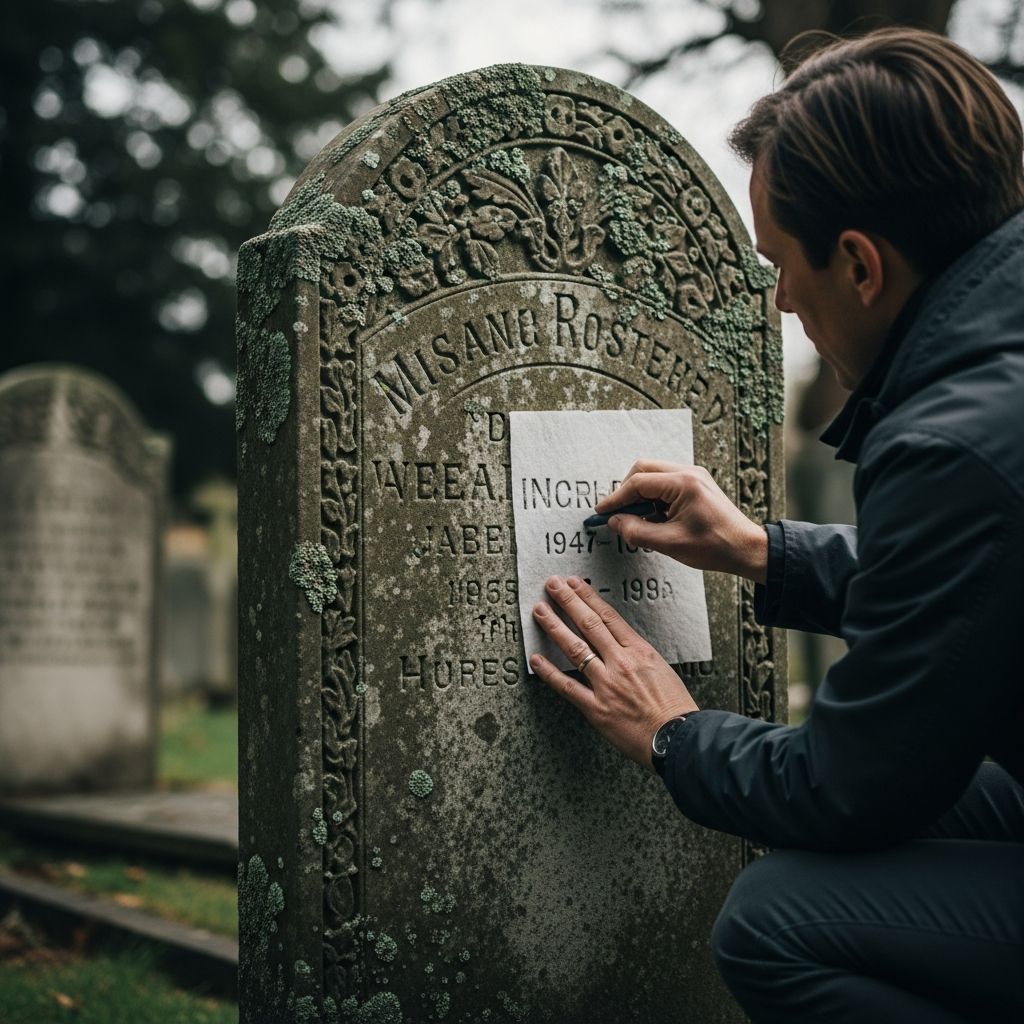
Gravestone rubbing offers a tactile way to connect with history, capturing intricate carvings and inscriptions from cemetery markers. This time-honored practice blends artistry, genealogy, and respect for the past, allowing enthusiasts to create portable replicas of memorials that might otherwise fade from view.
The Historical Significance of Gravestone Impressions
Long before digital photography, rubbing techniques served as vital tools for documenting epitaphs and symbols on tombstones. Genealogists and historians relied on these methods to record family lineages etched in stone, especially when weathering obscured details. Today, the craft persists as both a preservation effort and a creative outlet, helping to safeguard cultural narratives against erosion and time.
From Victorian-era cemeteries adorned with symbolic motifs like weeping willows and urns to colonial slate markers, each rubbing tells a story of craftsmanship and commemoration. Engaging in this activity not only revives forgotten skills but also fosters appreciation for cemetery landscapes as open-air museums.
Why Pursue Gravestone Rubbing Today?
- Genealogical Research: Capture faded inscriptions for ancestry records when photos fail.
- Artistic Expression: Produce unique textured artwork for framing or journaling.
- Historical Documentation: Contribute to local heritage projects by archiving vulnerable stones.
- Educational Value: Teach children about mortality, symbolism, and manual dexterity.
Despite its benefits, rubbing demands caution to avoid damaging fragile monuments, a concern amplified in older burial grounds.
Essential Permissions and Ethical Considerations
Before approaching any stone, secure explicit approval from cemetery management. Many sites prohibit rubbing outright due to risks of surface abrasion or adhesive residue. Contact officials via phone or email, outlining your intent and promising adherence to guidelines.
Respect extends to behavior: tread lightly on grounds, avoid fresh graves, and work during daylight hours. Leave no trace—remove all materials promptly. In historic sites, volunteer for cleanup or documentation to build goodwill.
| Do’s | Don’ts |
|---|---|
| ✓ Seek permission first | ✗ Rub without approval |
| ✓ Follow site rules | ✗ Use on fragile stones |
| ✓ Clean up thoroughly | ✗ Leave tape or debris |
| ✓ Work in pairs for safety | ✗ Visit alone at dusk |
Selecting the Perfect Stone for Rubbing
Ideal candidates feature smooth, stable surfaces with shallow, crisp engravings—think polished granite over porous marble or sandstone. Inspect for stability: reject leaning, cracked, or flaking markers to prevent accidental harm.
Flat or slightly raised designs yield superior results, highlighting motifs like anchors (hope), doves (soul’s ascent), or hands in prayer. Bypass deeply incised letters, as they demand excessive pressure and risk chipping. Prioritize stones from stable, well-maintained sections for both quality and ethics.
Gathering Your Rubbing Toolkit
A minimalist kit ensures portability and minimal impact. Core items include:
- Paper: Lightweight options like rice paper, newsprint, or vellum (avoid glossy or heavy stock that tears easily).
- Marking Tools: Soft crayons (peeled for broad strokes), charcoal sticks, or specially shaved pencils for even coverage.
- Securing: Low-tack masking tape (test on inconspicuous areas).
- Cleaning: Soft brush, plain water, and mild soap—no abrasives or chemicals.
- Protection: Fixative spray, clipboard for backup support, and gloves.
For pros, add a portable rubbing board to flatten paper against uneven surfaces. Budget kits start under $20, scalable for group outings.
Step-by-Step Process for Flawless Rubbings
- Prepare the Surface: Gently brush away loose dirt, moss, or lichen using a soft nylon brush and damp cloth with plain water. Allow full drying—wet stone distorts results.
- Position Paper: Unroll paper larger than the inscription area. Anchor one edge with minimal tape strips, smoothing wrinkles from the center outward. Use a helper on windy days.
- Apply Medium: Select crayon or modified pencil (shave one side flat for broader contact). Hold at a 45-degree angle, rubbing lightly in circular or linear motions over engravings. Build gradually for depth without smudging.
- Refine Details: Focus on contours first, then fill evenly. Avoid edges to prevent paper slippage or stone scratches.
- Preserve the Piece: Peel paper slowly, spray with artist fixative, and flatten under books. Trim and mount for display.
Practice on leaves or coins refines technique before cemetery visits.
Advanced Techniques for Professional Results
Elevate basic rubbings with these methods:
- Multi-Layer Approach: Overlay translucent papers for color gradients, capturing texture in hues of gray, sepia, or pastels.
- Large-Scale Captures: Use butcher paper and extendable poles for expansive memorials, sectioning if needed.
- Digital Hybrids: Scan rubbings for editing software, enhancing contrast or annotating genealogy notes.
- Symbolic Interpretation: Research motifs post-rubbing—e.g., oak leaves denote strength—to enrich presentations.
Charcoal yields dramatic contrasts on granite, while pencils suit fine script.
Common Pitfalls and Troubleshooting
Avoid these errors for success:
| Issue | Solution |
|---|---|
| Blurry lines | Increase pressure gradually; use fresher paper |
| Tape residue | Opt for painter’s tape; remove immediately |
| Paper tears | Choose vellum; secure better |
| Uneven tone | Work in overlapping strokes |
| Stone damage fear | Switch to photography or wax molds |
Windy conditions? Postpone or use weighted corners.
Safety Protocols in Cemetery Settings
Cemeteries pose uneven terrain risks—wear sturdy shoes, bring water, and inform someone of your location. Watch for bees, traffic, or unstable markers. Solo visits heighten vulnerabilities; pairs enhance vigilance.
Preserving and Displaying Your Creations
Post-fixative, store flat in portfolios away from sunlight. Frame under glass with acid-free mats for longevity. Digitize for sharing on genealogy platforms, crediting the site. Some create books compiling rubbings with historical context, turning personal projects into communal resources.
Alternatives When Rubbing Is Prohibited
- High-resolution photography with polarized filters.
- 3D scanning apps for virtual models.
- Wax or latex molding for textures (with permission).
- Stone tracings with soft brushes and digital overlays.
Frequently Asked Questions (FAQs)
Is gravestone rubbing legal everywhere?
No—many historic cemeteries ban it to protect stones. Always verify policies first.
What paper works best for beginners?
Rice paper or newsprint offers affordability and clarity without tearing.
Can children participate safely?
Yes, supervised with crayons on stable stones; it educates on history and respect.
How do I fix a smudged rubbing?
Apply fixative spray and press under weights; erase lightly with kneaded rubber.
Does rubbing damage headstones?
Minimal if done gently on suitable stones, but avoid fragile ones to prevent abrasion.
Building a Community Around Rubbing
Join local genealogy societies or online forums for tips and group excursions. Contribute rubbings to public archives, aiding broader preservation. Host workshops emphasizing ethics, turning hobbyists into stewards of shared heritage.
This craft bridges past and present, inviting tactile engagement with ancestors’ stories. With responsibility, it endures as a meaningful pursuit (word count: 1678).
References
- How to Make a Grave Rubbing — Howcast/YouTube. N/A. https://www.youtube.com/watch?v=BjlpNupjoCs
- How to Make a Gravestone Rubbing — Historic Geneva/YouTube. N/A. https://www.youtube.com/watch?v=0gVy8XINeDg
- How To Do A Proper Monument Rubbing — Summit Memorials. 2022-01-06. https://www.summit-memorials.com/how-to-do-a-proper-monument-rubbing/
- Confessions of a Goth Pencil Lady: How to Do a Grave Rubbing — CW Pencils. N/A. https://www.cwpencils.com/blog-archive/confessions-of-a-goth-pencil-lady-how-to-do-a-grave-rubbing
- Headstone Rubbing Techniques That Get Good Results — Ancestry Printing. N/A. https://www.ancestryprinting.com/headstone.html
- Gravestone Rubbing — Bullitt County History Museum. N/A. https://bullittcountyhistory.org/cem/rubbing.html

Medha Deb is an editor with a master's degree in Applied Linguistics from the University of Hyderabad. She believes that her qualification has helped her develop a deep understanding of language and its application in various contexts. Medha specializes in the areas of beauty, health, sports, and wellness and is committed to ensuring that the content on the website is…