
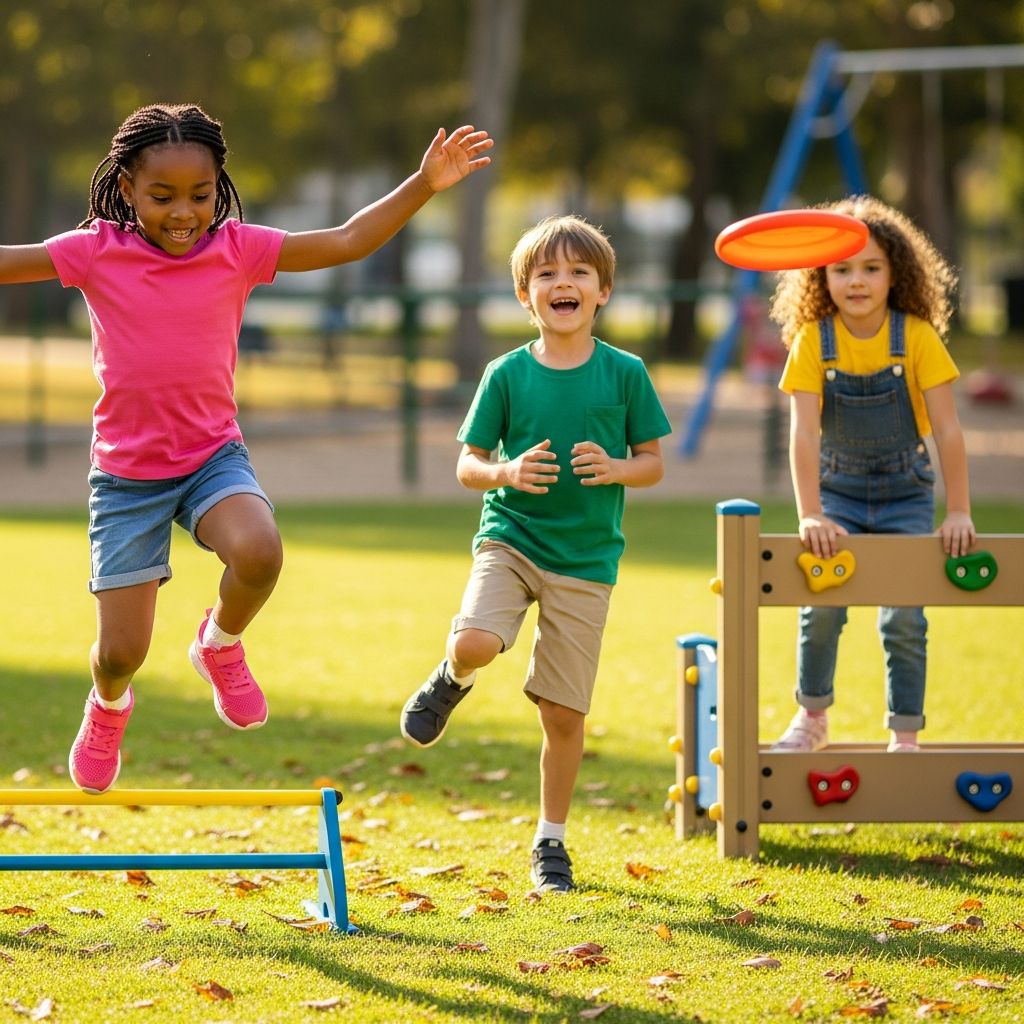
Gross motor skills form the foundation of a child’s physical abilities, involving large muscle groups in the arms, legs, and torso for movements like walking, running, jumping, and climbing. These skills are essential for daily activities, sports, and overall health, helping children build strength, balance, coordination, and confidence.
Understanding Gross Motor Development Milestones
Children’s gross motor skills evolve progressively from birth through early childhood. Recognizing these milestones allows parents and educators to support development effectively.
- Birth to 12 months: Infants progress from lifting their head while tummy time to rolling over, sitting unsupported, crawling, and taking first steps.
- 12 to 18 months: Toddlers walk independently, climb stairs with help, and stand on tiptoes.
- 18 months to 3 years: Children run smoothly, jump in place, kick balls, and pedal tricycles.
- 3 to 5 years: Preschoolers hop on one foot, throw and catch balls, balance on one leg, and engage in more complex movements like skipping.
- 5 years and up: School-aged kids master skipping, riding bikes, and team sports requiring agility and endurance.
Delays in these milestones may warrant consultation with a pediatrician or physical therapist, as early intervention can maximize potential.
Why Gross Motor Activities Matter for Child Health
Regular gross motor play strengthens muscles and bones, improves cardiovascular health, and aids in preventing obesity. It also enhances cognitive functions like attention and learning by providing sensory input essential for brain development.
Health organizations recommend at least 180 minutes of daily activity for infants and toddlers, and 60 minutes of moderate-to-vigorous activity for children over age 6, incorporating both structured and free play.
Indoor Gross Motor Activities for Rainy Days
Bad weather doesn’t have to halt physical development. These indoor ideas keep kids moving safely at home or in classrooms.
Animal Mimicry Challenges
Encourage imaginative play by imitating animals. Bear crawls (walking on hands and feet with knees off the ground), frog jumps (crouching and leaping forward), and crab walks (lifting hips and scooting sideways) build core strength, coordination, and endurance.
- Bear Crawl: Strengthens arms, legs, and core.
- Frog Jump: Improves explosive power and landing control.
- Crab Walk: Enhances shoulder stability and hip flexibility.
Obstacle Courses with Household Items
Create mini courses using pillows, cushions, tunnels made from boxes, and tape lines on the floor. Kids crawl under tables, jump over pillows, and balance on lines, fostering problem-solving and body awareness.
Dance and Music Sessions
Play upbeat music for freeze dance or follow-the-leader routines. This boosts rhythm, listening skills, and full-body coordination.
Target Games with Balls and Bean Bags
Toss bean bags into buckets or hoops, or roll balls to targets. These activities refine throwing accuracy and hand-eye coordination.
| Activity | Skills Targeted | Age Group |
|---|---|---|
| Animal Mimicry | Core strength, balance | 2-5 years |
| Obstacle Courses | Agility, planning | 1-6 years |
| Dance Sessions | Rhythm, endurance | All ages |
| Target Tossing | Coordination, accuracy | 3+ years |
Outdoor Adventures to Build Strength and Confidence
Fresh air amplifies gross motor benefits. Parks, backyards, and nature trails offer endless opportunities.
Playground Exploration
Climbing ladders, swinging, and sliding develop grip strength, leg power, and spatial awareness. Encourage pumping legs on swings for independent movement.
Wheelbarrow Races and Relay Games
Hold a child’s legs while they walk on hands, or set up relays with running, hopping, and jumping. These promote teamwork and muscle endurance.
Chalk Drawings and Hopscotch
Draw hopscotch grids, mazes, or animal paths on pavement. Hopping, skipping, and balancing on lines sharpen footwork and balance.
Bike Riding and Scootering
Pedaling tricycles or scooters builds leg strength and steering control. Start with training wheels for beginners.
For toddlers, water play like splashing in shallow pools or running through sprinklers adds sensory fun while practicing balance.
Age-Specific Activity Plans
For Infants and Toddlers (0-3 Years)
Focus on foundational movements: tummy time, supported sitting on exercise balls, crawling over textured surfaces, and parent-child classes like baby yoga.
- Tummy Time: Builds neck and shoulder strength.
- Crawling Mazes: Enhances bilateral coordination.
- Bubble Chasing: Encourages reaching and cruising.
For Preschoolers (3-5 Years)
Introduce skipping, one-footed hops, and ball games. Yoga poses for balance and simple gymnastics like forward rolls.
For School-Aged Children (5-10 Years)
Jump rope for rhythm, yoga sequences for flexibility, and sports like soccer for agility. Swimming excels in full-body coordination.
Integrating Gross Motor Play into Daily Routines
Make movement habitual: walk to school, have active recesses, or end screen time with play breaks. Combine with fine motor tasks, like drawing while lying on belly, for comprehensive development.
Supervise high-energy play to ensure safety, especially on varied surfaces like grass or gravel.
Frequently Asked Questions (FAQs)
What are gross motor skills?
Gross motor skills involve large muscles for whole-body movements like running, jumping, and climbing, distinct from fine motor skills using smaller muscles for precise tasks.
How much daily activity do kids need?
Infants/toddlers: 180 minutes spread out; children 6+: 60 minutes moderate-to-vigorous.
What if my child lags in milestones?
Consult a pediatric physical therapist for tailored exercises to catch up.
Are indoor activities as effective as outdoor?
Yes, both provide essential sensory input and skill-building when varied and consistent.
Can gross motor play help with learning?
Absolutely—it nourishes the sensory foundation for attention, coordination, and academic readiness.
References
- Gross motor skills: birth to 5 years — Children’s Hospital of Richmond. Accessed 2026. https://www.chrichmond.org/services/therapy-services/developmental-milestones/gross-motor-skills-birth-to-5-years/
- 5 Activities to Help Toddlers Develop Gross Motor Skills — Jungle Jumparoo. Accessed 2026. https://junglejumparoo.com/blogs/ultimate-kids-trampoline/5-activities-to-help-toddlers-develop-gross-motor-skills
- 15 Activities to Build Gross Motor Skills for Summer — NAPA Center. Accessed 2026. https://napacenter.org/gross-motor-skills-summer/
- Fun Gross Motor Skills Activities for Kids (FREE Guide) — Soundsory. Accessed 2026. https://soundsory.com/gross-motor-skills-activities/
- Gross Motor Skills — Cleveland Clinic. Accessed 2026. https://my.clevelandclinic.org/health/articles/gross-motor-skills
- 61 Fun Gross Motor Activities for Elementary Indoor Recess — Develop Learn Grow. Accessed 2026. https://developlearngrow.com/gross-motor-activities-for-indoor-recess/
- Supporting Fine and Gross Motor Skills In and Out of the Classroom — Penn State Extension. 2023. https://extension.psu.edu/programs/betterkidcare/news/supporting-fine-and-gross-motor-skills-in-and-out-of-the-classroom

- Integrated M.A. in Applied Linguistics, University of Hyderabad
- 5+ years in editorial, instructional, SEO, and research-based writing
Sneha is a relationships and lifestyle writer with a strong foundation in applied linguistics and certified training in relationship coaching. She brings over five years of writing experience to theskillvault, crafting thoughtful, research-driven content that empowers readers to build healthier relationships, boost emotional well-being, and embrace holistic living. Her writing and insights reflect the belief that beauty, happiness, and wellness…