
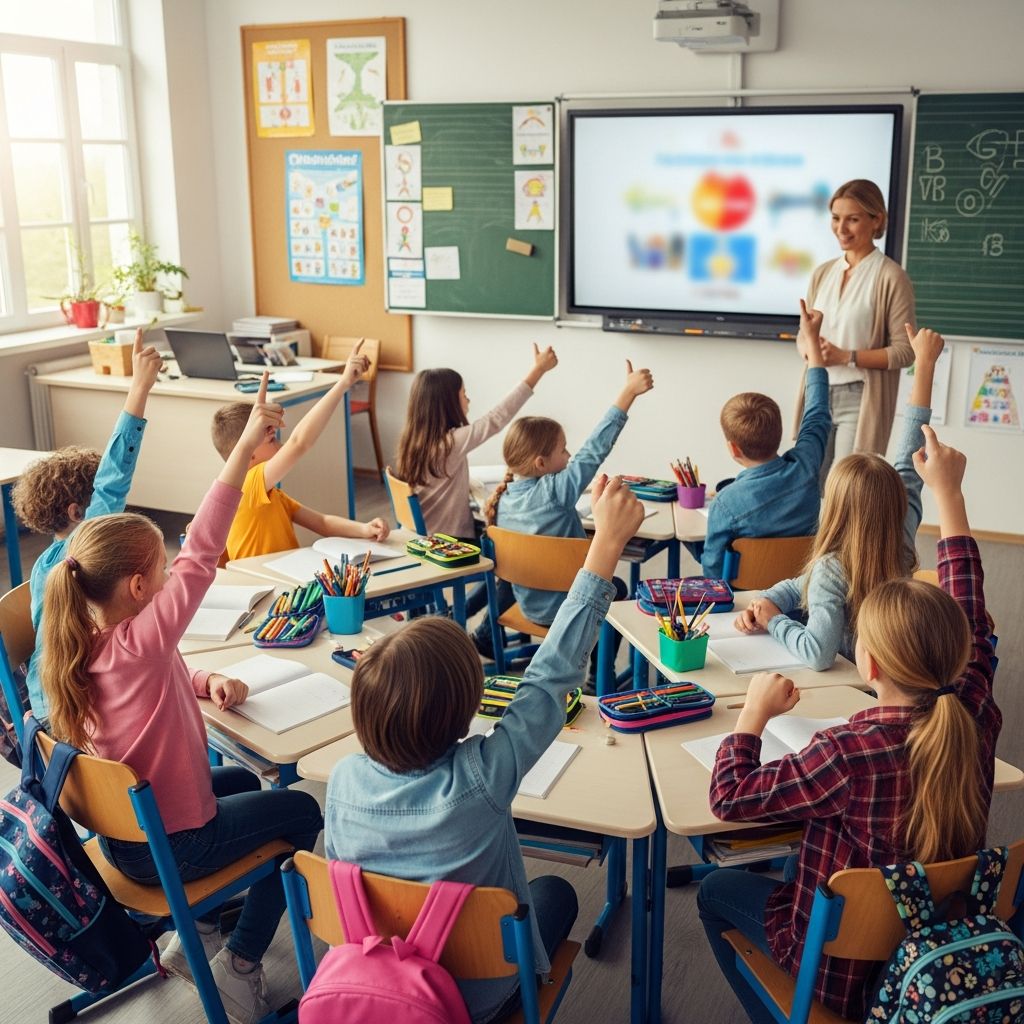
Hand signals offer a silent yet powerful way to manage classrooms, allowing students to communicate needs and ideas without disrupting the flow of instruction. This approach minimizes verbal interruptions, promotes inclusivity, and keeps lessons on track, making it an essential tool for educators seeking efficient classroom management.
Why Nonverbal Signals Matter in Modern Classrooms
In today’s diverse classrooms, where students range from multilingual learners to those with anxiety or special needs, traditional hand-raising often falls short. Nonverbal signals bridge this gap by enabling quick, respectful communication. Research highlights their role in maintaining instructional momentum while addressing student needs discreetly.
Teachers using these signals report fewer disruptions during small-group work or whole-class discussions. For instance, a nod of acknowledgment suffices for routine requests, freeing educators to focus on teaching. This system not only saves time but also empowers students to self-regulate, fostering independence and responsibility.
Core Advantages of Implementing Hand Signals
Adopting hand signals yields multifaceted benefits, from cognitive gains to emotional well-being. Here’s a breakdown:
- Reduced Interruptions: Students signal needs like bathroom breaks or pencil sharpening without calling out, preserving lesson flow.
- Increased Participation: Shy or nonverbal students engage more readily, promoting equity.
- Cognitive Boost: Gestures enhance memory and vocabulary retention through muscle memory and multisensory learning.
- Behavioral Improvements: Signals cut down on off-task chatter and help students clarify thoughts before speaking.
- Growth Mindset Development: Regular use correlates with improved academic performance and mindset shifts.
Studies show children using gestures early gain a 12-point IQ advantage and larger vocabularies, underscoring long-term developmental impacts. In classrooms, this translates to better attention to social cues and lower frustration levels.
Essential Hand Signals for Everyday Use
Start with a core set of five signals, using finger counts for simplicity. Display posters in high-traffic areas for quick reference.
| Signal (Fingers) | Meaning | When to Use |
|---|---|---|
| 1 Finger | Bathroom | During independent work or lectures |
| 2 Fingers | Water | Quick hydration needs |
| 3 Fingers | Pencil Sharpener | Tool maintenance |
| 4 Fingers | Question | Content clarification |
| 5 Fingers | Comment/Agreement | Discussion contributions |
Expand to include ASL-inspired gestures like the ‘R’ for reset (reflect on rules) or a quiet circle for silence. These adapt to various grade levels, with younger students benefiting from visual aids.
Strategies for Successful Introduction
Roll out signals gradually to ensure buy-in. Begin with modeling: demonstrate during lessons and practice in low-stakes scenarios. Post visuals prominently and review weekly.
If a student blurts out instead, gently redirect by pointing to the poster and mimicking the signal. Consistency is key—acknowledge every signal promptly to reinforce the system.
For tech integration, share digital posters via classroom platforms, especially in hybrid settings. Pair signals with sentence starters for discussions, like “I agree with [name] and add…” to deepen responses.
Hand Signals for Deeper Discussions and Feedback
Beyond logistics, signals enrich academic discourse. Use thumb up/down for agreement, a bridge gesture for building on ideas, or a puzzle piece for questions.
These provide real-time insights into comprehension, allowing teachers to adjust pacing. In group talks, they ensure quieter voices are heard, balancing participation. Gestures also aid mental organization of new concepts, improving retention.
Impact on Diverse Learners and Equity
Hand signals shine in inclusive settings. Multilingual students and those with speech challenges participate fully without language barriers. Anxious learners signal discreetly, building confidence over time.
Evidence from action research links signals to growth mindsets, with GPA improvements in math and science. They create positive environments where all students feel empowered, reducing behavioral issues and enhancing social-emotional growth.
Potential Challenges and Solutions
Initial resistance may occur, but modeling and positive reinforcement overcome it. Overuse can dilute impact—limit to 5-7 core signals. Monitor for equity; ensure nonverbal students aren’t overlooked.
Adapt for age: Simplify for preschoolers, add complexity for older grades. Regular feedback loops from students refine the system.
Real-World Examples from Educators
Educators note dramatic shifts: one reports zero mid-lesson disruptions after implementation. Another saw increased discourse quality with signals prompting thoughtful responses. In special education, gestures lowered frustration and boosted bonding.
Research Insights on Long-Term Benefits
Peer-reviewed studies affirm signals’ efficacy. Nonverbal cues foster growth mindsets, correlating with higher GPAs. Gestures support cognitive processing, aiding vocabulary and reading. Edutopia resources emphasize equity in discussions.
Frequently Asked Questions (FAQs)
What age groups benefit most from hand signals?
They’re effective from preschool through high school, with adaptations for developmental stages. Younger kids gain communication skills; older ones use them for complex discussions.
How do I train students on new signals?
Model daily, practice in games, and use posters. Redirect gently and celebrate correct use.
Can hand signals replace verbal communication?
No, they complement it, enhancing inclusivity without silencing voices.
Do they work in large classes?
Yes, especially with clear visuals and teacher scanning techniques.
What if a student ignores the system?
Remind nonverbally first, then address privately to understand barriers.
Integrating hand signals revolutionizes classroom dynamics, creating focused, equitable spaces where every student thrives. Their simplicity belies profound impacts on engagement, mindset, and achievement.
References
- Benefits of Gestures and Sign Language for Young Children — Songbird Pediatric Therapy. 2023. https://songbirdpediatrictherapy.com/benefits-of-gestures-and-sign-language-for-young-children/
- Classroom Hand Signals that Improve Student Engagement in 2026 — Jodi Durgin. 2026. https://jodidurgin.com/handsignals/
- Hand Signals’ Impact on Student Mindset and Performance — Bowling Green State University ScholarWorks. 2019. https://scholarworks.bgsu.edu/cgi/viewcontent.cgi?article=1836&context=honorsprojects
- Making Classroom Participation More Equitable With Hand Gestures — Edutopia. 2023. https://www.edutopia.org/article/using-hand-gestures-classroom-participation/
- 6 Hand Signals That Bring Learning to Life — Edutopia. 2015. https://www.edutopia.org/blog/hand-signals-bring-learning-to-life-ellie-cowen
- Using Hand Signals for More Equitable Discussions — Edutopia. 2023. https://www.edutopia.org/video/using-hand-signals-more-equitable-discussions/
- Nonverbal Signals: An Evidence-Based Behavior Strategy — Reading Rockets. 2023. https://www.readingrockets.org/topics/classroom-management/articles/nonverbal-signals-evidence-based-behavior-strategy

- Integrated M.A. in Applied Linguistics, University of Hyderabad
- 5+ years in editorial, instructional, SEO, and research-based writing
Sneha is a relationships and lifestyle writer with a strong foundation in applied linguistics and certified training in relationship coaching. She brings over five years of writing experience to theskillvault, crafting thoughtful, research-driven content that empowers readers to build healthier relationships, boost emotional well-being, and embrace holistic living. Her writing and insights reflect the belief that beauty, happiness, and wellness…