
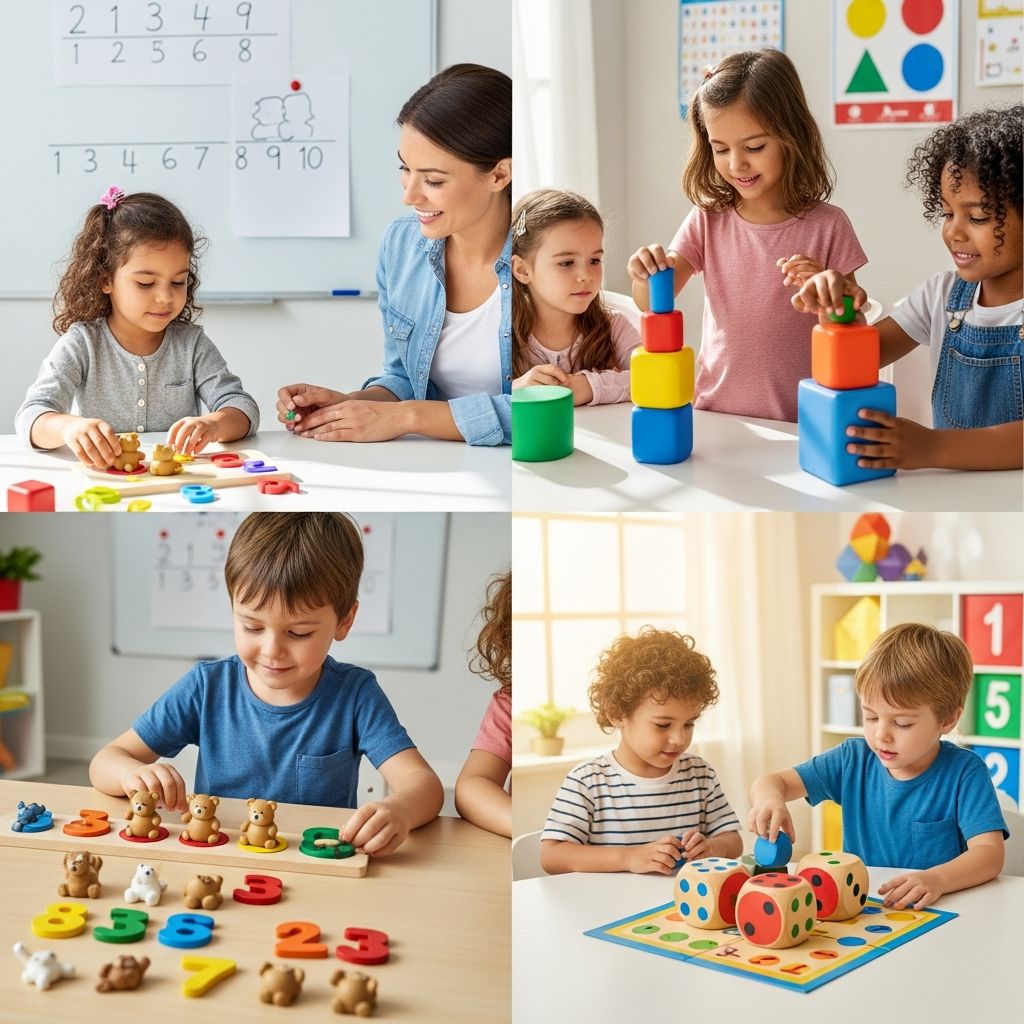
Building a strong foundation in mathematics starts with playful exploration during the early years. For preschoolers and kindergarteners, number-related activities transform abstract concepts into tangible experiences. These hands-on approaches not only foster recognition and counting skills but also boost confidence and curiosity. Parents and educators can easily integrate them into daily routines using household items or simple outdoor setups.
Mastering Number Identification Through Everyday Play
Helping children spot numbers in their environment lays the groundwork for quick recognition. Begin with familiar settings to make learning feel natural and exciting.
- Outdoor Number Quest: Take a walk and challenge kids to locate numerals on street signs, license plates, or house numbers. Point out a specific digit, like ‘5’, and celebrate each find with high-fives to reinforce memory.
- Sticker Precision Challenge: Label sheets of paper with numerals from 1 to 10. Provide small stickers and instruct children to place the exact count on each sheet, combining fine motor practice with quantity matching.
- Fly Swat Game: Craft paper shapes labeled with numbers and scatter them. Call out a numeral, and let kids use a soft swatter to ‘catch’ it, turning identification into a fast-paced adventure.
These games encourage repeated exposure without rote memorization, aligning with developmental stages where play drives retention.
Counting Adventures with Hands-On Manipulatives
Counting becomes memorable when paired with physical objects children can touch and move. This tactile method helps internalize one-to-one correspondence.
- Dice and Container Fill: Roll a die and gather matching loose parts like beans or pom-poms into cups. Repeat rolls to build towers, counting aloud to visualize growth.
- Nature Collection Sort: Write numbers 1-10 on the ground with chalk. Collect items like leaves or stones to match each, promoting both counting accuracy and nature appreciation.
- Balloon Keep-Up: Toss a balloon and count successive bounces before it lands. Vary by calling numbers to aim for, adding goal-oriented fun.
Such activities strengthen subitizing—the instant recognition of quantities—crucial for future math fluency.
Sequencing Skills with Creative Builds
Ordering numbers helps children understand progression and patterns. Use buildable materials to make sequencing interactive and three-dimensional.
- Rock Order Line: Paint or mark rocks with numerals 1-10. Arrange them in sequence along a path, perhaps outdoors, and have kids verify by walking and reciting.
- Block Tower Climb: Assign numbers to Lego stacks or blocks, building heights that match. Line them up to form a number line cityscape.
- Pipe Cleaner Beads: String beads onto cleaners, counting in order. Twist ends to create number-shaped jewelry for wearable learning.
These exercises develop logical thinking, preparing kids for addition and patterns.
| Activity Type | Materials Needed | Skills Targeted | Age Suitability |
|---|---|---|---|
| Identification | Stickers, paper | Recognition, matching | 3-4 years |
| Counting | Dice, cups, beans | One-to-one, quantity | 3-5 years |
| Sequencing | Rocks, markers | Order, patterns | 4-6 years |
This table summarizes quick-start options, adaptable to group or solo play.
Sensory Explorations for Deeper Number Understanding
Sensory play engages multiple senses, enhancing memory through multi-modal learning. It’s ideal for kinesthetic learners who thrive on texture and movement.
- Play Dough Formation Mats: Laminate mats with number outlines, tens frames, and dot prompts. Kids mold dough to form shapes, count embedded objects, and trace numerals.
- Gel Sensory Hunt: Fill bags with gel, glitter, and hidden number papers taped underneath. Kids ‘reveal’ and trace numbers with fingers for a magical effect.
- Brick Building Mats: Similar to dough mats but using small blocks. Fill frames and count, perfect for classroom rotations.
These methods cater to diverse learning styles, ensuring inclusivity.
Active Games to Energize Number Practice
Movement pairs perfectly with numbers, channeling high energy into skill-building. Gross motor integration keeps sessions dynamic.
- Hopscotch Variations: Draw grids with numbers 1-10 or skip-counting sequences. Hop while reciting to blend physicality with recitation.
- Jump and Match: Scatter cards on the floor. Call a number; kids jump to it and perform matching jumps or claps.
- Sidewalk Chalk Rally: Write numbers outside. Count environmental items like trees or steps, then replicate with drawings.
Outdoor elements add vitamin D benefits alongside cognitive gains.
Artistic Twists on Number Lessons
Creativity sparks joy in math. Art-infused activities make numbers visually striking and personally meaningful.
- Color-by-Number Pages: Printable sheets where shading matches numerals teach recognition alongside colors.
- Dot Marker Numbers: Draw large numerals; kids outline with dots, reinforcing shape through decoration.
- Connect-the-Dots Stories: Numbered dots form pictures. Completing reveals images, motivating sequence practice.
Display finished works to build pride and prompt home reviews.
Group Games for Social Number Fun
Collaborative play teaches sharing numbers in social contexts, vital for school readiness.
- Go Fish Numbers: Use card decks sans faces. Match quantities for pairs, practicing verbal number calls.
- Dot-to-Square Game: Grid of dots around numbers. Players connect lines; claim squares by naming the number correctly.
- Bingo Boards: Custom boards with numerals. Call numbers; mark matches for wins and recognition drills.
These foster turn-taking and peer encouragement.
Advanced Concepts: From 10 to 100
Once basics solidify, introduce larger scales gently.
- Hundreds Grid Visual: Tape a 10×10 floor grid. Fill squares with groups of 10 items to grasp 100 concretely.
- Tens Frame Builds: Use mats to compose numbers in frames, bridging to place value.
Progress scaffolds naturally from play.
Frequently Asked Questions
Q: What age group benefits most from these activities?
A: Primarily ages 3-6, but adaptable for younger toddlers or older kids needing reinforcement.
Q: Do I need special materials?
A: No—most use household or nature items; printables optional for variety.
Q: How often should we do number activities?
A: Daily short sessions (10-15 minutes) yield best results without overwhelming young attention spans.
Q: Can these help with number writing?
A: Yes, incorporate tracing in sensory mats or chalk to build fine motor control for numerals.
Q: How to adapt for different skill levels?
A: Simplify for beginners (1-5) or challenge with skip-counting (2s, 5s, 10s).
Integrating songs like number rhymes amplifies engagement across all activities.
References
- 50 Hands-on Math Activities for Preschool and Kindergarten — Treehouse Schoolhouse. 2023-05-15. https://treehouseschoolhouse.com/blog/hands-on-math-activities-preschool-kindergarten
- Number & Counting Activities for Preschoolers — ABCmouse Early Learning Academy. 2024-02-10. https://www.abcmouse.com/learn/activities/number-and-counting-activities-for-preschoolers/25723
- Kindergarten Numbers & Counting Worksheets — K5 Learning. 2025-01-20. https://www.k5learning.com/free-preschool-kindergarten-worksheets/numbers-counting
- 10 Counting Activities for Preschoolers — KinderCare Education. 2018-02-01. https://www.kindercare.com/content-hub/articles/2018/february/10-math-activities
- Numbers & counting games and activities for ESL kids — ESL KidStuff. 2023-11-12. https://eslkidstuff.com/esl-kids-games-activities-menu/numbers-counting-games-and-activities-for-esl-kids/

- Integrated M.A. in Applied Linguistics, University of Hyderabad
- 5+ years in editorial, instructional, SEO, and research-based writing
Sneha is a relationships and lifestyle writer with a strong foundation in applied linguistics and certified training in relationship coaching. She brings over five years of writing experience to theskillvault, crafting thoughtful, research-driven content that empowers readers to build healthier relationships, boost emotional well-being, and embrace holistic living. Her writing and insights reflect the belief that beauty, happiness, and wellness…