
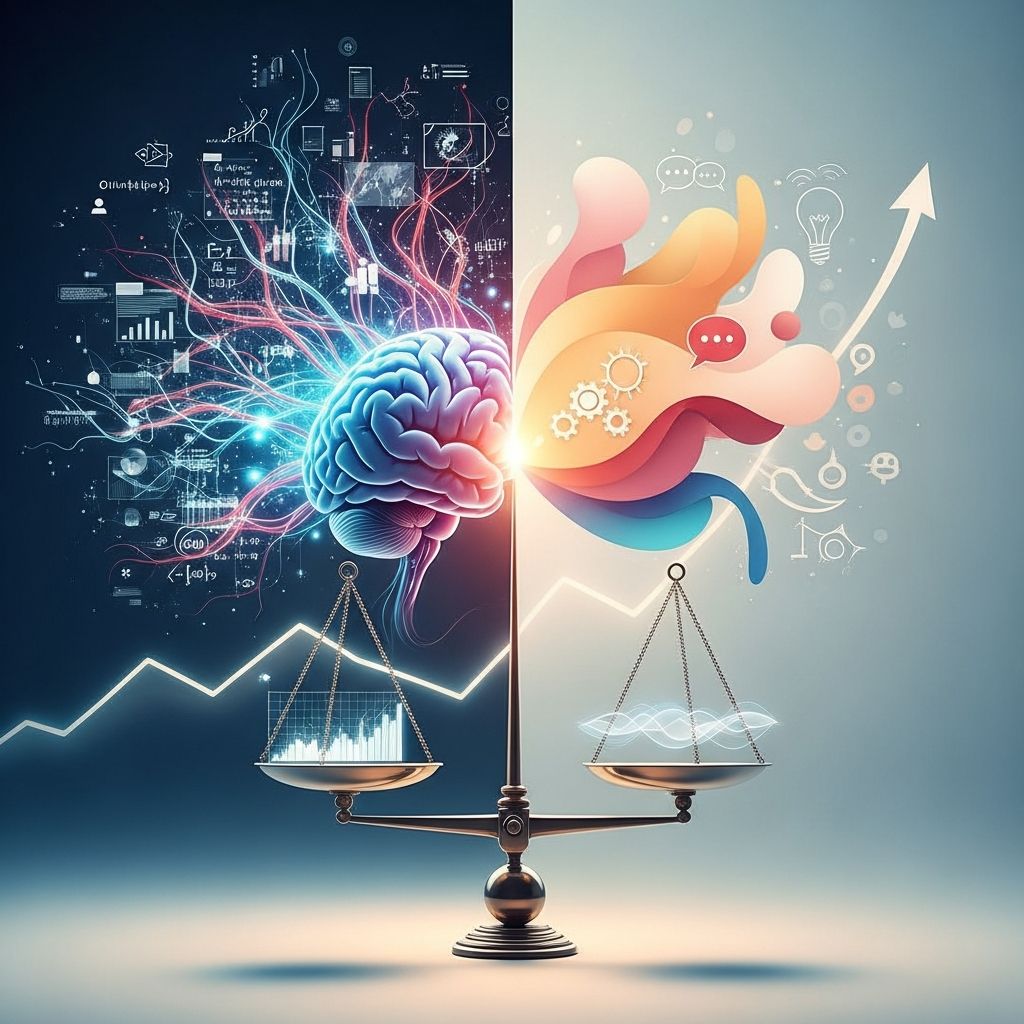
Employers rarely hire based on technical know-how alone. They want professionals who can both do the work and work well with others. That is why understanding the balance between hard skills and soft skills is critical for anyone who wants to grow and stay competitive in today’s job market.
What Are Hard Skills?
Hard skills are the specific, teachable abilities you need to perform particular tasks or use particular tools. They are usually gained through formal education, courses, certifications, or structured on-the-job training.
These skills are often:
- Technical or task-focused (for example, data analysis or accounting)
- Measurable and testable (you can be examined, certified, or graded on them)
- Job-specific (different roles require different hard skills)
Because hard skills are relatively easy to observe and verify, they are often listed explicitly in job descriptions and evaluated during hiring through tests, portfolios, or technical interviews.
Common Examples of Hard Skills
- Programming languages (e.g., Python, Java, SQL)
- Financial modeling and bookkeeping
- Operating specialized machinery or lab equipment
- Graphic design tools (e.g., Adobe Creative Cloud)
- Data analysis and statistics
- Foreign language proficiency
- Project management methodologies (e.g., Agile, Scrum)
What Are Soft Skills?
Soft skills are the interpersonal, behavioral, and cognitive abilities that shape how you work, communicate, and collaborate with others. They relate more to how you approach tasks and people than to what specific task you perform.
Soft skills are typically:
- Transferable across roles, industries, and career stages
- Harder to measure objectively but highly visible in daily behavior
- Developed over time through life experience, feedback, and reflection
Research on workplace performance consistently shows that soft skills such as communication, teamwork, and adaptability are strongly linked to job success and employability across professions.
Common Examples of Soft Skills
- Clear and respectful communication
- Teamwork and collaboration
- Problem-solving and critical thinking
- Adaptability and resilience during change
- Emotional intelligence and empathy
- Time management and organization
- Leadership and decision-making
- Conflict resolution and negotiation
Key Differences Between Hard and Soft Skills
Hard and soft skills complement each other, but they are not interchangeable. The table below highlights their main differences.
| Aspect | Hard Skills | Soft Skills |
|---|---|---|
| Core focus | Specific tasks, tools, or procedures | Behavior, communication, and relationships |
| How they are learned | Courses, certifications, textbooks, structured training | Experience, feedback, coaching, real-life practice |
| How they are measured | Tests, exams, portfolios, technical assessments | Performance reviews, observations, 360° feedback |
| Transferability | Often tied to particular roles or industries | Broadly useful across roles and sectors |
| Visibility in job ads | Frequently listed as concrete requirements (e.g., “Advanced Excel”) | Often described as “team player,” “strong communicator,” “adaptable” |
Why Employers Need Both Types of Skills
Organizations increasingly emphasize a blend of hard and soft skills when hiring and promoting employees. Research and employer surveys show that technical proficiency alone is no longer enough to ensure strong performance or leadership potential.
How Hard Skills Support Organizational Performance
- Enable core work: Without job-specific knowledge, employees cannot complete essential tasks or deliver products and services.
- Ensure quality and safety: Correct technical methods reduce errors, waste, and risk, especially in fields like healthcare, engineering, and finance.
- Support innovation: Deep expertise allows professionals to use advanced tools, analyze complex data, and build new solutions.
How Soft Skills Drive Long-Term Success
- Improve collaboration: Communication, empathy, and conflict management help teams work productively and resolve disagreements.
- Increase adaptability: As technology and markets change quickly, employees with strong soft skills learn new tools and approaches more easily.
- Strengthen leadership: Effective leaders need emotional intelligence, strategic thinking, and influence—not just technical mastery.
- Enhance customer relationships: Service quality depends heavily on listening skills, patience, and the ability to manage expectations.
Choosing Which Skills to Prioritize at Different Career Stages
You will always need both types of skills, but the balance may shift as your career develops.
Early-Career Professionals
At the beginning of your career, employers usually look for evidence that you can do the work and learn quickly.
- Build a solid foundation of hard skills relevant to your target roles.
- Demonstrate core soft skills such as reliability, willingness to learn, and teamwork.
- Use internships, projects, or volunteer roles to gain real-world practice.
Mid-Career Professionals
As responsibilities expand, your ability to collaborate and influence others becomes more important.
- Refresh and deepen technical skills to stay current with tools and methods.
- Invest more deliberately in communication, stakeholder management, and problem-solving.
- Seek opportunities to mentor others or coordinate small projects.
Senior and Leadership Roles
At senior levels, decisions and relationships typically matter more than hands-on technical work.
- Rely on strong soft skills to lead teams, manage change, and align stakeholders.
- Maintain enough technical understanding to make informed strategic decisions.
- Focus on skills like vision, coaching, negotiation, and cross-functional collaboration.
How to Develop Hard Skills Effectively
Improving hard skills is often a structured process. Consider the following approaches:
- Formal education: Degrees, diplomas, or vocational programs that teach foundational knowledge.
- Certification courses: Industry-recognized programs (for example, in IT, finance, or project management) that validate your expertise.
- Online learning platforms: Short courses, bootcamps, and micro-credentials to learn targeted tools or methods.
- On-the-job training: Shadowing, apprenticeships, and stretch assignments where you apply new techniques with guidance.
- Deliberate practice: Repeating complex tasks, building small projects, or solving real problems to deepen mastery.
How to Build and Strengthen Soft Skills
Soft skills improve through repeated practice, self-awareness, and feedback rather than purely theoretical study.
- Seek feedback regularly: Ask managers, peers, and mentors for concrete examples of what you do well and where you can improve.
- Observe role models: Notice how effective colleagues communicate, run meetings, or handle conflict, then experiment with similar approaches.
- Join collaborative activities: Team sports, student organizations, community groups, and cross-functional projects all build communication and teamwork.
- Use reflection: After important conversations or presentations, note what worked, what didn’t, and how you will adjust next time.
- Consider coaching or workshops: Leadership, communication, or emotional intelligence programs can accelerate development when paired with practice.
Showcasing Hard and Soft Skills on Your Resume and LinkedIn
It is not enough to list skills—you need to demonstrate how you used them and what results you achieved.
Highlighting Hard Skills
- Use the Skills section to list specific tools, languages, and certifications requested in job postings.
- In your Experience bullets, connect each hard skill to a concrete outcome (for example, “Built a dashboard in SQL and Python that reduced reporting time by 30%”).
- Include relevant projects, portfolios, or links that showcase your technical work.
Highlighting Soft Skills
- Avoid vague claims like “excellent communicator” without proof.
- Describe situations where you used soft skills, such as “Facilitated weekly cross-team meetings to resolve blockers and improve delivery timelines.”
- Use outcomes—higher satisfaction scores, fewer defects, faster delivery—to make your soft skills visible.
Creating a Personal Skill-Building Plan
To stay competitive, treat your skills like an ongoing project.
- Audit your current skills
List your strongest hard and soft skills, then compare them with several job descriptions for roles that interest you. - Identify high-impact gaps
Look for skills mentioned repeatedly in those descriptions—those are likely priorities in your field. - Set specific goals
For example, “Obtain a data analytics certificate in six months” or “Practice giving feedback once a week.” - Choose learning methods
Pick a mix of courses, reading, hands-on projects, and practice opportunities for both types of skills. - Track progress
Update your resume, portfolio, or notes whenever you complete a project, earn a credential, or receive positive feedback.
Frequently Asked Questions (FAQs)
Q1: Are hard skills more important than soft skills?
Neither type is inherently more important. Hard skills prove that you can perform specific tasks, while soft skills determine how effectively you work with others and adapt to change. Employers generally look for candidates who have a strong combination of both.
Q2: Can soft skills really be learned, or are they just personality traits?
Soft skills are influenced by personality, but research and workplace training programs show that they can be developed through intentional practice, feedback, coaching, and experience—similar to how people improve at leadership or communication over time.
Q3: How do I know which skills to focus on for my field?
Review multiple job postings for roles you want and note which abilities are mentioned most often. Combine this with feedback from managers or mentors in your industry to prioritize a short list of hard and soft skills that match your goals.
Q4: How often should I update my skills?
Because technology and work practices change frequently, it is wise to review your skills at least once a year. Identify outdated tools to replace, new technologies to learn, and soft skills—such as collaboration in hybrid or remote settings—that have become more important.
Q5: What if I am strong technically but struggle with communication?
Start small: practice summarizing your work clearly in writing, ask trusted colleagues for feedback on your explanations, and volunteer to present short updates in meetings. Structured communication or presentation workshops can also help build confidence when paired with consistent practice.
References
- Hard Skills vs. Soft Skills — Workable Recruiting Resources. 2023-06-01. https://resources.workable.com/hr-terms/hard-skills-vs-soft-skills
- Hard Skills vs. Soft Skills: What’s the Difference? — Indeed Career Guide. 2022-09-15. https://www.indeed.com/career-advice/resumes-cover-letters/hard-skills-vs-soft-skills
- Soft Skills vs Hard Skills: Definitions, Differences and Examples — Personio HR Lexicon. 2023-05-10. https://www.personio.com/hr-lexicon/soft-skills-hard-skills/
- Hard Skills vs. Soft Skills: What’s the Difference? — Coursera Career Academy. 2023-08-21. https://www.coursera.org/articles/hard-skills-vs-soft-skills
- Soft Skills vs Hard Skills — University of Salford Professional Development. 2022-11-03. https://www.salford.ac.uk/spd/soft-skills-vs-hard-skills
- Understanding Soft vs. Hard Skills — Washington State University Human Resource Services. 2021-04-15. https://hrs.wsu.edu/understanding-soft-vs-hard-skills/
- Skills: Hard (Technical) vs Soft (Professional) — Next Steps Idaho, Office of the State Board of Education. 2020-09-01. https://nextsteps.idaho.gov/resources/skills-hard-technical-vs-soft-professional

- Integrated M.A. in Applied Linguistics, University of Hyderabad
- 5+ years in editorial, instructional, SEO, and research-based writing
Sneha is a relationships and lifestyle writer with a strong foundation in applied linguistics and certified training in relationship coaching. She brings over five years of writing experience to theskillvault, crafting thoughtful, research-driven content that empowers readers to build healthier relationships, boost emotional well-being, and embrace holistic living. Her writing and insights reflect the belief that beauty, happiness, and wellness…