
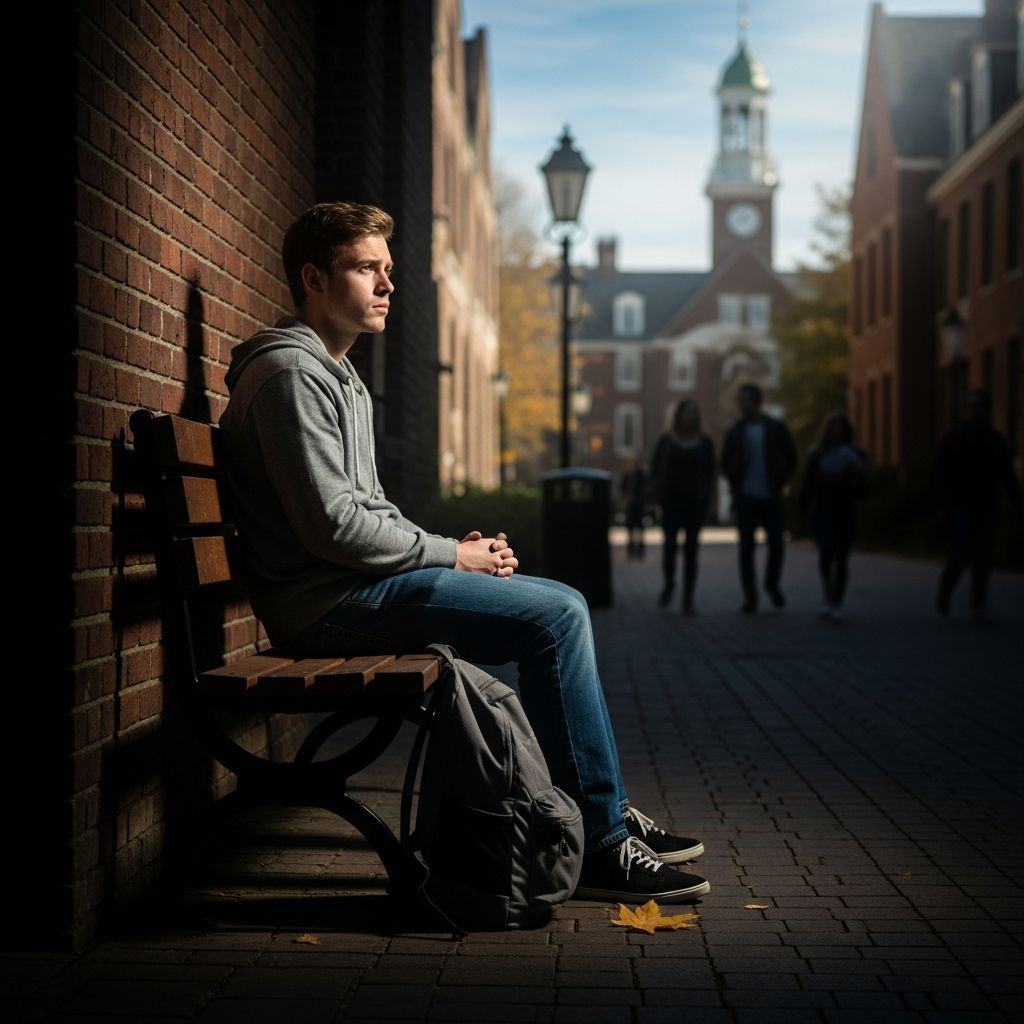
University brochures and recruitment presentations paint an idyllic picture of campus life—beautiful buildings, enthusiastic students, and endless opportunities. However, the lived experience of college extends far beyond glossy marketing materials. Every year, thousands of students arrive on campus expecting a straightforward academic journey, only to discover that university encompasses a complex range of challenges that institutional orientations rarely address. Understanding these hidden realities before you arrive can better prepare you to navigate the transition successfully.
The Deception of Autonomy and Time Management
One of the most jarring revelations for incoming students is the stark contrast between the amount of time spent in actual classrooms and the quantity of work expected outside them. Unlike high school, where students typically spend 30+ hours per week in structured classroom time with teachers monitoring progress, most college students attend only 12 to 15 hours of classes per week. This sounds like a gift—more free time and fewer hours in the classroom. However, this shift represents a fundamental misunderstanding that many new students fail to anticipate.
The reality is that those 150+ hours of unstructured time each week are not vacation hours. Students are expected to engage in independent studying, research, project work, and assignment completion without direct supervision or reminders. What took three hours to complete in high school may now require six hours at the university level due to increased complexity and academic rigor. The burden of responsibility for initiating work, setting deadlines, and maintaining momentum falls entirely on individual students.
Time management becomes a critical skill that many students never formally developed in secondary education. The freedom to attend class or sleep through it, to start assignments weeks in advance or hours before due dates, removes the external structure that kept many students on track. This transition often results in:
- Initial difficulty estimating how long assignments actually require
- Procrastination patterns that escalate stress and reduce quality
- Underestimating workload demands across multiple courses simultaneously
- Sleep deprivation and irregular daily routines
- Difficulty balancing academic work with social and personal activities
Successful students quickly develop strategies to compartmentalize large projects into manageable increments, create accountability systems, and build buffer time into their schedules. However, this learning curve is steep, and many students spend their first semester or year struggling to find an effective system.
The Emotional Landscape Nobody Discusses
Beyond academics, college introduces a profound emotional dimension that extends far beyond typical teenage development. For many students, university represents the first sustained separation from established support networks—parents, childhood friends, familiar teachers, coaches, and counselors who previously provided emotional scaffolding. This transition occurs precisely when students are navigating identity formation, independence, and evolving self-awareness.
Colleges acknowledge mental health through counseling centers and support resources, but these services operate differently than the informal, consistent support systems students experienced at home. A parent who notices subtle changes in mood or offers encouragement during difficult moments is replaced by a campus counselor available at scheduled appointment times. Teachers who knew you personally are replaced by professors teaching 200-student lecture courses.
The emotional challenges that emerge during college include:
- Acute homesickness and separation anxiety
- Relationship dissolution with high school partners
- Social anxiety in establishing new peer groups
- Identity questioning and self-doubt
- Grief related to leaving previous chapters of life
- Pressure to perform and meet expectations
- Loneliness despite being surrounded by thousands of people
Research indicates that emotional stress significantly impacts students’ ability to continue their education. Developing emotional self-awareness and recognizing when to seek professional support becomes essential to long-term success. Many students delay seeking help because they feel they should be able to manage everything independently, a misconception that can deepen emotional struggles.
Financial Independence: A Shock to the System
While tuition costs dominate public discourse about college expenses, the day-to-day financial realities surprise many students. Unless carefully managed, the financial dimension of college extends beyond tuition—encompassing textbooks that cost $200 per title, meal plans that may or may not align with actual needs, housing deposits, utilities, transportation, and discretionary spending.
For students who previously relied on parents to handle financial matters, college suddenly demands active financial decision-making. This responsibility arrives without training and often without a safety net. The anxiety resulting from financial constraints compounds academic and emotional stress, creating a psychological weight that affects overall wellbeing.
Critical financial challenges students face include:
- Understanding and managing student loan debt
- Budgeting limited funds across multiple expenses
- Balancing part-time work with academic demands
- Anxiety about post-graduation job markets and earning potential
- Pressure to achieve financial independence while maintaining academic performance
- Unexpected expenses that disrupt careful budgets
Students who develop realistic budgets, seek financial literacy resources, and communicate openly with family members about financial constraints generally experience less stress in this area. However, many navigate these challenges through trial-and-error, making costly mistakes along the way.
The Major Mismatch: When Your Path No Longer Fits
Many students enter college with a predetermined major selected during high school, sometimes encouraged by parents, teachers, or personal expectations. The assumption underlying this approach is that career direction remains stable through four years of education. Reality operates differently.
As students engage with actual university coursework, interact with professors in their discipline, and explore adjacent fields, their understanding of their chosen path evolves. What seemed appealing in theory may feel misaligned with genuine interests. Alternatively, exposure to new subjects reveals unexpected passions that weren’t available in high school curricula.
Changing majors carries psychological weight that many students underestimate. The decision involves acknowledging that previous planning may have been mistaken, potentially facing family disappointment, abandoning investments of time and effort, and reorienting toward an uncertain new direction. Some students describe the experience as comparable to a significant breakup—a severance from an identity and path that had been established.
What remains unspoken is that faculty members and advisors genuinely prefer that students pursue paths aligned with their authentic interests rather than persisting in mismatched majors. The perceived risk of disappointing your professors is typically outweighed by their desire to see you thrive and maintain genuine engagement with your studies.
Encountering Failure and Adjusting Expectations
College introduces most students to academic failure for the first time. A first failing grade, a missed scholarship opportunity, or a rejection from a desired program can feel genuinely devastating. Many high-achieving students lack experience with substantial failure because they navigated high school successfully through a combination of ability, support, and luck.
University operates under different expectations and on a different scale. Grades that would be exceptional in secondary education become average in college. Teaching styles vary dramatically—some professors use Socratic methods, others rely on dense lectures, and still others emphasize collaborative learning. The study strategies that worked previously may prove ineffective in new contexts.
Failure in college is not a personality deficiency or predictor of future inability—it is a natural part of the adjustment process. Students who contextualize early setbacks as information about what adjustments are needed rather than evidence of fundamental inadequacy recover and thrive. Those who internalize failure as a reflection of worth often experience escalating anxiety and withdrawal.
The adjustment process typically involves:
- Developing new study strategies through trial and error
- Learning to read professors’ expectations and adjust to their teaching styles
- Building metacognitive awareness of learning patterns and needs
- Practicing resilience and persistence through repeated challenge
- Reframing failure as feedback rather than final judgment
The Unexpected Independence of Daily Life
Beyond academics and emotions, college demands an unexpected level of independence in basic life management. Students accustomed to having meals prepared, laundry managed, and household tasks distributed suddenly become entirely responsible for feeding themselves, maintaining living spaces, and managing personal hygiene within their own schedule constraints.
This independence extends into social contexts as well. Many students arrive on campus with significant anxiety about social solitude—the prospect of eating meals alone, attending events without friends, or spending evenings in their dorm room without companionship. Over time, most students recognize that developing comfort with solitude and independence actually strengthens confidence and social relationships by removing desperate clinginess from friendships.
The shift from constant social availability to comfortable independence typically involves:
- Initial discomfort with eating, studying, or recreating alone
- Gradual development of self-directed activities and interests
- Recognition that independence allows for genuine relationship formation
- Building authentic confidence through managing daily life successfully
Navigating Anxiety Beyond Test Stress
While test anxiety receives recognition as a college stressor, multiple unexpected anxiety triggers operate throughout the university experience. Social media comparison creates persistent low-level anxiety as students observe curated versions of peers’ academic achievements, social activities, and apparent well-being. Sleep deprivation from balancing competing demands amplifies emotional reactivity and anxiety sensitivity. Financial uncertainty produces background stress that colors all other experiences.
The cumulative effect of these multiple anxiety sources often exceeds what students anticipated. Institutions typically address academic anxiety through tutoring and test-preparation services but less often address the systemic factors creating baseline elevated anxiety.
Building Resilience and Seeking Support
Understanding these hidden realities allows students to approach them proactively rather than reactively. Building resilience involves recognizing that challenges are normal features of college rather than personal failures. This reframing allows students to:
- Communicate with professors about struggles without shame
- Utilize campus resources for academic support, mental health, and financial guidance
- Develop honest self-awareness about capabilities and limits
- Build social support networks intentionally rather than expecting them to materialize
- Practice self-compassion during adjustment periods
Professors and college staff possess extensive experience with the challenges students face and want to provide support when students reach out. The primary barrier to receiving help is often the mistaken belief that struggling indicates weakness rather than normal adaptation to significant life changes.
Frequently Asked Questions
Q: How can I manage time effectively when I have only 15 hours of class per week?
A: Create a consistent study schedule that treats coursework like employment with set hours. Break large assignments into smaller milestones with intermediate deadlines. Use project management tools to track progress. Estimate study time as 2-3 hours outside class for every hour in class, adjusting based on experience.
Q: What should I do if I’m struggling emotionally in college?
A: Reach out to your campus counseling center, academic advisor, or residential life staff. Developing self-awareness about your emotional needs and communicating those needs to others is essential. Consider that many students experience similar struggles—you are not alone.
Q: Is it too late to change majors?
A: Changing majors is typically possible at any point, though earlier changes require less course repetition. Meet with your academic advisor to understand requirements and timelines. Faculty members support students pursuing their genuine interests rather than persisting in misaligned paths.
Q: How do I handle my first failing grade?
A: Recognize that failure is a normal part of college adjustment. Meet with your professor to understand what went wrong and what adjustments are needed. Focus on extracting lessons from the experience rather than internalizing it as personal inadequacy.
Q: How can I reduce financial anxiety?
A: Create a realistic budget, explore scholarship opportunities, and access financial literacy resources offered by your institution. Speaking with a financial aid advisor can clarify options and reduce uncertainty.
References
- 5 Common College Struggles and Hacks for Success — Berry College. 2024. https://www.berry.edu/articles/blog/2024/5-common-college-struggles
- 10 Unexpected Things That Happened To Me In College — University of Wisconsin-Oshkosh. 2016. https://www.uwosh.edu/admissions/2016/04/10-unexpected-things-that-happened-to-me-in-college/
- Weathering the Storm: Preparing for the Unexpected in College — Pepperdine University Seaver College. https://seaver.pepperdine.edu/blog/posts/preparing-for-the-unexpected.htm
- Unexpected Ways College Life Fuels Anxiety — Counseling Now. https://counselingnow.com/unexpected-ways-college-life-fuels-anxiety/

- Integrated M.A. in Applied Linguistics, University of Hyderabad
- 5+ years in editorial, instructional, SEO, and research-based writing
Sneha is a relationships and lifestyle writer with a strong foundation in applied linguistics and certified training in relationship coaching. She brings over five years of writing experience to theskillvault, crafting thoughtful, research-driven content that empowers readers to build healthier relationships, boost emotional well-being, and embrace holistic living. Her writing and insights reflect the belief that beauty, happiness, and wellness…