
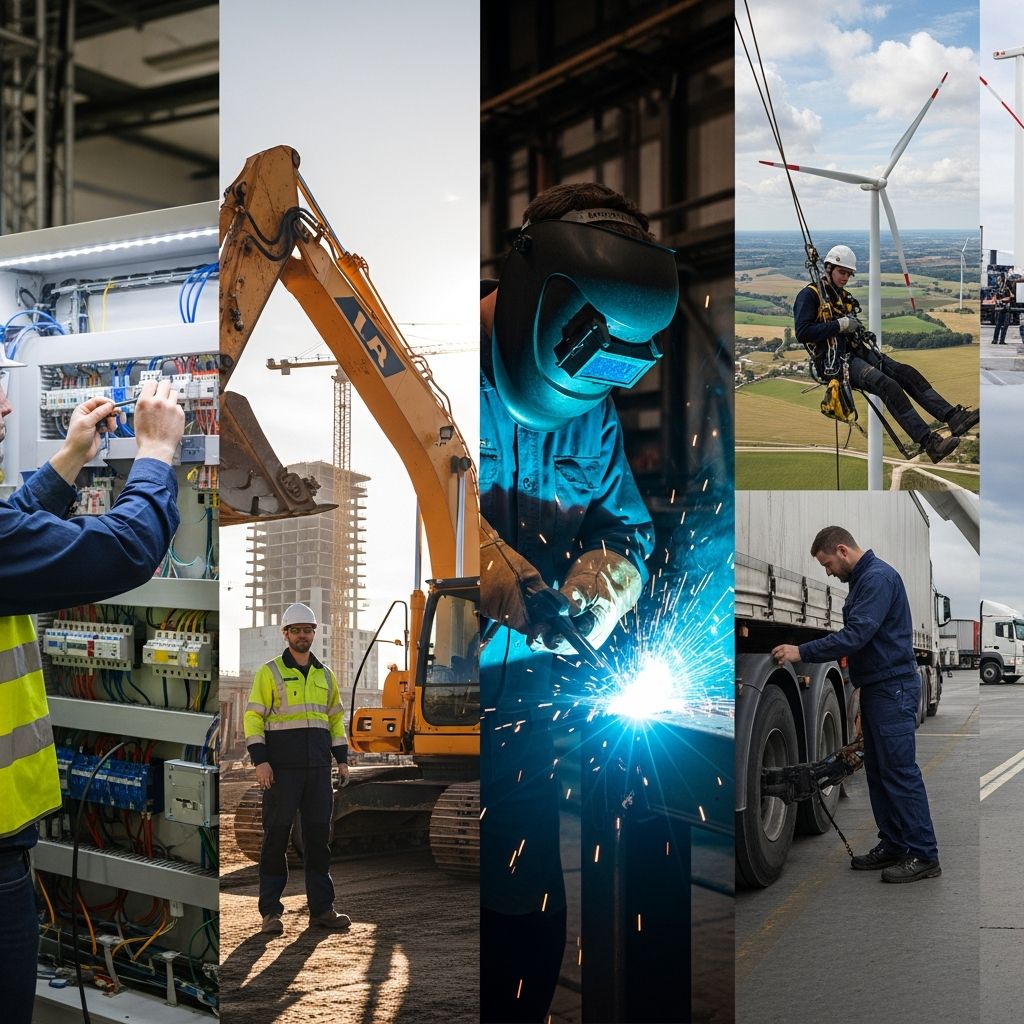
College is not the only route to a secure and well-paid career. Many blue-collar jobs—hands-on roles in skilled trades and technical fields—offer strong wages, benefits, and advancement opportunities without requiring a traditional four-year degree. This guide walks through some of the best-paying options, what the work looks like day to day, and how to get started.
What Counts as a Blue-Collar Job Today?
Blue-collar work historically referred to manual labor in fields like construction, manufacturing, and maintenance. Today, that definition has expanded to include highly technical roles that still involve working with your hands or on-site, rather than in a traditional office.
- Typical work settings: construction sites, factories, power plants, transportation hubs, homes and commercial buildings.
- Common traits: hands-on tasks, use of tools and equipment, physical activity, and often shift work or on-call schedules.
- Training paths: apprenticeships, trade schools, community college certificates, and employer training instead of (or in addition to) university degrees.
Many of these careers pay above the overall U.S. median wage, especially for experienced workers.
Why High-Paying Blue-Collar Jobs Are in Demand
Several trends are increasing demand for skilled trades workers:
- Retirements: Large numbers of experienced tradespeople are aging out of the workforce, opening up higher-level roles and driving up wages.
- Infrastructure spending: Public and private investment in roads, bridges, power grids, and buildings requires electricians, welders, heavy equipment operators, and inspectors.
- Technology and automation: New equipment, renewable energy, and smart systems need technicians who can install and maintain complex machinery.
- Limited supply of new workers: For years, more young people were steered toward four-year degrees than apprenticeships, leaving trade employers competing for talent.
According to the U.S. Bureau of Labor Statistics (BLS), many skilled trades roles have median wages above the national median and good prospects through 2032.
Overview: Sample High-Paying Blue-Collar Roles
The exact rankings of “highest paying” jobs can shift by region, union agreements, and specialty. The roles below represent categories that frequently appear near the top of pay lists from government and reputable employment sources.
| Job Category | Typical Median Pay (US) | Usual Entry Education | Key Benefit |
|---|---|---|---|
| Elevator & Escalator Technicians | Often around high five figures to low six figures | Apprenticeship | Strong union wages and benefits |
| Power Plant & Substation Operators/Repairers | Upper five figures to low six figures | Vocational or technical training | Stable utility sector work |
| Line Installers & Repairers (Electrical/Telecom) | Mid-to-upper five figures | Apprenticeship + licensing | Overtime and hazard pay potential |
| Boilermakers & Welders | Wide range; experienced workers can exceed national median by a lot | Apprenticeship or trade school | High earning potential with travel/overtime |
| Construction & Building Inspectors | Often above overall median wage | Experience in a trade + certification | Less physical strain than field construction |
Deep Dive: Examples of Well-Paid Blue-Collar Careers
1. Elevator and Escalator Technicians
Elevator installers and repairers build, maintain, and repair elevators, escalators, chairlifts, and similar systems in residential and commercial buildings. Because their work affects safety in high-traffic spaces, the qualifications are rigorous and the pay is correspondingly strong.
- Typical tasks: reading blueprints, installing mechanical and electrical components, diagnosing malfunctioning systems, and performing routine safety tests.
- Work environment: indoors in shafts and equipment rooms, often in confined spaces and at heights.
- Training path: multi-year paid apprenticeship, usually sponsored by unions or contractor associations, combining classroom instruction with supervised work.
- Why pay is high: specialized skills, safety responsibilities, licensing, and often strong union contracts.
2. Power Plant Operators and Substation/Relay Repairers
Professionals in the power generation and distribution sector help keep electricity flowing reliably. Roles include power plant operators, power distributors and dispatchers, and powerhouse/substation/relay repairers.
- Typical tasks: monitoring gauges and controls, adjusting output to match demand, troubleshooting electrical faults, and maintaining high-voltage equipment.
- Skills required: strong understanding of electrical systems, the ability to interpret schematics, and meticulous attention to safety.
- Entry requirements: many employers prefer candidates with technical school or community college coursework in electronics or power plant technology; extensive on-the-job training is common.
- Career upside: stable employment with utilities, opportunities to move into supervisory or control room roles, and additional earnings for night and weekend shifts.
3. Electrical Line Installers and Repairers
Electrical line workers install and repair the overhead and underground lines that deliver power from generating stations to homes and businesses. Telecom line installers handle similar work for phone and data networks.
- Typical tasks: climbing poles or working from bucket trucks, stringing or replacing cables, installing transformers, and restoring power after storms.
- Conditions: outdoor work in all weather, frequent overtime during major outages, and significant safety risks if procedures aren’t followed.
- Training path: apprenticeships, employer training programs, and state licensing. Some workers attend lineworker schools to gain a competitive edge.
- Pay drivers: hazard exposure, overtime, emergency call-outs, and specialized skills for high-voltage work.
4. Boilermakers, Welders, and Metal Fabricators
Boilermakers assemble, install, and repair large vessels that hold liquids and gases, such as boilers, tanks, and pressure vessels. Welders and metal fabricators join and shape metal components for everything from ships and pipelines to structural steel.
- Typical tasks: reading blueprints, cutting and shaping metal, welding seams, inspecting for defects, and performing high-temperature or confined-space work.
- Work settings: industrial plants, shipyards, construction sites, and sometimes remote locations like energy projects or offshore platforms.
- Training path: vocational programs, apprenticeships, and certifications (for example, from the American Welding Society) that validate specific welding processes.
- Earning potential: experienced workers who travel, work overtime, or specialize in high-demand processes (like pipeline work) can significantly increase their income.
5. Building and Construction Inspectors
Construction and building inspectors ensure that new construction, renovations, and infrastructure projects comply with building codes, safety regulations, and planning approvals.
- Typical tasks: visiting job sites, reviewing plans, checking framing, electrical, plumbing, and fire safety systems, and writing up reports on code compliance.
- Background: many inspectors start as tradespeople (e.g., electricians, carpenters, plumbers) and move into inspection after gaining experience.
- Training and credentials: knowledge of local building codes, sometimes postsecondary coursework in construction technology, plus state or local certification.
- Why it appeals: typically less physically demanding than field construction while still leveraging years of hands-on knowledge.
How to Evaluate Which Blue-Collar Path Fits You
Before committing to a trade, compare your interests, physical abilities, and preferred work environment with the realities of the job.
- Interest in problem-solving vs. building: Some roles, like power plant operators or telecom technicians, focus on diagnostics and systems. Others, like welders and elevator installers, emphasize fabrication and construction.
- Comfort with heights, confined spaces, and weather: Line workers and tower climbers spend time off the ground; boilermakers may work inside tanks or boilers.
- Schedule flexibility: Utilities, transportation, and emergency repair roles often require nights, weekends, and on-call rotations.
- Long-term physical strain: Consider how lifting, kneeling, or repetitive motions may affect you over a multi-decade career. Some people transition later into inspection, training, or supervision for this reason.
Training and Education Paths for Blue-Collar Careers
Unlike many white-collar roles, blue-collar careers frequently provide earn-while-you-learn options instead of asking you to pay for four or more years of schooling up front.
Common Training Routes
- Apprenticeships: Structured programs combining paid work with classroom instruction. Many are sponsored by unions, contractor associations, or employers and can last two to five years.
- Union training centers: Trade unions often run their own schools and training centers, offering up-to-date skills and clear promotion pathways.
- Community college and trade schools: Shorter certificate or diploma programs in areas like electrical technology, welding, HVAC, and industrial maintenance.
- On-the-job training: Some employers hire entry-level helpers and train them internally, especially in fields facing worker shortages.
Licensing and Certification
Many of the highest-paying blue-collar roles require a license or recognized certification, which can increase both your employability and your earning potential.
- State or local licenses: Common for electricians, plumbers, and some types of equipment operators; involve exams and verified hours of supervised work.
- Industry certifications: Examples include welding certifications or manufacturer-specific credentials for certain types of industrial equipment.
- Safety and compliance training: OSHA courses, confined space training, high-voltage qualifications, and other safety programs are often mandatory for higher-risk tasks.
Pros and Cons of High-Paying Blue-Collar Work
Advantages
- Strong income without a four-year degree: Many trades offer median wages above national averages, especially after several years of experience.
- Visible, tangible results: You can see the buildings, systems, or infrastructure you helped create or maintain.
- Job security in essential services: Power, water, transportation, and construction are fundamental needs, giving skilled workers leverage even in economic downturns.
- Clear advancement paths: Roles often progress from apprentice to journeyman to foreman or inspector, with pay increases at each level.
Challenges
- Physical risk and wear: Working at heights, with high voltage, or around heavy equipment demands strict safety practices and can still carry risk.
- Irregular hours: Emergency repairs, outages, and major projects can require overtime, night shifts, and time away from home.
- Training intensity: Apprenticeships require dedication over multiple years, even though you are earning along the way.
Frequently Asked Questions (FAQs)
Q1: Do I need a college degree for high-paying blue-collar jobs?
Most high-paying blue-collar roles do not require a four-year college degree. Instead, they rely on apprenticeships, trade school programs, certifications, and extensive on-the-job training.
Q2: How long does it usually take to become fully qualified?
Many apprenticeships last between 2 and 5 years, depending on the trade and your local requirements. After that, you may continue to gain higher-level licenses or certifications as you move into more responsible roles.
Q3: Are these jobs safe?
Trades like line work, welding, and power plant operations involve real risks, but employers and regulators impose strict safety standards. Proper training, protective equipment, and adherence to procedures significantly reduce the chance of serious incidents.
Q4: Can I move into management or office roles later?
Yes. Many supervisors, project managers, inspectors, and trainers started as apprentices in the field. Years of practical experience can be a strong foundation for leadership positions, especially if you later add supervisory or business coursework.
Q5: How do economic downturns affect blue-collar careers?
Demand can fluctuate with construction and manufacturing cycles, but essential services like utilities, public infrastructure maintenance, and emergency repairs tend to remain more stable than discretionary sectors.
References
- Occupational Outlook Handbook: High-Paying Blue-Collar Jobs — U.S. Bureau of Labor Statistics. 2024-03-29. https://www.bls.gov/ooh/
- 10 High-Paying Blue-Collar Jobs (With Salaries and Duties) — Indeed Editorial Team. 2023-10-06. https://www.indeed.com/career-advice/finding-a-job/highest-paying-blue-collar-jobs
- 20 Examples of Blue Collar Jobs to Consider in 2025 — Huntr Blog. 2024-01-15. https://huntr.co/blog/blue-collar-jobs
- The Fastest Growing Skilled Trades in 2025 and How to Get Hired — The Blue Collar Recruiter. 2024-02-20. https://thebluecollarrecruiter.com/the-fastest-growing-skilled-trades-in-2025-and-how-to-get-hired/

Medha Deb is an editor with a master's degree in Applied Linguistics from the University of Hyderabad. She believes that her qualification has helped her develop a deep understanding of language and its application in various contexts. Medha specializes in the areas of beauty, health, sports, and wellness and is committed to ensuring that the content on the website is…