
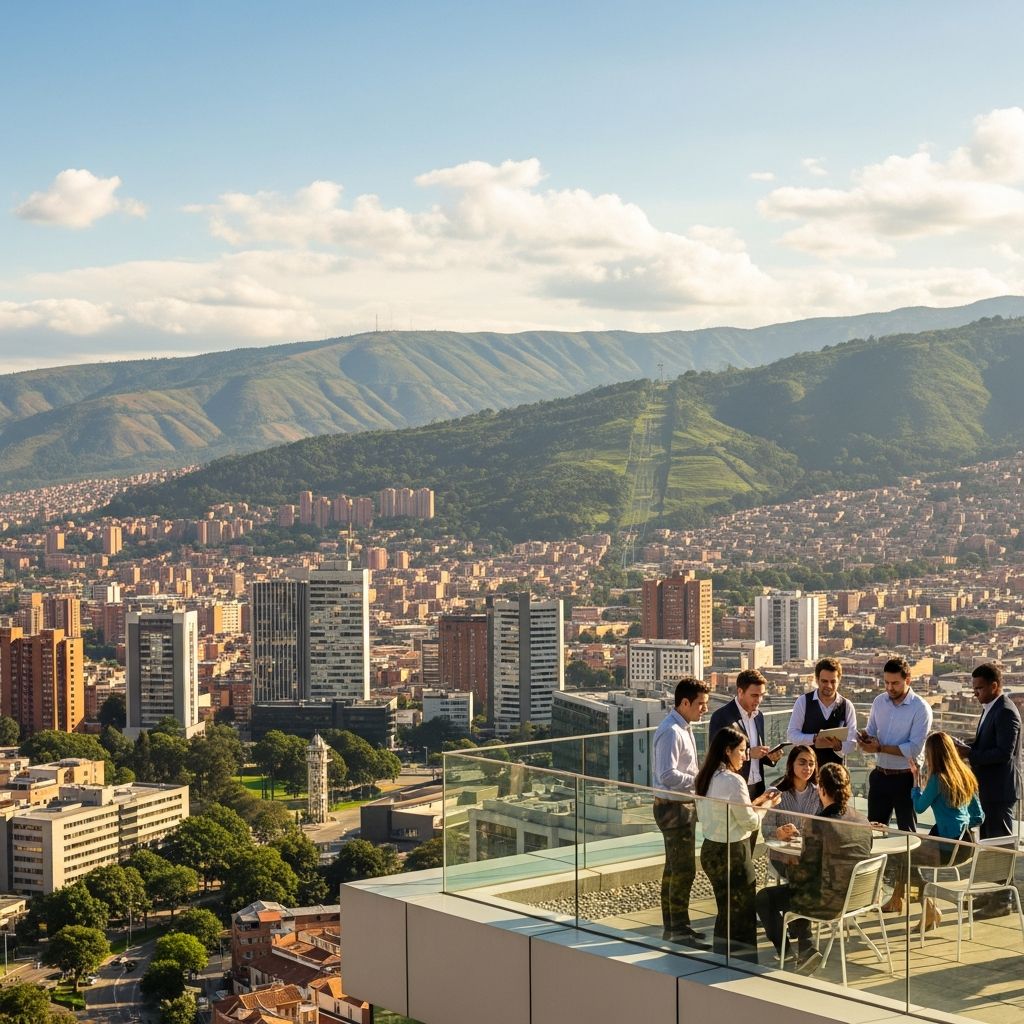
Medellín has evolved from an industrial city into one of Latin America’s most dynamic hubs for technology, services, and innovation. For companies looking to hire globally, build remote teams, or open a satellite office, the city offers a powerful mix of talent, infrastructure, and lifestyle advantages that few regional competitors can match.
This guide provides an employer-focused overview of Medellín: why it attracts investment, what kind of talent you can find, how the cost structure works, and what to consider when designing a sustainable hiring strategy in the city.
Why Medellín Has Become a Strategic Hiring Destination
In the last decade, Medellín has positioned itself as a key destination for foreign direct investment and global operations. The city hosts an increasingly sophisticated mix of technology companies, shared services centers, creative agencies, and startups, supported by proactive local institutions and public–private partnerships.
- Innovation ecosystem: Medellín is recognized nationally as a leading city for innovation and knowledge-intensive services, with dedicated innovation districts and startup accelerators.
- Consistent foreign investment: Agencies like ACI Medellín have helped attract hundreds of millions of dollars in foreign capital and thousands of jobs in sectors such as technology, creative industries, infrastructure, and commerce.
- Business-friendly culture: Compared with Bogotá’s more formal corporate environment, Medellín is often perceived as more entrepreneurial and collaborative, which can benefit agile teams and growing companies.
For employers, this translates into a location where qualified candidates already understand global business practices, remote collaboration, and multilingual service delivery.
The Local Economy: Stability with Room for Growth
Colombia’s broader economic performance provides important context for hiring and investment in Medellín. Recent data show that the national economy has returned to moderate growth after a period of volatility.
| Indicator | Colombia (Recent Trend) | Relevance for Employers |
|---|---|---|
| GDP Growth | Positive but moderate year-on-year expansion, reflecting recovery and stabilization. | Suggests a growing domestic market and improving macroeconomic conditions. |
| Foreign Direct Investment (FDI) | Medellín stands out as a top destination for FDI projects within Colombia, even as national flows fluctuate. | Signals confidence from multinational firms in the city’s talent and infrastructure. |
| Innovation Ranking | Colombia ranks in the middle tier globally for innovation performance, with room for improvement in outputs. | Medellín’s innovation initiatives aim to outperform national averages and attract high-value industries. |
For global companies, Medellín offers access to a stable, medium-cost market that is integrated into international trade, yet still presents plenty of upside in terms of talent availability and sector development.
Talent Landscape: Who You Can Hire in Medellín
Medellín’s labor market has transformed from manufacturing-centered to knowledge-driven. Employers can tap into a wide range of profiles, from software engineers and data analysts to bilingual customer support agents and digital marketers.
Key Talent Segments
- Technology professionals: Developers, cloud engineers, UX/UI designers, QA engineers, product managers, and data professionals trained in both local universities and private bootcamps.
- Shared services and BPO: Multilingual customer support specialists, back-office professionals, finance and accounting analysts, and HR operations teams supporting regional and global service centers.
- Creative and digital: Designers, videographers, content strategists, and digital marketers servicing brands in Spanish-speaking markets and beyond.
- Engineering and industry: Mechanical, civil, and electrical engineers with experience in infrastructure, energy, and manufacturing projects.
Education and Skills Pipeline
Medellín hosts major universities and technical institutes that support a steady supply of graduates in engineering, business, and design. Complementing formal education, the city has become a center for coding bootcamps, digital skills programs, and entrepreneurial training.
- Strong emphasis on STEM disciplines in public and private universities.
- Short-cycle programs focused on software development, data analytics, and UX design.
- Public–private initiatives that connect students with internships and apprenticeships in local companies.
For employers, this means a scalable pipeline of junior and mid-level talent, with senior profiles increasingly available in areas like product management, data science, and cloud architecture—especially among professionals with prior experience in multinational firms.
Costs and Compensation: Balancing Value and Fairness
Medellín’s cost structure is one of its core advantages. Salaries for skilled professionals are generally lower than in North America or Western Europe, while still offering professionals a competitive local standard of living. However, rapid investment and rising demand for talent are changing cost dynamics, especially in desirable neighborhoods and housing.
Understanding Living and Operating Costs
- Office and coworking: Flexible workspaces and Class A buildings are widely available, particularly in central and innovation-focused districts. Pricing remains competitive compared with major global hubs.
- Housing for staff: Foreign investment and an influx of digital nomads have pushed up rents, making Medellín one of Colombia’s most expensive rental markets.
- Local services: Healthcare, transportation, and everyday services are comparatively affordable, supporting a comfortable lifestyle for employees.
Employers should benchmark compensation not only against local salary surveys but also against rising living costs, especially for roles targeting bilingual or highly specialized professionals. Competitive packages increasingly include remote-work flexibility, professional development support, and performance-based bonuses.
Business Culture and Work Style
Understanding Medellín’s business culture is critical for building effective teams and managing cross-border operations. While every company and individual is different, several general patterns are particularly relevant for foreign employers.
Communication and Hierarchy
- Relationship-oriented: Building trust through conversation, in-person meetings, and ongoing contact is highly valued. Long-term, stable relationships often matter as much as transactional efficiency.
- Adaptable hierarchy: Many organizations maintain a clear reporting structure, but younger professionals in tech and startups are comfortable with flatter, more collaborative environments.
- Feedback and conflict: Employees may avoid direct confrontation; managers should create safe spaces for constructive feedback and clarify expectations around transparency.
Workplace Practices
- Hybrid and remote work: Medellín has quickly adopted remote and hybrid models, especially in tech and services. Many professionals already work with international teams across time zones.
- Time management: Punctuality is increasingly expected in corporate and tech settings, but building in buffer time for coordination and relationship-building is wise.
- Training culture: Employees often value structured learning paths, mentoring, and certifications. Well-designed training programs can be a major retention lever.
Quality of Life: A Magnet for Talent and Remote Workers
Medellín’s lifestyle is a major ingredient in its talent attraction. Known as the “City of Eternal Spring” for its mild climate, it has become a magnet not only for Colombians from other regions but also for international professionals and remote workers.
- Climate and geography: Year-round mild temperatures and a scenic valley setting contribute to high livability.
- Mobility: Medellín’s integrated public transport system (metro, cable cars, buses) is considered one of the most advanced in Colombia, improving access to employment hubs.
- Cultural ecosystem: A growing mix of museums, festivals, coworking spaces, and nightlife attracts young professionals and creative talent.
- Health and education services: Access to quality hospitals and schools is a draw for professionals relocating with families.
For employers, these factors support recruitment campaigns targeting relocation and long-term retention, particularly when combined with thoughtful onboarding and community-building initiatives.
Key Sectors for Hiring and Investment
While Medellín offers opportunities across industries, several sectors are especially prominent in attracting capital, generating jobs, and shaping the skills landscape.
- Information technology and software: Custom software development, SaaS, fintech, and digital transformation services for regional and global clients.
- Creative and audiovisual industries: Content production, animation, digital advertising, and multimedia services, often supported by local film and media incentives.
- Energy and sustainability: Companies working on energy efficiency, renewable energy, and urban sustainability projects.
- Advanced manufacturing and logistics: Automotive, electronics, and logistics operations leveraging Medellín’s connectivity and regional distribution role.
- Business services and BPO: Shared service centers for finance, human resources, customer operations, and IT support.
Choosing Medellín as a location can help companies diversify their global footprint by establishing a hub for Spanish-speaking markets and the broader Americas.
Responsible Expansion: Avoiding Unintended Impacts
Rapid foreign investment can also create challenges for local communities, especially when housing demand and cost of living increase faster than local incomes. Medellín has already seen pressure on rental markets in central and traditionally residential neighborhoods.
Employers can design more responsible strategies by:
- Paying fair, market-aware wages: Align compensation with evolving local benchmarks and cost of living, particularly for roles requiring bilingual skills or specialized expertise.
- Offering remote and hybrid options: Allow employees to live in a wider range of neighborhoods and municipalities, reducing pressure on a few high-demand districts.
- Investing in training and upskilling: Partner with local universities, technical institutes, and community organizations to expand opportunities for residents from diverse backgrounds.
- Engaging with local initiatives: Participate in open government, transparency, and civic innovation projects that strengthen institutions and citizen participation.
Practical Tips for Employers New to Medellín
Launching a hiring initiative or new office in Medellín requires careful planning. The following practical considerations can help smooth the process and build a sustainable presence.
Before You Hire
- Define your operating model: Decide whether you will build a remote-only team, a local office, or a hybrid model combining both.
- Clarify legal and tax implications: Work with local counsel or specialized providers to understand employment regulations, tax obligations, and possible incentives.
- Map your talent needs: Identify which roles must be local and which can be distributed, and plan your recruitment campaigns accordingly.
When You Start Hiring
- Partner with local recruiters: Local agencies and in-house recruiters familiar with Medellín’s market can help you calibrate salary ranges and candidate expectations.
- Invest in employer branding: Communicate clearly about your mission, values, and development opportunities; Medellín’s top talent often has multiple offers.
- Prioritize onboarding: Make sure new hires understand your global context, communication norms, and performance expectations from day one.
Scaling Your Presence
- Develop leaders locally: Build management capacity among Medellín-based employees to avoid over-reliance on expatriate leadership.
- Integrate cross-border teams: Create shared rituals, virtual meetups, and exchange programs between Medellín and other offices.
- Monitor market shifts: Track evolving salary benchmarks, rental prices, and policy changes that may impact your cost structure and HR strategy.
Frequently Asked Questions (FAQs)
Q: Why should a global company consider Medellín instead of other Latin American cities?
Medellín offers a strong combination of skilled talent, competitive costs, advanced public transport, and an innovation-oriented ecosystem. The city has attracted significant foreign direct investment and is known for its collaborative public–private initiatives, making it particularly attractive for technology, services, and creative industries.
Q: Is it realistic to build a fully remote team based in Medellín?
Yes. Many professionals in Medellín already work for international employers using remote and hybrid models. Reliable internet, widespread coworking spaces, and overlapping time zones with North America make it feasible to run distributed teams from the city.
Q: How does the cost of talent in Medellín compare with other major cities?
Salaries for qualified professionals in Medellín are generally lower than in major cities in North America and Western Europe, while higher than in many smaller Colombian cities. However, rising demand for tech and bilingual talent, as well as higher housing costs in prime neighborhoods, are gradually pushing compensation upward.
Q: What are the main challenges foreign employers face when hiring in Medellín?
Common challenges include understanding local labor regulations, aligning compensation with both local and global benchmarks, bridging cultural communication styles, and competing with other international employers for top talent. Working with local advisors and investing in cultural training for managers can mitigate many of these issues.
Q: How can companies ensure their expansion into Medellín benefits local communities?
Employers can support inclusive growth by paying fair wages, offering training and advancement opportunities, engaging with educational and civic initiatives, and designing real estate and remote-work policies that avoid pushing long-time residents out of central neighborhoods.
References
- City of Medellín Reports 266% Growth in Investment & International Cooperation During 2025 — Finance Colombia. 2025-11-20. https://www.financecolombia.com/city-of-medellin-reports-266-growth-in-investment-international-cooperation-during-2025/
- Top 10 Must-Know Startups in Medellín, Colombia in 2025: Lessons for Entrepreneurs — Female Switch. 2025-06-15. https://www.femaleswitch.com/elona-product-hunt/tpost/tra75zi521-top-10-must-know-startups-in-medelln-col
- Medellín Leads the Ranking of the Most Expensive Rentals in Colombia in 2025 and Attracts More Foreign Investment — Medellín Advisors. 2025-08-01. https://www.medellinadvisors.com/medellin-leads-the-ranking-of-the-most-expensive-rentals-in-colombia-in-2025-and-attracts-more-foreign-investment/
- 2025 Colombia Economic Outlook: Indicators and Growth During the Year — Medellin Guru. 2025-09-10. https://medellinguru.com/2025-colombia-economic-outlook-indicators-and-growth-during-the-year/
- Doing Business in Colombia: Insights for Foreign Investors in 2025 — Houthoff. 2025-04-30. https://www.hco.com/insights/doing-business-in-colombia
- Action Plan – Medellín, Colombia, 2025–2027 — Open Government Partnership. 2025-03-27. https://www.opengovpartnership.org/documents/action-plan-medellin-colombia-2025-2027/
- Colombia: Country Profile in the Global Innovation Index 2025 — World Intellectual Property Organization (WIPO). 2025-09-01. https://www.wipo.int/edocs/gii-ranking/2025/co.pdf
- Doing Business in Latin America 2025–2026 — EY. 2025-05-10. https://www.ey.com/content/dam/ey-unified-site/ey-com/latam/insights/doing-business-latam/documents/ey-doing-business-latam-2025-2026.pdf

- Integrated M.A. in Applied Linguistics, University of Hyderabad
- 5+ years in editorial, instructional, SEO, and research-based writing
Sneha is a relationships and lifestyle writer with a strong foundation in applied linguistics and certified training in relationship coaching. She brings over five years of writing experience to theskillvault, crafting thoughtful, research-driven content that empowers readers to build healthier relationships, boost emotional well-being, and embrace holistic living. Her writing and insights reflect the belief that beauty, happiness, and wellness…