
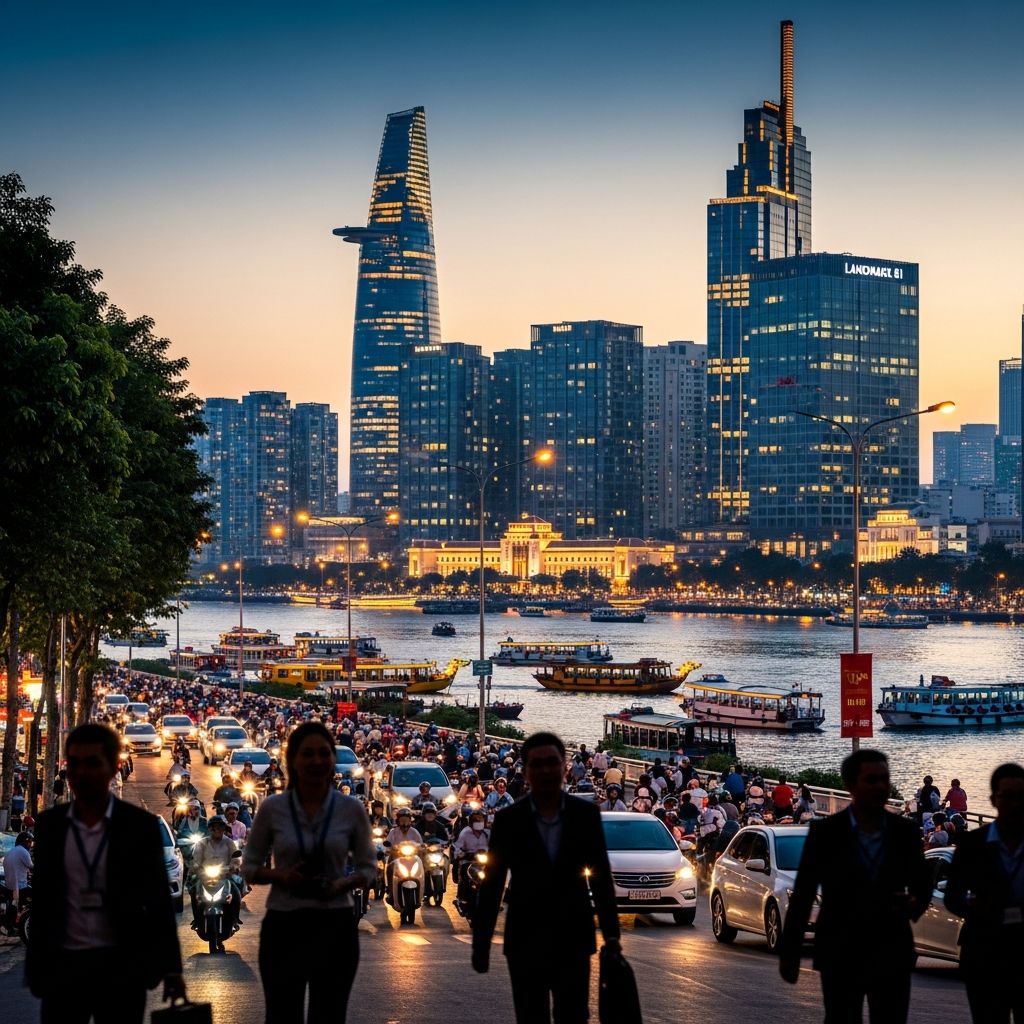
Ho Chi Minh City, still called Saigon by many locals, is Vietnam’s commercial heart and a rising magnet for ambitious professionals and fast-growing companies. Blending rapid economic growth with a comparatively low cost of living, the city offers compelling opportunities for both job seekers and employers.
This guide provides an in-depth look at the city’s job market, hiring trends, workplace culture, and everyday life so you can decide whether building a career or team in Ho Chi Minh City is the right move.
1. Why Ho Chi Minh City Is on the Global Careers Map
Ho Chi Minh City plays an outsized role in Vietnam’s economy, contributing a significant share of national GDP, exports, and tax revenue according to official statistics. As Vietnam continues to attract manufacturing, services, and technology investment, the city stands at the center of that transformation.
- Economic dynamism: Vietnam’s GDP growth has been among the fastest in Asia in recent years, supported by strong exports, foreign direct investment, and a growing middle class.
- Gateway to Southeast Asia: Many international companies use the city as a base to reach markets across ASEAN, thanks to its strategic location and trade agreements.
- Young, educated workforce: Vietnam’s median age is around 32, and enrollment in tertiary education has expanded rapidly, providing a steady pipeline of talent in business, engineering, and IT.
- Rising digital economy: Government strategies prioritize digital transformation, e-commerce, and high-tech services, offering growing opportunities in tech-enabled roles.
2. Key Industries and In-Demand Roles
Ho Chi Minh City’s economy is diversified, but several sectors stand out for job creation and hiring demand.
2.1 Technology and Digital Services
Software development, fintech, and digital services are expanding quickly as companies take advantage of Vietnam’s tech-savvy youth and cost-effective talent base.
- Software engineers and full-stack developers
- Mobile app and web developers
- Data analysts and business intelligence specialists
- Product managers, UX/UI designers
- IT project managers and solution architects
2.2 E-Commerce and Digital Marketing
Vietnam’s government has issued specific plans to accelerate e-commerce, support SMEs, and promote digital payments, creating jobs in online retail and digital marketing.
- E-commerce operations specialists
- Performance and growth marketers
- Social media and content managers
- Online customer experience and support roles
- Marketplace account managers for regional platforms
2.3 Manufacturing and Supply Chain
Vietnam has become a preferred manufacturing alternative in Asia, particularly for electronics, textiles, and consumer goods. Ho Chi Minh City and surrounding provinces host numerous industrial parks and logistics hubs.
- Supply chain planners and logistics managers
- Quality assurance and production engineers
- Procurement and sourcing specialists
- Industrial engineers and factory managers
2.4 Finance, Banking, and Professional Services
The city is emerging as a regional financial services center, with domestic and international banks, fintech firms, and consulting companies expanding operations.
- Corporate and retail banking professionals
- Risk management and compliance specialists
- Accountants and auditors
- Management consultants and business analysts
2.5 Tourism, Hospitality, and Services
Before the pandemic, Vietnam experienced rapid tourism growth, and Ho Chi Minh City remains a major entry point and destination. Services roles are rebounding in hotels, restaurants, entertainment, and aviation-related businesses.
- Hotel operations and guest relations
- Restaurant and F&B management
- Travel consultants and tour operators
- Event coordinators and experiences managers
3. Salary Levels and Cost of Living
One of the most attractive aspects of working in Ho Chi Minh City is the balance between earnings and living costs. Salaries for skilled roles are rising, but everyday expenses remain moderate compared with regional peers such as Singapore or Hong Kong.
| Expense Category | Typical Local Range (Approx.) | Comments |
|---|---|---|
| Housing (1-bedroom apartment) | Moderate to high in central districts | Cheaper in outer districts; shared housing common for expats and juniors. |
| Food & Groceries | Low to moderate | Street food is affordable; imported goods and fine dining can be pricey. |
| Transportation | Low | Motorbikes and ride-hailing apps keep costs down; metro lines are expanding. |
| Healthcare | Moderate | Public hospitals are lower-cost; private international clinics are more expensive. |
| Leisure & Entertainment | Flexible | Wide range of options from budget to upscale nightlife, gyms, and events. |
For employers, this cost environment allows competitive salary offers relative to local standards while remaining attractive compared with more expensive regional hubs. For professionals, it often means the ability to save while enjoying a comfortable lifestyle.
4. Work Culture and Office Life
Understanding Vietnam’s work culture is essential for anyone planning to live or hire in Ho Chi Minh City. While every company is different, several themes are common across many workplaces.
4.1 Hierarchy and Decision-Making
- Respect for seniority: Many workplaces give weight to age, job title, and tenure when decisions are made; junior staff may hesitate to openly contradict managers.
- Top-down direction: In more traditional firms, strategic decisions come from senior leaders, while younger employees expect clear guidance on priorities.
- Blending local and global styles: Multinational companies often introduce flatter structures and more open feedback cultures, especially in tech and startups.
4.2 Communication and Collaboration
- Indirect feedback: To avoid confrontation, some employees may soften criticism or say “yes” to preserve harmony, even if timelines or details are uncertain.
- Relationship-driven: Trust is built through frequent interaction, shared meals, and informal conversations, not only through formal meetings.
- Team orientation: Group success is often valued more than individual spotlight; collaborative problem solving is appreciated.
4.3 Working Hours and Flexibility
- Standard office hours typically run from Monday to Friday, with a lunch break around midday.
- Some local firms may expect overtime around deadlines or peak seasons.
- Remote and hybrid work practices grew during and after the pandemic, especially in multinational and technology companies, though full-time office work remains common.
5. Talent Pool and Hiring Considerations
For employers, hiring in Ho Chi Minh City means navigating a vibrant but competitive talent market. For job seekers, understanding how companies recruit helps you stand out.
5.1 Skills Supply and Gaps
- Strong technical skills: Many graduates in engineering, IT, and business bring solid foundational knowledge and a willingness to learn.
- Language capabilities: English proficiency is improving, particularly among younger professionals, but it still varies significantly by sector and seniority.
- Management experience: Demand for mid-level leaders with both technical expertise and people-management skills often exceeds supply, leading to higher competition in this segment.
5.2 How Companies Hire
- Online job portals and professional social networks
- Referrals from employees, alumni, and business partners
- Campus recruitment at universities and technical colleges
- Recruitment agencies for specialized or executive roles
Hiring cycles for junior roles can be fast, but senior roles may require multiple interview rounds and careful negotiation, particularly when targeting candidates with regional or international experience.
5.3 Employer Branding and Retention
As competition for skilled talent intensifies, employers are investing more in culture, learning, and benefits:
- Career development: Training, mentorship, and clear promotion paths are highly valued by young professionals.
- Work–life balance: Flexible hours, hybrid work, and wellness programs are increasingly used to differentiate employers.
- Inclusive culture: Opportunities to use English, work with international teams, and contribute ideas help attract globally-minded talent.
6. Visas, Legal Framework, and Business Environment
Vietnam’s government has implemented reforms to improve its investment climate and streamline business procedures, although challenges remain.
6.1 Business and Investment Climate
- Pro-investment policies: Recent legal changes aim to simplify licensing, reduce bureaucracy, and strengthen investor protections.
- Free trade agreements: Vietnam participates in multiple regional and bilateral trade agreements, improving market access for export-oriented companies.
- Remaining hurdles: Administrative processes can still be complex, and regulatory interpretation may differ across local offices.
6.2 Hiring Foreign Talent
Companies that wish to employ foreign professionals typically need to comply with work permit, visa, and residency rules. Requirements can include proof of qualifications, professional experience, and an employer sponsor.
- Work permits and visas must be obtained before or soon after arrival.
- Processing times can vary, so early planning is recommended.
- Policy updates are frequent; many firms rely on legal or HR specialists to remain compliant.
7. Everyday Life in Ho Chi Minh City
Beyond the office, quality of life is a major factor in deciding whether to relocate or build a career in Ho Chi Minh City. The city combines intense energy with pockets of calm and community.
7.1 Neighborhoods and Housing
- Central business districts: Inner-city districts host office towers, shopping centers, and a growing number of high-rise apartments.
- Expat-friendly areas: Some districts are popular with international residents due to international schools, restaurants, and riverfront developments.
- Emerging suburbs: New townships and residential complexes on the outskirts offer more space, greenery, and family-friendly amenities.
7.2 Transportation and Mobility
- Motorbikes remain the dominant mode of transport, but ride-hailing apps make getting around simple for locals and newcomers.
- Public transport networks, including bus routes and an expanding metro system, are improving urban mobility.
- Traffic congestion and air quality can be challenging during peak hours, especially in central districts.
7.3 Culture, Food, and Community
- Food culture: From street stalls to rooftop restaurants, the city offers an enormous range of Vietnamese and international cuisine.
- Arts and nightlife: Coffee shops, galleries, music venues, and clubs provide options for every taste.
- Community networks: Professional groups, hobby clubs, and online communities help newcomers integrate and build networks quickly.
8. Practical Tips for Job Seekers and Employers
8.1 For Job Seekers
- Highlight any regional or international experience on your CV.
- Showcase projects that demonstrate adaptability and problem-solving.
- Invest in improving English (or Vietnamese, for foreigners) to expand your options.
- Research employer reputation, culture, and growth prospects before accepting offers.
- Be prepared to discuss long-term career plans; employers value commitment and loyalty.
8.2 For Employers and Hiring Managers
- Benchmark compensation against both local and regional competitors.
- Offer clear development paths and training to retain emerging leaders.
- Adapt onboarding to support young graduates transitioning into professional environments.
- Communicate expectations openly and reinforce feedback channels.
- Be proactive about compliance with local labor, tax, and immigration regulations.
Frequently Asked Questions (FAQs)
Q: Is Ho Chi Minh City a good place for early-career professionals?
Yes. The city offers fast-growing industries, relatively affordable living costs, and many entry-level opportunities, especially in tech, services, and manufacturing. The pace can be intense, but the learning curve is steep and rewarding.
Q: Do I need to speak Vietnamese to work in Ho Chi Minh City?
In multinational companies, English is often the working language, particularly in white-collar roles. However, knowing basic Vietnamese helps daily life, broadens your network, and is an advantage in client-facing positions.
Q: How competitive is the job market for foreigners?
The market is most open to foreigners who bring specialized expertise, regional experience, or skills that are in short supply locally, such as advanced technical knowledge or senior management capabilities. Entry-level roles are usually reserved for local candidates.
Q: What benefits do employees commonly receive?
In addition to base salary, employees may receive performance bonuses, private health insurance, meal or transport allowances, and paid annual leave. International companies often provide more extensive benefit packages than smaller local firms.
Q: How stable is the business environment in Vietnam?
Vietnam has enjoyed sustained economic growth and has improved its legal framework to attract investment. Although regulatory changes and administrative procedures can present challenges, overall macroeconomic and political stability are seen as strengths by many investors.
References
- Vietnam Economic Performance in 2025: GDP, FDI, and Trade — Vietnam Briefing (Dezan Shira & Associates). 2025-09-30. https://www.vietnam-briefing.com/news/vietnam-gdp-fdi-and-trade-2025.html/
- 2025 Investment Climate Statements: Vietnam — U.S. Department of State. 2025-07-23. https://www.state.gov/reports/2025-investment-climate-statements/vietnam
- Doing Business in Viet Nam 2025 — PwC Vietnam. 2025-03-01. https://www.pwc.com/vn/en/publications/vietnam-publications/doing-business-in-vietnam-2025.html
- Ho Chi Minh City Targets 10.3% Growth in 2025 — GTI Partner (citing VietnamPlus). 2025-08-15. https://gtipartner.com/ho-chi-minh-city-growth-2025/
- Ho Chi Minh City’s 2025 Plan: Boosting E-Commerce and Supporting SMEs — World Trade Center Binh Duong New City (summarizing HCMC official plan). 2025-06-10. https://wtcconnect.net/en/ho-chi-minh-city-e-commerce-2025/

Medha Deb is an editor with a master's degree in Applied Linguistics from the University of Hyderabad. She believes that her qualification has helped her develop a deep understanding of language and its application in various contexts. Medha specializes in the areas of beauty, health, sports, and wellness and is committed to ensuring that the content on the website is…