
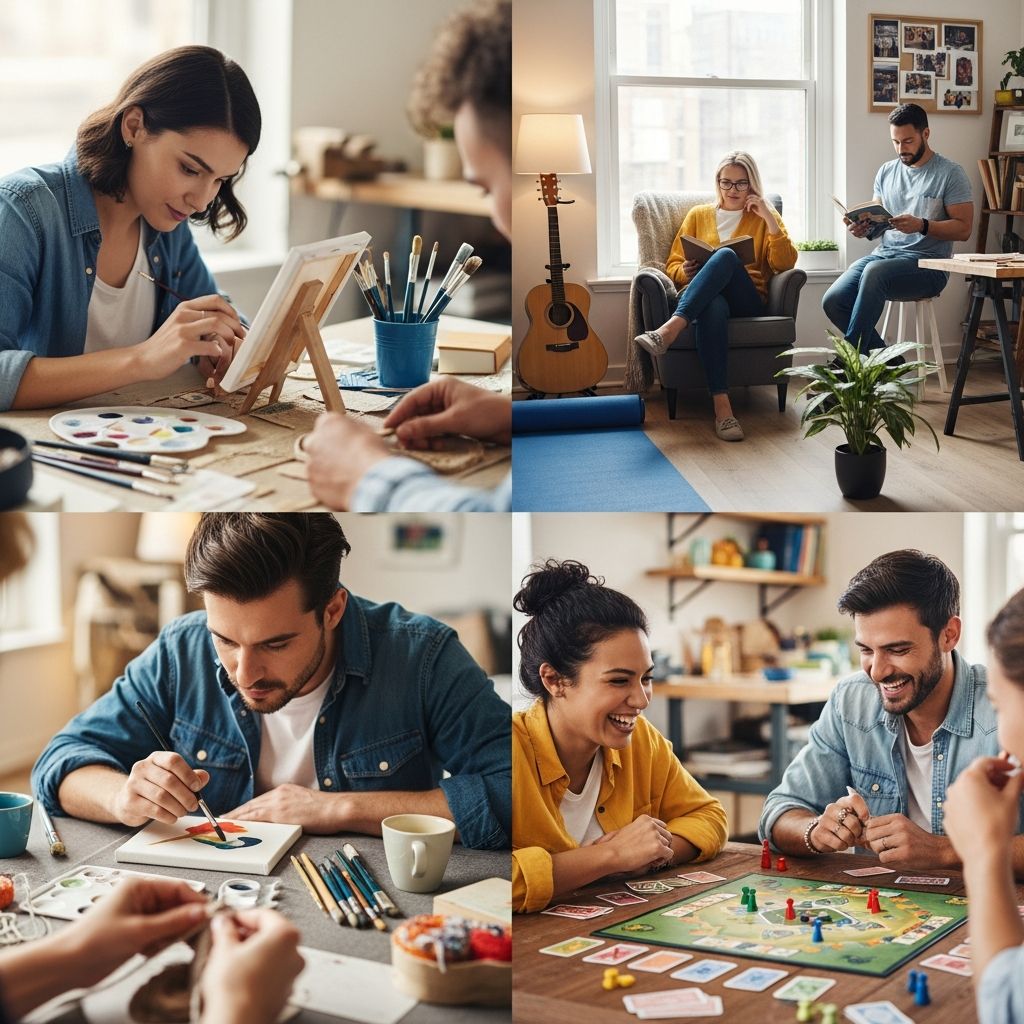
Hobbies may look like simple ways to pass the time, but the activities you keep returning to often say a lot about your personality. Psychological research has linked personality traits to the types of leisure activities people choose, how often they practice them, and how much satisfaction they gain from them. Understanding these links can help you select hobbies that feel energizing instead of forced.
This guide uses common personality models, like the Myers–Briggs Type Indicator (MBTI) and the Big Five traits, along with research on leisure and well-being, to show how different people naturally gravitate toward different kinds of hobbies.
Why Personality Matters for Your Free Time
Personality describes relatively stable patterns in how you think, feel, and behave. When it comes to hobbies, those patterns influence:
- What feels fun and meaningful vs. boring or stressful
- Whether you prefer quiet or social activities
- How much structure you like in your free time
- Whether you enjoy physical, creative, or intellectual challenges
Studies suggest that people tend to choose leisure activities that match their traits, and that engaging in personally meaningful hobbies can support mood, well-being, and even a sense of flourishing.
Two Major Personality Lenses: MBTI and Big Five
There are many ways to describe personality. This article mainly draws on two widely used frameworks.
MBTI Preference Pairs
The Myers–Briggs system describes four preference pairs, each with two options.
| Preference Pair | Core Focus | Hobby Implications (Typical Tendencies) |
|---|---|---|
| Extraversion (E) / Introversion (I) | Where you focus energy | E: group, fast-paced activities; I: solo, reflective activities |
| Sensing (S) / Intuition (N) | How you take in information | S: practical, hands-on hobbies; N: imaginative, conceptual hobbies |
| Thinking (T) / Feeling (F) | How you make decisions | T: strategy, systems, mastery; F: connection, values, aesthetics |
| Judging (J) / Perceiving (P) | How you approach the outer world | J: structured, scheduled hobbies; P: flexible, spontaneous hobbies |
Big Five Personality Traits
Modern research often uses the Big Five: openness, conscientiousness, extraversion, agreeableness, and neuroticism.
- Openness: Curiosity, imagination, love of ideas and novelty
- Conscientiousness: Discipline, organization, goal focus
- Extraversion: Sociability, energy, talkativeness
- Agreeableness: Empathy, cooperation, warmth
- Neuroticism: Tendency toward anxiety and emotional sensitivity
Research indicates these traits are linked to hobby preferences; for instance, people high in openness often choose creative or intellectually stimulating activities, while extraverts lean toward active and social hobbies.
How Each MBTI Preference Pair Points to Different Hobbies
You do not have to know your full type to use personality in choosing hobbies. Looking at each preference pair can already clarify a lot.
Extraversion vs. Introversion: Social vs. Solitary Energy
Extraverted people usually recharge around others and enjoy outward engagement.
- Team sports, dance classes, or group fitness
- Clubs, social gaming, or trivia nights
- Volunteer work with visible interaction (events, outreach)
Introverted people tend to feel restored by solitude or one-on-one time.
- Reading, writing, drawing, or solo video games
- Nature walks, photography, gardening
- Deep one-on-one conversations or small book clubs
Sensing vs. Intuition: Concrete vs. Conceptual Focus
Sensing-oriented people usually enjoy hobbies grounded in the five senses and tangible results.
- Cooking, baking, woodworking, or crafting
- DIY projects, home improvement, or car repair
- Sports, hiking, or hands-on workshops
Intuitive types often prefer activities involving imagination, patterns, and possibilities.
- Creative writing, world-building, or game design
- Theory-heavy interests: philosophy groups, science talks
- Brainstorming-style hobbies like invention or entrepreneurship projects
Thinking vs. Feeling: Logic vs. Values in Play
Thinking types may gravitate toward hobbies that involve systems, problem-solving, or challenge.
- Strategy games, chess, complex board games
- Programming, electronics, or analytics-based projects
- Skill-based competitions, from e-sports to speed cubing
Feeling types often look for emotional resonance, aesthetics, and connection.
- Music, dance, visual arts, or theater
- Community-building activities and support groups
- Volunteer work centered on caregiving or advocacy
Judging vs. Perceiving: Structure vs. Flexibility
Judging-oriented people typically enjoy clear plans and measurable progress in their hobbies.
- Goal-based fitness programs or training plans
- Classes with curricula (language courses, music lessons)
- Organized collections (stamps, records, memorabilia)
Perceiving types often prefer open-ended, exploratory activities.
- Casual travel with loose itineraries
- Improvisational arts, like jam sessions or improv comedy
- Sandbox-style games and experimental projects
Big Five Traits and Hobby Patterns
Research linking the Big Five traits to hobbies shows predictable trends that you can use as a guide.
Openness: Creative and Exploratory Activities
High openness is strongly associated with hobbies involving creativity, culture, and complex ideas.
- Art, writing, design, or composing music
- Travel, cultural events, and trying new cuisines
- Studying philosophy, science, or other deep topics for fun
Lower openness is not a limitation; it often pairs with enjoyment of familiar, concrete, and reliable activities, such as well-established sports, routines, or crafts.
Conscientiousness: Structured and Goal-Driven Hobbies
People high in conscientiousness often seek hobbies with clear goals, routines, and standards.
- Long-term skill development (learning an instrument, martial arts)
- Organized sports leagues or training plans
- Meticulous crafts such as model building or advanced baking
Those lower in conscientiousness may prefer spontaneous or low-commitment hobbies over strict schedules.
Extraversion: Social and Active Hobbies
Extraverts frequently favor energetic and interactive activities, from team sports to parties.
- Group exercise, dance, or outdoor adventures with friends
- Choirs, bands, drama clubs, or community organizations
- Gaming communities, social clubs, or meetups
Agreeableness: Cooperative and Caring Activities
People high in agreeableness tend to enjoy cooperative, supportive, and harmonious hobbies.
- Team-based sports emphasizing collaboration
- Group fitness or wellness activities like yoga or meditation circles
- Volunteering, mentoring, or caregiving roles
Neuroticism: Hobbies That Soothe or Channel Emotion
Higher neuroticism is associated with greater emotional sensitivity. Helpful hobbies often include calming or expressive outlets.
- Mindfulness, yoga, or relaxation practices
- Journaling, poetry, or expressive arts
- Low-pressure physical activity like walking or swimming
Research Snapshot: Personality, Leisure, and Well-Being
Several studies connect personality, hobbies, and mental health.
- A study of leisure activities and personality found that different traits were associated with different patterns of leisure, and that these patterns predicted aspects of psychological functioning.
- Research on employees also indicates that personality influences how people use their free time and how satisfied they feel with leisure activities.
- Everyday personality research shows that traits show up in daily choices, including how people spend time outside work and study.
This means that when your hobbies fit your personality, they are more likely to feel restorative instead of draining.
Step-by-Step: Choosing Hobbies That Fit Your Type
You do not need a test result to use personality insight. The steps below work even if you only have a rough sense of your tendencies.
1. Notice Your Natural Patterns
- Do you get energy from people or solitude?
- Do you trust hands-on experience or big ideas more?
- Do you like plans and structure or freedom and spontaneity?
Compare your answers with the MBTI preference descriptions above.
2. Match Needs, Not Labels
Instead of asking, “What hobby suits my exact type?”, ask:
- “Do I want more social contact or more quiet in my week?”
- “Do I need something challenging or something soothing?”
- “Do I enjoy tracking progress, or do I want no pressure?”
3. Use Small Experiments
Personality is stable but not rigid. Try short, low-risk experiments:
- Commit to testing one new activity for four sessions
- Borrow supplies or attend a trial class before investing heavily
- Allow yourself to stop if it genuinely clashes with your temperament
4. Balance Comfort and Growth
Hobbies that match your strengths feel natural, but some that stretch you slightly can build new skills and resilience.
- Introverts might try a small group class instead of a huge event
- Extraverts might explore reflective hobbies like journaling or solo hikes
- Highly conscientious people might explore playful, low-stakes activities
Examples: Aligning Hobbies With Common Personality Patterns
The table below suggests hobby directions for broad personality themes. These are examples, not rules.
| Personality Theme (Blend of Traits) | What You May Crave | Example Hobbies |
|---|---|---|
| Reserved, analytical, future-focused | Depth, autonomy, complex ideas | Reading, coding projects, strategy games, research-based hobbies |
| Outgoing, practical, energetic | Action, teamwork, real-world results | Team sports, outdoor adventures, group fitness, event organizing |
| Creative, idealistic, people-oriented | Meaning, expression, connection | Music, writing, theater, advocacy, mentoring, community art |
| Organized, reliable, detail-focused | Structure, mastery, visible progress | Instrument practice, language learning, meticulous crafts |
| Spontaneous, curious, novelty-seeking | Variety, exploration, play | Travel, improv arts, new sports sampling, open-world games |
Common Mistakes When Picking Hobbies
- Chasing trends over fit: Choosing activities because they are popular, not because they suit your temperament.
- Ignoring energy limits: Forcing highly social hobbies when you are drained, or vice versa.
- Overloading structure: Turning every pastime into a performance metric, especially for very conscientious people.
- Underestimating learning curves: Dropping hobbies too soon before you reach the enjoyable stage.
FAQs About Personality and Hobbies
Q: Do I have to choose hobbies that match my personality type exactly?
No. Personality is a guide, not a cage. Research suggests that people tend to prefer hobbies that fit their traits, but you are free to explore outside those patterns. Use your tendencies as a starting point, then see what genuinely feels rewarding.
Q: Can the right hobby improve my mental health?
Evidence indicates that engaging in enjoyable, meaningful leisure activities is associated with better mood, reduced stress, and higher psychological well-being. Calming, expressive, or physically active hobbies can all support mental health when they fit your needs and circumstances.
Q: My personality seems to be changing. Should my hobbies change too?
Long-term studies suggest that personality can shift over time and in response to life experiences. As your traits and circumstances evolve, it is normal for your interests and preferred hobbies to change too. Periodically reassess what still feels energizing and what does not.
Q: Is taking a personality test necessary before choosing hobbies?
It is not necessary, though some people find tests like MBTI or Big Five questionnaires helpful for reflection. You can often learn just as much by observing your own patterns: when you feel most alive, which environments drain you, and how you prefer to spend unstructured time.
Q: Can I use hobbies to deliberately develop certain traits?
Yes, to a degree. Evidence suggests that repeated behaviors and environments can support gradual shifts in personality-related behaviors over time. For example, joining collaborative activities may strengthen social confidence, while disciplined practice hobbies may foster habits related to conscientiousness.
References
- MBTI Preferences: How Do You Prefer to Be? — The Myers & Briggs Foundation. 2023-01-01 (approx. last updated). https://www.myersbriggs.org/my-mbti-personality-type/the-mbti-preferences/
- How the Big Five Personality Traits Influence Your Hobbies and Leisure Activities — Cerebral Quotient. 2023-06-15. https://www.cerebralquotient.com/blog/personality-psychology/big-five-personality-traits-and-hobbies/
- The role of personality traits and leisure activities in predicting well-being in young adults — Stavrova O., Luhmann M. 2022-11-10. https://pmc.ncbi.nlm.nih.gov/articles/PMC9636694/
- Personality Traits Meet Everyday Life in New Research on How People Change Over Time — Jaffee S. UC Davis Letters & Science. 2021-12-01. https://lettersandsciencemag.ucdavis.edu/self-society/personality-traits-meet-everyday-life-new-research-how-people-change-over-time
- The relationship between personality types and leisure time activities and their effect on occupational stress of casino employees — Vermeulen L. et al., SA Journal of Human Resource Management. 2010-03-31. https://sajhrm.co.za/index.php/sajhrm/article/view/761/1038

- Integrated M.A. in Applied Linguistics, University of Hyderabad
- 5+ years in editorial, instructional, SEO, and research-based writing
Sneha is a relationships and lifestyle writer with a strong foundation in applied linguistics and certified training in relationship coaching. She brings over five years of writing experience to theskillvault, crafting thoughtful, research-driven content that empowers readers to build healthier relationships, boost emotional well-being, and embrace holistic living. Her writing and insights reflect the belief that beauty, happiness, and wellness…