
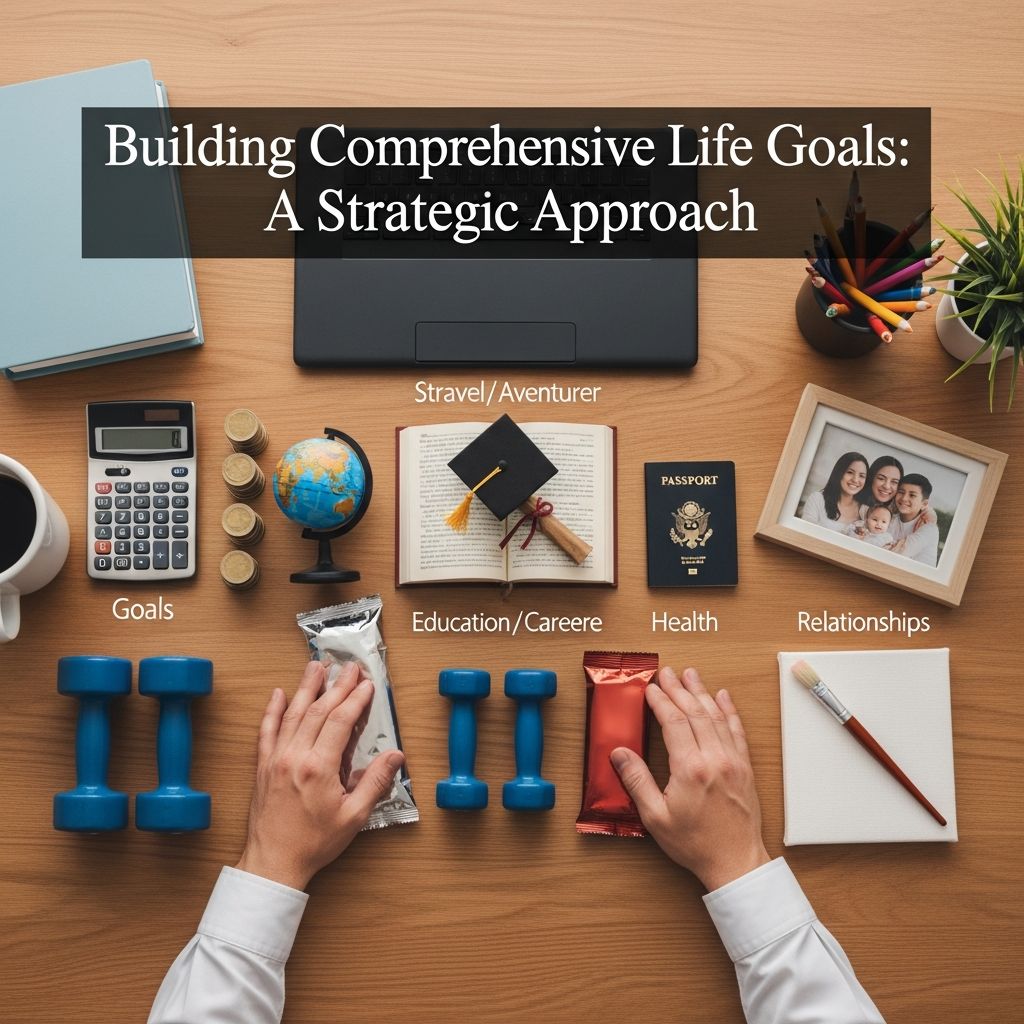
The beginning of a new year traditionally prompts reflection and planning. Many individuals set resolutions, yet research consistently shows that a significant percentage abandon these objectives within weeks. The challenge lies not in lacking ambition, but rather in the approach to goal formulation. Rather than isolated, disconnected aspirations, successful individuals employ integrated frameworks that address multiple facets of their lives simultaneously. This comprehensive methodology ensures goals remain motivating, achievable, and deeply meaningful.
Understanding the Foundation: Why Traditional Goal-Setting Falls Short
Conventional goal-setting approaches often focus on single dimensions—career advancement or fitness improvements—without considering how these objectives interconnect with other life areas. This fragmented perspective creates misalignment and internal conflict. When one goal contradicts another or lacks connection to deeper values, motivation deteriorates. Holistic goal-setting addresses this limitation by recognizing that personal, professional, physical, and emotional dimensions influence one another. Success requires orchestrating these elements into a coherent framework where each component supports overall well-being rather than competing for limited resources.
Effective goal architecture requires acknowledging that lasting transformation involves more than intellectual commitment. Goals must resonate emotionally and spiritually, connecting to your fundamental sense of purpose. This alignment between rational planning and emotional investment creates the psychological momentum necessary to sustain effort through inevitable obstacles.
Step One: Establishing Your Core Values and Vision
Before constructing specific objectives, clarify the foundational principles that guide your life. Core values represent what matters most—integrity, family, growth, contribution, creativity, or security. These become the filtering mechanism for evaluating which goals deserve your finite time and energy.
Begin by reflecting on moments when you felt most fulfilled and alive. What were you doing? Who were you with? What aspects of that experience resonated deeply? These reflections illuminate patterns that reveal your authentic priorities. Often, the goals we think we should pursue differ significantly from those that genuinely excite us.
Your vision statement transcends basic aspiration. It paints a vivid picture of your life when these values are fully expressed. Rather than vague ambitions like “be successful,” your vision might articulate the specific experience: “I lead a dynamic team creating innovative solutions while maintaining meaningful relationships with family and friends, balancing professional achievement with personal presence.” This specificity provides a north star that guides daily decisions.
Step Two: Conducting a Comprehensive Life Assessment
Systematic goal-setting requires understanding your current position across life’s key dimensions. Create an inventory addressing these areas:
- Career and Professional Development: Your current role, satisfaction level, growth trajectory, and aspirations
- Financial Health: Income adequacy, savings rate, debt management, and long-term security
- Physical Well-being: Energy levels, fitness, nutrition habits, and health management
- Relationships and Social Connection: Quality of family bonds, friendships, community involvement, and social support
- Mental and Emotional Development: Stress management, emotional resilience, learning pursuits, and psychological growth
- Spiritual or Purpose-Driven Practice: Meaning-making activities, meditation, volunteer work, or philosophical pursuits
For each dimension, rate your current satisfaction on a scale and identify gaps between present reality and desired state. This honest assessment prevents fantasy-based goal-setting while highlighting areas requiring attention. The assessment also reveals interdependencies—improved physical health often enhances energy for career advancement and relational presence.
Step Three: Transforming Values Into Measurable Objectives
While values provide direction, goals require specificity and measurability. The SMART framework—Specific, Measurable, Achievable, Realistic, and Time-bound—translates abstract values into actionable objectives. However, SMART goals alone lack the motivational resonance of holistic target-setting.
Consider how to express each core value as a concrete objective. If “family connection” is central to your values, a SMART goal might read: “Schedule and complete a weekly two-hour family dinner without digital distractions every Sunday for twelve months.” This specificity removes ambiguity about what success looks like and when it occurs.
When setting multiple objectives, ensure they complement rather than conflict. A goal to work seventy-hour weeks contradicts aspirations for family presence and personal wellness. Recognizing these tensions during planning allows you to negotiate realistic targets that honor multiple commitments rather than discovering conflicts mid-year through failure.
Step Four: Building Integration Across Life Domains
The Balanced Scorecard framework provides a methodology for ensuring comprehensive coverage across organizational contexts, and the same principle applies to personal life planning. Establish objectives across four essential perspectives:
| Life Perspective | Focus Area | Sample Objectives |
|---|---|---|
| Financial | Economic security and resource management | Increase savings rate, eliminate consumer debt, build investment portfolio |
| Relational | Connection with others and community contribution | Deepen key relationships, volunteer monthly, expand social circle |
| Physical | Health, energy, and bodily well-being | Establish consistent exercise routine, improve sleep quality, nutrition habits |
| Intellectual/Spiritual | Learning, growth, and meaning-making | Complete professional certification, establish meditation practice, explore purpose |
This multidimensional approach ensures no single area dominates at the expense of others. A career goal receives equal consideration alongside relationship and health objectives, creating natural balance. The framework also highlights how progress in one domain enables advancement in others—improved health increases work performance and relationship quality.
Step Five: Creating a Cascade of Supporting Milestones
Large ambitions become manageable through decomposition into smaller milestones and immediate actions. The Goal Pyramid methodology illustrates this hierarchy, where organizational or life-level objectives cascade into departmental or domain-specific targets, which further break into individual action steps.
For instance, a goal to “achieve financial security through investment” might decompose as:
- Year-long objective: Establish diversified investment portfolio worth $50,000
- Quarterly milestones: Complete investment education (Q1), open brokerage account and invest $10,000 (Q2), increase monthly contributions by 25% (Q3), review and rebalance portfolio (Q4)
- Monthly actions: Read investment books, research platforms, automate transfers, monitor performance
- Weekly practices: Dedicate Sunday evening to financial planning and tracking
This granular breakdown transforms intimidating aspirations into routine actions. Each week delivers manageable tasks that accumulate into significant progress. The visibility of incremental advancement maintains motivation during extended goal timelines.
Step Six: Addressing Obstacles Through Strategic Planning
The WOOP framework—Wish, Outcome, Obstacles, Plan—complements goal definition by proactively addressing predictable challenges. After establishing what you want and the positive outcome, systematically identify potential obstacles and plan countermeasures.
If your goal involves consistent exercise three times weekly, anticipated obstacles might include busy work schedules, weather inconvenience, or motivation fluctuations. For each obstacle, develop a specific response strategy. For schedule conflicts, you might establish non-negotiable morning workout times or identify backup exercise alternatives requiring minimal time. For motivation challenges, you might arrange accountability partnerships or schedule workouts as social commitments with friends.
This realistic anticipation prevents surprise derailment. When expected obstacles arise—and they will—you have predetermined responses rather than improvising excuses. This distinction between anticipated difficulties and unexpected crises fundamentally changes how you navigate goal pursuit.
Step Seven: Establishing Accountability and Progress Monitoring
The final component of comprehensive goal-setting involves creating structures that maintain commitment through regular review and accountability. Monthly progress assessments identify what’s working and what requires adjustment. This isn’t about harsh self-judgment but rather honest evaluation and course correction.
Consider multiple accountability mechanisms. Personal journaling documents progress and insights. Trusted accountability partners provide external perspective and motivation. Public commitment—sharing goals with relevant parties—creates social motivation. Quantifiable tracking through spreadsheets or apps provides objective feedback on progress toward measurable targets.
Quarterly reviews allow for strategic adjustment. Circumstances change, and goals may require modification. Perhaps a health goal proved unrealistic given work demands, or a relationship objective exceeded expectations. Rather than viewing revisions as failure, treat them as data-informed recalibration ensuring goals remain meaningful and achievable.
Integrating Mind, Heart, and Body in Goal Pursuit
Sophisticated goal-setting recognizes that achievement involves cognitive, emotional, and physical dimensions working in concert. The cognitive dimension handles strategic analysis and logical planning. Visualization practices—imagining successful goal achievement in vivid sensory detail—prepare your nervous system for success and overcome limiting beliefs about capability.
The emotional dimension involves identifying why achieving these goals matters. Connecting objectives to deeper purposes activates intrinsic motivation superior to external rewards. What feelings and experiences will goal achievement enable? How will your life be different? What becomes possible?
The physical dimension involves embodied action—the actual behaviors and practices that move toward objectives. No amount of thinking or emotional commitment manifests results without consistent physical effort. Regular practice, disciplined habits, and persistent action transform aspiration into reality.
Avoiding Common Goal-Setting Mistakes
Even well-intentioned planners encounter predictable pitfalls. Avoid these common mistakes:
- Disconnection from values: Goals that don’t reflect genuine priorities feel hollow and unmotivating
- Excessive ambition: Pursuing too many goals simultaneously creates overwhelm and scattered effort
- Lack of specificity: Vague aspirations provide no clear target or measurement standard
- Missing stakeholder input: Goals affecting others lack buy-in without participation from relevant parties
- Insufficient resource allocation: Underestimating time, money, or support needed for success
- Absence of flexibility: Rigid goals that can’t adapt to changing circumstances create frustration
Implementation Timeline for Your Goal Framework
Rather than overwhelming simultaneous action, implement your comprehensive goal framework progressively:
- Week 1: Clarify core values and develop vision statement
- Week 2: Conduct life assessment across key dimensions
- Week 3: Formulate SMART objectives aligned with values
- Week 4: Create milestone hierarchies and obstacle plans
- Week 5 onward: Implement accountability structures and begin regular progress tracking
Frequently Asked Questions
Q: How many goals should I pursue simultaneously?
A: Quality exceeds quantity. Most individuals maintain focus more effectively with three to five primary objectives. Pursuing too many goals dilutes effort and reduces progress in each area. Select objectives addressing your most important life dimensions rather than attempting comprehensive change everywhere.
Q: What should I do if circumstances change and goals become irrelevant?
A: Flexibility distinguishes wise goal-setting from rigidity. Review goals quarterly and adjust them based on changing circumstances, new information, or shifted priorities. Modification isn’t failure; it’s intelligent adaptation ensuring goals continue serving your evolving life.
Q: How do I maintain motivation during long-term goal pursuit?
A: Break ambitious goals into visible milestones providing regular progress feedback. Celebrate incremental achievements. Connect to your deeper ‘why’—the fundamental purpose behind the goal. Share goals with accountability partners who provide encouragement. Visualize success regularly to maintain emotional connection.
Q: Should goals always be ambitious or is it acceptable to maintain status quo in certain areas?
A: Not every life area requires growth simultaneously. Some goals may focus on maintaining current excellence while others pursue transformation. The comprehensive framework accommodates both ambitious stretch goals and maintenance objectives, ensuring realistic balance.
Q: How do I ensure goals don’t conflict with each other?
A: During planning, explicitly map potential conflicts between objectives. Negotiate targets that honor multiple commitments. Sometimes this means moderating one goal’s ambition to create space for others. The aim is integrated life design, not individual goal optimization regardless of consequences.
References
- 10 Proven Goal-Setting Frameworks to Utilize — INTOO. 2024. https://www.intoo.com/us/blog/what-is-a-goal-setting-framework/
- Holistic Goal Setting: Mind, Body, Soul Alignment — Mind for Marathon. 2024. https://mfm.au/blog/beyond-smart-a-holistic-approach-to-conquering-a-marathon/
- 7 Effective Goal-Setting Frameworks Analyzed — Deel. 2024. https://www.deel.com/blog/goal-setting-frameworks/
- Create Your Holistic Goal — Atina Diffley. PDF. https://atinadiffley.com/wp-content/uploads/Create-Your-Holistic-Goal-1.pdf

Medha Deb is an editor with a master's degree in Applied Linguistics from the University of Hyderabad. She believes that her qualification has helped her develop a deep understanding of language and its application in various contexts. Medha specializes in the areas of beauty, health, sports, and wellness and is committed to ensuring that the content on the website is…