
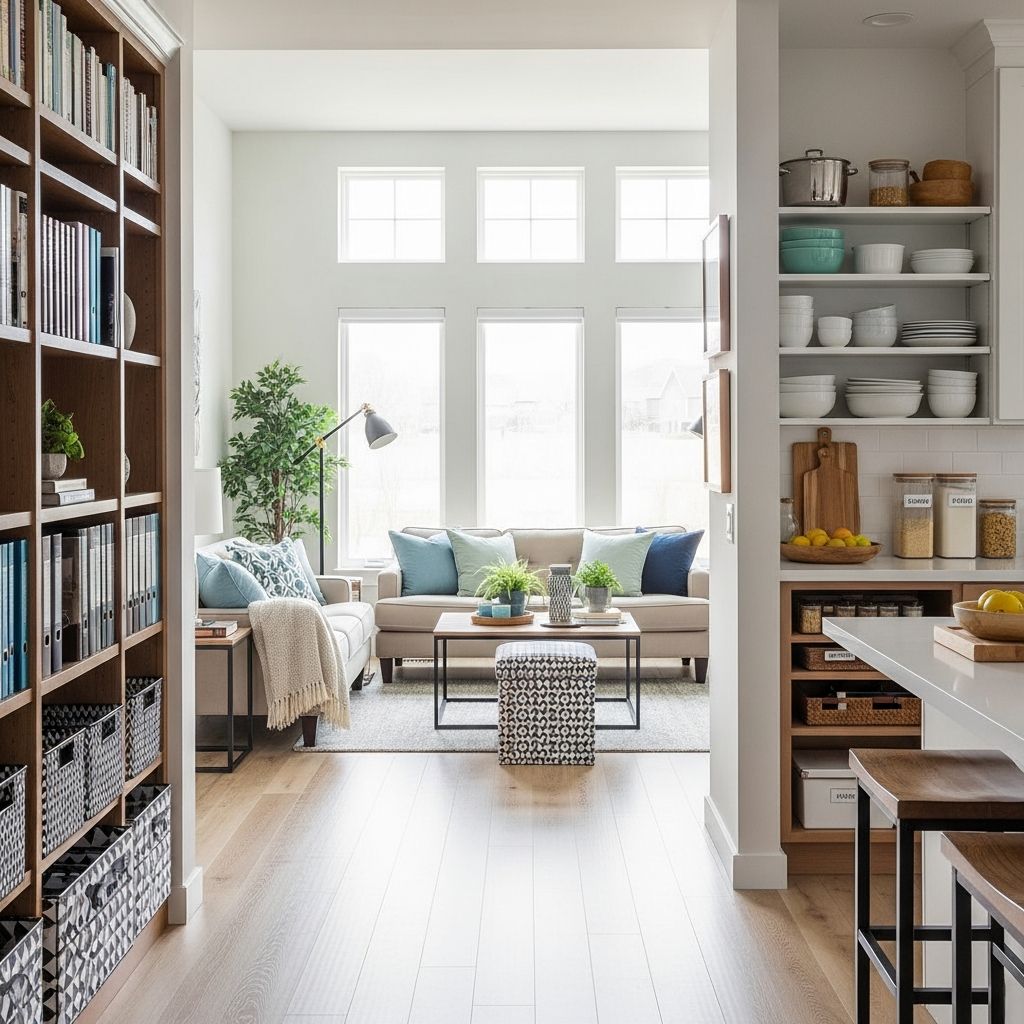
A cluttered home can feel overwhelming and chaotic, affecting both your mental well-being and daily productivity. Whether you’re living in a sprawling house or a compact apartment, the principles of effective organization remain consistent. The journey toward a well-organized home doesn’t require professional help or expensive solutions—it simply requires intentional planning, practical strategies, and a commitment to sustainable practices. This guide explores comprehensive approaches to transforming your living space into an organized, functional environment.
Understanding Your Organization Style
Before diving into specific organizing tactics, it’s essential to recognize that every individual has unique preferences regarding how they want to organize their space. Some people thrive with minimalist approaches, while others prefer to keep items for future use. Understanding your personal organization style helps you create systems that you’ll actually maintain over time, rather than following methods that feel unnatural or restrictive to your lifestyle.
Consider how you prefer to access items. Do you need to grab things quickly during busy mornings? Do you want to see all available options before making choices? Do you need designated drop zones to prevent items from getting lost when you arrive home? Your answers to these questions should shape how you design your organizational systems. When storage solutions align with your natural habits and preferences, you’re far more likely to sustain them long-term.
The Importance of Strategic Decluttering
Before organizing anything, you must first declutter. Many people attempt to organize items they shouldn’t keep in the first place, which creates frustration and wastes time. Effective decluttering involves making honest assessments about what truly serves your life.
A practical rule of thumb involves evaluating whether you’ve used or worn an item within the past three years. If it has remained untouched during this period, it’s likely time to remove it from your home. However, be realistic about your current life stage and actual habits. Keeping something “just in case” or “someday” often results in accumulated clutter that takes up valuable space.
When sorting through possessions, create distinct categories for your items:
- Keep: Items you actively use, wear, or genuinely love
- Resell or Consign: Quality items that others might value
- Donate: Usable items that no longer serve your needs
- Recycle or Discard: Broken, damaged, or unusable items
This systematic approach ensures that every item in your home has a purpose and place, rather than serving as visual clutter that creates mental stress.
Breaking Down Large Projects Into Manageable Segments
Attempting to organize your entire home simultaneously is a recipe for overwhelm. Instead, focus on one specific area at a time, such as a single drawer, closet, or room. This incremental approach maintains motivation and prevents the project from feeling insurmountable.
Implement time-management techniques while tackling organizational tasks. Work in focused intervals—dedicate 25 minutes to intensive organizing work, followed by a 5-minute break. After completing an hour of work, take a longer break of 15 to 30 minutes. This pacing technique helps maintain your energy and focus while making the time feel as though it passes quickly.
By limiting your scope to manageable sections, you’ll experience tangible progress and the satisfaction that comes with completing a task, which motivates continued efforts on subsequent areas of your home.
Implementing Effective Categorization Systems
Once you’ve decluttered an area, the next step involves organizing similar items together. Loose items scattered throughout a space create visual chaos and make it impossible to find what you need. Categorization brings order by grouping related items strategically.
After identifying categories, measure your storage space precisely and select appropriate containers—drawer organizers, bins, baskets, or shelving units—that maximize your available area. Creative solutions like rotating turntables inside cabinets, sliding organizers under sinks, or tiered risers in pantries can dramatically increase usable storage capacity while improving accessibility.
Consider unconventional uses for storage items. For example, kitchen dividers designed for baking sheets work equally well for organizing clutches or flip-flops. Thinking creatively about organizational tools helps you maximize limited space without additional expense.
Maximizing Vertical Storage Opportunities
Many homes have significant unused space above shelves, on walls, and in upper cabinet areas. Vertical storage solutions dramatically expand your organizational capacity without consuming additional floor space—a particularly valuable strategy for smaller homes or apartments.
Tension rods installed in upper pantry spaces can hold items vertically, freeing substantial shelf space. Wall-mounted systems, hook installations, and track systems transform previously wasted areas into functional storage. For frequently accessed items, ensure they’re positioned at comfortable heights. Items used less frequently can occupy higher shelves, while everyday essentials should be at eye level or within easy reach.
This vertical approach proves especially valuable in garages, bathrooms, kitchens, and entryways where floor space is limited but wall space offers untapped potential.
Creating Sustainable Systems and Labeling Solutions
Organization only lasts when you establish systems that support your daily habits. Consider how you naturally interact with different spaces and design your storage accordingly. If you frequently misplace keys, establish a dedicated key hook station near your entry door where you’re reminded to place them immediately upon arrival. If you rotate between multiple bags, create a visible storage area displaying all options so you can easily select one while keeping essential items in a removable insert that travels between bags.
Clear labeling is essential for sustainable organization. Labels remind household members where items belong, reducing the tendency for things to end up in incorrect locations. This is particularly important in shared households where multiple people use the same spaces.
Establish specific zones for different activities or item types. A drop zone near your entrance containing a basket for items that need to go upstairs, a mail station for incoming documents, and a coat rack for daily outerwear all create designated places where things naturally belong. This zoning approach prevents items from migrating throughout your home.
Advanced Drawer and Cabinet Organization
Drawers and cabinets often become disorganized quickly because items lack defined spaces. Drawer dividers create boundaries that keep everything properly arranged and easily accessible. Adjustable dividers accommodate various item sizes, while expandable dividers adapt to different drawer depths.
For items like pans and cookware, specialized organizers prevent dangerous stacks that are difficult to access and hazardous when retrieving items from lower positions. Rolling organizers transform hard-to-reach cabinet spaces into functional, accessible storage. Tiered organizers and rotating turntables help you view all available options at a glance, particularly valuable in pantries where similar items might otherwise get buried in the back.
Reducing Paper Clutter Through Digital Solutions
Paper clutter represents one of the most common organizational challenges in modern homes. Transitioning to digital systems significantly reduces physical storage needs and simplifies document retrieval. Eliminate unnecessary mailing lists to reduce incoming junk mail, switch to electronic bill payment rather than maintaining paper statements, and scan important documents to create digital backups.
Scanning important paperwork allows you to maintain digital copies while eliminating physical filing systems. This approach saves considerable space while making documents more easily searchable and less vulnerable to physical damage.
Closet Optimization and Wardrobe Management
Closets often become disorganized because we keep items we no longer wear or that no longer fit our current lifestyle. Begin a closet revamp by removing anything that doesn’t reflect your current style, fit properly, or flatter your appearance.
For uncertain items, employ the reverse hanger technique: hang items with hangers facing backward. When you wear something, rehang it with the hanger facing forward. After several months, pieces still wearing backward hangers are candidates for removal. This visual system reveals your actual wearing patterns without requiring guesswork.
Consider using hooks instead of hangers if you tend to drop or pile clothing. Hooks eliminate the friction of removing hangers and replacing them, making it easier to maintain the system. Hooks work particularly well for frequently worn items, creating effortless access for busy mornings.
Living Room and Common Area Organization
Common areas like living rooms naturally accumulate clutter because multiple household members use them and items lack designated homes. Coffee tables particularly attract random items that create visual chaos. Large decorative trays help contain this clutter while maintaining aesthetic appeal. Decorative boxes stored on shelves or side tables provide stylish storage for coasters, remote controls, computer cords, and other items that typically scatter across surfaces.
Implement a basket system at the bottom of stairs to collect items requiring placement in upper-level rooms. Rather than making individual trips, residents can gather items in this central location and transport them all at once. Making basket organization part of family routines ensures shared responsibility for maintaining order.
Garage and Tool Storage Solutions
Garages frequently become catch-alls for items without designated home spaces. Installing wall-mounted track systems moves tools and equipment off the floor, dramatically improving both safety and accessibility. Stacking multiple tracks doubles storage capacity for frequently used items while keeping your floor clear for vehicles and movement.
The 12-Item Organization Method
For those seeking a simple, repeatable approach to maintaining organization, the 12-item method offers an accessible strategy. This involves identifying 12 items to discard, 12 items to donate, and 12 items to return to their proper storage spaces. This straightforward methodology works for individual rooms and can be repeated as needed.
This method’s simplicity makes it sustainable and particularly effective for preventing already-organized spaces from deteriorating. Regular application maintains your organizational systems without requiring extensive time commitments.
Staircase and Entryway Management
Entryways and staircase areas set the tone for your entire home. These transition spaces should facilitate smooth transitions between coming and going rather than accumulating items. Install hooks for coats and bags, maintain a basket for items requiring placement elsewhere, and establish a mail station to prevent papers from scattering.
Creating functional entryway systems reduces the likelihood that guests encounter clutter immediately upon arrival while making your daily routines smoother.
Frequently Asked Questions
How long does it typically take to organize an entire home?
Organization timelines vary based on home size, current clutter level, and available time for projects. Rather than rushing to complete everything simultaneously, plan for gradual progress across weeks or months. This pacing prevents overwhelm and allows time to establish sustainable systems.
What’s the best organization method for small spaces?
Small spaces benefit particularly from vertical storage solutions, multi-functional furniture, and strict adherence to minimalist principles. Ensure every item serves a purpose and has a designated location. Maximize wall space and under-bed storage while keeping surfaces clear.
How can I maintain organization once I’ve established it?
Maintenance depends on consistent habits and clear systems. Designate homes for all items, implement regular decluttering schedules, and involve all household members in organizational responsibility. The 12-item method works well for ongoing maintenance.
Should I organize before or after decluttering?
Always declutter first. Organizing items you should discard wastes time and resources. Remove unnecessary possessions, then organize what remains.
What’s the most cost-effective way to organize?
Many effective storage solutions use items you already own. Before purchasing organizers, assess what containers, bins, or shelving you currently have available. Creative repurposing often proves sufficient.
References
- Quick Tips for an Organized Home — Lolli and Me. Accessed January 2026. https://lolliandme.com/best-tips-for-an-organized-home/
- 20 Home Organization Ideas For A Clutter-Free Home — Driven by Décor. Accessed January 2026. https://www.drivenbydecor.com/home-organization-ideas/
- Home Organization: A Beginner’s Guide — Military by Owner. Accessed January 2026. https://www.militarybyowner.com/resources/home-organization-a-beginners-guide/
- Our Top 12 Organization Tips — The Container Store. Accessed January 2026. https://www.containerstore.com/organization-projects/general/tip/top-12-organization-tips

Medha Deb is an editor with a master's degree in Applied Linguistics from the University of Hyderabad. She believes that her qualification has helped her develop a deep understanding of language and its application in various contexts. Medha specializes in the areas of beauty, health, sports, and wellness and is committed to ensuring that the content on the website is…