
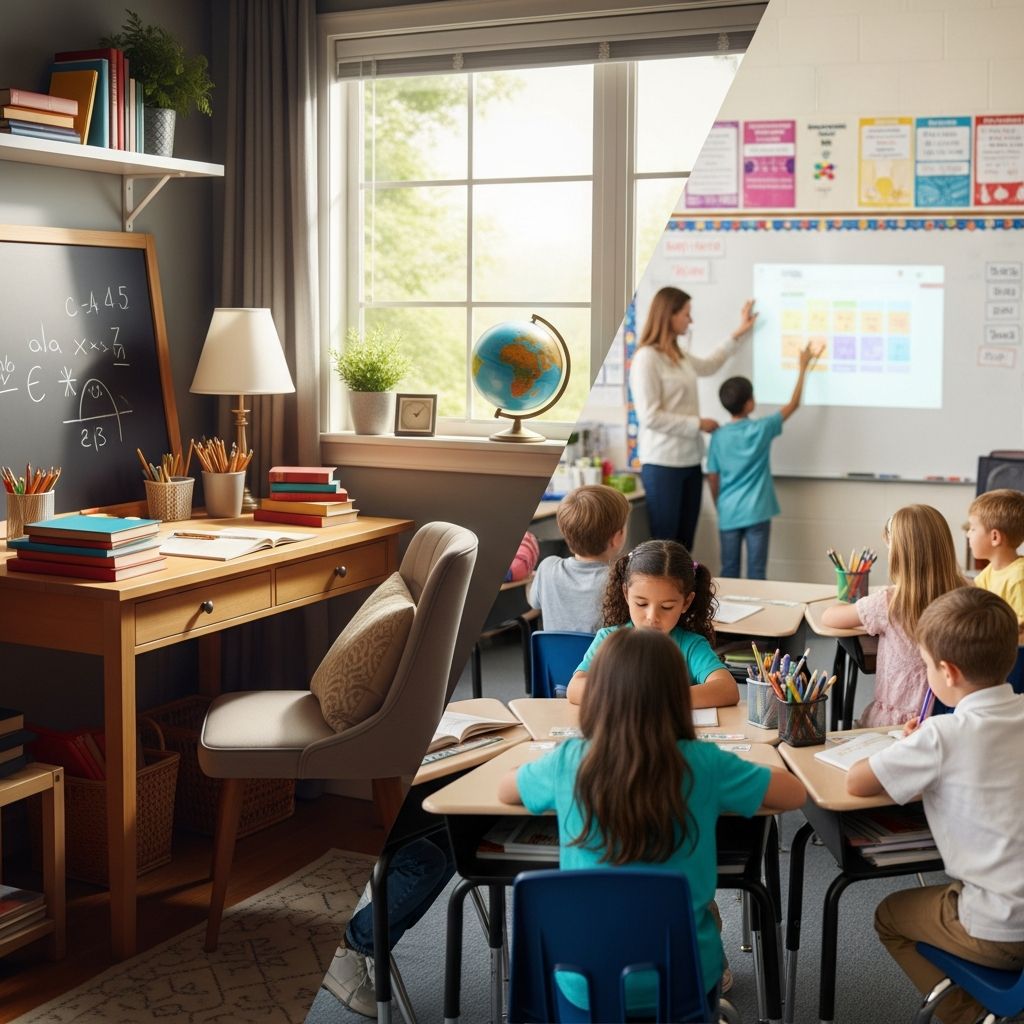
Choosing between homeschooling and public schools involves evaluating academic results, daily routines, social growth, and family dynamics. Homeschooling provides tailored education at lower costs with superior test scores, while public schools deliver structured environments and broad resources.
Current Landscape of Educational Options
In the United States, public schools educate the vast majority of students, with about 49.4 million enrolled, making up 87.5% of school-age children. Homeschooling serves around 3.7 million students, or 6.6%, growing at an impressive 8% annually compared to public schools’ slight decline of 0.5%. This shift highlights increasing parental interest in alternatives amid concerns over traditional systems.
Public schools benefit from established infrastructure, including labs, libraries, and certified specialists like counselors and therapists. However, large class sizes often limit individual focus. Homeschooling, conversely, features near 1:1 ratios, enabling customized pacing but requiring parental commitment.
Academic Achievements and Test Results
Homeschooled students consistently outperform public school peers on standardized assessments. They score 15-25 percentile points higher, with average SAT scores of 1190 versus 1060 for public students. ACT averages stand at 26.5 for homeschoolers compared to 21. Over 78% of peer-reviewed studies confirm these superior outcomes.
| Metric | Homeschool | Public School |
|---|---|---|
| Average SAT Score | 1190 | 1060 |
| Average ACT Score | 26.5 | 21 |
| College Attendance Rate | 74% | 44% |
| College Graduation (4-Year) | 66.7% | 57.5% |
| First-Year College GPA | 3.41 | 3.12 |
These figures stem from individualized instruction, where parents adapt curricula to strengths, accelerating advanced learners or supporting those needing extra time. Public schools’ standardized pace can leave some behind or bore others.
Daily Schedules and Time Efficiency
Homeschool days last 3-5 hours of focused learning, freeing time for real-world pursuits like projects or family activities. Public school days span 6-8 hours, including transitions and non-academic periods. This efficiency in homeschooling fosters deeper engagement without burnout.
Flexibility shines in homeschooling: families adjust for travel, health, or interests. Public schedules lock families into buses, homework, and events, limiting spontaneity.
Financial Considerations for Families
Homeschooling costs $700-$1,800 yearly per child, mainly for materials, versus public schools’ $12,612 per student funded by taxes. Savings enable investments in unique resources, though public schools provide free access to facilities and programs.
- Hidden public costs: Transportation, supplies, fees for activities.
- Homeschool advantages: Reusable curricula, community library use.
Social Development and Peer Interactions
A common concern is homeschoolers’ socialization, yet research shows they enjoy higher positive peer ties and well-being. They form bonds through clubs, sports, church, or co-ops, avoiding negative influences prevalent in large schools.
Public schools facilitate daily peer exposure and 80% extracurricular participation in sports or arts. However, this can expose children to bullying or distractions. Homeschoolers often report lower stress and stronger family ties.
Customization and Learning Styles
Homeschooling excels in personalization, assessing each child’s needs to build lessons around strengths and gaps. Parents skip mastered topics or delve deeper, ideal for gifted, special needs, or non-traditional learners.
Public classrooms follow uniform plans, using IEPs for some but often struggling with diversity. This one-size-fits-all limits potential for many.
Parental Role and Responsibilities
Homeschool parents act as guides, fostering accountability and intrinsic motivation. Challenges include self-discipline and avoiding ‘checking boxes’. Public schools shift enforcement to teachers, easing daily oversight but reducing parental control.
High involvement boosts outcomes across settings, with homeschool naturally demanding more.
College and Career Preparation
Homeschool graduates enter college at 74-87% rates, with higher GPAs (3.41 vs 3.12), retention (88% vs 80%), and graduation (67% vs 59%). They thrive due to independence and study habits. Public schools prepare via familiar structures but see lower pursuit rates.
Both paths succeed, but homeschool emphasizes self-directed learning vital for careers.
Challenges and Potential Drawbacks
Homeschooling demands time, potentially straining working parents or requiring co-ops. Certification isn’t needed in most states, but consistency prevents gaps. Public schools face overcrowding, safety issues, and curriculum debates, plus rigid schedules stressing families.
- Homeschool cons: Isolation risk if unstructured; parent burnout.
- Public cons: Limited personalization; peer pressure.
Enrollment Trends and Future Outlook
| Option | Students | % of Total | Growth Rate |
|---|---|---|---|
| Public Schools | 49.4M | 87.5% | -0.5% |
| Homeschool | 3.7M | 6.6% | 8.0% |
| Private | 5.72M | 10.1% | 0.3% |
Rising homeschool numbers, now exceeding some city systems, signal demand for options. Hybrids like charters (6.4%, 7.5% growth) blend benefits.
Frequently Asked Questions
Is homeschooling academically superior to public schools?
Yes, data shows homeschoolers score higher on tests and achieve better college outcomes, thanks to personalization.
Do homeschooled children face socialization issues?
No, they often have richer interactions through diverse activities, with studies indicating higher well-being.
How much does homeschooling cost compared to public school?
Homeschool averages $700-$1,800 yearly versus $12,612 per public student.
Can any parent homeschool effectively?
Success relies on structure and resources; many thrive with planning, co-ops, or online aids.
What about special needs students?
Homeschool offers tailored support, outperforming rigid public IEPs for many.
Are homeschool diplomas accepted by colleges?
Yes, with high acceptance (87%) and strong performance.
This analysis empowers informed choices. No option fits all; assess your child’s needs, family capacity, and goals.
References
- Public School vs. Homeschool Statistics: A Comprehensive Analysis — Crown Counseling. 2024. https://crowncounseling.com/statistics/public-school-vs-homeschool/
- Homeschool vs Public School — Classical Conversations. N/A. https://classicalconversations.com/blog/homeschool-vs-public-school/
- Homeschooling vs Public School: from a mom who has taught both — iHomeschool Network. N/A. https://ihomeschoolnetwork.com/homeschooling-vs-public-school/
- Homeschool vs Public School: Key Differences Explained — Common Sense Press. N/A. https://commonsensepress.com/homeschool-vs-public-school-a-complete-comparison/
- How Home Schooling Will Change Public Education — Brookings Institution. N/A. https://www.brookings.edu/articles/how-home-schooling-will-change-public-education/

- Integrated M.A. in Applied Linguistics, University of Hyderabad
- 5+ years in editorial, instructional, SEO, and research-based writing
Sneha is a relationships and lifestyle writer with a strong foundation in applied linguistics and certified training in relationship coaching. She brings over five years of writing experience to theskillvault, crafting thoughtful, research-driven content that empowers readers to build healthier relationships, boost emotional well-being, and embrace holistic living. Her writing and insights reflect the belief that beauty, happiness, and wellness…