
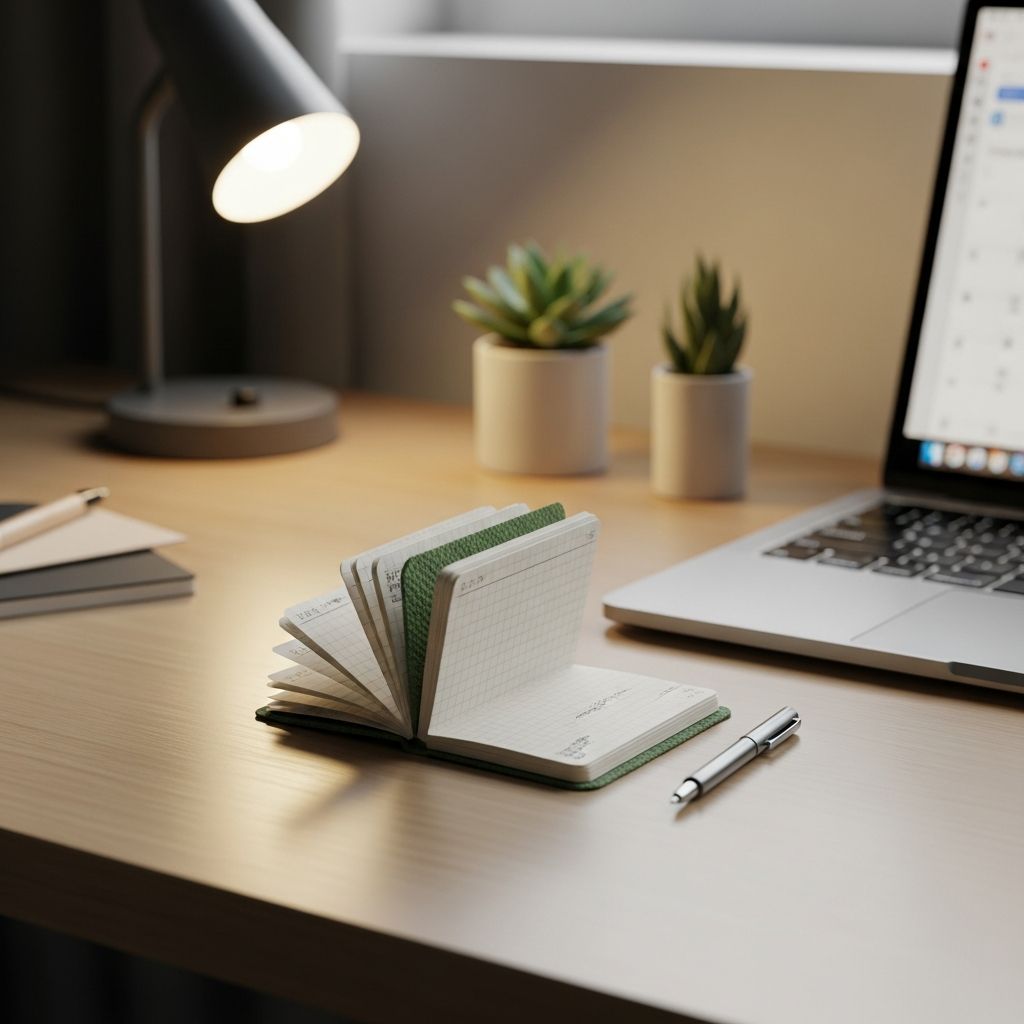
In an increasingly digital world saturated with notifications and constant stimuli, the simple act of writing in a small notebook has emerged as a powerful tool for reclaiming focus and boosting productivity. While many people assume that productivity solutions require complex apps, expensive software, or elaborate planning systems, the truth is far simpler. A compact, portable journal—whether it’s a leather-bound pocket-sized notebook or a basic bullet journal—can fundamentally transform how you organize your thoughts, manage your workload, and achieve your goals. This article explores how and why these miniature journaling tools have become indispensable for professionals, students, and creative individuals seeking to maximize their daily output.
Understanding the Power of Compact Journaling
The concept of miniature notebooks operates on a principle that many productivity experts have confirmed: constraints breed clarity. When you have unlimited digital space, it becomes easy to capture every thought, every idea, and every distraction that crosses your mind. However, when your writing surface is limited, you’re forced to make decisions about what truly matters. This selective process naturally elevates the quality of your notes and ensures that only the most important information finds its way onto your pages.
A pocket-sized notebook typically measures around 3.5 by 5.5 inches, making it the perfect size to fit into a briefcase, purse, or back pocket. This portability means you always have a dedicated tool for capturing thoughts, regardless of where your day takes you. Unlike smartphones, which come with dozens of distracting applications and notification alerts, a simple notebook provides a distraction-free environment for focused thinking and planning.
Simplifying Your Daily Task Management
One of the most immediate benefits of using a compact notebook is the transformation of how you approach daily tasks. The traditional approach of creating endless to-do lists often leads to overwhelm and procrastination. Instead, miniature notebooks encourage a more focused strategy: concentrating on what needs to be accomplished today, without the mental burden of tomorrow’s tasks.
Each morning, you can designate three to five primary tasks that deserve your attention that day. This approach serves multiple purposes. First, it prevents decision fatigue by limiting the number of choices you need to make. Second, it creates achievable daily goals that provide a sense of accomplishment when completed. Third, it reduces anxiety by mentally separating today’s responsibilities from future ones. As you check off each completed task, the physical act of marking it done provides immediate psychological reinforcement, motivating you to continue tackling your remaining objectives.
This method works particularly well for individuals who struggle with traditional digital productivity systems or complex time management software. The simplicity and tangibility of physically writing and crossing off tasks creates a satisfying feedback loop that digital systems often fail to replicate.
Capturing Fleeting Moments of Inspiration
Creative professionals and knowledge workers know that breakthrough ideas often strike unexpectedly. These moments of inspiration can occur during a commute, in a meeting, or while engaged in an unrelated activity. The challenge is capturing these ideas before they evaporate from memory, which happens surprisingly quickly when you’re not actively focusing on retention.
Reaching for a smartphone to record an idea seems intuitive, but it introduces several complications. The device immediately overwhelms you with notifications, alerts, and the temptation to check messages or browse content. By the time you’ve navigated past these distractions, your moment of inspiration may have faded. A pocket notebook, by contrast, requires only seconds to locate and use. You can jot down your thought in its raw form without any interference or digital distraction.
Many successful entrepreneurs, writers, and designers keep miniature notebooks specifically dedicated to capturing ideas. This practice acknowledges that inspiration is fleeting and valuable, deserving of immediate attention and a protected space free from digital noise.
Enhancing Focus Through Constrained Space
Research in cognitive psychology has consistently shown that less information often leads to better retention and recall. When you’re taking notes in a pocket-sized notebook, the physical constraint of limited page space forces you to engage in critical thinking about what information is actually worth recording. This process of selection and summarization actively strengthens your memory and understanding of the material.
During meetings, lectures, or research sessions, the tendency with larger notebooks or digital devices is to attempt a complete transcript of everything being said. This approach creates an illusion of productivity while often diminishing actual learning and comprehension. In contrast, the limited space of a compact notebook necessitates that you distill information to its essential components. You must ask yourself: What is the core concept being presented? What do I need to remember? What action will I take based on this information?
This disciplined approach to notetaking produces several advantages. Your notes become more useful references because they contain only the information that matters most. You spend less time reviewing notes later because they’re concise and well-organized. Most importantly, the cognitive effort required to determine what’s worth writing actually deepens your engagement with the material being presented.
The Cognitive Benefits of Handwriting
Mounting scientific evidence supports what many educators have long suspected: writing by hand engages different cognitive processes than typing on a keyboard or screen. When you handwrite notes, your brain must process information differently, leading to improved comprehension, retention, and the ability to synthesize ideas in novel ways.
The motor skills involved in writing slow down the pace of information capture compared to typing. This slower pace might seem like a disadvantage, but it actually forces your brain to engage in real-time filtering and synthesis of information. Rather than transcribing everything word-for-word, your mind must interpret, translate, and capture the essence of what you’re learning. This active processing creates stronger neural pathways and more durable memories than passive digital recording.
Additionally, the tactile experience of writing—the feel of pen on paper, the visual feedback of your handwriting developing on the page—engages multiple sensory systems that enhance memory formation. This multisensory engagement is largely absent when typing or using voice-to-text features on digital devices.
Organization Without Overwhelming Complexity
Many comprehensive productivity systems fail because they become too complex to maintain consistently. The setup requires hours, and the ongoing maintenance becomes burdensome. In contrast, a pocket notebook operates on simplicity, which is one of its greatest strengths.
You can use whatever organizational system suits your needs and personality. Some people prefer simple chronological entries. Others use basic symbols or signifiers to categorize tasks and notes. Still others incorporate lightweight bullet-point formatting. The beauty of a compact notebook is that your system can evolve organically based on what you discover works for you, rather than forcing you to conform to a predetermined complex structure.
This flexibility means that your journaling habit is more likely to stick. Since the system is simple and customizable, it doesn’t feel like a burden but rather a natural extension of your thinking process. Over time, you develop a personalized approach that integrates seamlessly into your daily routine.
Stress Reduction and Mental Clarity
The act of writing itself, separate from what you’re writing about, has been shown to reduce stress and improve emotional regulation. When you transfer thoughts from your mind onto paper, you physically externalize mental clutter. This externalization serves several psychological functions.
First, it frees up cognitive resources. Your brain no longer needs to maintain these thoughts in active working memory, which reduces mental fatigue and the anxiety associated with remembering everything. Second, seeing your thoughts written out allows you to examine them more objectively, often revealing that worries are less overwhelming when documented than when swirling in your mind. Third, the process of writing encourages reflection and self-awareness, helping you understand your own thought patterns and emotional triggers more clearly.
For individuals managing stress, anxiety, or simply dealing with information overload, the simple practice of writing in a compact notebook can provide genuine psychological relief. The notebook becomes a mental health tool, not just a productivity device.
Goal Tracking and Long-Term Achievement
Successful goal achievement requires more than just setting intentions; it demands consistent visibility and regular progress monitoring. A pocket notebook serves as an excellent tool for this purpose, allowing you to track various categories of goals—professional projects, fitness objectives, learning targets, financial goals, and personal development aims.
When goals are recorded in a portable notebook, you can review them frequently throughout your day. This regular visibility keeps your objectives top-of-mind and helps you align your daily actions with your larger ambitions. Unlike digital goals that might be buried in apps or forgotten documents, physical entries in a notebook create a tangible connection between your daily tasks and your long-term vision.
The process of manually recording progress also provides psychological satisfaction and reinforcement. Whether you’re tracking the number of days you’ve completed a habit, the progress on a project milestone, or the achievement of smaller sub-goals, the visual record of advancement motivates continued effort and persistence.
Choosing Your Ideal Compact Notebook
The effectiveness of a pocket notebook doesn’t depend on expensive materials or elaborate design, though quality matters for durability and user experience. Several options are available depending on your preferences and needs:
- Leather-bound pocket journals offer durability, professional appearance, and often include features like ribbon bookmarks or card slots. They’re ideal for business professionals or individuals who appreciate aesthetic quality.
- Bullet journals in compact sizes combine the structured approach of bullet journaling with the portability advantage. They work well for people who want some system guidance but still maintain flexibility.
- Custom notebooks can be personalized with your name, preferred colors, or meaningful images, adding a personal touch that increases your commitment to using them regularly.
- Basic notepads in small sizes offer the most minimalist approach, removing any sense of pressure to make perfect entries while maintaining all the functional benefits.
Integrating Compact Notebooks Into Your Routine
Starting a pocket notebook practice requires no complicated setup or lengthy preparation. You can begin today with just three simple steps:
- Select your notebook based on your preferences and budget. The perfect notebook is the one you’ll actually use, so choose something you genuinely like.
- Establish a basic approach to organizing your entries. This might be as simple as writing the date, listing today’s priorities, and capturing any ideas or important information as they arise.
- Commit to consistency by carrying your notebook with you daily and reviewing it regularly. Even five minutes of intentional engagement with your notebook each morning and evening creates powerful results.
Many people find that their notebook use expands naturally over time. What starts as a simple task list might evolve to include reflective writing, goal tracking, project planning, or creative sketching. This organic evolution occurs because the notebook becomes a familiar, comfortable tool that serves multiple purposes in your thinking and planning process.
Frequently Asked Questions
Q: Is a pocket notebook better than digital productivity apps?
A: Neither is inherently superior; they serve different purposes. Notebooks excel at reducing distraction, improving retention, and providing a tactile experience. Digital apps work better for complex scheduling, automatic reminders, and cloud synchronization. Many people find the best approach combines both, using notebooks for thinking and planning while using apps for calendar management and automated reminders.
Q: How often should I review my pocket notebook?
A: Daily review is most effective for task management and priority setting. A weekly review helps you identify patterns, consolidate notes, and plan for the coming week. A monthly or quarterly review reveals progress on larger goals and allows you to reflect on what’s working versus what needs adjustment.
Q: Can pocket notebooks work for complex projects?
A: Yes, especially for initial planning and ongoing progress tracking. For very detailed project documentation, you might supplement a pocket notebook with a larger planning document or digital system, but the notebook is excellent for capturing daily progress, blockers, and next steps.
Q: What should I do when my notebook is full?
A: Many people keep their completed notebooks as archives or references. Others simply start a new notebook and continue their system. Some prefer to consolidate important information from a completed notebook into a new one, reviewing past entries in the process.
Q: Is there a “correct” way to use a pocket notebook?
A: No. The system that works best is the one you’ll actually use consistently. Experiment with different approaches—minimalist, structured, artistic, or hybrid—until you discover what resonates with your thinking style and lifestyle.
Conclusion: Small Tools, Significant Results
In a world of increasingly complex productivity systems and sophisticated digital tools, the humble pocket notebook represents a counterintuitive truth: sometimes simpler is genuinely better. By imposing beneficial constraints on your thinking and notetaking, eliminating digital distractions, and engaging your mind through handwriting, a small notebook becomes a disproportionately powerful tool for enhancing productivity and achieving your goals. Whether you’re a busy professional juggling multiple projects, a student managing coursework, or a creative professional seeking to capture inspiration, a compact notebook deserves a place in your daily toolkit.
References
- The Power of the Pocket – Five BIG Reasons to Keep A Pocket-Size Notebook — JB Custom Journals. 2024. https://www.jbcustomjournals.com/blogs/news/the-power-of-the-pocket-5-ways-a-pocket-size-notebook-can-increase-your-daily-productivity
- How a Pocket Journal Can Transform Your Daily Routine — Usapad. 2024. https://www.usapad.com/blog/pocket-journal-daily-routine/
- The Benefits of Keeping a Bullet Journal — PaperWrld. 2024. https://paperwrld.com/blogs/paperwrlds-blog/benefits-of-keeping-a-bullet-journal

Medha Deb is an editor with a master's degree in Applied Linguistics from the University of Hyderabad. She believes that her qualification has helped her develop a deep understanding of language and its application in various contexts. Medha specializes in the areas of beauty, health, sports, and wellness and is committed to ensuring that the content on the website is…