
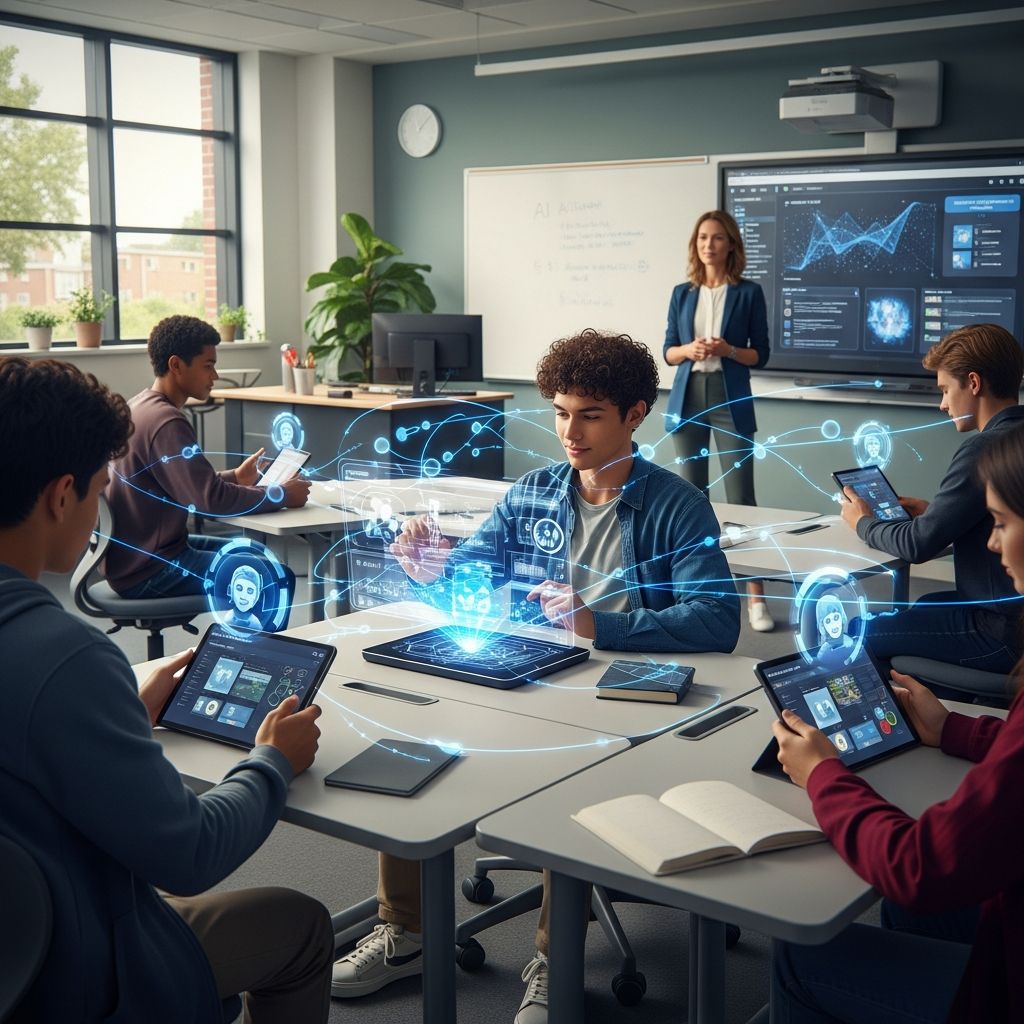
Artificial intelligence is fundamentally altering educational landscapes by enabling customized instruction, optimizing teacher workflows, and fostering inclusive environments. This integration promises to address longstanding challenges in traditional schooling while preparing students for a tech-driven future.
Personalized Learning Pathways
One of the most impactful applications of AI lies in crafting individualized educational journeys. Unlike uniform curricula that overlook diverse student paces and styles, AI analyzes real-time data on performance, preferences, and engagement to adjust content dynamically.
Adaptive platforms employ machine learning algorithms to present materials at optimal difficulty levels, ensuring mastery before progression. For instance, systems track responses to quizzes and modify subsequent lessons accordingly, boosting retention and motivation.
- Real-time progress monitoring identifies strengths and gaps instantly.
- Custom quizzes and exercises align with visual, auditory, or kinesthetic preferences.
- Scalable support for varying skill levels prevents disengagement.
Research indicates these tools significantly enhance outcomes; a survey revealed 55% of educators noted improved student results from AI use. Intelligent tutoring systems further simulate one-on-one coaching, delivering explanations tailored to comprehension levels and promoting independent problem-solving.
Streamlining Teacher Workloads
AI liberates educators from repetitive tasks, allowing more focus on mentorship and creativity. Automated grading for objective assessments provides immediate feedback, reducing hours spent on paperwork.
Advanced tools extend to essay evaluation, detecting patterns in writing quality and suggesting improvements. Classroom management aids include behavior analytics that flag potential issues early, recommending interventions based on historical data.
| Task | Traditional Method | AI-Enhanced Approach | Time Savings |
|---|---|---|---|
| Grading Quizzes | Manual review | Instant scoring and feedback | 80-90% |
| Lesson Planning | From scratch | AI-generated outlines and resources | 50-70% |
| Attendance Tracking | Roll call | Facial recognition or app check-ins | Nearly 100% |
By handling these routines, teachers gain time for deeper interactions, fostering social-emotional growth and personalized guidance. Platforms like those aiding content creation generate lesson plans, visuals, and activities from simple prompts, democratizing high-quality materials.
Promoting Accessibility for All Learners
AI bridges gaps for students with disabilities or language barriers, creating equitable opportunities. Speech-to-text and text-to-speech converters assist those with reading challenges, while real-time translation supports multilingual classrooms.
Assistive devices powered by AI, such as screen readers with contextual understanding, enhance navigation of complex texts. For neurodiverse learners, tools analyze emotional cues via sentiment detection in interactions, offering tailored coping strategies.
- Real-time captioning for hearing-impaired students during lectures.
- Adaptive interfaces that simplify navigation for motor skill limitations.
- Multilingual support breaking down cultural and linguistic divides.
These innovations align with global calls for inclusive tech, as emphasized in reports advocating learner-centered digital tools.
Leveraging Data for Strategic Insights
Vast datasets from AI interactions enable predictive modeling and informed decisions. Algorithms forecast at-risk students by patterns in attendance, grades, and engagement, prompting proactive support.
Curriculum efficacy is gauged through analytics on method effectiveness, guiding refinements. Enhanced parent portals share progress visuals, strengthening home-school partnerships.
Stanford researchers highlight AI’s potential to shift focus toward critical skills like inquiry, using data to amplify curiosity-driven exploration.
Immersive and Interactive Experiences
AI combined with VR/AR creates simulated environments for hands-on learning. Students dissect virtual frogs or witness historical events, deepening conceptual grasp without physical constraints.
Chatbots provide 24/7 query resolution, from homework help to scheduling, easing administrative burdens. Emotional AI supports social skill development, particularly for autism spectrum users via interactive robots.
Navigating Challenges and Ethical Considerations
Despite benefits, AI adoption requires addressing privacy, bias, and over-reliance risks. Data security protocols must protect student information, while diverse training datasets mitigate algorithmic prejudices.
Educators need training to integrate tools effectively, ensuring AI augments rather than supplants human elements. Forward-thinking districts establish guidelines for ethical use, partnering AI with human judgment.
Studies affirm balanced implementation yields gains without diminishing core skills.
Real-World Implementations and Success Stories
Institutions like Arizona State University deploy adaptive systems yielding higher engagement. Elementary programs like DreamBox report math proficiency surges, validated by Harvard analysis.
AI lesson planners from Gates Foundation initiatives customize resources via natural language processing, empowering under-resourced teachers. Platforms such as Curipod and Quizzizz foster interactive, personalized paths.
Preparing for AI’s Educational Future
As AI evolves, schools must cultivate digital literacy, teaching ethical use and critical evaluation of outputs. Teacher professional development, policy frameworks, and equitable access will be pivotal.
Global bodies like UNESCO advocate tech that prioritizes personalization and equity. By 2026, widespread adoption could redefine learning, emphasizing creativity and collaboration alongside AI efficiency.
Frequently Asked Questions
What is the biggest benefit of AI in schools?
Personalized learning stands out, adapting to individual needs and improving engagement and outcomes.
Does AI replace teachers?
No, it enhances teaching by automating routines, freeing educators for mentorship and relationship-building.
How does AI ensure student privacy?
Robust protocols, anonymized data, and compliance with regulations like GDPR protect information.
Can AI help students with disabilities?
Yes, through tools like speech recognition, translations, and adaptive interfaces promoting inclusivity.
What training do teachers need for AI tools?
Ongoing professional development on integration, ethics, and interpretation of AI insights.
References
- AI in Schools: How Technology Enhances Education — Greenhouse Learning. 2024. https://greenhouselearning.co.uk/ai-in-schools-how-technology-enhances-education/
- How artificial intelligence in education is transforming classrooms — Southern Methodist University Learning Sciences. 2023. https://learningsciences.smu.edu/blog/artificial-intelligence-in-education
- AI in Schools: Pros and Cons — University of Illinois College of Education. 2024-10-24. https://education.illinois.edu/about/news-events/news/article/2024/10/24/ai-in-schools–pros-and-cons
- AI Can Add, Not Just Subtract, From Learning — Harvard Graduate School of Education. 2025-04-25. https://www.gse.harvard.edu/ideas/news/25/04/ai-can-add-not-just-subtract-learning
- AI Will Transform Teaching and Learning. Let’s Get it Right — Stanford HAI. N/A. https://hai.stanford.edu/news/ai-will-transform-teaching-and-learning-lets-get-it-right

Medha Deb is an editor with a master's degree in Applied Linguistics from the University of Hyderabad. She believes that her qualification has helped her develop a deep understanding of language and its application in various contexts. Medha specializes in the areas of beauty, health, sports, and wellness and is committed to ensuring that the content on the website is…