
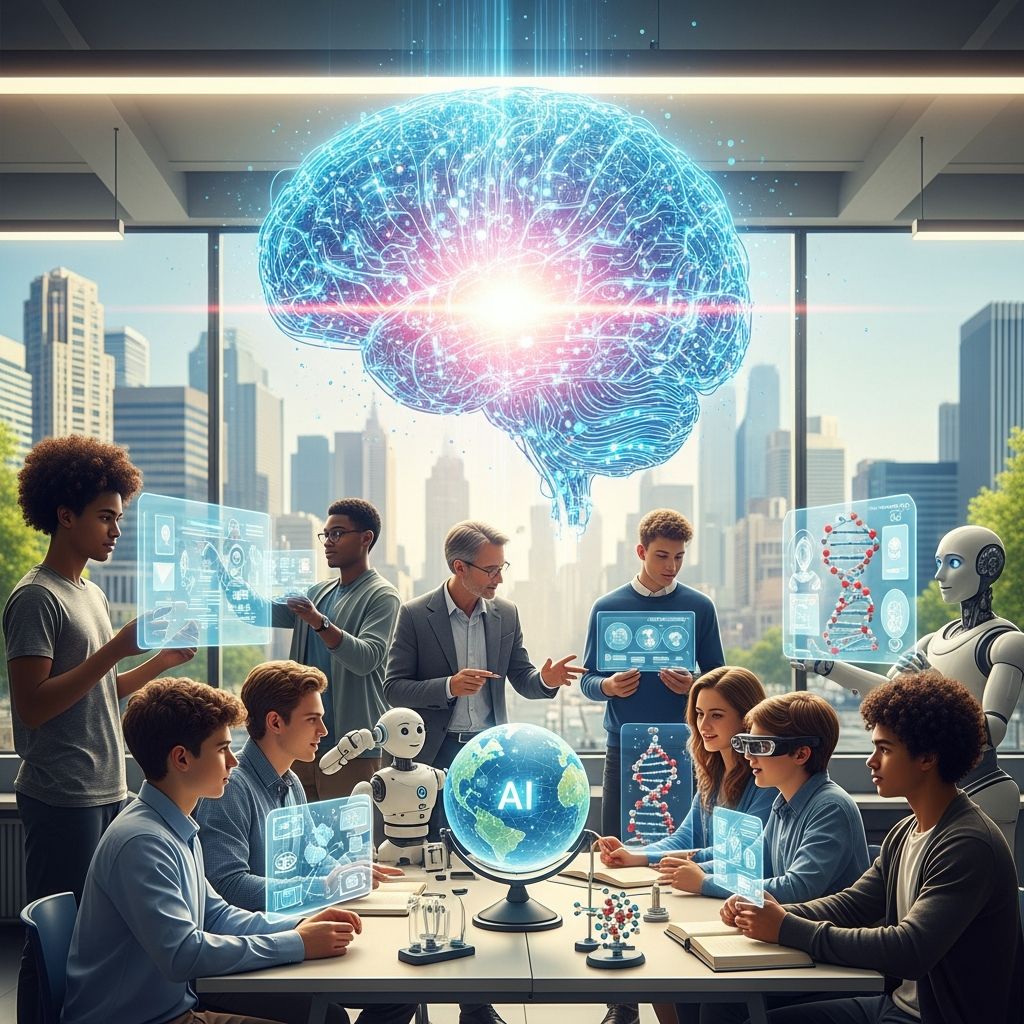
Artificial intelligence is fundamentally altering the educational landscape by enabling highly individualized learning experiences that adapt to each student’s unique pace, style, and needs. This shift moves away from traditional one-size-fits-all models toward dynamic, data-driven approaches that enhance engagement and outcomes.
Core Technologies Driving Educational Innovation
At the heart of this transformation are key AI technologies like machine learning, natural language processing, and computer vision, each contributing distinct capabilities to modernize teaching and learning.
Machine Learning: Crafting Custom Learning Journeys
Machine learning algorithms analyze vast datasets on student performance to dynamically adjust content difficulty and sequence. Platforms such as DreamBox Learning exemplify this by modifying math lessons in real-time based on responses, ensuring students remain challenged without frustration. This personalization leads to improved retention and mastery, as systems identify knowledge gaps early and deploy targeted interventions.
- Real-time performance tracking to pinpoint strengths and weaknesses.
- Adaptive pacing that accelerates advanced learners while supporting those needing more time.
- Resource recommendations tailored to individual progress metrics.
Natural Language Processing: Elevating Communication Skills
Natural language processing (NLP) powers tools that provide instantaneous analysis of written and spoken work. These systems detect grammatical errors, suggest enhanced phrasing, and even guide essay structure, fostering rapid skill development in language arts. For language learners, NLP enables conversational practice with immediate corrections, building confidence and fluency.
In writing instruction, NLP goes further by evaluating coherence, vocabulary richness, and argumentative strength, offering actionable feedback that mimics expert tutoring.
Computer Vision and Immersive Environments
Computer vision underpins augmented reality (AR) and virtual reality (VR) applications, creating interactive simulations for subjects like science and history. Students can dissect virtual frogs, tour ancient Rome, or witness chemical reactions firsthand, deepening conceptual understanding through multisensory engagement.
These tools transcend traditional textbooks, allowing manipulation of 3D models and real-time feedback on interactions, which research shows boosts memory and problem-solving abilities.
Empowering Educators with AI Assistance
AI liberates teachers from repetitive tasks, allowing focus on mentorship and creativity. Automated grading systems like Gradescope evaluate assignments swiftly, providing detailed analytics on class-wide trends.
| AI Tool | Teacher Benefit | Example Impact |
|---|---|---|
| Automated Grading | Time savings on assessment | Gradescope reduces grading time by 50-70% |
| Progress Analytics | Insight into student needs | Identifies at-risk students early |
| Content Generation | Custom lesson planning | Generates quizzes aligned to curriculum |
Beyond efficiency, AI offers predictive insights, flagging disengagement or learning barriers before they escalate, enabling proactive interventions.
Boosting Student Engagement and Outcomes
AI fosters active, student-centered environments by detecting boredom or struggle via engagement metrics and responding with tailored content. Intelligent tutoring systems (ITS) like those at Arizona State University adapt curricula, resulting in higher engagement and performance scores.
A Forbes survey revealed 60% of U.S. educators using AI report improved learning outcomes, with 55% noting enhanced student results. Harvard studies on DreamBox confirm significant math gains, underscoring AI’s efficacy.
- Immediate feedback loops accelerate mastery.
- Goal-oriented paths align with personal aspirations.
- Self-awareness through progress dashboards promotes lifelong habits.
Overcoming Barriers: Equity, Privacy, and Ethics
While promising, AI adoption faces hurdles. Data privacy concerns demand robust safeguards to protect student information. Equity issues arise in access; not all regions have reliable internet or devices, potentially widening divides.
Maintaining human elements like empathy in teaching is crucial—AI complements, not replaces, educators. Ethical guidelines, including bias mitigation in algorithms, are essential for fair implementation.
Real-World Implementations and Case Studies
Purdue University leverages AI for creativity sparking, aiding brainstorming for projects. Stanford emphasizes AI for soft skills like critical thinking, providing low-stakes feedback environments.
Corporate learning, as noted in Harvard Business Review, uses generative AI for skill-building in problem-framing. The Gates Foundation advocates equitable AI to benefit all students.
Future Directions: AI’s Evolving Role
Looking ahead, AI will integrate deeper into curricula, with generative tools creating bespoke materials and VR expanding global collaborations. Partnerships like AI for Education ensure responsible rollout through training.
Transformative approaches, per ASCD, distinguish AI enhancements from replacements, prioritizing pedagogical integrity.
Frequently Asked Questions
What is the biggest benefit of AI in education?
Personalized learning paths that adapt to individual needs, improving engagement and outcomes.
Does AI replace teachers?
No, AI handles routine tasks, freeing teachers for high-value interactions like mentoring.
How does AI ensure fairness?
Through bias audits, equitable access initiatives, and transparent algorithms.
Can AI help students with disabilities?
Yes, via adaptive interfaces, speech-to-text, and customized content.
What are risks of AI in classrooms?
Data privacy breaches and over-reliance; mitigated by policy and balanced use.
References
- How AI is Transforming Student Learning: Education Revolution — Upskillist. 2024. https://www.upskillist.com/blog/ai-in-education-transforming-learning-for-the-modern-student/
- How AI is Transforming Education — ATD (Association for Talent Development). 2024. https://www.td.org/content/atd-blog/how-ai-is-transforming-education
- How artificial intelligence in education is transforming classrooms — SMU Learning Sciences. 2024. https://learningsciences.smu.edu/blog/artificial-intelligence-in-education
- AI Will Transform Teaching and Learning. Let’s Get it Right — Stanford HAI. 2023-10-10. https://hai.stanford.edu/news/ai-will-transform-teaching-and-learning-lets-get-it-right
- How AI is transforming education | Purdue Expert — Purdue University / YouTube. 2024. https://www.youtube.com/watch?v=dDtE1bvB-VM

Medha Deb is an editor with a master's degree in Applied Linguistics from the University of Hyderabad. She believes that her qualification has helped her develop a deep understanding of language and its application in various contexts. Medha specializes in the areas of beauty, health, sports, and wellness and is committed to ensuring that the content on the website is…