
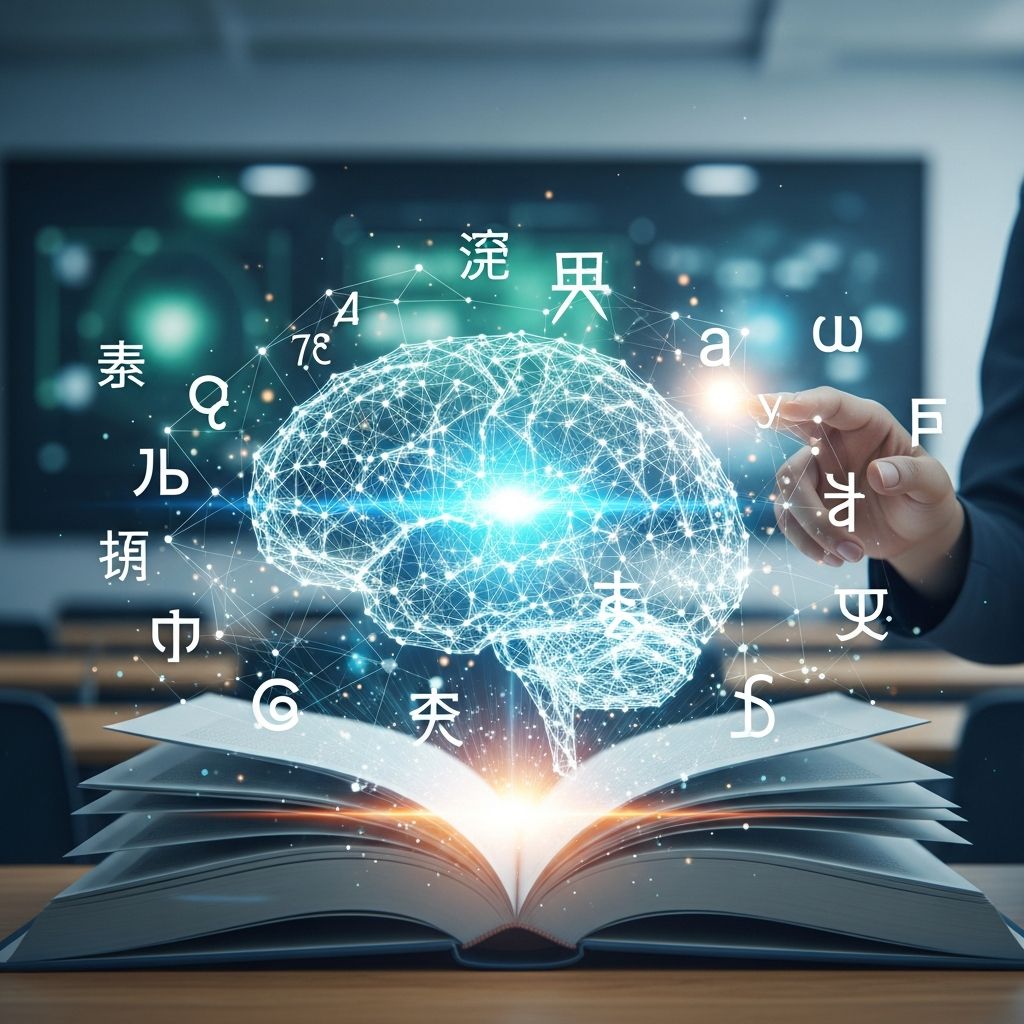
The Evolution of Artificial Intelligence in Language Education
Artificial intelligence has fundamentally altered the educational landscape, with language instruction experiencing some of the most significant transformations. While AI has quietly operated in the background for years—powering learning management systems like Google Classroom and Canvas—a new generation of generative AI tools is now reshaping how educators teach English and how students develop language proficiency. This shift represents more than technological advancement; it reflects a fundamental reimagining of what personalized, responsive education can achieve in diverse classroom settings.
The integration of AI into English language arts has accelerated dramatically, particularly among early adopter educators who recognize the potential of these tools to enhance instruction. Research indicates that English language arts teachers are nearly twice as likely to adopt AI tools compared to mathematics educators, suggesting that language-based instruction represents a natural fit for prompt-driven AI applications. This widespread adoption reflects both the promise and the complexity of implementing AI in classrooms where supporting student communication skills remains a central objective.
Personalized Learning Pathways Through Intelligent Systems
One of the most compelling applications of artificial intelligence in language education involves creating customized learning experiences tailored to individual student needs. Traditional classroom environments often struggle to accommodate the diverse proficiency levels and learning preferences present in heterogeneous student populations. AI-powered personalization addresses this challenge by adapting content, pacing, and assessment methods to match each learner’s specific requirements.
Intelligent tutoring systems represent a cornerstone of this personalization movement. These sophisticated platforms analyze student performance, identify knowledge gaps, and deliver targeted interventions—all while maintaining records of learning progress over time. Companies such as Khan Academy, McGraw Hill, and Carnegie Learning have developed comprehensive AI tutoring solutions that promise to democratize high-quality individualized instruction. These systems prove particularly valuable for English learners and students with documented learning disabilities, who benefit from flexible scaffolding and alternative presentation methods.
Machine translation and automated writing evaluation tools extend personalization by addressing specific language skill development. AI-enabled translation services like Google Translate and Microsoft Translator help students accelerate their writing process while looking up vocabulary and phrases in context. Research demonstrates that machine translation enables students to write with greater fluency and communicate more effectively, reducing lexicogrammatical errors and building confidence in written expression.
Supporting English Language Learners Through Interactive Tools
English language learners face distinctive instructional challenges, requiring targeted support for developing proficiency across reading, writing, speaking, and listening domains. AI tools designed specifically for language development have emerged as valuable resources for addressing these needs within time-constrained classroom environments.
Speaking practice represents a particular area where AI tools provide meaningful support. Classroom time limitations often constrain opportunities for students to receive individualized feedback on oral language production. Conversational AI platforms, including intelligent personal assistants like Alexa and Google Assistant, enable learners to engage in authentic, real-time communication practice. These tools provide immediate responsive feedback, model correct pronunciation, and create low-stakes speaking opportunities where learners feel comfortable taking risks.
Speech-to-text AI reading assistants offer additional benefits for language learners. Tools like Amira function as AI-powered reading companions that provide feedback in multiple languages while recognizing various dialects within each language. By offering one-on-one feedback on oral reading, these assistants help students practice fluency, develop confidence, and hear model pronunciations that reinforce correct language patterns. The multilingual capacity of such tools proves especially valuable in diverse urban classrooms where students bring multiple home languages and dialects.
Chatbot platforms designed for educational purposes create interactive spaces where English learners can practice conversation without anxiety about peer judgment. When reluctant speakers encounter supportive AI conversation partners offering responses in both English and students’ native languages, classroom participation often increases significantly. This scaffolded approach to conversation practice can transition students toward greater engagement in whole-class discussions and collaborative learning activities.
Teacher Empowerment and Instructional Enhancement
Beyond direct student support, artificial intelligence tools are fundamentally changing how educators design, deliver, and manage instruction. Rather than replacing teaching expertise, these applications augment teacher capabilities, allowing educators to focus more energy on high-impact instructional activities while automating routine tasks.
Administrative burden reduction represents a significant benefit teachers experience. AI-powered platforms like Curipod, Gradescope, and Twee automate grading, scoring, and assessment tasks that traditionally consume substantial teacher time. Additionally, these tools assist with lesson plan development, generating creative activity ideas, composing parent-teacher communications, adapting materials for different age groups and neurodivergent learners, and providing second opinions on instructional materials.
Content modification and differentiation capabilities enable teachers to meet diverse learner needs more efficiently. AI systems can analyze classroom materials and adapt them to match students’ current language proficiency levels and reading abilities, addressing instructional gaps that might otherwise persist in heterogeneous classrooms. This capacity to rapidly customize content allows teachers to maintain rigorous instruction while ensuring accessibility for all learners.
The collaborative relationship between teacher expertise and AI capability represents an essential framework for responsible integration. Teachers maintain decision-making authority, applying professional judgment about when and how AI tools serve instructional objectives. This human-centered approach ensures that technology complements rather than replaces the irreplaceable elements of teaching—mentorship, cultural responsiveness, and adaptive decision-making in complex social contexts.
Expanding Access and Reducing Instructional Disparities
Equitable access to high-quality instruction remains a persistent challenge in American education, particularly for English learners and students with learning differences. AI tools demonstrate potential for narrowing instructional gaps by providing consistent, individualized support regardless of school funding levels or teacher experience.
Lower-level language learners benefit particularly from scaffolded AI-based tools designed specifically for language acquisition, such as personalized dashboards offering guided practice and incremental skill building. These tools provide the patient, non-judgmental repetition language learners need while maintaining engagement through varied activities and immediate feedback. Meanwhile, advanced learners can leverage more sophisticated generative AI tools like chatbots and virtual assistants that enable complex language production and creative application.
Robotics-integrated AI activities add another dimension to accessible language instruction. Programmable robots like Cubetto and KaiBot enable students to engage in hands-on learning while practicing verbal communication and problem-solving skills simultaneously. These embodied learning experiences prove particularly engaging for kinesthetic learners and those who benefit from multimodal instruction approaches.
Current Adoption Patterns and Educator Perspectives
Adoption of AI tools in English language instruction reflects diverse educator perspectives, ranging from enthusiastic early adopters to cautious skeptics. However, recent data reveals substantial and growing integration across American classrooms. According to the Center for Democracy and Technology, 85% of teachers and 86% of students utilized AI during the 2024-2025 school year, with 54% of students reporting weekly use and 25% reporting daily use.
Early adopters of AI tools tend to teach middle and high school students, particularly in English language arts and social studies—subject areas where generative AI capabilities in language and visual analysis are most advanced. These educators approach AI integration strategically, viewing it as a means to save time on routine tasks while simultaneously making learning experiences more engaging and personalized. Their experimentation and creative integration models provide valuable insights for broader implementation efforts.
Institutional responses to AI integration vary considerably. Some educational systems have invested substantially in custom AI solutions—such as Los Angeles Unified School District’s investment in a specialized chatbot called “Ed”—though implementation challenges and sustainability remain ongoing concerns. Higher education institutions are increasingly developing formal AI policies and infrastructure; approximately 73% of higher education respondents identified rising student engagement with AI-powered tools as a primary reason to establish institutional AI governance frameworks.
Addressing Challenges and Concerns
While AI tools offer substantial benefits for language instruction, thoughtful integration requires acknowledging legitimate concerns and implementing safeguards. Academic integrity represents one significant consideration, as students can now use AI to summarize articles, correct grammar, and even generate essay drafts. Approximately 86% of students worldwide utilize AI to assist with schoolwork, raising questions about the development of critical thinking skills and authentic language production.
Concerns persist that overreliance on AI tools could exacerbate existing instructional gaps rather than narrow them, particularly if implementation lacks equitable oversight and teacher expertise. Students with limited prior access to high-quality instruction might not develop foundational skills necessary to use AI tools effectively as learning partners. Similarly, algorithmic bias in language recognition and translation systems could disadvantage speakers of non-standard dialects or less commonly spoken languages.
The displacement anxiety some educators experience reflects legitimate questions about the teaching profession’s future and students’ social-emotional needs for human connection and mentorship. These concerns merit serious consideration rather than dismissal, though evidence increasingly suggests that strategic AI implementation enhances rather than diminishes human teaching relationships when designed thoughtfully.
Future Directions and Best Practices
Responsible AI integration in English language instruction requires several key commitments. First, AI should consistently complement rather than replace human expertise, maintaining teachers in central decision-making roles about instructional priorities and student needs. Second, implementation must proceed cautiously and thoughtfully, with ongoing evaluation of outcomes for diverse student populations to ensure equitable benefits.
Student critical literacy around AI represents an essential educational objective. Rather than passively consuming AI-generated content, learners benefit from explicit instruction in evaluating AI outputs, recognizing limitations, and employing AI tools purposefully within their own learning and communication processes. This approach transforms AI from a tool that students use unconsciously into a subject of explicit study and critical analysis.
Professional development for educators remains crucial for maximizing AI’s potential benefits while minimizing risks. Teachers need support in understanding different AI tools’ capabilities and limitations, designing instruction that strategically incorporates AI for specific learning objectives, and maintaining academic integrity standards in AI-enabled environments. Ongoing professional learning communities create spaces where educators share implementation strategies and collectively solve emerging challenges.
Frequently Asked Questions
Q: Can AI tools replace human English teachers?
A: No. AI tools are designed to complement and amplify teacher capabilities, handling routine tasks and providing individualized practice opportunities while teachers focus on higher-order instruction, mentorship, and social-emotional support.
Q: How can teachers prevent academic dishonesty with AI tools available to students?
A: Educators can establish clear guidelines distinguishing appropriate AI use from academic integrity violations, design assignments requiring original thinking and documentation of learning processes, and teach students to use AI as a learning partner rather than a shortcut.
Q: Which students benefit most from AI-powered language instruction?
A: English language learners, students with learning disabilities, struggling readers, and students who benefit from individualized feedback and self-paced practice particularly benefit from AI tools, though properly designed AI can enhance learning for diverse student populations.
Q: What types of AI tools work best for teaching English?
A: Different tools serve different purposes: conversational AI for speaking practice, speech-to-text tools for fluency development, automated writing evaluation for written work, and intelligent tutoring systems for comprehensive personalized learning experiences.
Q: How can schools ensure equitable access to AI-powered instruction?
A: Schools should carefully select tools that work effectively for diverse learners, provide professional development for all teachers regardless of comfort level with technology, and continuously monitor whether implementation benefits are distributed equitably across student populations.
References
- AI technology embraced by teachers of English learners – Chalkbeat — Chalkbeat. 2025-08-12. https://www.chalkbeat.org/2025/08/12/ai-education-tools-for-english-learners-raise-hopes-and-challenges/
- Classrooms are adapting to the use of artificial intelligence — American Psychological Association. 2025-01. https://www.apa.org/monitor/2025/01/trends-classrooms-artificial-intelligence
- Getting to grips with AI in the English classroom — Cambridge English Language Teaching Blog. 2024-12-02. https://www.cambridge.org/elt/blog/2024/12/02/getting-to-grips-with-al-in-the-english-classroom/
- YSU | AI and Its Impact in Today’s Classrooms — Youngstown State University. https://online.ysu.edu/degrees/education/msed/ai-teaching-statistics-usage-and-trends/
- AI Is Coming to U.S. Classrooms, but Who Will Benefit? — Center on Reinventing Public Education. https://crpe.org/ai-is-coming-to-u-s-classrooms-but-who-will-benefit/
- AI’s Impact on Education in 2025 – Cengage Group — Cengage Group. 2025. https://www.cengagegroup.com/news/perspectives/2025/ais-impact-on-education-in-2025/
- AI use in schools and classrooms is booming as educators grapple with guidelines and cheating — CBS Chicago. https://www.cbsnews.com/chicago/news/ai-school-classrooms-booming-guidelines-cheating/

- Integrated M.A. in Applied Linguistics, University of Hyderabad
- 5+ years in editorial, instructional, SEO, and research-based writing
Sneha is a relationships and lifestyle writer with a strong foundation in applied linguistics and certified training in relationship coaching. She brings over five years of writing experience to theskillvault, crafting thoughtful, research-driven content that empowers readers to build healthier relationships, boost emotional well-being, and embrace holistic living. Her writing and insights reflect the belief that beauty, happiness, and wellness…