
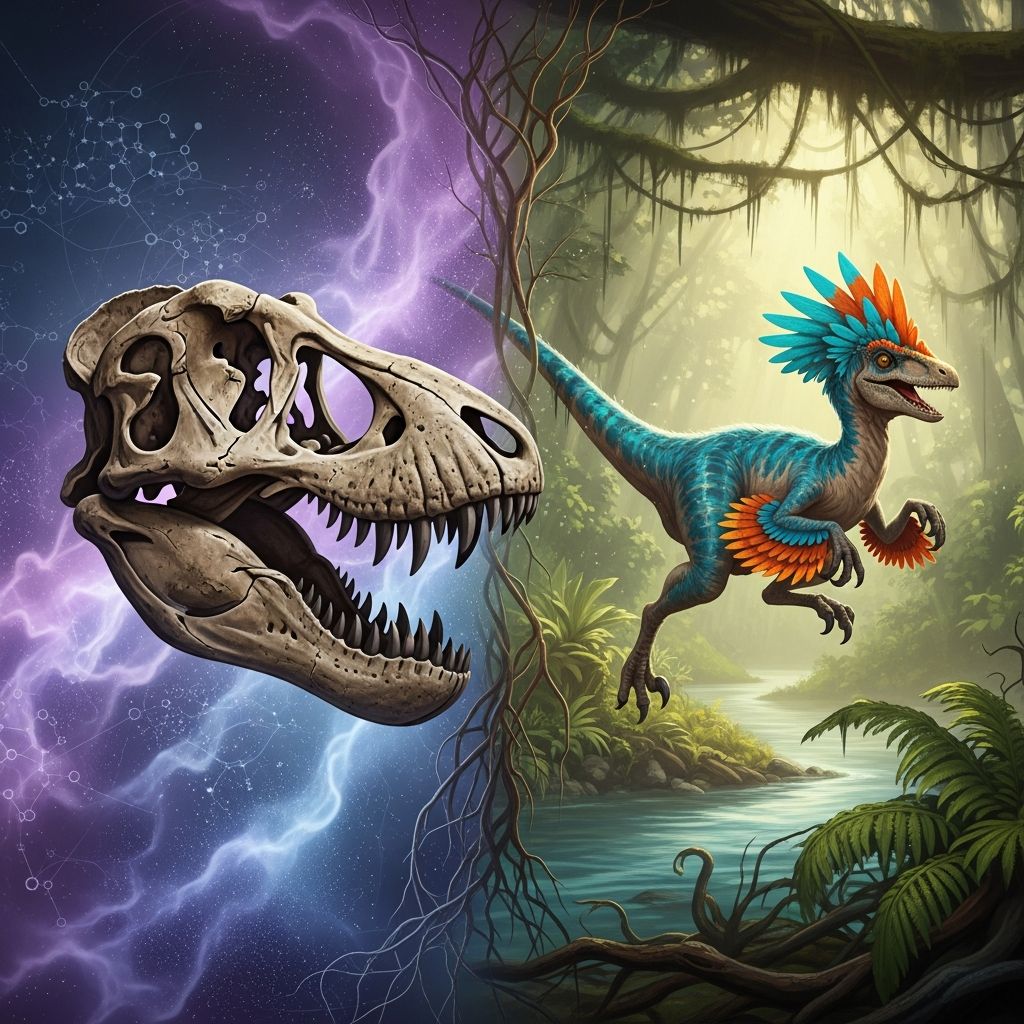
Dinosaur names blend scientific precision with imaginative flair, following strict international rules while capturing the essence of ancient life. These monikers, from the fearsome Tyrannosaurus rex to whimsical modern creations, reveal much about discovery, anatomy, and human ingenuity in paleontology.
The Foundations of Scientific Naming
At the heart of dinosaur nomenclature lies the binomial system, a standardized method used across biology to assign unique identifiers to species. This approach, developed by Carl Linnaeus in the 18th century, consists of two parts: the genus name, which is capitalized and indicates a group of closely related organisms, and the species epithet, which is lowercase and specifies the particular variant. Both are italicized, and the genus can be abbreviated in familiar contexts, such as T. rex for Tyrannosaurus rex
This system ensures global consistency, preventing confusion among scientists worldwide. For dinosaurs, names must adhere to the International Code of Zoological Nomenclature (ICZN), which mandates that new names be published in peer-reviewed literature, accompanied by a formal description, type specimen designation, and etymology explanation. Names cannot duplicate existing genera in zoology, a rule that has led to notable renamings, like the early dinosaur initially called Syntarsus, which conflicted with a beetle genus and was rechristened Megapnosaurus—meaning ‘big dead reptile’—by taxonomists.
- Genus name: Capitalized, often descriptive of key traits (e.g., Tyrannosaurus = ‘tyrant lizard’).
- Species epithet: Lowercase, can describe features, locations, or honors (e.g., rex = ‘king’).
- Italicization: Mandatory for formal scientific use.
Linguistic Roots: Greek and Latin Building Blocks
Most dinosaur names draw from ancient Greek and Latin, languages rich in descriptive roots that paleontologists combine to evoke physical characteristics or behaviors. The suffix -saurus, meaning ‘lizard’ or ‘reptile,’ dominates early names, reflecting the initial perception of dinosaurs as giant lizards. Megalosaurus, the first formally named dinosaur in 1824, translates to ‘great lizard,’ setting a precedent for feature-based naming.
Common prefixes highlight anatomy: stego- (‘roof’) for Stegosaurus, referencing its plated back initially thought to lie flat like shingles; tri- (‘three’) and -ceratops (‘horned face’) for Triceratops; and tyranno- (‘tyrant’) paired with rex for the iconic predator. These combinations create evocative portraits of prehistoric giants, bridging science and classical scholarship.
| Dinosaur Name | Meaning Breakdown | Key Feature |
|---|---|---|
| Stegosaurus | Stego- (roof) + saurus (lizard) | Back plates |
| Triceratops | Tri- (three) + cerat- (horn) + ops (face) | Facial horns |
| Tyrannosaurus rex | Tyranno- (tyrant) + saurus (lizard) + rex (king) | Powerful jaws |
| Brontosaurus excelsus | Bront- (thunder) + saurus (lizard) + excelsus (lofty) | Massive size |
Modern namers expand beyond -saurus, incorporating diverse roots for precision and creativity while honoring linguistic traditions.
Naming After Physical Traits and Discoveries
Many names spotlight distinctive anatomical features, aiding identification and memory. Iguanodon (‘iguana tooth’), named in 1825, alluded to teeth resembling modern iguanas, though later studies refined understandings. Place-based names are common too: Edmontosaurus from Alberta’s Edmonton Formation, or Lesothosaurus from Lesotho.
Discoverers often immortalize locations or formations, like Coronosaurus (‘crown lizard’) from its frill ornamentation, playfully nicknamed ‘Broccoliceratops’ during study for broccoli-like knobs—though the official name prevailed. These descriptive choices make names functional tools for classification.
Honoring People, Myths, and Culture
Beyond anatomy, names pay tribute to scientists, explorers, and cultural figures. Masiakasaurus knopfleri honors Dire Straits’ Mark Knopfler, as his music played during excavation. Mythical inspirations shine in Hagryphus giganteus, blending Egyptian god Ha, griffin, and ‘giant’ for a theropod.
Local languages add inclusivity: Ledumahadi mafube (‘giant thunderclap’ in Sesotho) evokes an earth-shaking sauropodomorph from Lesotho. Haya griva nods to a Mongolian horse-protecting deity. Gender diversity emerges too, with names like Pantydraco (‘underpants dragon’) from a Welsh site’s lingerie factory.
- Personal tributes: E.g., species named for mentors or musicians.
- Cultural nods: Indigenous languages preserve heritage.
- Mythic flair: Gods and beasts infuse wonder.
The Process: From Fossil to Formal Name
Naming unfolds rigorously post-discovery. Paleontologists analyze fossils, compare with known species, and if novel, draft a genus and epithet. Publication in a journal like Nature or Journal of Vertebrate Paleontology formalizes it, including holotype details (the reference specimen) and diagnosis distinguishing it from relatives.
Challenges arise: priority rules favor the earliest valid publication; conflicts prompt renamings. Beetle taxonomists’ grudge renamed a dinosaur Megapnosaurus, underscoring inter-field tensions. Today, digital databases like the Paleobiology Database track names, ensuring uniqueness.
Evolution of Naming Trends Over Time
19th-century names were straightforward: -saurus variants emphasizing size or teeth amid ‘Bone Wars’ rivalries between Cope and Marsh. 20th-century shifts introduced behavioral hints and places. 21st-century names embrace creativity, cultures, and pop references, reflecting matured science and public engagement.
Lengthy polysyllabic names persist for precision, like hypothetical ‘albigrandiplanilasioduounguisaurus’ (‘white, large, flat, hairy, two-clawed lizard’), showcasing root-stacking potential. Short, punchy ones like T. rex dominate popular culture.
Fun Facts and Naming Controversies
Notable quirks include Dracorex hogwartsia, inspired by Harry Potter, or Suuwassea (‘Sue’s rattlesnake’) for fossil collector Sue Hendrickson. Controversies erupt over validity: Brontosaurus revived after suppression, now accepted as Brontosaurus excelsus.
Renaming pitfalls highlight rules’ stringency, ensuring stability amid thousands of species (over 1,000 named).
Frequently Asked Questions (FAQs)
Who decides a dinosaur’s official name?
The discovering paleontologist or team proposes it, formalized via peer-reviewed publication under ICZN rules.
Can dinosaur names change after assignment?
Yes, if invalid (e.g., duplicate) or reclassified, but changes are rare to maintain stability.
Why Greek and Latin for names?
These ‘dead’ languages are stable, universally understood in science, avoiding translation ambiguities.
What’s the longest dinosaur name?
Contenders include 23+ syllable constructs, but practical ones balance descriptiveness and brevity.
Can anyone name a dinosaur?
No; requires scientific expertise, fossil evidence, and formal publication.
Why Names Matter in Paleontology
These labels organize knowledge, spark curiosity, and connect public imagination to rigorous science. As new fossils emerge—from Madagascar’s odd theropods to Antarctic giants—naming evolves, blending tradition with innovation to chronicle Earth’s lost biodiversity.
References
- From “T. Rex” to “Pantydraco”: How Dinosaurs Get Their Names — Smithsonian Magazine. 2018-05-10. https://www.smithsonianmag.com/science-nature/t-rex-pantydraco-how-dinosaurs-get-their-names-180962602/
- How do you name a dinosaur? — American Museum of Natural History. Accessed 2026. https://www.amnh.org/explore/videos/dinosaurs-and-fossils/naming-dinosaurs
- How do you name a dinosaur? (video) — Khan Academy / AMNH. Accessed 2026. https://www.khanacademy.org/partner-content/amnh/dinosaurs/what-is-a-dinosaur/v/how-do-you-name-a-dinosaur
- How Are Dinosaurs Named? — U.S. Geological Survey (.gov). 2001-05-17. https://pubs.usgs.gov/gip/dinosaurs/named.html
- Dinosaur Naming Conventions — American Museum of Natural History (.edu equivalent). Accessed 2026. https://www.amnh.org/dinosaurs/dinosaur-names
- How do you name a dinosaur? – YouTube — American Museum of Natural History. Accessed 2026. https://www.youtube.com/watch?v=cFKbZxNsnik
- DINOSAUR NAMES — University of California Museum of Paleontology (.edu). Accessed 2026. https://ucmp.berkeley.edu/fosrec/MunGun4.html

- Integrated M.A. in Applied Linguistics, University of Hyderabad
- 5+ years in editorial, instructional, SEO, and research-based writing
Sneha is a relationships and lifestyle writer with a strong foundation in applied linguistics and certified training in relationship coaching. She brings over five years of writing experience to theskillvault, crafting thoughtful, research-driven content that empowers readers to build healthier relationships, boost emotional well-being, and embrace holistic living. Her writing and insights reflect the belief that beauty, happiness, and wellness…