
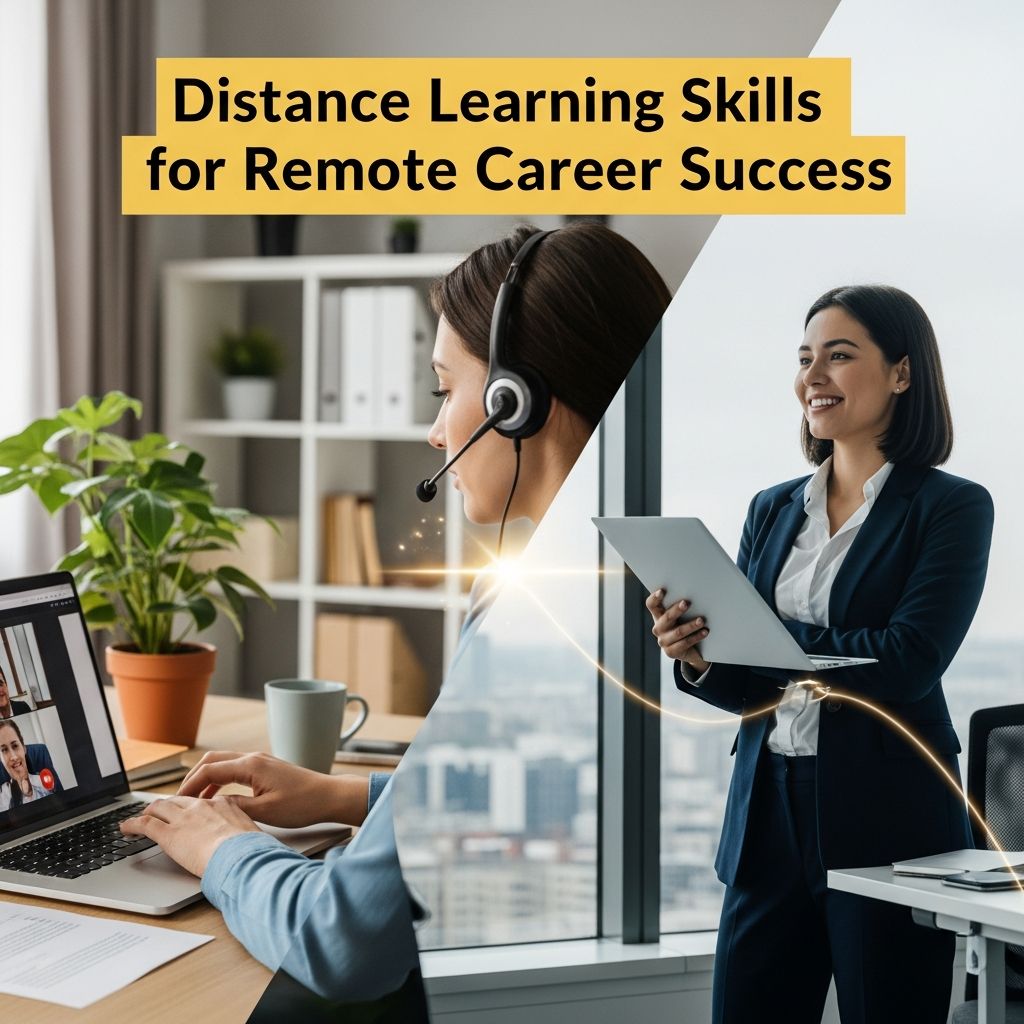
The workplace landscape has undergone significant transformation. In 2023, approximately twenty-two million adults engaged in full-time remote work arrangements, a trend that accelerated during the pandemic and has remained stable as organizations embraced flexible work models. This shift has created new demands for workers, requiring skill sets distinctly different from traditional office-based employment. Distance learning environments provide an ideal preparation ground for individuals entering the remote workforce, offering practical experience with the competencies that employers now prioritize.
The Connection Between Virtual Education and Remote Employment
The parallels between online education and remote work are striking. Both environments require individuals to manage their responsibilities independently, maintain focus without direct supervision, and demonstrate self-initiative in completing tasks. Students who pursue distance learning gain firsthand experience with the challenges and advantages of working from a distance, positioning them advantageously for remote employment opportunities.
Transferable skills—competencies developed in one context and successfully applied in another—form the bridge between educational achievement and career readiness. When students complete their online education successfully, they have already demonstrated mastery of skills that remote employers actively seek. These skills become the foundation for professional success in distributed work environments.
Remote work arrangements benefit both employers and employees. Organizations reduce overhead costs associated with physical office spaces while gaining access to talent pools unconstrained by geographic limitations. Employees appreciate the elimination of commute times, greater schedule flexibility, and improved work-life integration. Understanding this mutual value proposition helps students recognize why the skills they develop through distance learning matter in today’s job market.
Self-Directed Time Management and Personal Accountability
Perhaps the most fundamental skill that distance learning cultivates is effective time management. Unlike traditional classroom settings with predetermined schedules and external structure, online learning places responsibility for meeting deadlines squarely on the student’s shoulders. While institutions establish submission dates and weekly participation requirements, students must independently determine when and how to complete their coursework.
This autonomy mirrors remote work environments perfectly. Remote employees cannot rely on managers standing nearby to ensure task completion or to signal when transitions between different projects should occur. Instead, workers must:
- Create personal schedules that accommodate deadlines and deliverables
- Develop systems to track multiple assignments and commitments
- Build discipline to resist procrastination and maintain consistent progress
- Balance work intensity with adequate rest to prevent burnout
- Take initiative to seek clarification or support when needed
Distance learning students who successfully manage these expectations develop what employers call self-motivation and personal organization—traits essential for remote work success. The student who conquers procrastination and learns to work effectively across multiple weeks and months of coursework has already solved one of remote work’s greatest challenges.
Digital Communication and Collaborative Problem-Solving
Contrary to assumptions about isolation in online education, distance learning actually provides extensive opportunities for interaction and collaboration. However, this interaction occurs through mediated channels rather than face-to-face encounters. Students communicate via email, discussion boards, video conferencing platforms, instant messaging applications, and other digital tools.
This environment necessitates developing refined communication abilities. When you cannot rely on body language, facial expressions, or immediate verbal clarification, your written and verbal messages must achieve exceptional clarity. Online students learn to:
- Compose clear, professional electronic correspondence
- Participate meaningfully in asynchronous discussions
- Use video conferencing effectively and professionally
- Collaborate on group projects across distances
- Ask questions and seek feedback through appropriate channels
- Provide constructive feedback to peers in virtual settings
Remote work demands precisely these communication competencies. Employees must articulate their needs, contribute to team discussions, and coordinate efforts without the benefit of hallway conversations or spontaneous in-person meetings. By the time distance learning students enter the workforce, they have already developed comfort and proficiency with these essential workplace communication modes.
Technical Proficiency and Digital Tool Mastery
Distance learning inherently requires students to develop technical skills. Every online student becomes proficient with learning management systems, video conferencing software, collaborative document platforms, and various productivity applications. This technical foundation proves invaluable in modern workplaces, where digital tools mediate most professional activities.
Beyond mere familiarity with specific applications, distance learners develop a broader technical literacy—the ability to navigate new platforms, troubleshoot basic connectivity issues, and adapt to evolving software interfaces. This adaptability matters because workplace technologies constantly evolve. Remote employees who have experience learning new digital tools independently possess advantages when organizations implement fresh platforms or systems.
The technical skills developed through distance education extend across many industries and work arrangements. Whether a student eventually works remotely, in a traditional office, or in a hybrid model, the technical competency cultivated through online learning translates directly to workplace productivity and professional credibility.
Work-Life Balance and Sustainable Productivity
One of the most underestimated skills that distance learning develops is the ability to establish and maintain healthy boundaries between work and personal life. Students in online programs quickly learn that without clear demarcation between study time and leisure time, the lines blur dangerously. Successful distance learners develop strategies to establish specific work periods, create dedicated study spaces, and protect time for family, friends, and personal rejuvenation.
This skill becomes critical in remote work environments, where the temptation to work excessively can undermine long-term productivity and wellbeing. The home office blurs professional and personal spaces in ways that traditional offices do not. Individuals who have already mastered the art of compartmentalizing their time and protecting personal space through distance learning arrive at remote work with tested strategies for sustainable productivity.
Remote workers who fail to establish these boundaries often experience burnout, reduced satisfaction, and declining performance. By contrast, those who have practiced setting limits and protecting personal time—as distance learning requires—enter remote work with proven methods for maintaining equilibrium.
Geographic Flexibility and Schedule Optimization
Distance learning eliminates geographic constraints on educational access. A student can pursue coursework from anywhere with internet connectivity, allowing them to optimize their environment and schedule according to personal preferences and circumstances. This freedom parallels remote work arrangements, where employees often work from home, coffee shops, co-working spaces, or other locations that suit their needs.
Distance learning students discover their personal productivity patterns through experience. Some students learn they concentrate best in early morning hours, while others find their peak focus arrives in the evening. Some benefit from working in extended blocks, while others prefer distributed effort throughout the day. This self-knowledge, gained through months or years of online education, directly improves remote work performance when students can apply their discoveries to professional responsibilities.
Furthermore, distance learning accommodates diverse life circumstances. Students managing caregiving responsibilities, health challenges, or multiple commitments can adjust their learning schedules accordingly. This adaptability prepares them well for remote work, which similarly accommodates life’s complexities while maintaining professional productivity.
Building Professional Networks Across Distances
Distance learning communities often span geographic regions and even continents. Students interact with classmates from different areas, backgrounds, and professional experiences. This geographic diversity enriches perspectives and builds networks that extend beyond what traditional local education could provide.
These expanded networks prove professionally valuable. When distance learning students eventually seek remote work opportunities, they have already developed relationships with peers in various locations and industries. These connections—formed through collaborative projects, discussion forums, and virtual study groups—can lead to job opportunities, professional referrals, and career mentorship.
Additionally, exposure to diverse perspectives through distance learning cohorts develops cultural awareness and communication competency with people different from oneself. Modern employers actively seek these qualities, recognizing that diverse teams produce better outcomes and that cultural competency matters in an increasingly global workforce.
Accelerated Learning and Efficient Knowledge Acquisition
Research demonstrates that distance learning can require 40 to 60 percent less time than traditional classroom instruction to achieve equivalent learning outcomes. This efficiency stems from several factors: the ability to review recorded materials, the absence of travel time, and the capacity to focus on personally relevant content at individualized pacing.
For remote workers, this enhanced learning efficiency translates to greater productivity. Individuals who have developed skills in rapid information absorption and independent learning can quickly master new job responsibilities, adapt to changing requirements, and advance professionally. The time optimization skills developed through distance learning directly improve workplace performance.
Self-Awareness and Metacognitive Development
Distance learning requires students to develop metacognitive skills—awareness of their own learning processes, strengths, and areas for improvement. As students work independently, they must identify when they understand material and when they need additional support. They develop insight into their learning styles, optimal work environments, and effective problem-solving strategies.
This self-awareness contributes significantly to remote work success. Remote employees who understand their strengths and limitations can seek appropriate support, structure their work to leverage their capabilities, and communicate their needs effectively to supervisors and teammates. The self-knowledge cultivated through distance learning provides this essential foundation.
Frequently Asked Questions
How does distance learning prepare students better than traditional education for remote work?
Distance learning provides practical daily experience with the exact challenges remote work presents: managing time independently, communicating through digital channels, and maintaining productivity without direct supervision. Students don’t just learn about these skills theoretically—they practice them continuously throughout their education.
What happens if a student struggles with the independence required in online learning?
Many distance learning institutions provide support structures including tutoring, academic coaching, and advising services. Struggling with independence in online education is actually valuable experience, as it allows students to identify their challenges, seek support, and develop solutions before entering the remote workforce.
Do employers value distance learning education the same as traditional degrees?
Increasingly, yes. Employers recognize that distance learning develops crucial remote work competencies. Additionally, many distance learning programs are accredited equivalently to traditional programs, and employers value the demonstrated self-discipline and initiative that successful online students display.
Can students with inconsistent schedules succeed in distance learning?
Distance learning’s flexibility accommodates irregular schedules. Students can concentrate work into specific periods and maintain lighter engagement other times. This flexibility mirrors remote work arrangements and helps students develop the adaptability required for flexible employment.
Does distance learning develop adequate communication skills for professional environments?
Yes. Digital communication—the primary mode in distance learning—comprises the majority of communication in modern remote work. Students develop proficiency with professional written communication, video conferencing, and collaborative tools that directly transfer to workplace contexts.
Conclusion: The Natural Preparation Pathway
Distance learning represents far more than a convenient educational delivery method. For individuals pursuing remote work careers, online education functions as comprehensive preparation that develops every competency modern employers seek. From time management and self-motivation to digital communication and technical proficiency, distance learning students develop these capabilities through daily practice rather than theoretical study.
The alignment between distance learning environments and remote work requirements creates a natural pathway from student to professional. Students who succeed in online education have already demonstrated they possess the skills, discipline, and adaptability required for remote work success. As remote employment continues expanding, distance learning emerges as the ideal preparation ground for the workforce of today and tomorrow.
References
- Benefits of Online Education for Remote Work & Work from Home Jobs — Connections Academy. Accessed February 2026. https://www.connectionsacademy.com/support/resources/article/benefits-of-online-education-for-remote-work/
- How Online Education Prepares Students for Remote Work — Louisiana State University Online. Accessed February 2026. https://online.lsu.edu/newsroom/articles/how-online-education-prepares-students-remote-workplace-today/
- Top 10 Benefits of Online Study — BARBRI Resources. Accessed February 2026. https://www.barbri.com/resources/top-10-benefits-of-online-learning
- How Online Education Is Shaping the Future Workforce — University of Minnesota Online. Accessed February 2026. https://online.umn.edu/story/how-online-education-shaping-future-workforce

- Integrated M.A. in Applied Linguistics, University of Hyderabad
- 5+ years in editorial, instructional, SEO, and research-based writing
Sneha is a relationships and lifestyle writer with a strong foundation in applied linguistics and certified training in relationship coaching. She brings over five years of writing experience to theskillvault, crafting thoughtful, research-driven content that empowers readers to build healthier relationships, boost emotional well-being, and embrace holistic living. Her writing and insights reflect the belief that beauty, happiness, and wellness…