
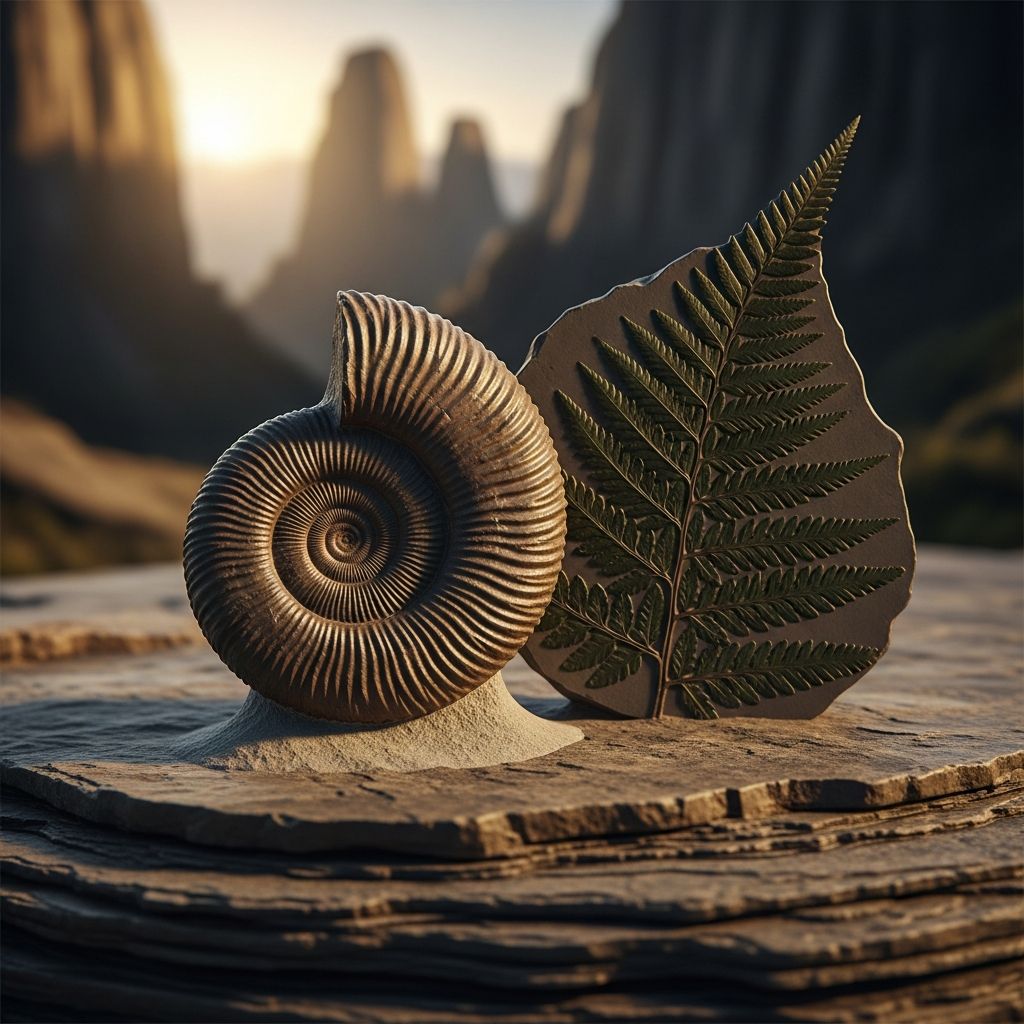
Fossils serve as invaluable windows into Earth’s distant past, preserving traces of ancient life forms that once roamed, swam, or grew across the planet. These remnants, embedded in sedimentary rocks, provide scientists with concrete evidence of evolutionary changes, extinct species, and shifting environments over millions of years.
The Essence of Fossils in Scientific Discovery
At their core, fossils represent the preserved remains or indicators of prehistoric organisms. Unlike mere relics, they encapsulate biological structures, behaviors, and ecological contexts that would otherwise be lost to time. Paleontologists rely on these artifacts to reconstruct timelines of life, from microscopic plankton to colossal dinosaurs.
The study of fossils, known as paleontology, bridges biology, geology, and history. By examining fossil distributions in rock layers, researchers date geological epochs and track continental drifts. For instance, marine fossils atop mountains like Everest highlight tectonic uplifts that reshaped landscapes.
Conditions Necessary for Fossilization
Few organisms fossilize; most decay completely due to exposure to air, water, bacteria, and scavengers. Successful preservation demands specific conditions: rapid burial in fine sediments like mud, sand, or silt shortly after death. This shields remains from surface degradation.
- Rapid Burial: Sediment from floods, landslides, or volcanic ash covers the organism quickly, preventing scavenger access and oxygen exposure.
- Low Oxygen Environment: Anaerobic conditions slow bacterial decomposition of soft tissues.
- Mineral-Rich Waters: Groundwater carrying dissolved minerals infiltrates sediments, facilitating chemical transformations.
- Stable Sedimentation: Continuous layering without disturbance ensures deep burial and lithification into rock.
Marine settings dominate fossil records because ocean floors accumulate sediments steadily, ideal for preserving shelled invertebrates and fish.
Primary Mechanisms of Fossil Formation
Fossilization involves intricate geochemical processes that replace or replicate organic material. The most prevalent is permineralization, where minerals infiltrate porous structures.
Permineralization: Turning Organics to Stone
In permineralization, mineral-laden groundwater seeps into buried remains, filling cellular voids with silica, calcite, or iron oxides. These minerals crystallize, hardening the structure while retaining original form and fine details like growth rings in petrified wood.
Dinosaur bones and ancient trees exemplify this: pores in bones or wood fibers absorb minerals, creating durable stone replicas. This process preserves microstructure, allowing microscopic analysis of internal anatomy.
Molds and Casts: Echoes of the Original
When original material dissolves post-burial, it leaves a cavity mirroring its shape—a mold. Subsequent mineral precipitation or sediment infill forms a cast, a positive replica.
Shellfish and ammonites frequently yield molds and casts. Acidic groundwater erodes shells, creating hollows; mineral-rich fluids then fill them, producing lifelike duplicates.
Replacement and Recrystallization
Replacement sees original atoms swapped for minerals atom-by-atom, maintaining shape but altering composition. Recrystallization involves mineral regrowth into larger crystals, potentially distorting details but preserving overall form.
These occur in stable, water-permeated environments over millennia, transforming delicate shells into enduring quartz or pyrite.
Exceptional Preservation: Rare Fossil Types
Beyond mineral-based fossils, extraordinary conditions yield intact soft tissues or behaviors.
Trace Fossils: Clues to Ancient Activities
Trace fossils, or ichnofossils, capture actions like footprints, burrows, or feeding trails rather than bodies. A dinosaur trackway molds in mud, then casts via sediment fill, revealing gait, speed, and social behavior.
- Footprints indicate size, posture, and locomotion.
- Burrows show nesting or escape strategies.
- Coprolites (fossilized dung) reveal diets and ecosystems.
Preserved Remains: Freezing, Drying, and Encasement
Rarely, entire organisms fossilize unaltered. Freezing in permafrost mummifies mammoths; desiccation in arid zones preserves insects; amber traps small creatures in resin; tar pits entomb predators like La Brea’s dire wolves.
These ‘Lagerstätten’ sites, like Burgess Shale, offer soft-tissue snapshots, revolutionizing views on Cambrian explosions of diversity.
Journey from Burial to Discovery
Buried remains undergo compaction as overlying sediments lithify into sedimentary rock under pressure. Tectonic forces uplift strata; erosion by wind, water, and ice exposes fossils.
| Stage | Description | Time Scale |
|---|---|---|
| Burial | Sediment covers remains | Days to years |
| Lithification | Sediments harden to rock | Thousands of years |
| Mineralization | Minerals replace organics | Thousands to millions of years |
| Uplift & Erosion | Rocks exposed at surface | Millions of years |
This cycle demands patience; most fossils remain hidden, revealed only by geological happenstance.
Diversity of Fossilized Life Forms
Fossils span microbes to megafauna, plants to protists. Microfossils like foraminifera dominate deep-time records, their tiny shells raining to seafloors.
- Body Fossils: Bones, shells, teeth—hard parts endure best.
- Plant Fossils: Leaves, seeds, wood via compression or petrifaction.
- Microfossils: Pollen, diatoms for paleoclimate proxies.
Index fossils, widespread short-lived species, calibrate rock ages precisely.
Interpreting Fossils: Tools and Challenges
Modern techniques like CT scanning visualize internals without damage; isotope analysis infers diets and climates; radiometric dating pins ages.
Challenges persist: incomplete records bias toward hardy taxa; taphonomic biases (preservation artifacts) skew interpretations. Yet, converging evidence from genetics and geology bolsters fossil narratives.
Frequently Asked Questions (FAQs)
What is the most common way fossils form?
Permineralization, where minerals fill and harden organic remains, is the most prevalent, seen in bones and petrified wood.
Can soft tissues fossilize?
Yes, rarely in exceptional sites via freezing, amber, or rapid burial, preserving skin, feathers, or organs.
How long does fossilization take?
From thousands to millions of years, involving burial, mineralization, and exposure.
Why are most fossils marine?
Oceans provide consistent sedimentation and burial, ideal for preservation compared to terrestrial decay.
Do all rocks contain fossils?
No, primarily sedimentary rocks; igneous and high-grade metamorphic rocks rarely preserve them.
Conclusion: Fossils as Earth’s Storytellers
Fossils not only chronicle life’s history but also warn of extinction patterns amid modern crises. They underscore preservation’s rarity, urging protection of fossil-rich sites for future insights.
References
- How do fossils form? — The Australian Museum. 2023. https://australian.museum/learn/australia-over-time/fossils/how-do-fossils-form/
- 18.5B: Fossil Formation — Biology LibreTexts. 2023-10-29. https://bio.libretexts.org/Bookshelves/Introductory_and_General_Biology/General_Biology_(Boundless)/18:_Evolution_and_the_Origin_of_Species/18.05:_Evidence_of_Evolution/18.5B:_Fossil_Formation
- How are dinosaur fossils formed? — Natural History Museum. 2023. https://www.nhm.ac.uk/discover/how-are-fossils-formed.html
- How do fossils form? — Oxford University Museum of Natural History. 2023. https://learningzone.oumnh.ox.ac.uk/how-are-fossils-formed
- Fossils — British Geological Survey. 2023. https://www.bgs.ac.uk/discovering-geology/fossils-and-geological-time/fossils/
- How Do Fossils Form — U.S. National Park Service. 2023. https://www.nps.gov/subjects/fossils/how-fossils-form.htm

- Integrated M.A. in Applied Linguistics, University of Hyderabad
- 5+ years in editorial, instructional, SEO, and research-based writing
Sneha is a relationships and lifestyle writer with a strong foundation in applied linguistics and certified training in relationship coaching. She brings over five years of writing experience to theskillvault, crafting thoughtful, research-driven content that empowers readers to build healthier relationships, boost emotional well-being, and embrace holistic living. Her writing and insights reflect the belief that beauty, happiness, and wellness…