
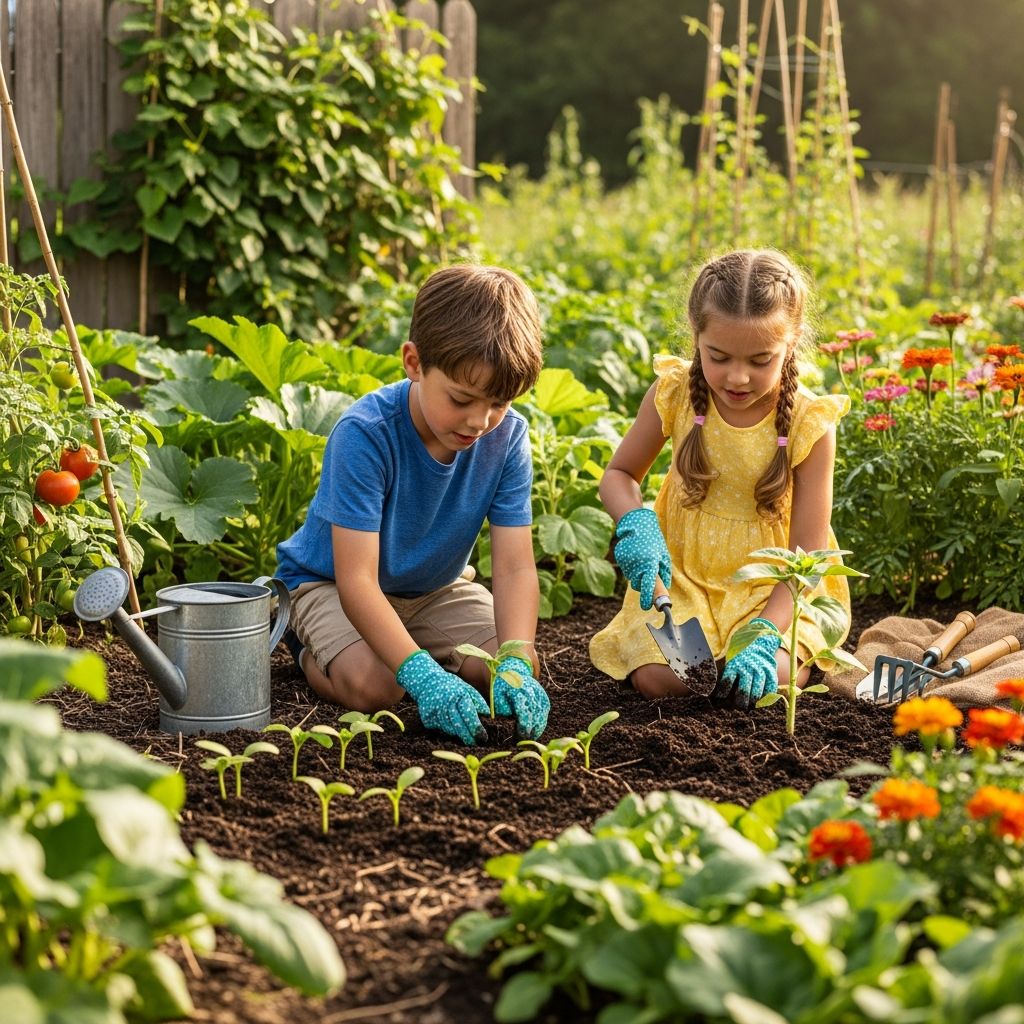
Gardening serves as a powerful educational tool for children, instilling **patience** through the gradual process of plant growth and introducing **scientific concepts** via direct interaction with natural processes. This activity combines practical lessons in responsibility with exploratory learning about biology, ecology, and environmental science.
Why Gardening Builds Essential Life Skills in Children
Engaging children in gardening goes beyond mere play; it fosters core competencies like perseverance and accountability. In an era dominated by instant results from digital devices, the garden offers a counterbalance, requiring consistent effort over weeks or months.
Children learn that success demands time and dedication. For instance, planting seeds and monitoring their progress teaches them to anticipate outcomes without immediate rewards, enhancing emotional regulation and focus.
The Science Classroom in Your Backyard
Gardens transform into living laboratories where kids explore fundamental scientific principles. They observe germination, where seeds absorb water and nutrients to sprout, demonstrating basic biology.
- Photosynthesis: Children witness leaves capturing sunlight to produce energy, a key process in plant survival.
- Soil Ecology: Digging reveals worms and microbes that enrich soil, illustrating decomposition and nutrient cycling.
- Pollination: Watching bees transfer pollen between flowers introduces reproductive biology and interdependence in ecosystems.
These observations encourage hypothesis testing, such as experimenting with different watering amounts to see effects on growth, promoting critical thinking akin to STEM curricula.
Fostering Patience Through Nature’s Timeline
Plant growth epitomizes delayed gratification. A seed may take days to sprout and months to yield produce, training children to endure waiting periods.
Daily tasks like checking soil moisture build routine and mindfulness. When plants thrive due to their care, kids experience profound satisfaction, reinforcing that persistence pays off.
| Plant Type | Time to Sprout | Time to Harvest | Lesson in Patience |
|---|---|---|---|
| Radishes | 3-7 days | 20-30 days | Quick wins build early confidence |
| Tomatoes | 5-10 days | 60-80 days | Long-term commitment rewards |
| Sunflowers | 7-14 days | 70-100 days | Visual growth motivates observation |
This table highlights varying timelines, allowing parents to select plants matching children’s attention spans.
Physical and Emotional Benefits for Young Gardeners
Gardening promotes physical health through activities like digging, which build strength, coordination, and fine motor skills.
- Digging and planting enhance gross motor development.
- Pruning tiny plants refines dexterity.
- Outdoor time boosts vitamin D and reduces screen-related stress.
Emotionally, nurturing plants cultivates empathy and self-esteem. Seeing a fragile seedling flourish under their care mirrors personal growth, especially beneficial for children facing challenges.
Responsibility and Routine from Garden Chores
Assigning specific duties—watering, weeding, or pest monitoring—instills ownership. Children designated to a plot feel empowered, learning consequences of neglect, like wilting plants.
This mirrors real-life accountability, teaching time management as they balance garden care with other activities.
Environmental Awareness and Healthy Eating Habits
Gardening connects kids to food origins, increasing appreciation for fresh produce. Harvesting their own veggies encourages trying new foods and understanding nutrition.
It also sparks stewardship; observing ecosystem balance prompts discussions on sustainability, pollution, and conservation.
Practical Tips for Starting a Family Garden
Begin small to avoid overwhelm. Choose easy-grow crops and involve kids in every step, from soil preparation to harvest celebration.
- Select a sunny spot and child-safe tools.
- Plant fast-maturing seeds for motivation.
- Track progress in a journal for scientific reflection.
- Celebrate milestones with garden-fresh meals.
Incorporate problem-solving, like dealing with pests, to teach resilience.
Age-Appropriate Gardening Activities
| Age Group | Activities | Skills Developed |
|---|---|---|
| 2-4 years | Watering, digging small holes | Motor skills, sensory exploration |
| 5-7 years | Planting seeds, simple weeding | Responsibility, basic observation |
| 8-12 years | Full cycle care, experiments | Science inquiry, independence |
Tailoring tasks ensures engagement across developmental stages.
Overcoming Common Challenges in Kid Gardening
Impatience or failures, like poor germination, are learning opportunities. Guide children to analyze causes—overwatering or poor soil—and adjust, building problem-solving skills.
Weather unpredictability teaches adaptability, a vital life lesson.
Frequently Asked Questions (FAQs)
What age is best to start gardening with children?
Any age works with adapted tasks; toddlers enjoy sensory play, while older kids handle complex science projects.
How does gardening teach science specifically?
It demonstrates biology (growth cycles), chemistry (soil pH), and ecology (pollinators), through real-world experiments.
Can gardening help with behavioral issues?
Yes, the calming routine and achievements boost focus, empathy, and emotional regulation.
What if we lack outdoor space?
Use pots, windowsills, or community gardens for indoor/outdoor options.
How to make gardening fun and educational?
Incorporate games, journals, and family cooking to blend play with learning.
Long-Term Impact on Child Development
Beyond immediate lessons, gardening equips children with tools for lifelong success: curiosity-driven learning, resilience against setbacks, and a proactive environmental ethic. Studies affirm its role in holistic growth, from cognitive gains to social bonds.
Parents report stronger family ties through shared outdoor time, creating enduring memories.
References
- Teaching Kids Patience and Responsibility Through Gardening — Sparkles and Stretch Marks. 2023-05-15. https://www.sparklesandstretchmarks.com/teaching-kids-patience-and-responsibility-through-gardenin/
- Gardening with Kids: It’s Good for Everybody — UC ANR. 2022-08-10. https://ucanr.edu/blog/uc-master-gardeners-san-mateo-san-francisco-counties/article/gardening-kids-its-good-everybody
- How Gardening Can Teach Patience and Growth to Foster Children — EOH Families. 2024-03-20. https://www.eohfamilies.org/blog/how-gardening-can-teach-patience-and-growth-to-foster-children
- Gardening Teaches Kids Life Skills — LSU AgCenter. 2023-11-05. https://www.lsuagcenter.com/topics/lawn_garden/home_gardening/gardening-teaches-kids-life-skills
- Cultivating Growth: The Many Benefits of Gardening for Children — BrightPath Kids. 2024-01-12. https://brightpathkids.com/family-blog/benefits-of-gardening-for-children
- Gardening with Young Children: Developing More Than Just a Green Thumb — National Wildlife Federation Blog. 2024-11-15. https://blog.nwf.org/2024/11/gardening-with-young-children-developing-more-than-just-a-green-thumb/
- Gardening with young children helps their development — MSU Extension. 2023-06-22. https://www.canr.msu.edu/news/gardening_with_young_children_helps_their_development

- Integrated M.A. in Applied Linguistics, University of Hyderabad
- 5+ years in editorial, instructional, SEO, and research-based writing
Sneha is a relationships and lifestyle writer with a strong foundation in applied linguistics and certified training in relationship coaching. She brings over five years of writing experience to theskillvault, crafting thoughtful, research-driven content that empowers readers to build healthier relationships, boost emotional well-being, and embrace holistic living. Her writing and insights reflect the belief that beauty, happiness, and wellness…