
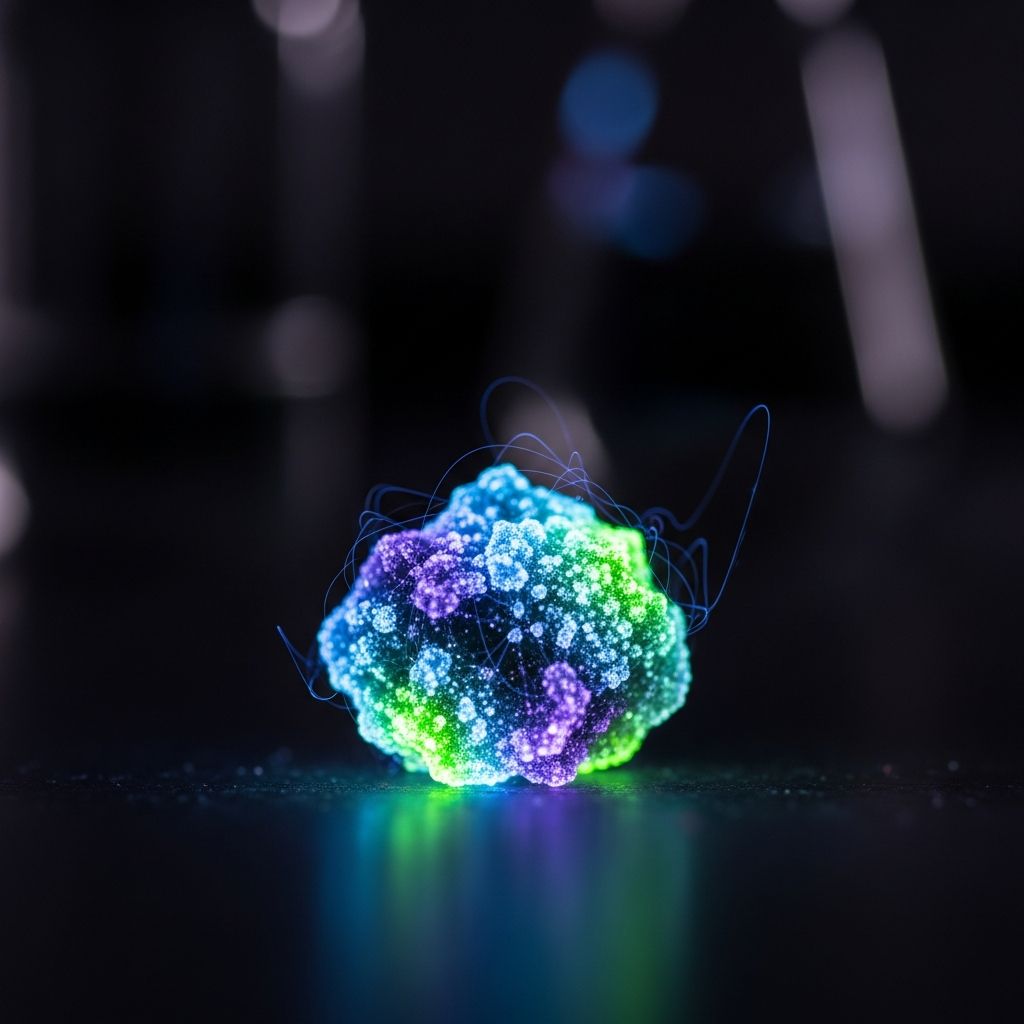
Glow-in-the-dark materials transform ordinary objects into sources of light without electricity, relying on a process where they absorb ambient light and re-emit it over time. This phenomenon, rooted in photoluminescence, powers everything from children’s toys to safety signage and architectural features.
The Fundamental Physics of Light Emission
At its core, the glow effect stems from phosphorescence, a type of photoluminescence where substances absorb photons from light sources and release them gradually as visible light. Unlike fluorescence, which stops almost instantly when the light source is removed, phosphorescence involves electrons that get excited to higher energy states and then slowly return to their ground state, emitting light over minutes or hours.
Phosphors, the key ingredients, are crystalline compounds doped with specific activators that create electron traps. These traps hold the energy until thermal vibrations or other stimuli release it as photons. The efficiency depends on the depth of these traps: deeper traps mean longer glow times.
Key Phosphors Powering the Glow
Two primary phosphors dominate glow-in-the-dark applications: zinc sulfide and strontium aluminate.
- Zinc Sulfide (ZnS): An older phosphor, often mixed with copper as an activator, producing a greenish glow. It typically lasts 30 minutes to an hour after charging but is less bright and persistent than modern alternatives.
- Strontium Aluminate (SrAl2O4): A newer, europium-doped variant that glows far brighter and longer—up to 12 hours or more. It’s non-toxic, doesn’t contain radioactive elements like older radium-based paints, and charges faster under various lights.
These materials are embedded in paints, plastics, resins, or stones, retaining their properties even after molding or painting.
How Charging and Glowing Actually Works
Glow materials require an initial charge from light exposure. Electrons in the phosphor absorb energy, jumping to excited states. In darkness, they cascade back down, releasing energy as light—often green because human eyes are most sensitive to that wavelength, making it appear brightest.
| Light Source | Charge Time (Strontium Aluminate) | Glow Duration |
|---|---|---|
| UV/Black Light | 3-4 minutes | Up to 12 hours |
| Direct Sunlight | 7-8 minutes | Up to 12 hours |
| Fluorescent/LED | 21-23 minutes | 8-10 hours |
| Incandescent Bulb | 24-26 minutes | 6-8 hours |
Data adapted from practical tests; actual times vary by product thickness and phosphor concentration. The glow fades gradually: brightest in the first 30 minutes, then steadily dimming as electrons de-excite.
Perception plays a role too— in total darkness, after 10-15 minutes of eye adaptation, the glow appears significantly brighter due to enhanced rod cell sensitivity in the retina. Ambient light washes it out, so optimal viewing requires pitch black.
Distinguishing Glow from Other Light Phenomena
Not all self-illuminating effects are phosphorescent. Here’s a comparison:
| Phenomenon | Mechanism | Duration | Examples |
|---|---|---|---|
| Phosphorescence | Light absorption, slow re-emission | Minutes to hours | Glow stars, safety paint |
| Fluorescence | Instant absorption/re-emission | Nanoseconds | Highlighters, blacklight posters |
| Bioluminescence | Chemical reaction in organisms | Continuous (while reacting) | Fireflies, deep-sea creatures |
| Chemiluminescence | Chemical energy to light | Minutes | Glow sticks |
Phosphorescence uniquely stores visible or UV light energy without chemicals or heat, making it ideal for passive, rechargeable luminosity.
Practical Applications Across Industries
Safety and Emergency Uses
In low-visibility scenarios, photoluminescent strips mark escape routes in buildings, aircraft, and ships. They charge from ambient light during the day and guide evacuations for hours without power. The U.S. Coast Guard approves strontium aluminate for life vests and exit signs.
Landscaping and Architecture
Glow pebbles line pathways, eliminating trip hazards at night. Solar-powered charging during the day provides eco-friendly illumination. Architects incorporate them into facades and furniture for aesthetic, energy-free accents.
Consumer Products and Toys
From bedroom constellations to watch dials and bike reflectors, these materials add fun and function. Modern versions are safer, avoiding legacy radioactive additives like radium used in early 20th-century paints.
Industrial and Artistic Innovations
Paints coat tools for visibility in dark workshops; artists create murals that shift with light exposure. In automotive design, glow accents enhance safety on wheels.
Advances and Future Prospects
Research pushes boundaries: hybrid phosphors glow in multiple colors (blue, aqua, red via doping adjustments), and nano-enhanced versions charge in seconds. Integration with solar cells creates perpetually glowing surfaces. Sustainability improves as production scales, reducing reliance on batteries for night lighting.
Challenges remain, like temperature sensitivity—extreme cold prolongs glow, heat shortens it—and thickness requirements for optimal performance. Yet, with non-toxic formulas, these materials promise broader adoption in green tech.
Frequently Asked Questions (FAQs)
Why do most glow-in-the-dark items glow green?
The human eye’s peak sensitivity is in the green spectrum (around 555 nm), making green emissions appear brightest even if not the most intense.
How long does the glow really last?
Strontium aluminate products can visibly glow 10-12 hours in total darkness; zinc sulfide fades in under an hour. Visibility threshold is about 0.32 millicandela per square meter.
Are glow-in-the-dark materials safe for skin or ingestion?
Modern phosphors like strontium aluminate are non-radioactive and non-toxic, unlike old radium paints. However, they aren’t meant for consumption.
Can they charge through windows or clouds?
Yes, but less efficiently. Direct sunlight is best; indirect light takes longer.
Do they work in freezing temperatures?
Yes, cold enhances persistence by slowing electron release; heat diminishes it.
DIY Tips for Maximizing Glow Effects
- Expose to bright light or UV for full charge.
- View in complete darkness after eye adaptation.
- Layer thicker coatings for stronger, longer glows.
- Combine with blacklight for rapid recharges.
Experiment with glow paints on canvases or stones to see photoluminescence in action.
References
- What is Glow-in-the-Dark? A Complete Guide — Ambient Glow Technology. 2023. https://ambientglowtechnology.com/blogs/news/what-is-glow-in-the-dark
- What is “glow in the dark” and how does it work? — Glow Inc. 2023. https://www.glow.co.uk/what-is-glow-in-the-dark-and-how-it-works.html
- Phosphorescence — Wikipedia. 2026-04-01. https://en.wikipedia.org/wiki/Phosphorescence
- How does ‘glow in the dark’ work? — BBC Science Focus Magazine. 2023. https://www.sciencefocus.com/science/how-does-glow-in-the-dark-work
- How Does Glow-in-the-Dark Work? — Rainbow Symphony. 2023. https://www.rainbowsymphony.com/blogs/blog/how-does-glow-in-the-dark-work
- Science Behind Glow-in-the-Dark Toys — U.S. Energy Information Administration (EIA). 2022. https://www.eia.gov/kids/for-teachers/lesson-plans/pdfs/GlowInTheDarkSecondary.pdf

Medha Deb is an editor with a master's degree in Applied Linguistics from the University of Hyderabad. She believes that her qualification has helped her develop a deep understanding of language and its application in various contexts. Medha specializes in the areas of beauty, health, sports, and wellness and is committed to ensuring that the content on the website is…