
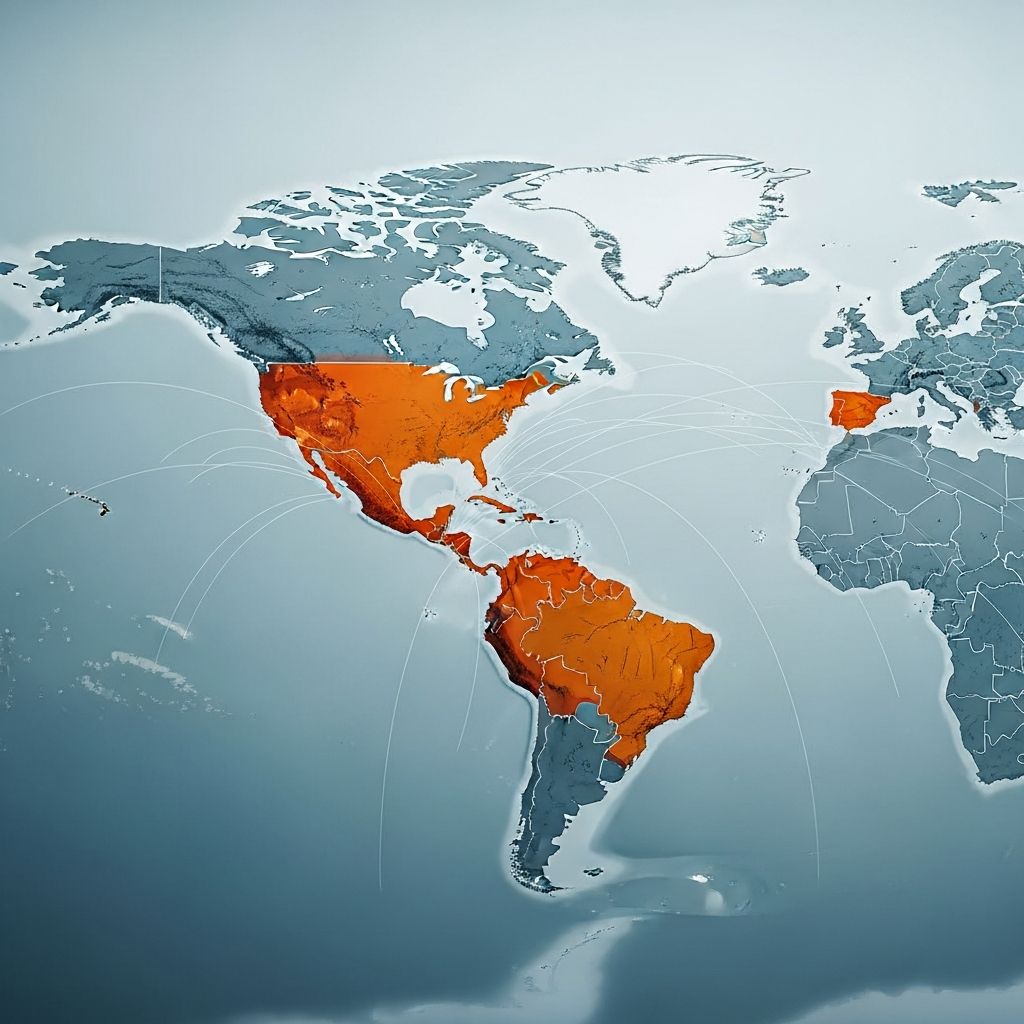
Spanish ranks as one of the most widely spoken languages globally, serving as the official language in 20 sovereign countries and several territories, with approximately 519 million native speakers primarily concentrated in the Americas and Spain. This linguistic powerhouse originated from Vulgar Latin on the Iberian Peninsula and has evolved through centuries of cultural exchanges, now uniting diverse populations across multiple continents.
Historical Foundations and Worldwide Expansion
The roots of modern Spanish trace back to the Castilian dialect spoken in medieval Spain, influenced by Arabic during the Moorish occupation and later standardized through royal decrees. Spanish spread dramatically during the Age of Exploration, as European powers colonized vast territories in the Americas, Africa, and Asia. By the 16th century, it had become the language of administration, religion, and trade in colonies from Mexico to the Philippines.
Today, while Spain represents the linguistic homeland, it accounts for less than 10% of global speakers, with the majority residing in Latin America. Colonial legacies, migrations, and modern globalization have embedded Spanish in unexpected regions, from U.S. border states to African enclaves. This expansion has birthed a rich tapestry of dialects, each reflecting local indigenous, African, and European influences.
Official Spanish-Speaking Nations by Continent
Spanish holds official status—either de jure or de facto—in 20 countries, spanning Europe, Africa, and the Americas. Below is a breakdown organized by geographic region, highlighting key nations and their speaker demographics.
Europe: The Origin Point
Spain stands as the epicenter, home to about 48 million native speakers. The language’s prestige dialect, Castilian, is enshrined in the constitution, though regional variants like Andalusian and Galician-inflected forms add diversity. Nearby, Gibraltar (a British territory) and Andorra feature significant Spanish usage, with 75% and 48.6% of populations speaking it respectively.
Africa: Colonial Echoes
Equatorial Guinea is the sole African nation with Spanish as an official language, spoken by nearly 68% of its residents alongside French and Portuguese. Spanish also persists in Spain’s North African territories—Ceuta, Melilla, and the Canary Islands—where it blends with local Berber influences and American returnee dialects. Western Sahara sees Spanish as a major language due to historical administration.
North and Central America: The Heartland
Mexico leads with over 132.5 million native speakers as of 2024, making it the world’s largest Spanish-speaking country. Central American nations—Costa Rica, El Salvador, Guatemala, Honduras, Nicaragua, and Panama—unanimously adopt Spanish officially, except Belize where English predominates but Spanish is common (54% speakers). These countries showcase Mesoamerican indigenous substrates in their Spanish variants, such as Nahuatl loans in Mexican Spanish.
Caribbean Islands: Vibrant Fusion
Cuba and the Dominican Republic anchor the Caribbean, with Puerto Rico (a U.S. territory) boasting over 95% Spanish proficiency. Here, African rhythms from slavery eras infuse the language with unique cadences, evident in Cuban seseo (merging s and th sounds) and Dominican aspiration of final s’s.
South America: Diversity in Scale
Nine South American countries claim Spanish as official: Argentina (46 million speakers), Bolivia, Chile, Colombia (52.7 million), Ecuador, Paraguay, Peru, Uruguay, and Venezuela. Colombia ranks second globally in native speakers. Brazil remains the outlier with Portuguese, but Spanish bridges borders via trade and media. Paraguay’s bilingualism with Guarani exemplifies co-official status.
Population Breakdown: Top Spanish-Speaking Countries
The table below summarizes the leading nations by native speakers, drawing from 2024-2025 data for precision.
| Country | Native Speakers (millions) | Region |
|---|---|---|
| Mexico | 132.5 | North America |
| Colombia | 52.7 | South America |
| Spain | 48 | Europe |
| Argentina | 46 | South America |
| Peru | ~32 (est.) | South America |
Note: Figures reflect native proficiency; total speakers exceed 636 million including L2 users.
Regions of Significant Non-Official Use
Beyond official borders, Spanish flourishes in diaspora hubs. The United States hosts around 60 million speakers (19% of population), concentrated in California, Texas, Florida, and New York, positioning it to become the second-largest Spanish-speaking nation by 2060.[10] Belize (54% speakers), the Philippines (historical creole influences), and small communities in Angola, South Sudan, and Morocco also sustain the language.
- U.S. Southwest: Chicano Spanish blends with English, featuring code-switching.
- Philippines: Chavacano, a Spanish-based creole, survives in Zamboanga.
- North Africa: Moroccan Spanish dialects from protectorate eras.
Dialectal Variety: A Linguistic Mosaic
Spanish’s global footprint yields over a dozen major dialects. Caribbean variants accelerate speech and drop consonants; Rioplatense (Argentina/Uruguay) uses yeísmo (ll/y as ‘sh’); Andean Spanish incorporates Quechua/Aymara vocabulary. Standardization efforts by the Real Academia Española maintain unity, but local flavors define identity—from Mexico’s clear enunciation to Spain’s ceceo (s/th merger in southern dialects).
Cultural and Economic Impact
As a UN official language, Spanish powers diplomacy, literature (Cervantes to García Márquez), and media like telenovelas reaching 500 million viewers. Economically, it unites a $5 trillion market in Latin America, boosting trade. Learning Spanish opens doors to 21% of global GDP.
Future Trends in Spanish Usage
Demographics forecast growth: Latin America’s population boom and U.S. Hispanic surge will push total speakers past 700 million by 2050.[10] Digital platforms amplify reach, with Spanish as the second-most used language online. Challenges include indigenous language preservation in Bolivia/Peru and English dominance in the U.S., yet resilience endures.
Frequently Asked Questions (FAQs)
What are the 20 countries where Spanish is official?
Argentina, Bolivia, Chile, Colombia, Costa Rica, Cuba, Dominican Republic, Ecuador, El Salvador, Equatorial Guinea, Guatemala, Honduras, Mexico, Nicaragua, Panama, Paraguay, Peru, Spain, Uruguay, Venezuela.
Which country has the most Spanish speakers?
Mexico, with 132.5 million native speakers.
Is Spanish spoken in the United States officially?
No, English is primary, but ~60 million speak Spanish, making it the second most common language.
How many total Spanish speakers worldwide?
About 636 million, including 519 million native.
Does Brazil speak Spanish?
No, Portuguese is official; Spanish is understood near borders but not widespread.
References
- Countries with most Spanish speakers 2025 — Statista. 2025. https://www.statista.com/statistics/991020/number-native-spanish-speakers-country-worldwide/
- Spanish language — Wikipedia. 2026 (accessed). https://en.wikipedia.org/wiki/Spanish_language
- List of countries and territories where Spanish is an official language — Wikipedia. 2026 (accessed). https://en.wikipedia.org/wiki/List_of_countries_and_territories_where_Spanish_is_an_official_language
- Spanish language | History, Speakers, & Dialects — Britannica. 2026 (accessed). https://www.britannica.com/topic/Spanish-language
- How Many People Speak Spanish, And Where Is It Spoken? — Babbel. 2026 (accessed). https://www.babbel.com/learn-spanish/advanced/how-many-people-speak-spanish

Medha Deb is an editor with a master's degree in Applied Linguistics from the University of Hyderabad. She believes that her qualification has helped her develop a deep understanding of language and its application in various contexts. Medha specializes in the areas of beauty, health, sports, and wellness and is committed to ensuring that the content on the website is…