
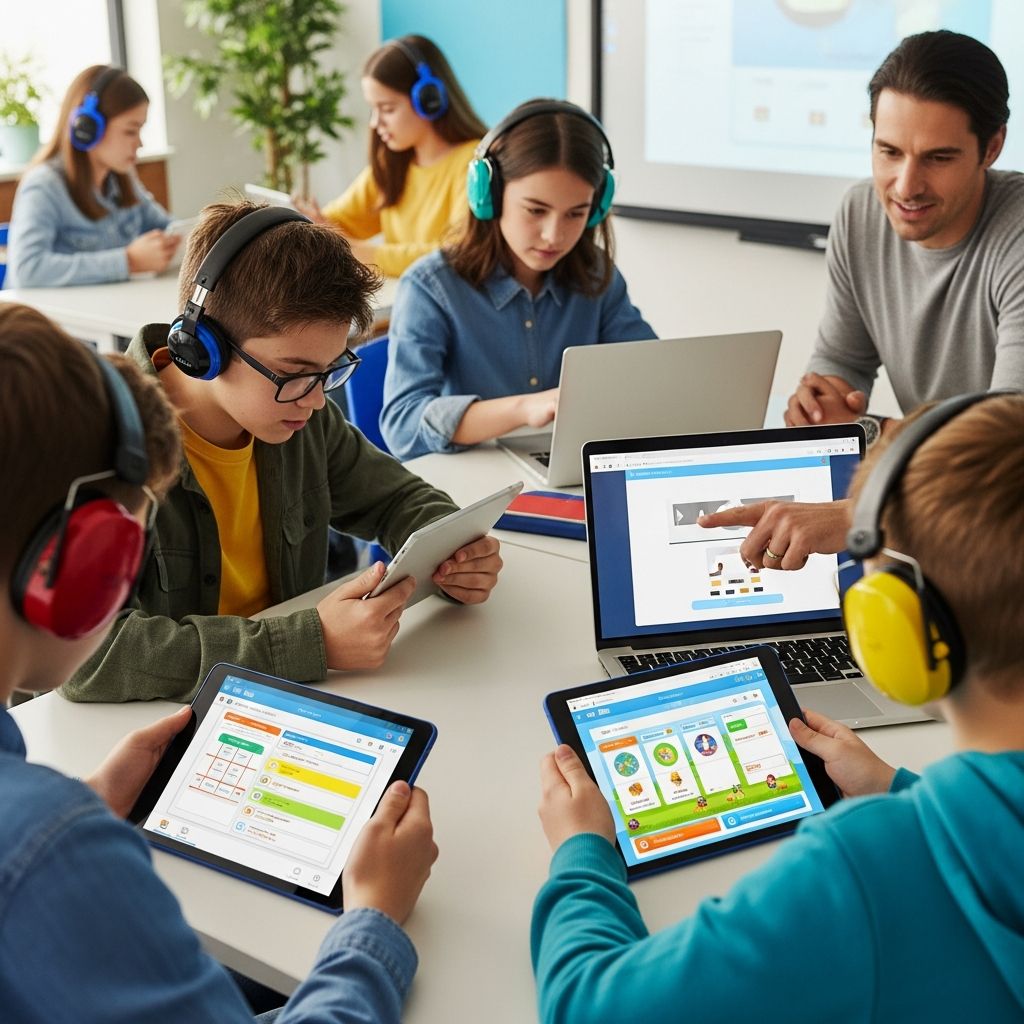
The transition to digital education has opened unprecedented opportunities for students with autism spectrum disorder (ASD). While traditional brick-and-mortar classrooms often present challenges such as sensory overload, inflexible scheduling, and limited individualization, online learning platforms provide alternatives that fundamentally transform how students on the autism spectrum engage with education. This shift represents more than a temporary accommodation—it reflects a growing recognition that diverse learners require diverse approaches to education.
The Challenge of Traditional Classroom Environments for Autistic Learners
Students with autism frequently encounter significant obstacles in conventional school settings that neurotypical peers may navigate with relative ease. The standard classroom environment combines multiple sensory stimuli simultaneously—overhead lighting, hallway noise, classroom activity, and social interactions—creating an overwhelming sensory landscape. Beyond sensory challenges, rigid daily schedules that fail to accommodate individual learning paces and interests can diminish engagement and increase frustration among students whose neurology functions differently.
Furthermore, traditional educational structures typically emphasize standardized curricula and one-size-fits-all teaching methods that don’t account for the unique cognitive profiles and learning preferences common among autistic students. The social dynamics of physical classrooms add another layer of complexity, as many autistic students experience significant anxiety related to peer interactions, unwritten social rules, and performance pressure in front of classmates. These cumulative factors often result in heightened stress levels that interfere with academic performance and emotional well-being.
Customizable Learning Environments and Sensory Accommodation
One of the most compelling advantages of online education for autistic students is the ability to customize the entire learning environment according to individual sensory needs and preferences. Unlike traditional classrooms where sensory conditions remain largely fixed, digital learning allows students to control lighting, sound levels, background music or silence, and visual complexity. This environmental control extends to reducing exposure to the unpredictable sensory triggers inherent in crowded hallways, cafeterias, and group transitions.
The home-based nature of online learning means students benefit from spaces already adapted to their comfort levels and preferences. Students can eliminate sudden auditory interruptions like bells or announcements that may trigger anxiety or dysregulation. Visual distractions are minimized, allowing greater concentration on academic content rather than environmental management. This reduction in sensory demands frees cognitive resources that can be redirected toward learning itself.
Flexible Pacing and Individualized Academic Progression
Autistic students demonstrate remarkable engagement and learning outcomes when permitted to pursue education at their own pace and according to their individual interests. Traditional schools operate on fixed schedules where all students progress through material simultaneously, regardless of mastery or readiness. This approach fundamentally mismatches with how many autistic learners function optimally.
Online platforms enable genuine flexibility that extends beyond asynchronous content delivery. Students can spend additional time on challenging concepts without holding back peers or rushing to meet arbitrary deadlines. Conversely, they can accelerate through material they master quickly without unnecessary repetition. This responsive pacing reduces the frustration that emerges when curriculum speed doesn’t align with individual processing needs.
Educational designers can also integrate student interests directly into curriculum planning. When autistic learners pursue topics that genuinely interest them, motivation increases substantially. Rather than viewing student interests as distractions from “real learning,” online education systems can leverage these interests as motivational anchors that make academic content more relevant and engaging.
Structured Flexibility: Balancing Predictability with Autonomy
Although flexibility is crucial, many autistic students simultaneously require consistent structure and predictability to feel secure and manage anxiety effectively. This might seem contradictory, but online learning platforms can deliver both through thoughtful design. Rather than rigid, inflexible schedules, digital learning can provide structured yet adaptable routines where the general framework remains consistent while specific timing accommodates individual needs.
Visual supports—including written schedules, color-coded task lists, progress trackers, and clear learning objectives—help autistic students understand what to expect and what is expected of them. These supports reduce anxiety associated with uncertainty and create scaffolding that promotes independent functioning. When students know the structure and can anticipate transitions, their focus improves and behavioral dysregulation often decreases.
The flexibility to take breaks on an individualized basis represents another critical feature. Rather than adhering to school-wide schedule breaks, students can pause when they recognize their attention or regulation declining, recharge through preferred activities, and return to learning when capacity has been restored. This self-awareness and autonomy support both emotional regulation and sustained academic engagement.
Technology as an Enabling Tool for Autistic Learners
Modern educational technology offers powerful tools specifically beneficial for autistic students. Interactive applications, virtual simulations, video modeling, and gamified learning experiences engage multiple sensory channels in controlled ways that support learning rather than overwhelm it. Many autistic individuals demonstrate strengths in visual-spatial processing and pattern recognition, which makes technology-enhanced learning particularly effective.
Adaptive technology extends beyond engaging interfaces. Speech-to-text software supports students with written expression challenges. Visual scheduling applications help students navigate daily routines and understand time management. Assistive technology tools remove barriers to participation and expression, allowing students to demonstrate knowledge and skills without interference from motor or language processing differences.
The written nature of much online communication—including text-based discussion forums, email exchanges with instructors, and digital assignment submission—can benefit autistic learners who process written information more easily than verbal communication or manage social anxiety better through writing. This mode of interaction allows time for processing without the pressure of immediate verbal responses.
Personalized Academic Planning and Continuous Progress Monitoring
Effective online schools for autistic students implement Individualized Learning Plans (ILPs) that document each student’s unique strengths, challenges, learning style, and academic goals. Unlike generic education plans, these customized approaches recognize that autism spectrum disorder manifests differently across individuals and requires differentiated strategies.
Online educational platforms enable continuous progress monitoring and real-time assessment. Teachers and support specialists can immediately identify when a student struggles with particular concepts and adjust instructional approaches without delay. Data collected through digital platforms reveals patterns in student performance, engagement, and skill development that guide intervention decisions.
This responsive teaching model contrasts with traditional classrooms where identifying struggling students may take weeks or months, and modifying instruction requires substantial reorganization. The immediacy of digital feedback allows for agile, evidence-based educational decisions that keep students progressing appropriately.
Social-Emotional Development in Controlled Virtual Settings
A persistent misconception suggests that online learning isolates autistic students and prevents social development. However, well-designed digital learning communities provide social interaction opportunities within structured, anxiety-reducing frameworks. Virtual classrooms can incorporate guided group activities, moderated discussion forums, and collaborative projects where social interaction happens with teacher oversight and support.
These controlled environments allow autistic students to practice social skills, conversation techniques, and collaborative problem-solving in lower-stakes situations where anxiety is reduced and direct instruction is available. Visual supports can model social expectations and provide scaffolding for social interactions. Over time, students build confidence and social competence that increasingly transfers to less-structured settings.
The absence of unstructured social situations like crowded hallways, unpredictable peer interactions, and implicit social rules removes major sources of anxiety while maintaining intentional social learning opportunities. This creates space for genuine social-emotional growth rather than mere social exposure.
Reducing Anxiety and Stress-Related Barriers to Learning
Many autistic students experience significant anxiety in traditional school environments stemming from sensory overstimulation, social pressure, unpredictable situations, and performance stress in front of peers. This anxiety consumes cognitive resources and emotional capacity, leaving less available for actual learning. Online education directly addresses these anxiety sources.
The reduction in social pressure—no longer needing to manage appearance, navigate complex peer dynamics, or perform socially for classmates—allows students to direct their attention toward academics. The elimination of bullying risks, which disproportionately affect autistic students, removes a significant source of school-related anxiety. In home-based learning environments, students can engage academically while managing their sensory and emotional states more effectively.
When anxiety decreases substantially, students report improved focus, better retention of information, and greater willingness to engage with challenging material. The emotional safety created by online learning becomes foundational for academic success.
Attendance, Engagement, and Ownership of Learning
Online learning has corresponded with increased school attendance among autistic students who previously experienced significant absenteeism due to school-related anxiety, sensory distress, or difficulty with traditional scheduling. When students can learn from home and create schedules aligned with their optimal functioning times, barriers to attendance decrease substantially.
This improved attendance has cascading positive effects. Regular engagement with educational content builds momentum and academic growth. Students develop reliable learning habits and consistency that support retention and skill building. Perhaps equally important, students experience themselves as successful participants in their own education rather than chronic absentees managing crises.
Online learning also promotes student ownership of the educational process. When students have genuine input into scheduling, pacing, and sometimes curriculum choices, they develop investment in learning outcomes. This autonomy supports development of self-advocacy and independence skills—capacities that benefit autistic students throughout their lives beyond school.
Supporting Complex Learning Profiles and Co-occurring Conditions
Many autistic students present additional learning differences such as dyslexia, dysgraphia, attention challenges, or learning disabilities alongside autism spectrum characteristics. Rather than treating these as competing needs, comprehensive online schools can coordinate support across multiple specialization areas.
For example, a student with autism and dyslexia receives consistent strategies across both specialized programs, avoiding fragmented or contradictory instruction. Assistive technology tools can simultaneously support multiple learning differences. This integrated approach ensures that the full complexity of each student’s learning profile receives appropriate attention and coordinated support.
Parental Partnership and Family-Centered Support
Online education creates natural opportunities for increased parental involvement in their child’s learning process. Regular virtual meetings with teachers, therapists, and support staff ensure clear communication about academic progress and emerging needs. Digital platforms allow parents to view student work, observe engagement patterns, and contribute insights about their child’s learning strengths and challenges.
Beyond communication, families receive training and support through workshops and webinars that equip parents to reinforce learning strategies at home. This consistent communication loop creates a coherent educational ecosystem where school and home strategies align and reinforce each other. Students benefit from experiencing consistent approaches across all environments, reducing the cognitive load of managing different expectations and strategies in different settings.
Considerations for Successful Online Learning Implementation
While online learning offers substantial benefits for many autistic students, successful implementation requires attention to several key factors. Teachers and instructional designers should possess training in both autism spectrum characteristics and effective online pedagogy. Students benefit from initial onboarding and ongoing support as they develop digital learning skills and self-regulation strategies specific to online environments.
Technology infrastructure must be reliable, and devices must be accessible. When students struggle with technology or face barriers to digital access, the advantages of online learning diminish. Additionally, students vary significantly in their readiness for online learning—some autistic students thrive immediately while others require transition support and skill-building before fully benefiting from digital education.
Looking Forward: Digital Education as Educational Equity
Online learning represents a significant advancement in educational equity for students with autism. By fundamentally reimagining how instruction occurs—through customizable environments, flexible pacing, targeted technology, and personalized support—digital education addresses barriers that traditional schools struggle to remove. As online learning options continue developing, they offer increasingly sophisticated capacity to support autistic students in achieving academic success while preserving emotional well-being and fostering genuine growth.
References
- The Benefits of Online Schooling for Students with Autism — Research for the Rest of Us. 2021-04-16. https://www.rtor.org/2021/04/16/the-benefits-of-online-schooling-for-students-with-autism/
- How Online Learning Helps Students with Autism Succeed — Scholars Academy for the Gifted. https://scholarsacademy4thegifted.org/how-online-learning-helps-students-with-autism-succeed/
- Explore Free Online School Options for Students with Autism — ASU Prep Digital. https://www.asuprepdigital.org/es/blog/free-online-school-for-students-with-autism/
- Virtual Learning and Its Pros and Cons for Autistic Students — Otsimo. https://otsimo.com/en/what-is-virtual-learning/
- Revisiting “Online Spaces and Autism” — Purdue Global Writing Center. 2024-04-12. https://purdueglobalwriting.center/2024/04/12/online-spaces-and-autism/
- How to Support Autistic Students in a Virtual Learning Environment — Autism Speaks. https://www.autismspeaks.org/blog/how-support-autistic-students-virtual-learning-environment

- Integrated M.A. in Applied Linguistics, University of Hyderabad
- 5+ years in editorial, instructional, SEO, and research-based writing
Sneha is a relationships and lifestyle writer with a strong foundation in applied linguistics and certified training in relationship coaching. She brings over five years of writing experience to theskillvault, crafting thoughtful, research-driven content that empowers readers to build healthier relationships, boost emotional well-being, and embrace holistic living. Her writing and insights reflect the belief that beauty, happiness, and wellness…