
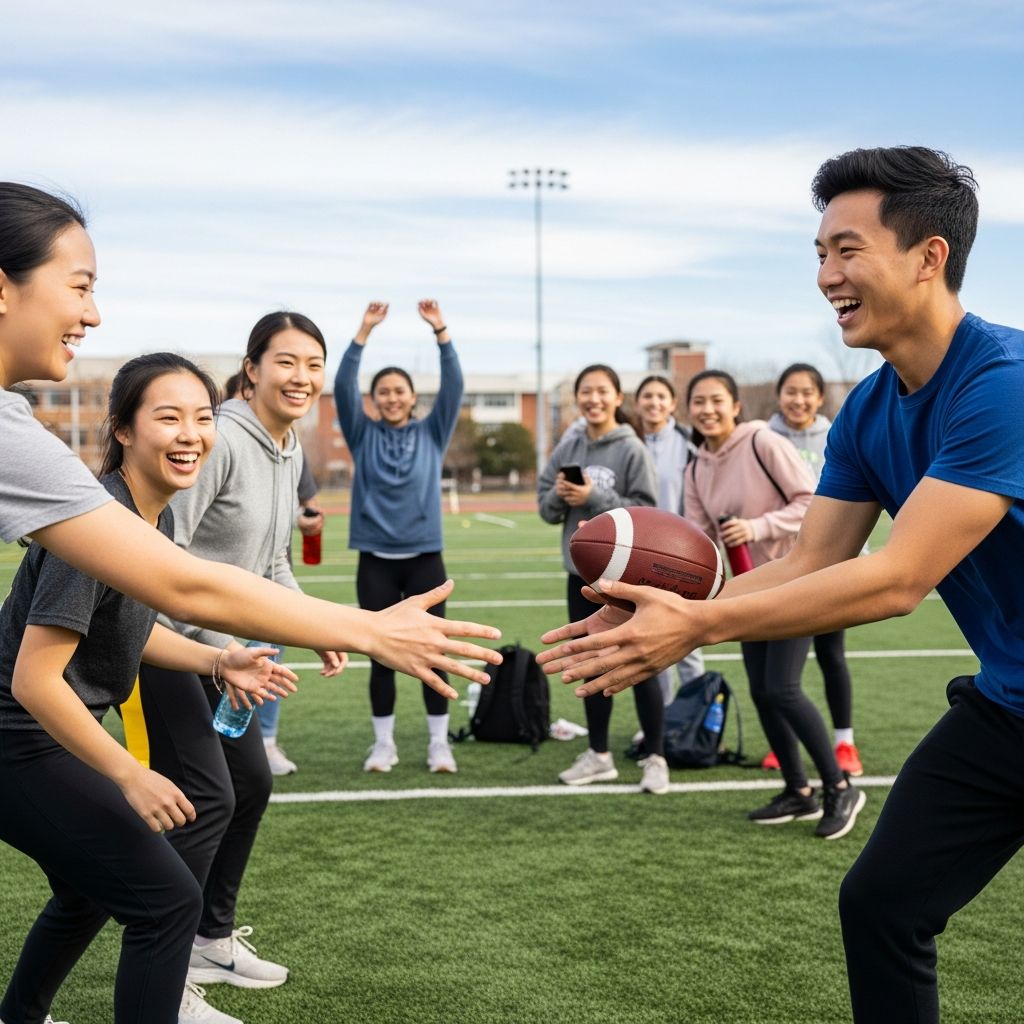
Distance education has transformed how students access learning, offering flexibility and personalized instruction that traditional classrooms cannot always provide. However, one significant challenge that remote learners face is the reduced opportunity for face-to-face social interaction with peers. This isolation can impact student well-being, confidence, and overall development during formative years. Athletic programs and sports participation represent a powerful antidote to this challenge, offering distance learners structured environments where meaningful social connections naturally develop. Whether through organized leagues, community teams, or recreational programs, sports create tangible opportunities for remote students to build friendships, develop essential communication abilities, and establish a sense of belonging outside the digital classroom.
Why Social Development Matters for Remote Learners
Students attending online schools benefit from customized learning paths and one-on-one instruction, but they may miss the informal peer interactions that occur naturally in traditional school settings. These interactions—from hallway conversations to lunch table dynamics—are often where students develop crucial social competencies. Sports programs fill this gap by providing structured social contexts where interaction is not just encouraged but necessary for success.
The absence of daily in-person peer contact can make remote students vulnerable to feelings of isolation, which may negatively affect motivation, mental health, and academic performance. Athletic participation counters this trend by creating regular, purposeful engagement with same-age peers who share common interests and goals. This consistent social contact becomes especially important during adolescence, when peer relationships increasingly influence self-perception and identity formation.
Developing Communication Skills Through Athletic Participation
Effective communication forms the foundation of all healthy relationships and professional success. Sports environments provide intensive, practical opportunities for students to develop both verbal and nonverbal communication abilities in ways that classrooms alone cannot replicate.
Within team sports, athletes must communicate constantly—calling plays, offering encouragement, providing feedback, and resolving disagreements. Unlike passive classroom listening, sports communication requires active participation and immediate response. A player must understand and respond to instructions from coaches, coordinate with teammates in real time, and articulate their own needs and concerns. This immediate feedback loop accelerates learning and skill development far more effectively than delayed written comments or asynchronous online discussions.
Individual sports such as gymnastics and martial arts similarly develop communication abilities through one-on-one interactions with coaches and peers who share similar pursuits. These conversations about technique, progress, and challenges naturally build listening and expression skills. Additionally, athletes learn to receive constructive criticism without defensive reactions—a critical life competency—because improvement directly correlates with wins and personal athletic achievement.
Building Self-Confidence and Esteem Through Achievement
One of the most transformative benefits of sports participation is the measurable impact on self-confidence. Unlike many areas of life where success remains abstract or delayed, athletics provides immediate, visible evidence of progress and accomplishment.
When students train consistently and witness their skills improving, when they contribute to team victories, or when they overcome personal athletic challenges, they experience tangible proof of their capability. This concrete evidence of growth directly translates into increased self-esteem that extends far beyond the playing field. Research consistently demonstrates that this confidence boost is foundational—athletic self-confidence shapes how students approach academics, social situations, and future challenges.
For distance learners who may have limited opportunities to experience peer recognition and group celebration, this public affirmation becomes especially valuable. The team environment ensures that achievement is witnessed and celebrated by others, not just internally felt. A coach’s praise, a teammate’s high-five, or crowd encouragement during competition provides social reinforcement that strengthens the confidence-building effect.
Creating Meaningful Friendships and Social Networks
Sports create ideal conditions for friendship formation precisely because they bring together young people around shared goals and activities, rather than forcing social interaction as an afterthought. Unlike classroom settings where peer groupings are often predetermined by academic tracking, sports teams assemble individuals with diverse backgrounds, abilities, and personalities who unite around mutual interest in a specific activity.
This diversity within shared purpose is powerful. A student might never meet their tennis partner in an academic environment, yet they bond deeply through practice sessions, matches, and sideline encouragement. The shared experience of working toward common goals—defeating an opponent, improving as a team, or mastering new techniques—creates natural connection points.
Beyond the immediate team, athletic participation expands students’ social circles substantially. Tournaments, leagues, and competitions expose remote learners to young people from different schools, neighborhoods, and backgrounds. A distance student might participate in a weekend soccer tournament and forge connections with athletes from five different communities, opportunities that would never occur in an exclusively online environment.
These friendships often persist beyond the season, especially when students continue in the same sport or attend league events throughout the year. The social bonds formed through athletics frequently encourage continued participation—students want to keep playing because they value the friendships they’ve built.
Fostering Teamwork and Collaborative Problem-Solving
Team sports teach collaboration in ways that no simulation or classroom exercise can fully replicate. When a team is down by three points with two minutes remaining, there is no theoretical engagement—stakes are real, and students must genuinely work together to solve the problem.
Athletic teamwork requires each member to understand their role, respect others’ expertise, and subordinate individual ego for collective benefit. A student may be the strongest player on the team, yet must accept the coach’s decision to sit them on the bench because the team composition works better another way. This experience teaches vital lessons about perspective, humility, and the reality that group success often requires personal sacrifice.
Research examining prosocial behavior shows that team sports participants demonstrate significantly better cooperation and social adaptation than their non-athletic peers. More specifically, students in structured sports programs show measurable improvements in communication, cooperation, and their ability to adapt to social contexts. These gains emerge because sports create repeated situations requiring collaborative problem-solving with meaningful consequences.
Managing Emotions and Building Resilience
Athletic competition naturally exposes students to both triumph and disappointment, providing valuable emotional education. A student who experiences the disappointment of losing a close game learns that setbacks are survivable and often temporary. More importantly, they learn this lesson in a structured, supervised environment with peer and coach support, rather than discovering it in isolation.
Playing sports regularly teaches emotional maturity as students experience wins and losses, learn to respect rules and authority, and develop strategies for handling disappointment. This emotional skill development becomes particularly important during middle school years (ages 12-14), when peer relationships become increasingly central to identity formation and mental health. Research confirms that team sports provide protective effects against depression and anxiety during this vulnerable developmental period.
Additionally, sports teach young people to manage the physiological arousal that accompanies competition. Athletes learn breathing techniques, mental preparation strategies, and emotional regulation skills almost inadvertently while pursuing athletic goals. These capabilities transfer directly to managing test anxiety, social nervousness, and other high-stakes situations throughout their lives.
Understanding Identity and Belonging
Adolescence is fundamentally about identity exploration—figuring out who you are and where you fit in the world. Sports participation accelerates and enriches this process by providing a community with shared identity and clear belonging.
When a student becomes a member of a team—whether that’s the school volleyball squad, a club soccer team, or a martial arts dojo—they gain a social identity and role within that community. This belonging is powerful, especially for distance learners who may not have multiple peer communities through school. Being a “basketball player” or “competitive swimmer” becomes part of how students understand themselves, and this identity often reinforces positive behaviors and values.
The sense of community created through athletics extends beyond individual friendship dyads. Team members, coaches, and families create a supportive network that provides social support, encouragement during challenges, and celebration during successes. This community becomes a safety net during difficult periods and reinforces students’ sense of value and importance to others.
Age-Specific Social Benefits of Athletic Participation
The social value of sports varies meaningfully across developmental stages. Understanding how athletic participation supports development at different ages helps parents and educators make informed decisions about program selection and expectations.
Elementary Years (Ages 6-11)
Young athletes develop basic teamwork and communication skills while building fundamental motor competencies. At this stage, sports emphasize fun, skill development, and introduction to structured peer interaction. Social benefits include learning to follow instructions, respect authority figures, and function within group settings.
Middle School Years (Ages 12-14)
This period represents the most dramatic expansion in social development as peer relationships become increasingly important. Sports provide essential contexts for developing advanced teamwork abilities, navigating complex peer dynamics, and managing the emotional intensity of early adolescence. Research strongly supports athletic participation during this stage as protective against depression and anxiety.
High School Years (Ages 15-18)
Older athletes develop sophisticated leadership abilities and complex communication skills that directly transfer to adult professional and personal contexts. High school sports teach ethical reasoning, consequences of decisions, and moral reasoning within competitive environments—capabilities that remain valuable throughout adulthood.
Long-Term Benefits That Extend Into Adulthood
The social skills developed through youth sports do not disappear when athletic careers end. Longitudinal research tracking athletes over decades reveals that benefits persist and expand throughout adulthood. Former youth athletes demonstrate enhanced teamwork abilities in professional settings, stronger leadership qualities, and superior stress management skills compared to their non-athletic peers.
More broadly, social skills gained through sports participation correlate with better interpersonal relationships and increased community engagement throughout adulthood. People who developed teamwork abilities, communication skills, and resilience through youth sports tend to build stronger networks, assume leadership roles, and maintain connections with others throughout their lives.
Additionally, the sense of belonging and community created through sports often motivates individuals to seek similar experiences as adults—joining recreational leagues, volunteering to coach youth, or supporting community athletic programs. Thus, youth sports participation seeds lifelong patterns of engagement and connection.
Practical Pathways for Distance Learning Students
Distance learners have numerous options for athletic participation depending on their interests, schedules, and local availability:
- Community Recreation Leagues: Most communities offer basketball, soccer, baseball, and other team sports through parks and recreation departments. These leagues accommodate varying skill levels and offer flexible scheduling.
- Club Sports: Specialized clubs (swimming, gymnastics, martial arts, tennis) provide intensive training and community with others passionate about specific activities.
- School-Based Programs: Many public and private schools allow non-enrolled students to try out for teams, particularly for popular sports.
- Individual Sports with Group Components: Running clubs, CrossFit communities, and rock climbing groups provide the benefits of individual athletic pursuit within social contexts.
- Virtual Competition Communities: For certain activities, online competitions and digital team communities offer social engagement around athletic pursuits.
Frequently Asked Questions
Can distance learning students effectively participate in competitive sports?
Yes. Many distance learners successfully participate in competitive athletics because their flexible schedules often accommodate practice times better than traditional school students. The key is choosing programs with schedules that align with your student’s academic commitments.
What if my child is not athletically skilled?
Recreational leagues and instructional programs exist specifically for learners developing skills. The social benefits of participation occur at all skill levels—beginners benefit equally from teamwork, communication practice, and community belonging.
How do I find athletic programs in my area?
Check your community’s parks and recreation department website, search for local club sports organizations, explore YMCAs and community centers, and inquire with school athletic departments about non-enrollment participation opportunities.
Is one sport better than others for social development?
Team sports provide superior social benefits compared to individual activities due to the inherent cooperation requirements. However, individual sports still develop communication and friendships through coach interaction and peer communities. Choose activities your student genuinely enjoys, as intrinsic interest increases long-term participation and engagement.
How much time should my student commit to athletics?
A single team or program requiring 2-6 hours weekly provides substantial social benefits without overwhelming academic commitments. Consistency matters more than volume—regular participation builds deeper relationships and greater skill development than sporadic involvement.
Conclusion: Athletics as a Bridge to Belonging
For distance learning students, athletic programs represent far more than physical activity or competitive opportunities. Sports create the structured, repeated, purposeful peer interactions that remote education cannot provide. They build communication abilities, strengthen self-confidence, teach collaboration, and create genuine friendships with shared history and meaning. As remote learning continues to expand educational options, athletic participation becomes increasingly valuable as the bridge connecting isolated learners to communities, building the social foundation necessary for flourishing throughout adolescence and beyond.
References
- Summer Socialization Through Sports for Online Students — Connections Academy. 2024. https://www.connectionsacademy.com/support/resources/article/socialization-through-sports-for-online-school-students/
- How Do Youth Sports Help Improve Social Skills? — Fitness by the Sea. 2024. https://fitnessbythesea.com/fitness-and-physical-activities/how-do-youth-sports-help-improve-social-skills/
- How School Athletics Can Help Your Child Socially — Kehoe-France Schools. 2024. https://kehoe-france.com/blog/how-school-athletics-can-help-your-child-socially/
- The Social and Academic Benefits of Team Sports — Edutopia. 2024. https://www.edutopia.org/discussion/social-and-academic-benefits-team-sports
- Developing Life Skills Through Sports — healthdirect Australia. Australian Department of Health. 2024. https://www.healthdirect.gov.au/developing-life-skills-through-sports
- Influence of Sports Activities on Prosocial Behavior of Children and Adolescents: A Systematic Review — PMC National Center for Biotechnology Information, U.S. National Library of Medicine. 2022. https://pmc.ncbi.nlm.nih.gov/articles/PMC9180162/

Medha Deb is an editor with a master's degree in Applied Linguistics from the University of Hyderabad. She believes that her qualification has helped her develop a deep understanding of language and its application in various contexts. Medha specializes in the areas of beauty, health, sports, and wellness and is committed to ensuring that the content on the website is…