
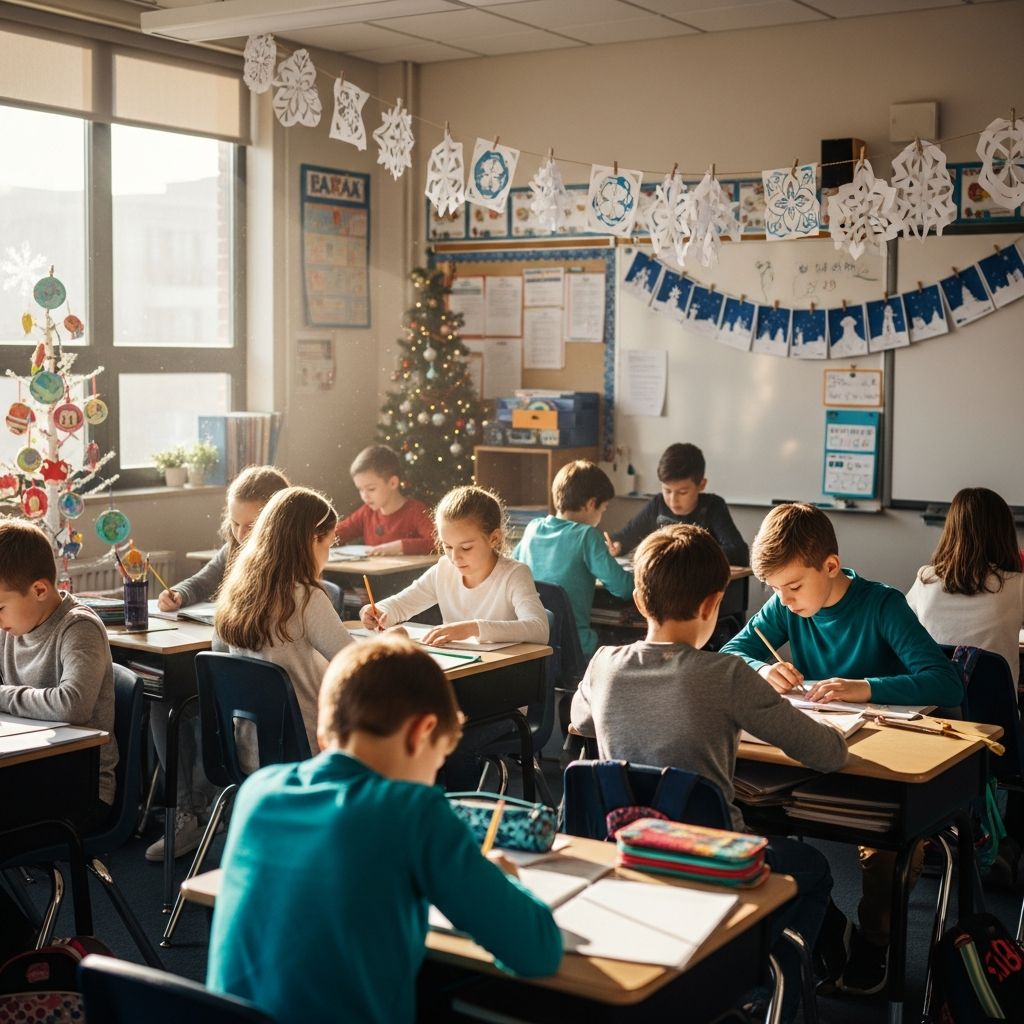
The days leading up to a holiday break in schools often feel like an uphill battle. Students buzz with excitement about time off, family gatherings, and gifts, while teachers juggle waning attention spans, their own holiday preparations, and the push to wrap up the term meaningfully. This period tests classroom dynamics like few others, but with intentional planning and proven tactics, educators can transform chaos into controlled productivity. This guide offers fresh, actionable advice drawn from experienced teachers’ insights to help you not just survive, but excel through these weeks.
Understanding the Pre-Holiday Challenge
Holiday anticipation disrupts routines. Research from educational psychology highlights how excitement elevates dopamine levels, making sustained focus difficult for young minds. Teachers report heightened behavioral issues, reduced academic output, and personal fatigue during this time. Yet, viewing it as an opportunity for low-stakes learning and relationship-building can shift the perspective. By anticipating these hurdles, you position yourself to implement countermeasures effectively.
- Student Excitement Peaks: Thoughts of vacations and festivities dominate, leading to fidgeting and chatter.
- Teacher Burnout Risk: Balancing grading, planning, and personal tasks amplifies stress.
- Learning Opportunities: Short, engaging activities can reinforce skills without overwhelming anyone.
Strategic Lesson Planning for Maximum Impact
Resist the urge to abandon curriculum goals. Instead, prioritize high-yield, flexible lessons that accommodate shorter attention spans. Front-load essential content early in the week when energy is highest, saving lighter reviews for later days.
| Day of Week | Focus Type | Example Activity |
|---|---|---|
| Monday-Tuesday | Core Skills | Interactive group problem-solving or lab experiments |
| Wednesday | Review & Reinforce | Student-led quizzes or digital gamified assessments |
| Thursday-Friday | Fun Application | Hands-on projects tying holidays to learning themes |
Batch similar tasks to streamline your workflow. Prepare materials in advance, using simple printables or digital tools that require minimal setup. This approach ensures coverage of standards while keeping engagement high.
Boosting Student Engagement with Creative Twists
Keep students invested through novelty. Incorporate movement, choice, and relevance to harness their holiday energy positively.
- Hands-On Labs and Experiments: Shift to practical activities like science demos or math challenges disguised as games. These maintain cognitive engagement without feeling like drudgery.
- Student-Led Initiatives: Assign peer teaching for reviews, empowering students and reducing your load. Groups present key concepts creatively, fostering ownership.
- Themed Tie-Ins: Link lessons to holidays thoughtfully—e.g., geometry in gift wrapping or history via cultural traditions—without overemphasizing festivities.
Avoid elaborate holiday crafts unless they align with objectives; simplicity prevents cleanup headaches and keeps focus sharp.
Classroom Management Mastery
Proactive behavior strategies are crucial when impulses run high. Establish clear, consistent expectations from day one of the pre-holiday stretch.
- Set Visual Incentives: Use a progress chart or token system where good choices earn small rewards, like extra recess time.
- Mini-Rewards Table: Display wrapped, low-cost prizes (e.g., stickers, bookmarks) for positive behaviors, drawing from mystery motivators.
- Movement Breaks: Schedule 2-3 minute brain breaks with stretches or quick walks to reset energy.
Minimize transitions between activities to reduce off-task time. Positive narration—publicly noting good choices—reinforces norms without singling out individuals.
Self-Care Essentials for Educators
Your well-being directly impacts classroom success. Counter burnout with deliberate recharge habits.
- Structured Breaks: Step away for a 5-minute walk or hydration pause; physical movement reboots focus.
- Nutrition and Hydration: Pack balanced snacks to stabilize energy, avoiding sugar crashes that exacerbate sluggishness.
- Mindful Moments: Practice brief breathing exercises to manage rising frustration.
Protect personal time by setting boundaries—avoid holiday shopping during lunch if it drains you. Remember, a rested teacher models resilience.
Simplifying Routines Without Slacking
Maintain core structures to signal normalcy. Deviating too far invites disorder.
- Consistent Schedules: Stick to bell times and daily rhythms as much as possible.
- Batch Grading: Tackle assessments mid-week, using rubrics for efficiency.
- Delegate Wisely: Involve older students in minor tasks like material distribution.
This discipline pays off, preventing a post-break reset scramble.
Preparing for a Seamless Return
End strong by front-loading January prep. Dedicate the final afternoon to tidying, planning first-week lessons, and archiving materials.
- Lesson Sequencing: Outline re-entry activities that review pre-break content gently.
- Declutter Space: Remove holiday decor to symbolize fresh starts.
- Reflect and Adjust: Note what worked for future terms.
This foresight eases re-entry anxiety, allowing true rest during break.
Embracing Holiday Spirit Thoughtfully
Infuse joy sparingly to build community without derailing focus.
- Low-Key Celebrations: Share a class story circle about traditions (respecting diversity).
- Gratitude Practices: End days with quick wins shout-outs.
- Flexible Fun: Opt for read-alouds or music breaks tied to curriculum.
Balance festivity with purpose for memorable, productive closures.
Frequently Asked Questions (FAQs)
What if students are completely checked out?
Shorten tasks, amp up interactivity, and use choice boards to give ownership. Redirect energy into collaborative challenges.
How do I handle my own holiday stress?
Prioritize sleep, enlist family help for prep, and schedule non-negotiable self-time like evening walks.
Should I cancel assessments before break?
No—opt for formative checks like exit tickets over high-stakes tests to gauge understanding lightly.
Ideas for multi-grade classrooms?
Differentiate with tiered stations: basics for younger, extensions for older, ensuring all engage meaningfully.
What about virtual or hybrid settings?
Leverage polls, breakout rooms, and screen-shared games; keep sessions 20-30 minutes with built-in chats.
References
- Truth for Teachers: 7 Teacher Tips for Surviving the Week Before Holiday Break — Angela Watson, Truth for Teachers. 2014-12-11. https://truthforteachers.com/7-teacher-tips-for-surviving-the-week-before-holiday-break/
- It’s Not Rocket Science Classroom: How to Survive Until Winter Break — Rachel Lynette, It’s Not Rocket Science. 2021-11. https://itsnotrocketscienceclassroom.com/2021/11/how-to-survive-until-winter-break/
- Primarily Speaking: Holiday Survival Guide — Primarily Speaking Blog. 2014-12. https://www.primarily-speaking.com/2014/12/holiday-survival-guide.html
- Inklings News: Surviving the Countdown Tips — Inklings News. 2024-12-06. https://www.inklingsnews.com/opinions/2024/12/06/surviving-the-countdown-tips-for-the-last-3-weeks-before-the-holidays/
- Wandering Educators: How to Survive Days Leading to Vacation — Wandering Educators. N/A. https://www.wanderingeducators.com/best/stories/how-to-survive-days-leading-to-vacation

- Integrated M.A. in Applied Linguistics, University of Hyderabad
- 5+ years in editorial, instructional, SEO, and research-based writing
Sneha is a relationships and lifestyle writer with a strong foundation in applied linguistics and certified training in relationship coaching. She brings over five years of writing experience to theskillvault, crafting thoughtful, research-driven content that empowers readers to build healthier relationships, boost emotional well-being, and embrace holistic living. Her writing and insights reflect the belief that beauty, happiness, and wellness…